

10×30 Horse Barn: What Fits, What It Suits, and When to Size Up
A 10×30 horse barn gives you 300 square feet in a long, shallow footprint, and the honest answer is that the 10 is doing far more to shape your options than the 30 is. Thirty feet of length divides up easily. Ten feet of depth is the constraint you’ll live with.
Here’s what fits in that footprint, what it suits, and when you’re better off going deeper instead of longer.
What fits in 300 square feet
Laid out along the 30 foot length, you’ve got a few workable divisions:
-
Three 10×10 stalls. Uses the whole run with nothing left for storage.
-
Two 10×12 stalls plus a 10×6 tack area. The most common split, and the tack space is small but real.
-
One open run-in shelter. No divisions at all, which suits pasture animals that come and go.
-
Two stalls plus a hay bay. Workable if you’re buying hay in small lots rather than storing a season’s worth.
Why the depth matters more than the length
Common stall sizes run from about 10×10 for ponies and small horses up to 12×12 for full-size animals. In a building that’s 10 feet deep, a 12×12 stall doesn’t exist. Your stalls are 10 feet deep whatever else you do, which is fine for smaller horses, tight for a full-size horse that’s stalled for long stretches, and perfectly reasonable for a run-in that animals use by choice.
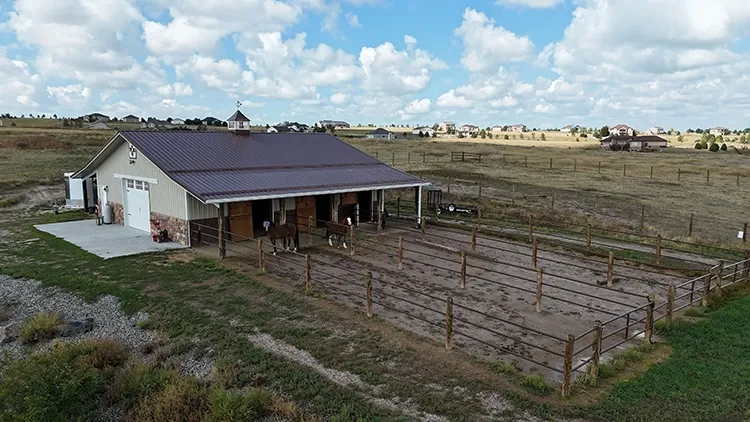
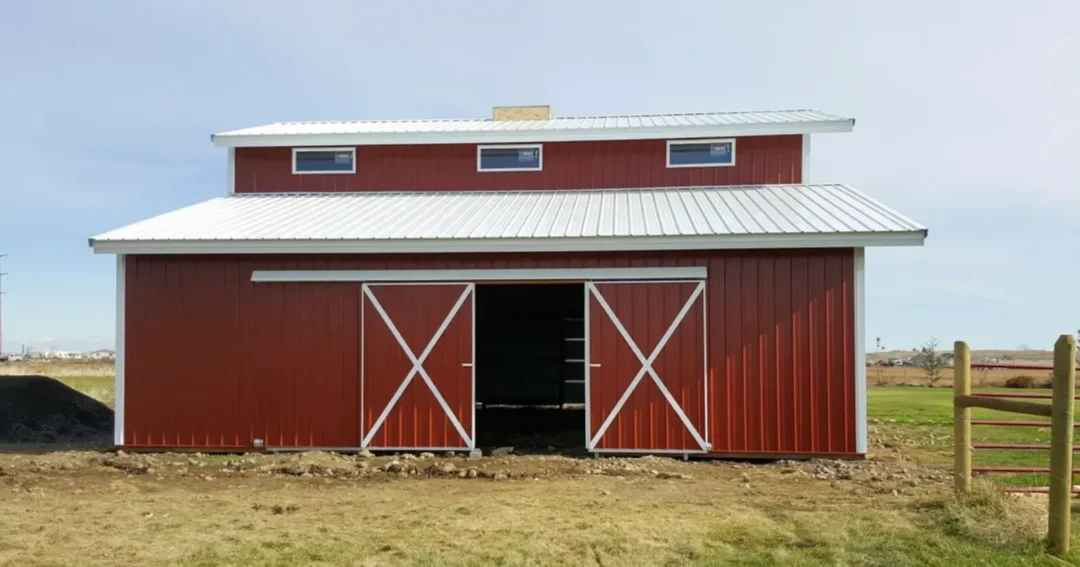
The other thing depth costs you is aisle. At 10 feet there isn’t one. Stalls open directly to the outside, which is what makes this a shed row rather than a center-aisle barn. That’s not a flaw, it’s a different building: shed rows are cheaper, ventilate themselves, and work well in our climate as long as the open side faces away from the prevailing weather.
What a 10×30 is genuinely good at
It’s a strong fit for a couple of horses on a small acreage, for a run-in shelter on pasture, and for adding covered stalls to a property that already has hay and equipment storage somewhere else. It’s also the size people build when they want to start keeping horses at home without committing to a full barn.
Ventilation still matters at this size, maybe more, because a shallow building with animals in it moves a lot of moisture. Our guide to pole barn ventilation covers what good airflow looks like, and it applies to a small barn as much as a big one.
When to go bigger instead
Go deeper before you go longer. Widening to 12 or 14 feet gets you real 12×12 stalls, and 24 feet gets you a center aisle with stalls on both sides, which changes daily chores completely. If you’re weighing footprints, pole barn sizes lays out how the dimensions play against each other, and horse barns covers the larger designs and what to expect from a contractor.
Common questions
Can a 10×30 be built as post-frame?
Yes, and it usually is. Post spacing and truss span are engineered to the building whatever the size, and a small footprint doesn’t change how it’s put together. Our agricultural buildings guide covers the range.
Do I need a concrete floor?
For stalls, plenty of people don’t want one. Compacted base with mats or bedding is common and easier on legs than bare concrete. A tack or feed area is where concrete earns its keep.
What about doors?
Shed row stalls typically get sliding or dutch doors on the open side. Sizing them is worth thinking about early, and exterior barn doors covers how the types compare.
The bottom line
A 10×30 horse barn is a shed row: two or three shallow stalls, or an open run-in, with no aisle. It’s a good small-acreage building and a poor substitute for a full-size barn, and the deciding question is whether 10 foot depth suits your animals.
We build across Idaho, Washington, Oregon, Montana, and Colorado. Give us a call at (800) 833-9997 or request a free quote and we’ll size it against what you’re keeping.