
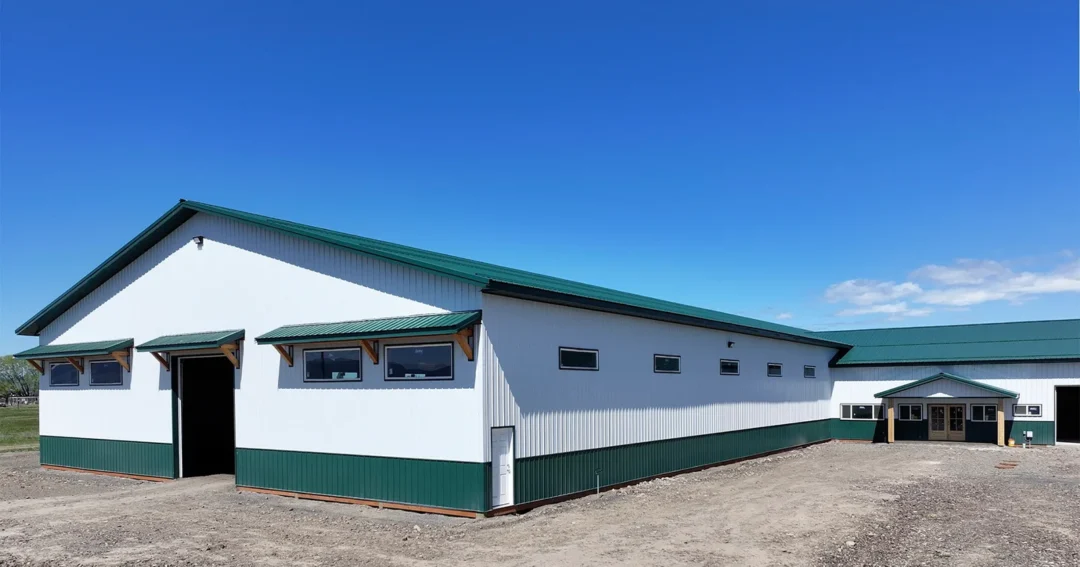
Agricultural Buildings: Pole Barns and Metal Buildings for Farms and Ranches
Agricultural buildings are the backbone of a working farm or ranch, and getting the right structure makes a real difference in how efficiently your operation runs day to day. Whether you need a place to park your tractors and combines, house your cattle, store hay, or run a farm shop, the right agricultural pole building or metal building gives you the space and durability to protect your investment and keep things moving.
At Steel Structures America, we’ve helped farmers and ranchers across Idaho, Washington, Oregon, Colorado, Montana, and the surrounding region build structures that hold up to hard use and unpredictable weather. This guide covers everything you need to know about agricultural buildings, including the main types, typical sizes, what goes into the planning, and how to make sure you’re getting a building that actually fits your operation.
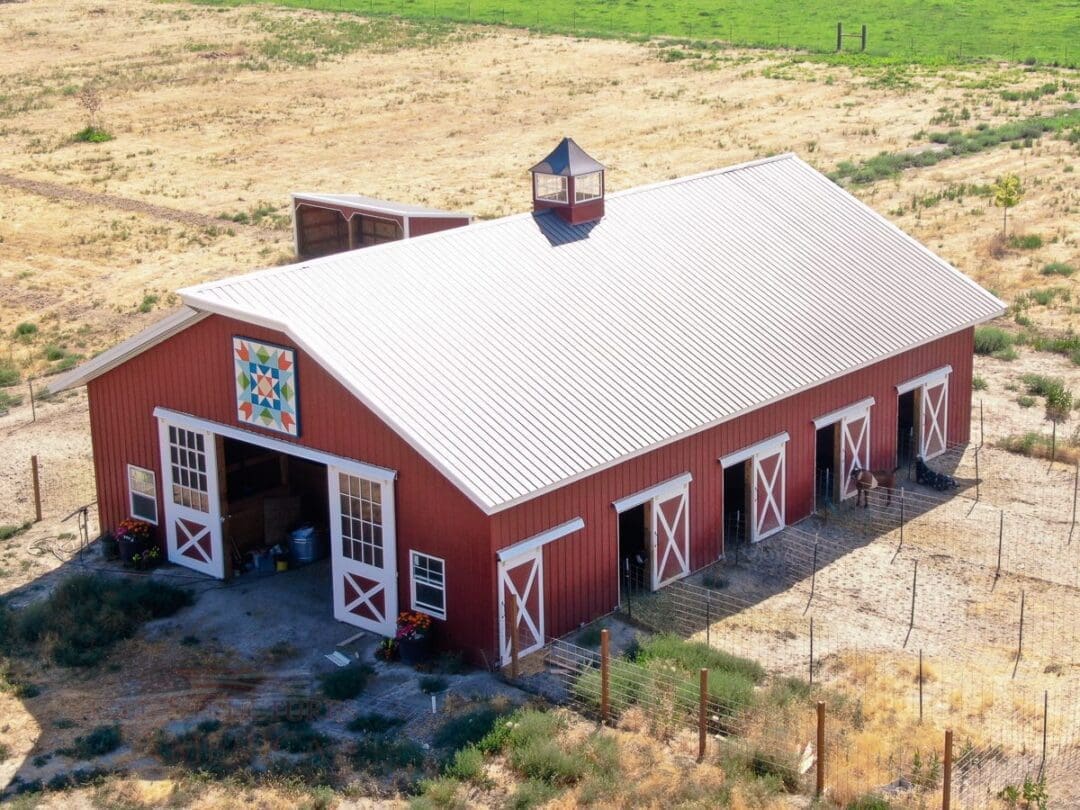
Why Agricultural Buildings Are Different From Other Structures
Farm buildings aren’t just big sheds. They deal with things most buildings never encounter, including massive equipment clearance requirements, livestock ventilation needs, fire risk from dry hay, moisture from animals and feed, and the constant wear that comes from daily farm use.
A building that works great for a contractor’s shop or a boat storage setup might not cut it on a working farm. Agricultural pole buildings and metal buildings are designed with those specific challenges in mind. They’re built to handle wide-open spans for large equipment, high ceilings for hay storage, proper ventilation for livestock health, and rugged durability that holds up season after season without constant maintenance.
Here’s a quick look at what makes farm building design unique:
- Clear-span interiors that allow equipment to move freely without interior columns in the way
- Tall overhead doors to accommodate combines, grain carts, and large tractors
- Ventilation planning that matters for both livestock and hay storage
- Durable materials that can handle moisture, manure, dust, and UV exposure
- Flexible layouts that can be customized for multiple uses on the same farm
The Main Types of Agricultural Buildings
Most farm building projects fall into one of three main categories. Each one has its own design requirements, sizing considerations, and planning factors. We’ll cover each one in detail below and link out to our deeper guides where applicable.
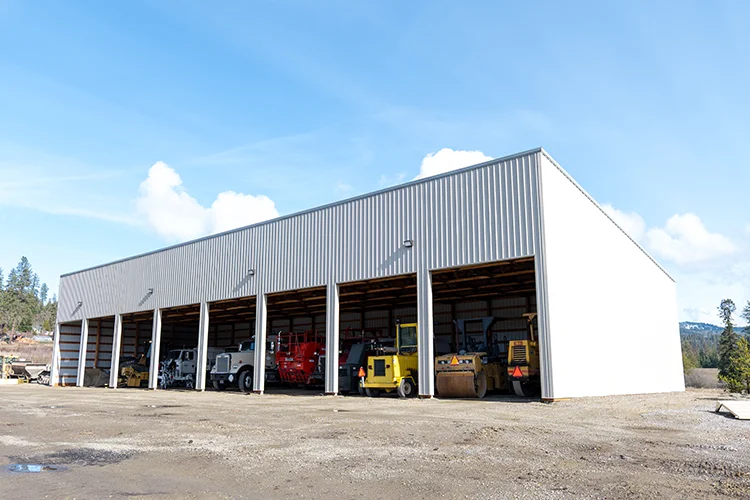
1. Farm Equipment and Machinery Storage Buildings
Storing expensive farm equipment properly is one of the best investments you can make on a farm. Tractors, combines, planters, tillage equipment, and grain carts represent hundreds of thousands of dollars in capital. Leaving them exposed to weather accelerates wear, leads to costly repairs, and shortens the usable life of your machinery.
A dedicated farm equipment storage building solves that problem. These structures typically feature large clear-span interiors without interior posts, tall sliding or overhead doors to accommodate high equipment, and enough floor space to park multiple large machines side by side.
Typical Sizes for Equipment Storage Buildings
Equipment storage buildings come in a wide range of sizes depending on what you need to store. Here are some general guidelines:
| Building Size | Best For | Notes |
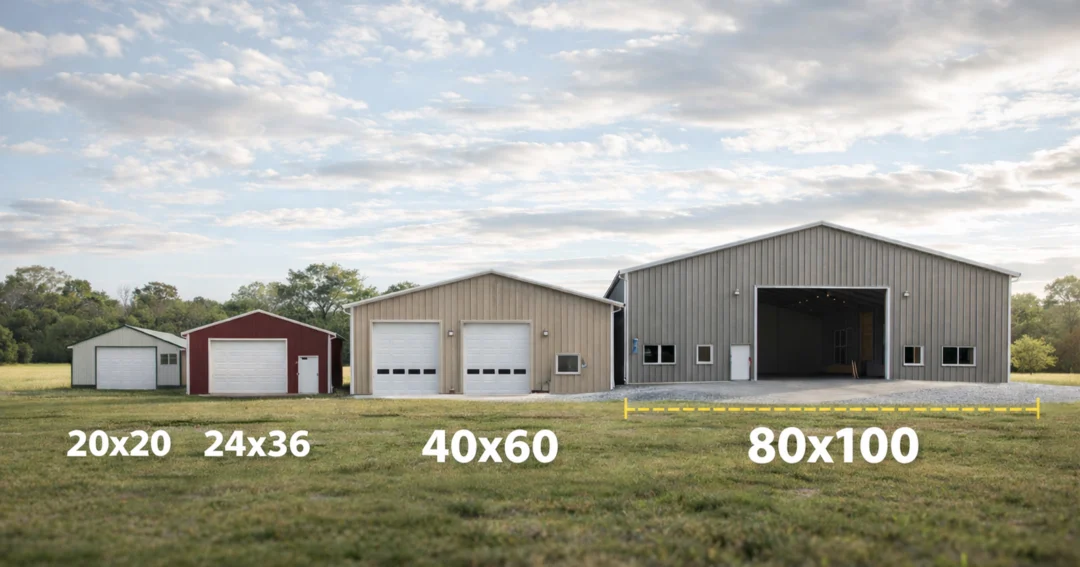
| 40×60 | Small equipment, 2-3 tractors, utility vehicles | Good starting point for smaller operations |
| 50×80 | Mid-size equipment, 3-4 tractors, small combine | Most common size for mid-scale farms |
| 60×100 | Full-size combines, large grain carts, header storage | High clearance doors recommended |
| 80×120+ | Multiple large machines, large-scale operations | May require engineered drawings for wind/snow loads |
Door height is just as important as floor space. A full-size combine with the header attached can easily exceed 14 to 16 feet. Plan for at least 14-foot overhead doors, and many farmers go 16 to 18 feet to make sure there’s no guesswork when pulling equipment in and out.
2. Livestock Pole Barns
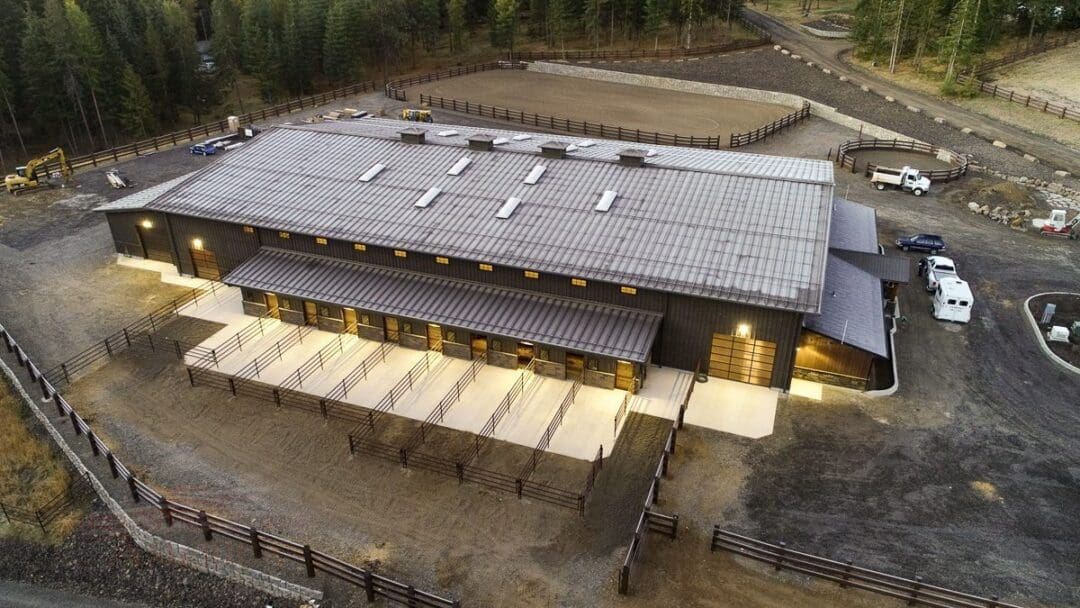
Livestock facilities have requirements that go well beyond basic storage. The animals inside are living creatures whose health, comfort, and productivity depend directly on the quality of their environment. Proper ventilation, drainage, and layout design all play a significant role in a successful livestock building.
Pole barns are a natural fit for livestock facilities because of their flexibility in sizing, their ability to accommodate open-sided designs for natural ventilation, and their cost efficiency compared to traditional stick-built structures. Whether you’re housing cattle, hogs, or poultry, a well-designed pole barn can be configured to match the specific needs of your animals and your operation.
Cattle Pole Barns
Cattle barns and shelters are among the most common agricultural pole buildings we build. These range from simple three-sided windbreaks and loafing sheds to fully enclosed barns with feeding alleys, calving pens, and head catches. The right design depends on your herd size, your management system, and your local climate.
- Loafing sheds and open-sided shelters: Great for cow-calf operations and beef herds. Typically 30 to 60 feet wide, open on one side, with a metal roof and back wall to block prevailing wind and weather.
- Enclosed calving barns: Used for spring calving operations where animals need close monitoring. Usually fully enclosed with individual pens, good lighting, and ventilation.
- Feedlot cover buildings: Wide, open structures used to shelter cattle on feed. High roofs with open sides and center ridges for ventilation.
Hog and Swine Buildings
Swine facilities are highly specialized. Hogs are sensitive to temperature extremes and require very controlled environments for optimal growth rates. Proper ventilation is critical, both for animal health and to manage ammonia and moisture buildup in the building.
Pole barn structures can be adapted for swine production with the addition of proper ventilation systems, insulated walls and ceilings, and durable floor systems. These are typically more involved builds than basic equipment storage, and it pays to work with a builder who understands the requirements.
Poultry Buildings
Poultry barns, whether for laying hens, broilers, or turkeys, require very specific environmental controls. Temperature, air quality, lighting, and sanitation all directly impact flock health and performance. Pole barn construction can form the structural shell of a poultry building, with the interior outfitted for your specific production system.
Most poultry barns run long and narrow, commonly 40 to 50 feet wide and 300 to 600 feet long, to accommodate mechanical ventilation systems and tunnel cooling. This makes post-frame construction an efficient and cost-effective structural choice.
3. Hay Storage Buildings
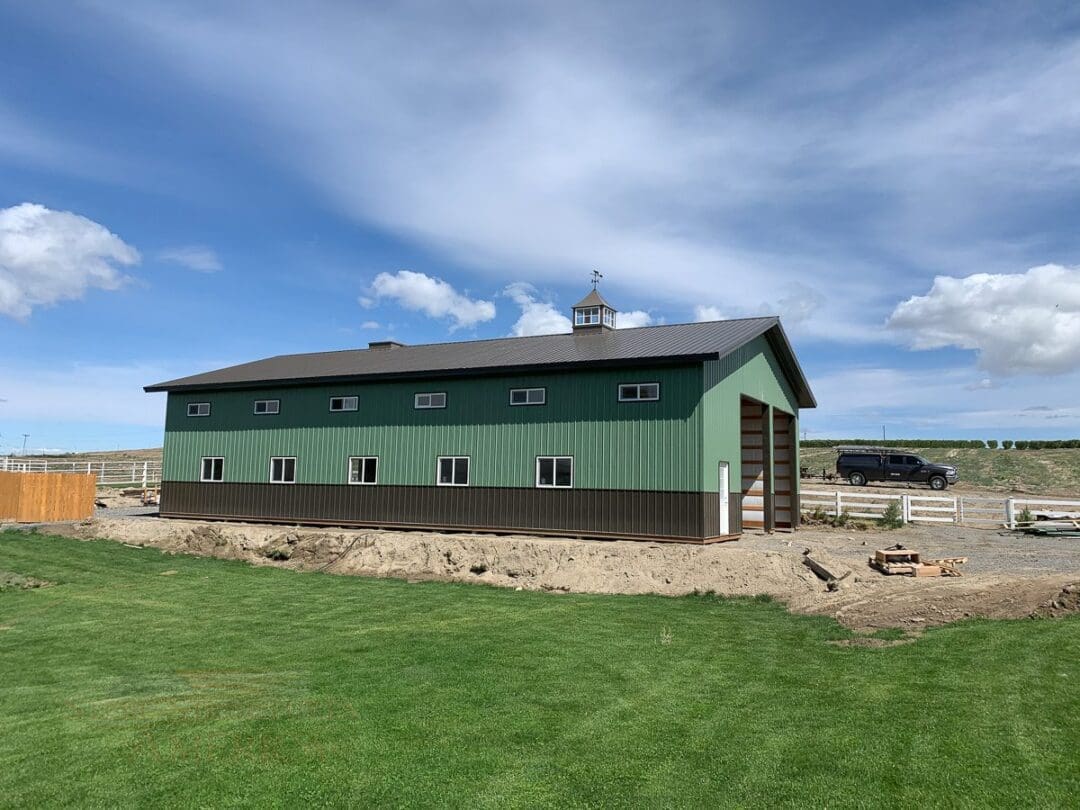
Hay pole barns are a staple on livestock farms and ranches across the region. Proper hay storage protects your feed from rain, UV damage, and moisture, all of which cause spoilage and reduce nutritional value. A well-designed hay barn can preserve a significantly higher percentage of your stored crop compared to outdoor stacking.
Hay storage buildings have some unique design considerations that set them apart from other agricultural buildings:
Open-Sided vs. Enclosed Hay Barns
One of the first decisions in hay barn design is whether to go open-sided or fully enclosed. Open-sided hay barns allow for better natural airflow, which helps hay cure and reduces the risk of mold and heat damage from improperly cured bales. They’re also less expensive to build since you’re eliminating sidewalls on one or more sides.
Enclosed hay barns offer more weather protection, particularly from blowing rain and snow, and may be preferred in wetter climates or for storing high-value forage. Many farmers end up going with a partial open design, fully enclosed on the weather side with open gable ends or sidewalls.
Ventilation in Hay Storage Buildings
Ventilation in a hay barn is about more than just airflow. Hay that goes into storage with too much moisture can generate heat as it continues to dry, which in severe cases leads to spontaneous combustion. Good ventilation design reduces that risk while also preventing condensation from forming on metal roofs and dripping onto stored bales.
Ridge vents, open sidewalls, and proper roof pitch all contribute to a well-ventilated hay storage building. This is an area where working with an experienced agricultural builder really pays off.
Typical Hay Barn Sizes
Hay barn sizing is driven primarily by how many tons or bales you need to store. A general rule of thumb is that a round bale weighing approximately 1,000 to 1,200 pounds takes up roughly 50 to 60 square feet of floor space including access aisles. Here are some common hay barn sizes and what they can hold:
| Building Size | Approx. Round Bale Capacity | Notes |
| 40×60 | 40-50 bales | Good for small herds or hobby farms |
| 40×80 | 55-70 bales | Common size for mid-scale cattle operations |
| 60×100 | 100-120 bales | Popular for larger ranches and commercial hay producers |
| 60×120+ | 130-160+ bales | Best for full season storage on large operations |
Farm Shop Buildings: A Category of Their Own
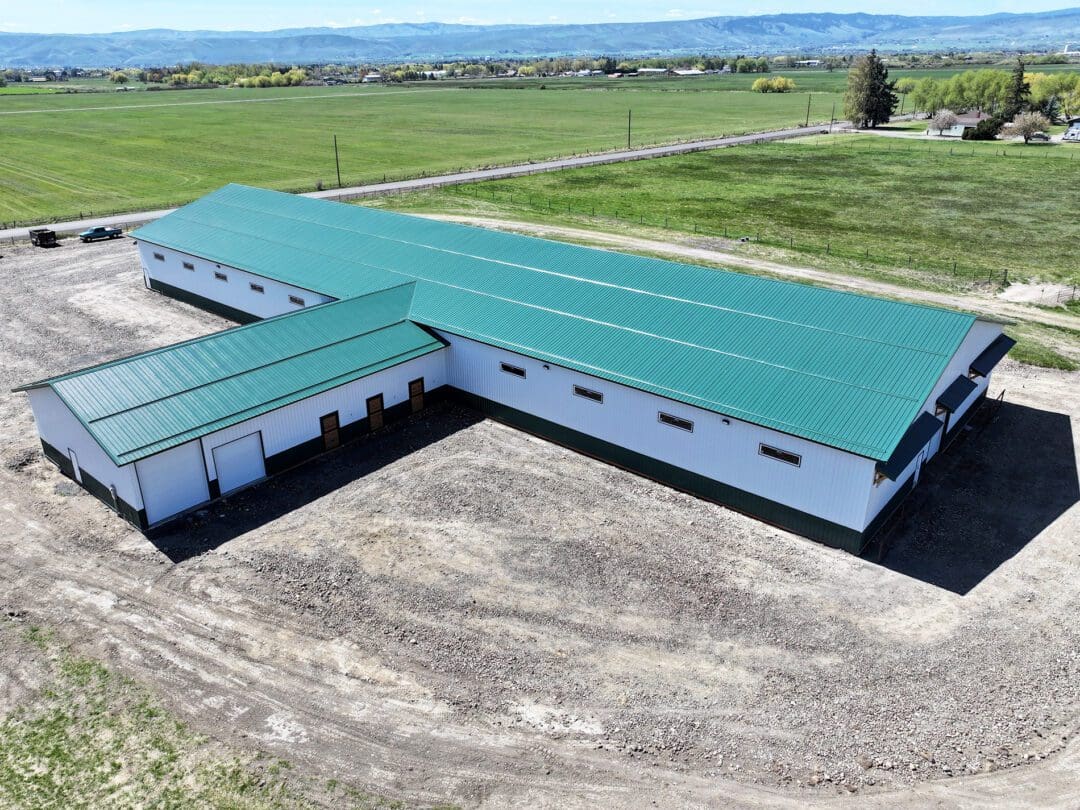
Farm shop buildings sit at an intersection between agricultural storage and contractor-style workspace. On a working farm or ranch, a dedicated shop building is where tractors get fixed, equipment gets welded, tools get stored, and repairs get done out of the weather.
Farm shops are built to handle the same kind of hard daily use as any commercial contractor shop, but they’re typically located on rural agricultural properties and often need to function for multiple purposes. A good farm shop building might store a couple of utility vehicles, have a work area with a hoist or lift, include a parts room or office, and still leave room to roll in a piece of equipment that needs repairs.
What Makes a Good Farm Shop Building
- Ceiling height of at least 14 to 16 feet to accommodate equipment on lifts or with headers attached
- Concrete floor throughout the main work area
- Multiple overhead doors, ideally on at least two walls for drive-through capability
- Electrical service sufficient for welders, compressors, and lighting
- A dedicated parts and supply room with shelving
- An insulated and heated work area for year-round use in cold climates
- Lean-to additions for covered equipment parking adjacent to the main shop
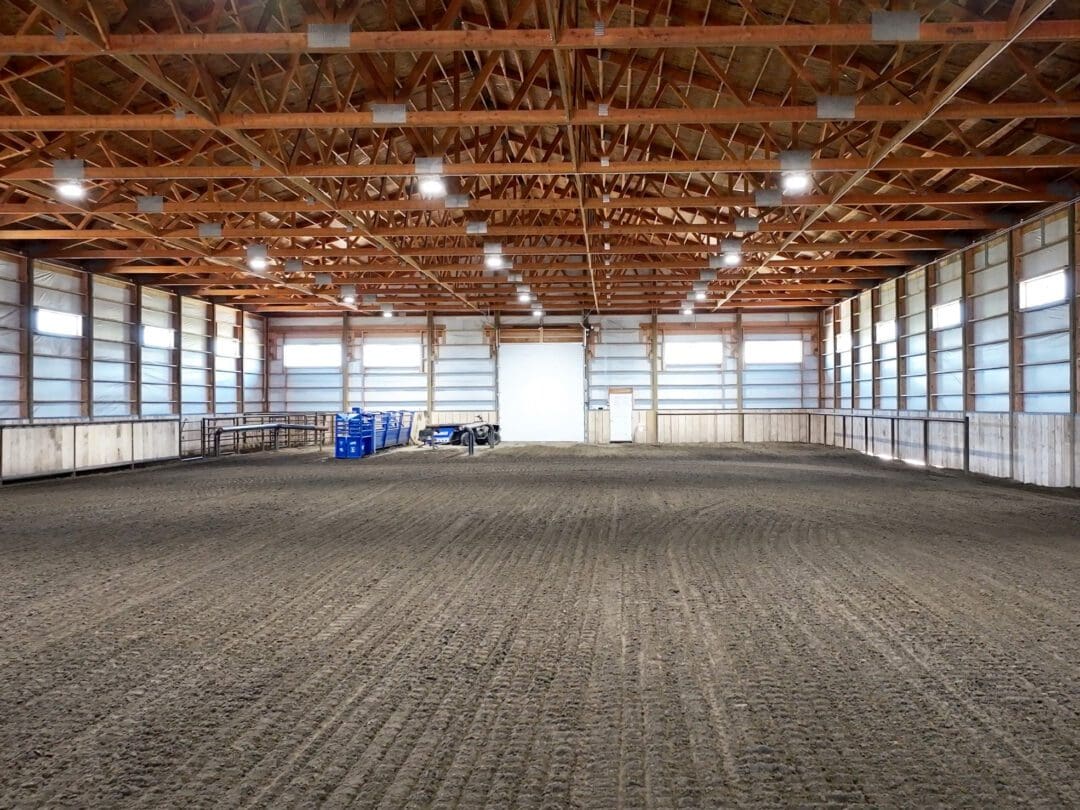
Typical Farm Shop Sizes
Farm shops typically run from 40×60 all the way up to 80×120 or larger depending on the scale of the operation. A 50×80 or 60×80 is a very common target for mid-size farms that want room to work on equipment without feeling cramped. If you’re running a large operation with multiple pieces of equipment and employees, going bigger upfront almost always makes sense.
Pole Barn vs. Metal Building: Which Is Right for Farm Use?
This is one of the questions we hear most often from agricultural buyers, and the honest answer is that both work well depending on the application. Here’s a simple breakdown:
| Application | Agricultural Pole Barn | Agricultural Metal Building |
| Hay storage | Excellent — open-sided designs easy to configure | Good, but typically more expensive per square foot |
| Livestock shelters | Excellent — flexible open/closed design options | Good for larger enclosed facilities |
| Equipment storage | Very good — cost-efficient for large spans | Excellent — rigid frame works well for wide clear-spans |
| Farm shop | Very good — common choice for farm shops | Excellent — great for large, tall shop facilities |
| Long-term durability | Very good with proper posts (Perma-Column recommended) | Excellent — all-metal construction resists rot |
| Cost efficiency | Typically lower cost per square foot | Slightly higher cost, especially at large spans |
For most hay and livestock applications, agricultural pole barns are the go-to choice because of their cost efficiency and flexibility. For large equipment storage facilities and farm shops where you need maximum clear-span width and long-term structural performance, both pole barns and metal buildings are solid options. Our team can help you evaluate both based on your specific needs and budget.
Planning Your Agricultural Building: Key Questions to Answer First
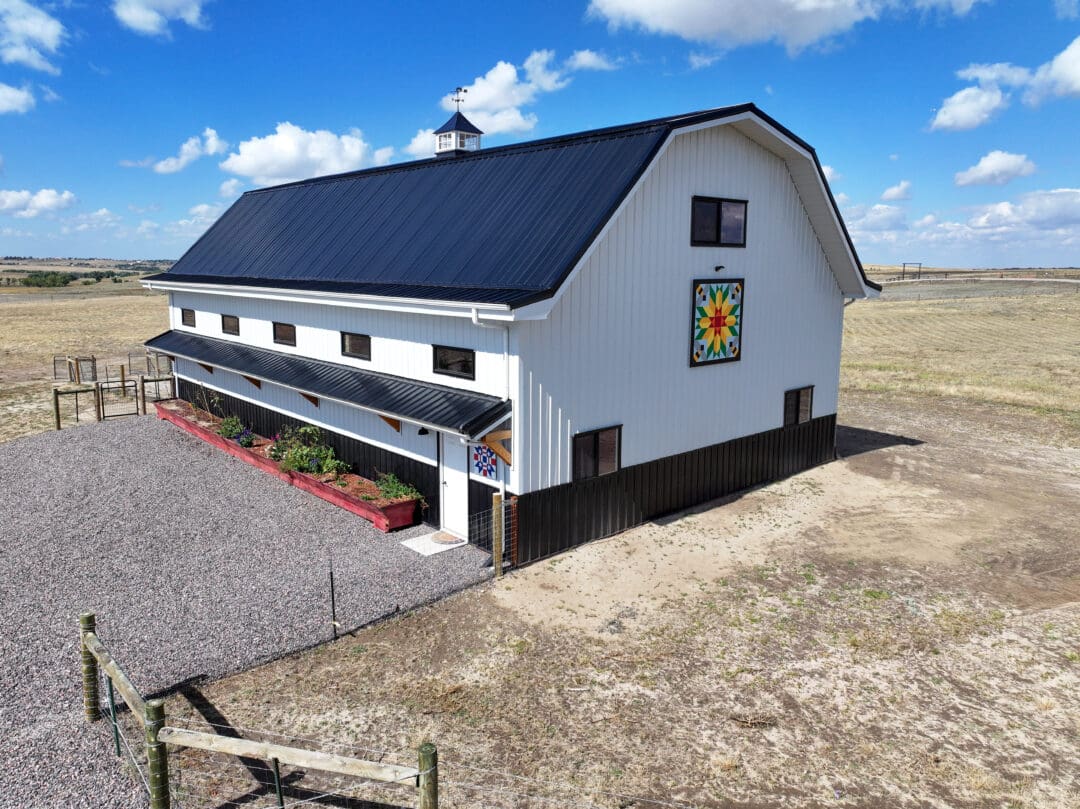
Before you sit down with a builder, it helps to have clear answers to a few key questions. The more specific you can be upfront, the more accurate your quote will be and the less likely you are to build something you’ll regret later.
What Are You Storing or Housing?
This sounds obvious, but the details matter a lot. If you’re storing a modern combine with a 40-foot corn head attached, your building needs to be a very different size and door configuration than if you’re storing a tractor and a few implements. If you’re housing cattle, the number of head and your management system determine your pen layout and square footage requirements. Write down exactly what you need to fit inside and how you’ll move it in and out.
How Much Clearance Do You Need?
Door height and interior clearance are often underestimated. For large equipment storage, measure the tallest machine you currently own, then add a couple of feet for comfort. For livestock buildings, consider whether you’ll need equipment like a feed wagon or loader tractor to move through the building regularly.
Will You Need Utilities?
A hay barn probably doesn’t need electrical service. A farm shop definitely does. Livestock buildings may need water, lighting, and electrical for heating equipment or ventilation fans. Planning for utilities at the time of construction is always cheaper than adding them later.
What Are Your Local Code and Permit Requirements?
Permit requirements for agricultural buildings vary by county and state. Some rural areas have minimal requirements for agricultural structures, while others require engineering drawings, setback compliance, and inspections. Our team is familiar with the requirements across our service area in Idaho, Washington, Oregon, Colorado, and Montana. We’ll make sure your building meets what’s required wherever you’re located.
Do You Have Site Access and Ground Conditions?
Building on a farm or ranch property often means dealing with varied ground conditions, limited access for construction equipment, or utility lines and irrigation systems to work around. Having a clear understanding of your site before construction begins helps avoid delays and surprises.
Foundation Options for Agricultural Pole Barns
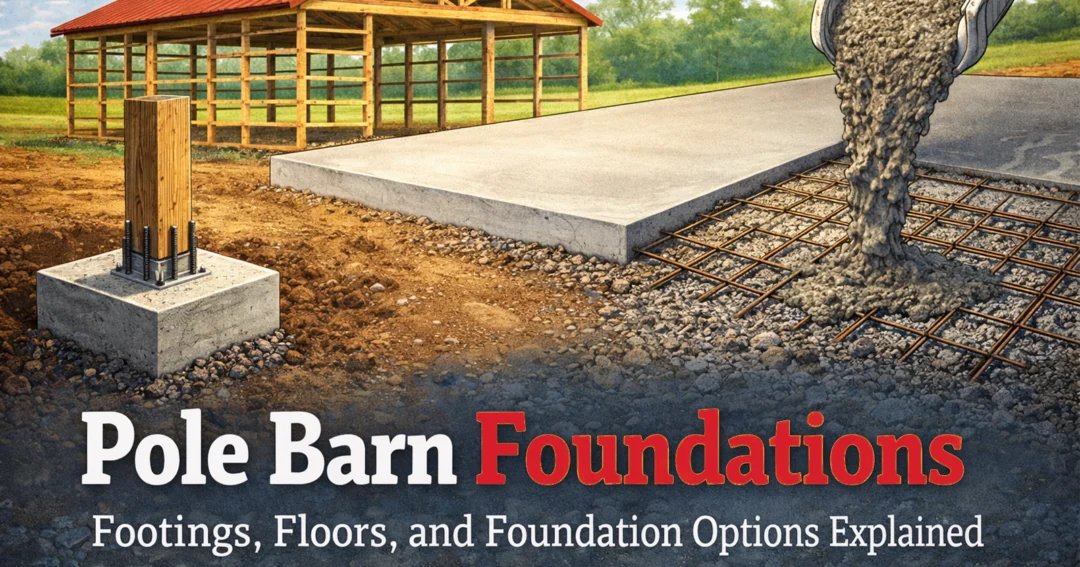
How your building is anchored to the ground has a significant impact on its long-term durability, especially in agricultural environments where moisture is a constant factor. The traditional approach is to set pressure-treated wood posts directly in the ground, which works reasonably well but carries the risk of rot over time, especially in wet soils.
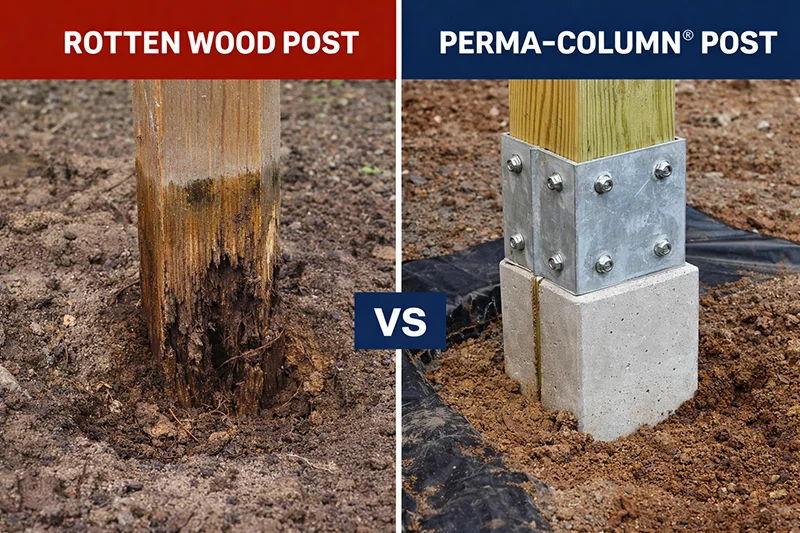
An increasingly popular alternative is Perma-Column, a precast concrete column system that eliminates wood-to-soil contact entirely. The concrete column is set in the ground and the wood post is connected above grade, dramatically extending the life of the building and reducing the risk of structural failure from post rot.
For agricultural buildings that are expected to last for generations and deal with constant moisture exposure from rain, irrigation, and livestock, Perma-Column is an upgrade that’s well worth the investment, and Steel Structures America uses Perma-column on every project.
What to Look for in an Agricultural Building Contractor
Not every building contractor is the right fit for agricultural projects. Farm buildings have specific requirements around sizing, function, and durability that take experience to get right. Here’s what to look for when evaluating contractors:
- Experience with agricultural and farm building projects specifically, not just residential or commercial construction
- Familiarity with local permit requirements for agricultural structures in your area
- The ability to provide engineered drawings if required by your county
- References from other farmers or ranchers in the area
- Clear communication about timelines and realistic scheduling
- A process that starts with understanding your operation before jumping to a design
At Steel Structures America, agricultural buildings are a core part of what we do. We work with farmers and ranchers throughout our service area to design and build structures that make sense for their specific operations, whether that’s a simple hay shelter or a large multi-bay equipment storage facility with an attached shop.
Agricultural Building Costs: What to Expect
Agricultural building costs vary widely depending on the type of building, the size, the foundation system, features like insulation and utilities, and local material and labor costs. That said, here’s a general sense of the ranges you can expect to work with:
- Basic open-sided shelters and hay barns: These are the most cost-efficient structures. Simple open-sided designs on smaller footprints are the most affordable agricultural building option.
- Equipment storage buildings: Mid-range cost depending on size and door configuration. Larger buildings with tall doors and concrete floors add cost but are well worth it for protecting expensive machinery.
- Farm shops: Higher cost due to insulation, electrical, concrete, and interior finishing. A well-outfitted farm shop is a significant investment but one that pays for itself quickly in reduced downtime and repair costs.
- Livestock facilities: Costs vary widely based on the level of fit-out required. A simple loafing shed is much less expensive than a fully equipped calving barn with pens, lighting, and utilities.
The best way to get an accurate number for your project is to reach out for a project-specific quote. We’ll ask the right questions, walk through your needs, and give you a realistic price based on exactly what you’re building.
Ready to Build Your Agricultural Building?
Steel Structures America serves farmers, ranchers, and agricultural businesses across Idaho, Washington, Oregon, Colorado, Montana, and the surrounding region. We build agricultural pole buildings and metal buildings that are designed for the specific demands of farm and ranch use, not adapted from residential or commercial designs.
Whether you need a hay barn, a cattle shelter, an equipment storage building, or a full farm shop, we can help you design and build the right structure for your operation. Reach out today to get the conversation started.
Call us at (800) 833-9997 or request a quote online to learn more about our agricultural building projects or get started on your project.