
Pole Barn Size Selector Guide: From Small Garages to Large Commercial Spans
If you are asking what size pole barn do I need, you are already thinking about this the right way. Getting the dimensions right before you build is one of the most important decisions of the entire project. Build too small and you will be frustrated within a few years. Build smart and your pole barn works for you for decades.
This guide is designed to help you match your actual use case to the right footprint. We will walk through every major size category, from small 20×20 garages to large 80×100 commercial spans, and give you clear guidance on which size fits what. If you want a full overview of pole barn dimensions and standard sizes in general, the Pole Barn Sizes Guide covers that ground. This article is focused specifically on helping you make your size decision.
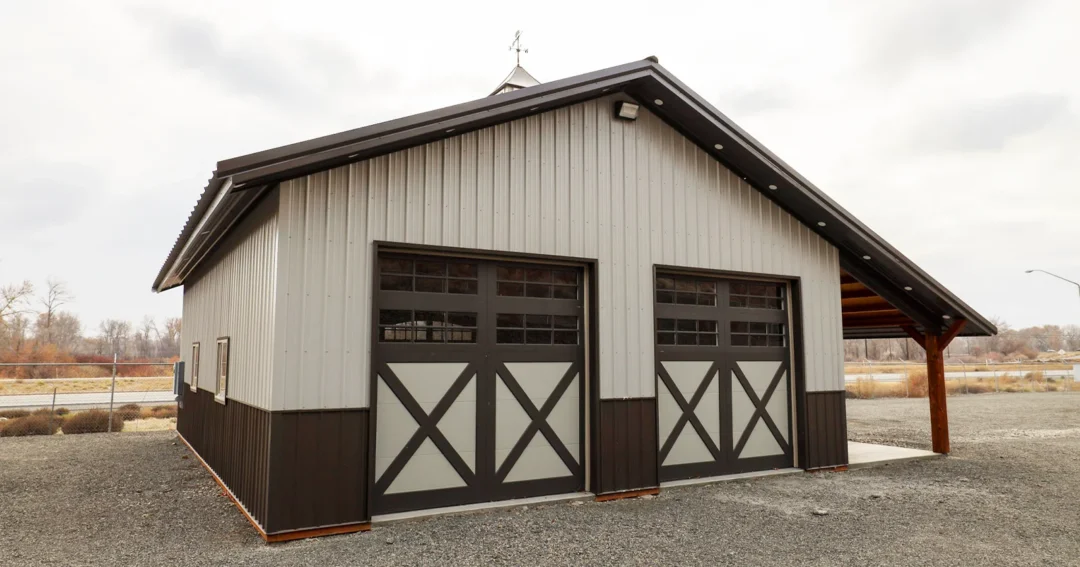
How to Think About Sizing a Pole Barn
Before getting into specific sizes, there are a few principles worth understanding that make the decision much clearer.
Most people size their pole barn for today. The buyers who are happiest with their buildings are the ones who sized for five years from now. It costs significantly less to go bigger during the initial build than to retrofit or add on later. If you are on the fence between two sizes, go with the larger one.
Width matters more than length. The width of your pole barn determines how many vehicles or pieces of equipment can fit side by side and affects the structural span of the building. Length is generally cheaper to add per foot and easier to plan around. If you have to compromise somewhere, a wider, shorter building usually serves buyers better than a narrow, long one.
Eave height is the third dimension that many buyers underestimate. A pole barn that is perfectly sized in footprint but too short for your tall truck, RV, or equipment is going to cause problems. Always plan your eave height based on the tallest thing you need to store, with at least 18 to 24 inches of clearance above it. In fact, we made a full article showing how pole barn square footage can be misleading here.
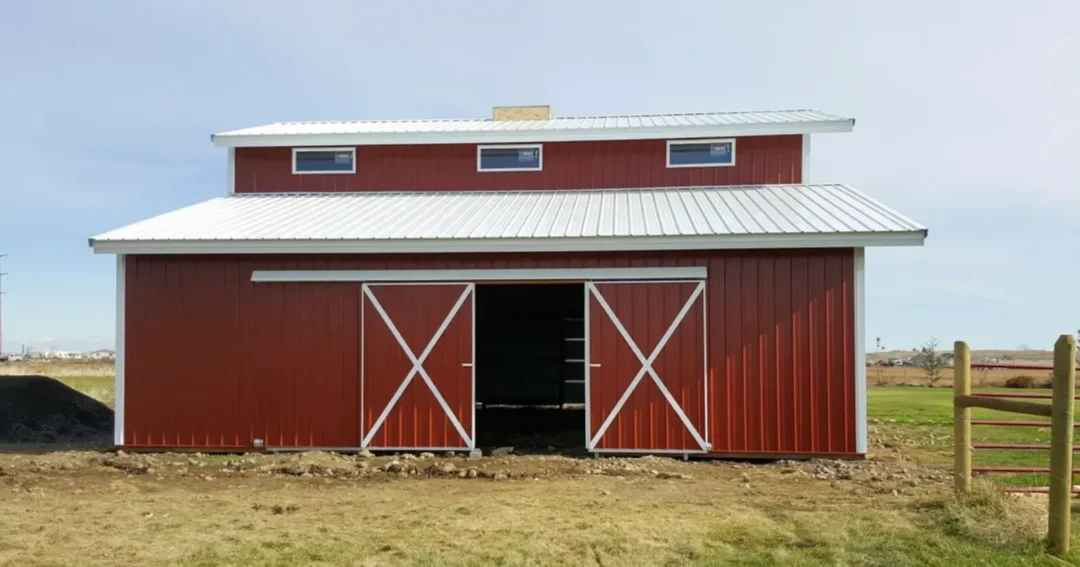
Don’t forget to take the roofing style in to consideration. We have a guide on monitor vs gambrel roofing designs here.
Small Pole Barns: 20×20 to 30×40
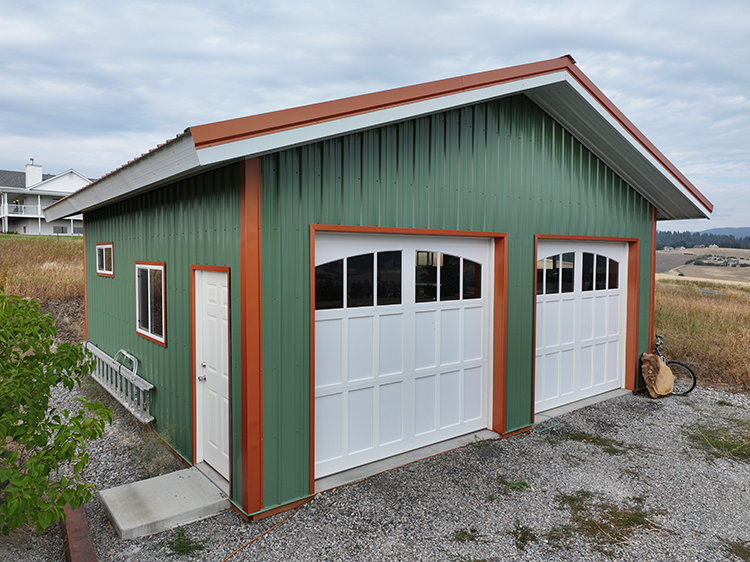
Small pole barns in this range are ideal for residential property owners who need a solid garage or basic workshop without a full commercial-scale build. These sizes are some of the most common for hobby shops, single-vehicle storage, and general outbuildings.
We put a complete guide to small pole buildings together here.
20×20 Pole Barn
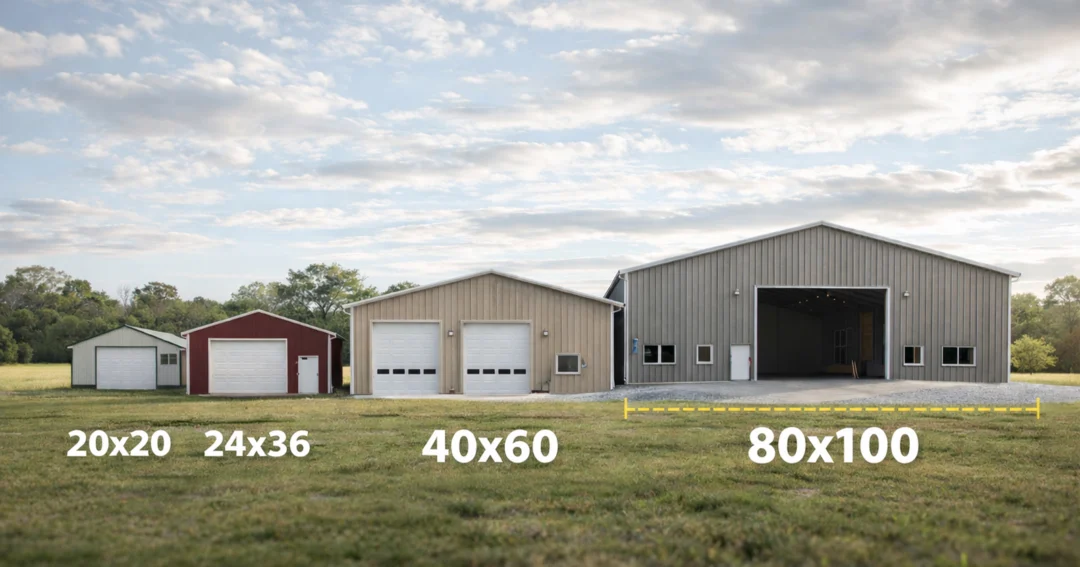
A 20×20 pole barn gives you 400 square feet of floor space. This is the smallest footprint worth building in post-frame construction and works well for a single-car garage, a compact storage building, or a small workshop for lighter projects. Keep in mind that a standard full-size pickup takes up most of a 20-foot-wide interior, so if you plan to park a truck and still move around it comfortably, a 24-foot width will feel much better.
24×24 Pole Barn
The 24×24 pole barn is one of the most popular small builds. At 576 square feet, it functions well as a single-car garage with room along the walls for workbenches, shelving, and basic tool storage. It is a classic square footprint that feels efficient and organized. If you are planning a true single-car garage with a workspace on the side, a 24×24 is a strong starting point.
24×36 and 30×40 Pole Barns
These sizes represent the sweet spot for two-car garages and light hobby shops. A 24×36 gives you around 864 square feet, which comfortably fits two vehicles with a small workshop area at the back. A 30×40 expands that to 1,200 square feet, adding meaningful room for a dedicated workbench area, equipment storage, or a third vehicle.
For most residential buyers building their first serious outbuilding, a 30×40 is a very common recommendation. It handles the core uses well and leaves enough flexibility that you are not cramped immediately.
Mid-Size Pole Barns: 30×48 to 40×80
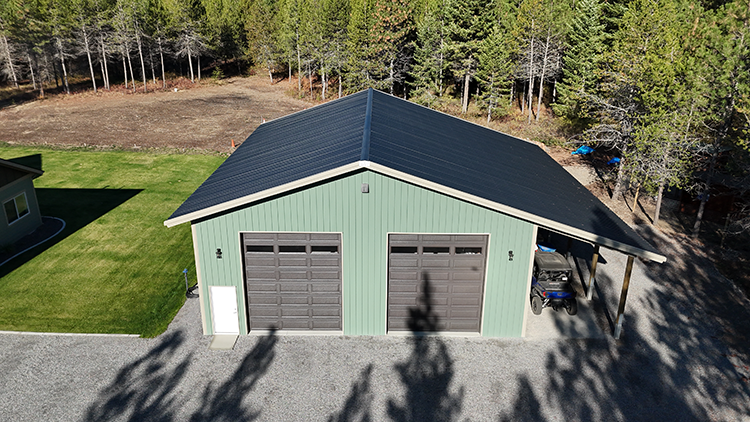
Mid-size pole barns are where the building starts to feel like a serious structure. These sizes serve a wide range of buyers including workshop and hobby shop owners with larger collections, contractors, farmers with smaller operations, and anyone building an RV storage facility.
30×48 and 30×50 Pole Barns
Adding 8 to 10 feet of length beyond a 30×40 makes a real difference in how the space lays out. A 30×50 gives you 1,500 square feet, enough to create a dedicated rear workshop zone that is separated from the parking bays by layout, not just by hope. Contractors often prefer this configuration because the back of the building becomes a proper work area while the front handles vehicles and equipment.
40×60 Pole Barn
The 40×60 is widely considered the most versatile pole barn size. At 2,400 square feet, it comfortably handles three to four vehicles, a full workshop area, and additional storage without the space feeling crowded. The 40-foot width also allows for a true clear-span interior without interior support columns, which means maximum usable floor space.
This is the recommended size for a pole barn size for equipment if your operation is mid-scale. It fits most agricultural equipment used on smaller farms, a boat or RV alongside vehicles, or a full contractor shop setup with room for trailers and work vehicles.
40×80 Pole Barn
A 40×80 pole barn gives you 3,200 square feet, which opens up serious capability. The extra 20 feet of length compared to a 40×60 can be used for an enclosed office or bathroom, a dedicated rear shop area, or simply more parking and equipment space. At this size, you are also looking at more door configuration options, and many buyers opt for three overhead doors across the front with a rear access door for drive-through flow.
Large Pole Barns: 50×100 to 60×100
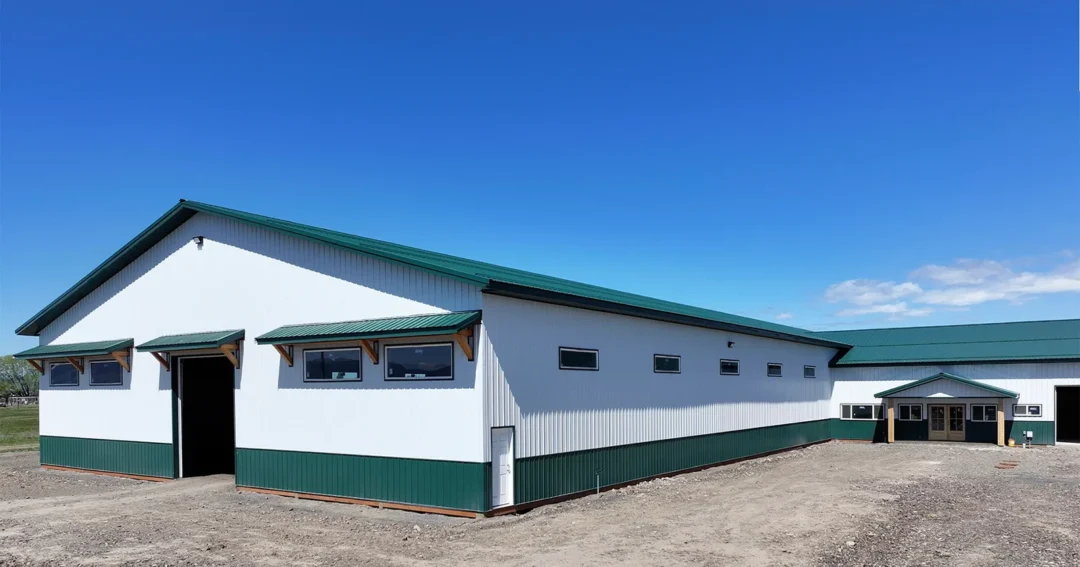
Once you move into the large pole barn category, the building is handling serious agricultural or commercial workloads. These sizes require more engineering consideration and are best planned in consultation with a contractor from the start.
| Size | Sq Ft | Best Use Cases |
| 50×100 | 5,000 | Large farm equipment, light commercial warehouse, equipment dealer storage |
| 60×100 | 6,000 | Commercial storage, large agricultural operations, drive-through equipment buildings |
| 60×120 | 7,200 | Full commercial, multiple large equipment bays, semi-truck access |
| 80×100 | 8,000 | Large commercial, industrial storage, major farm operations |
50×100 Pole Barn
A 50×100 pole barn is 5,000 square feet, comparable to a small commercial warehouse. At this scale, the building can handle large combine and tractor storage, multiple work bays, a hay or grain storage layout, or a full commercial shop with office space. The 50-foot span requires heavier structural components to maintain a clear interior, so structural planning is an important part of the budget conversation.
60×100 Pole Barn
A 60×100 pole barn steps into genuine commercial territory at 6,000 square feet. This is a large pole barn by any measure, commonly used for agricultural operations with large equipment fleets, commercial storage facilities, and businesses that need drive-through capability. At 60 feet wide, you have enough room for large equipment to enter one end, maneuver inside, and exit the opposite side, which is a common layout for serious agricultural drive-through buildings.
80×100 Pole Barn
The 80×100 pole barn is one of the largest standard post-frame configurations at 8,000 square feet. Buildings at this size are used for major farming operations, equipment dealers, commercial warehouse users, and large businesses needing significant covered workspace. Every build at this scale involves custom engineering, and project planning should start well before any construction timelines are set.
Pole Barn Size for 2 Cars: Getting It Right
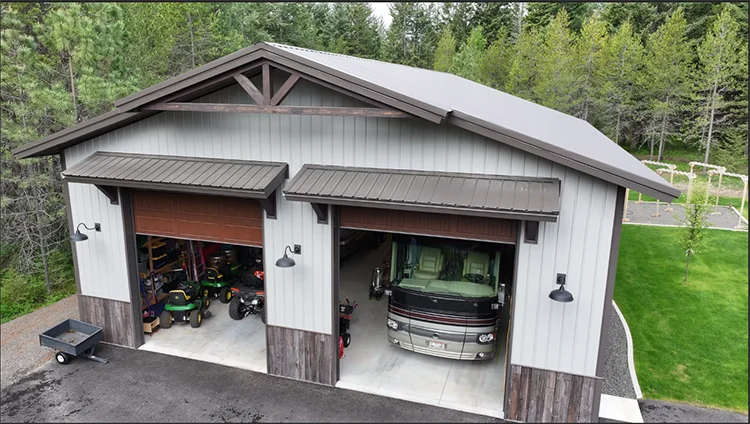
If you are primarily building a garage for two vehicles, here is what you actually need to know to get the sizing right.
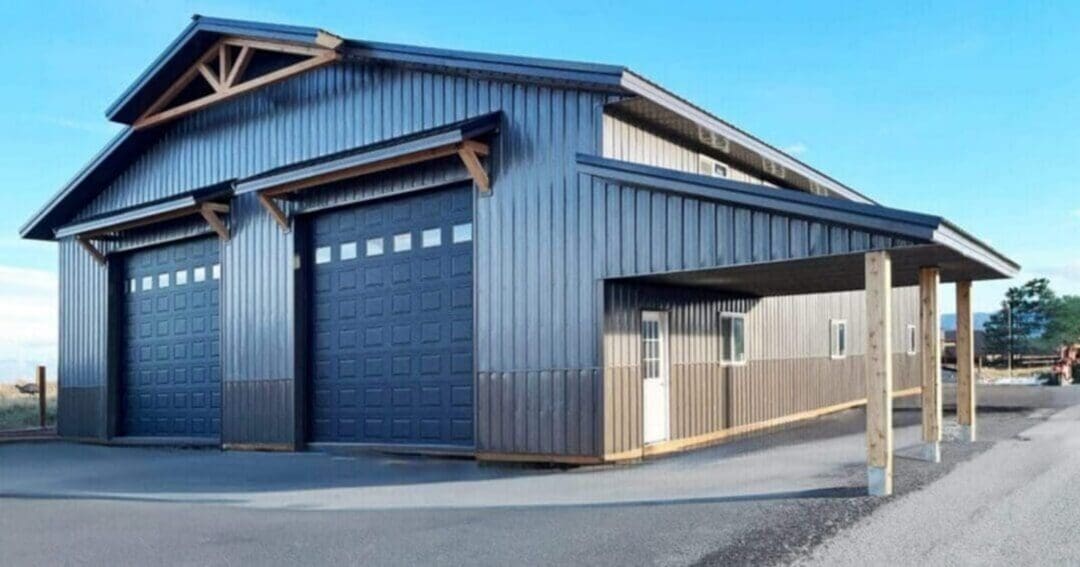
The minimum comfortable width for a two-car garage with two standard overhead doors is 24 feet. However, in a 24-foot-wide building, you are parking two vehicles with almost no room on the sides or between them. For most buyers, 30 feet of width is where a two-car garage starts to feel generous. It allows you to open both doors fully without risking damage to the other vehicle or the wall.
On length, a minimum depth of 24 feet works for standard passenger cars, but full-size trucks and SUVs need at least 28 to 30 feet of interior depth to close the door behind them comfortably. If you are also storing lawn equipment, motorcycles, or want any workshop space, plan on at least 36 to 40 feet of length.
A 30×40 pole barn is the most commonly recommended size for a genuine two-car garage with usable space. A 30×50 or 30×60 gives you a dedicated back workshop area that keeps the parking bays clean.
Pole Barn Size for Equipment Storage
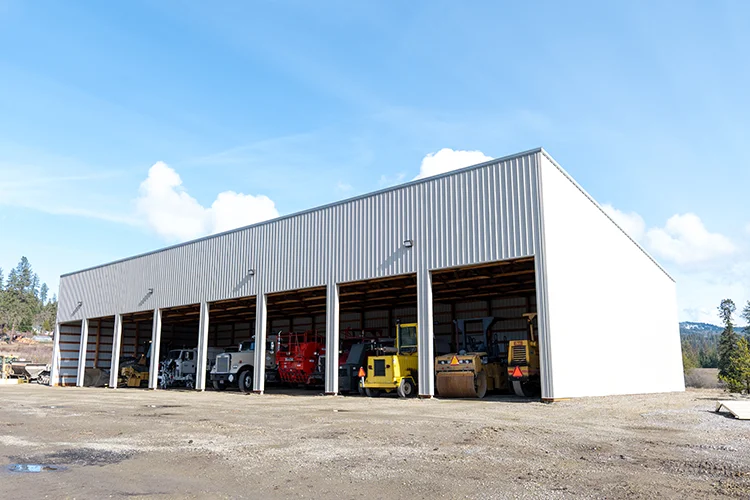
Farm equipment and large recreational equipment require a different sizing approach than a standard garage. The key measurements to get right are door width, door height, and turning radius inside the building.
For agricultural equipment, the most common mistake is underestimating door width. A standard combine header can be 25 to 35 feet wide. That obviously will not fit through any standard door, but the combine head is typically removed for storage. Even so, the combine body itself can be 12 to 15 feet tall and 10 to 14 feet wide, requiring a large door opening and generous interior clearance.
As a general guide for a pole barn size for equipment at different scales:
- Compact tractor and small implements: 30×40 to 40×60 with 12-foot eave minimum
- Full-size tractors and row crop equipment: 40×60 to 50×80 with 14-foot eave
- Combine and large harvesting equipment: 50×100 to 60×100 with 16-foot eave or taller
- Semi-trucks and large commercial equipment: 60×100 or larger with 16 to 18-foot eave
Always measure the tallest and widest equipment you expect to store before finalizing your building dimensions. Then add meaningful clearance on all sides for safe movement and maintenance access.
Using a Pole Barn Size Calculator Approach
There is no single magic number that applies to every buyer, but you can use a simple decision framework to arrive at your size. Think of this as a manual pole barn size calculator.
| Your Situation | Starting Size Recommendation |
| 1 vehicle, basic storage | 20×24 to 24×30 |
| 2 vehicles, some workshop space | 30×40 to 30×50 |
| 3 vehicles or RV/boat storage | 36×48 to 40×60 |
| Contractor shop with vehicles and equipment | 40×60 to 40×80 |
| Small farm equipment (tractors, implements) | 40×60 to 50×80 |
| Large agricultural or commercial use | 50×100 to 80×100+ |
These are starting points, not final answers. Every build has unique variables like setback requirements, terrain, budget, and future plans that affect the final decision. Use this as a first filter and refine from there.
Questions to Ask Before You Finalize Your Size

Before you commit to dimensions, run through these questions. They tend to surface the details that cause regret if missed.
- What is the largest vehicle or piece of equipment I own now, and what might I purchase in the next five years?
- Do I want a separate workspace inside the building, and if so, how large does it need to be to be genuinely useful?
- Am I planning a barndominium or living quarters at any point? That changes the size and layout conversation significantly.
- What are my local setback requirements from property lines, roads, and other structures?
- Do I want a lean-to addition now or in the future? If so, does the building placement and width account for it?
- Will I need a bathroom, office, or mechanical room inside the building? Plan for those before finalizing the length.
Ready to Talk Sizes with a Contractor?
Steel Structures America builds pole barns across Idaho, Washington, Oregon, Colorado, Montana, and surrounding states. Whether you are starting with a 24×24 in mind or planning a large 60×100 commercial span, we can help you work through the details and get the dimensions right before you build.
Call us at (866) 490-4012 or reach out online to start the conversation.