
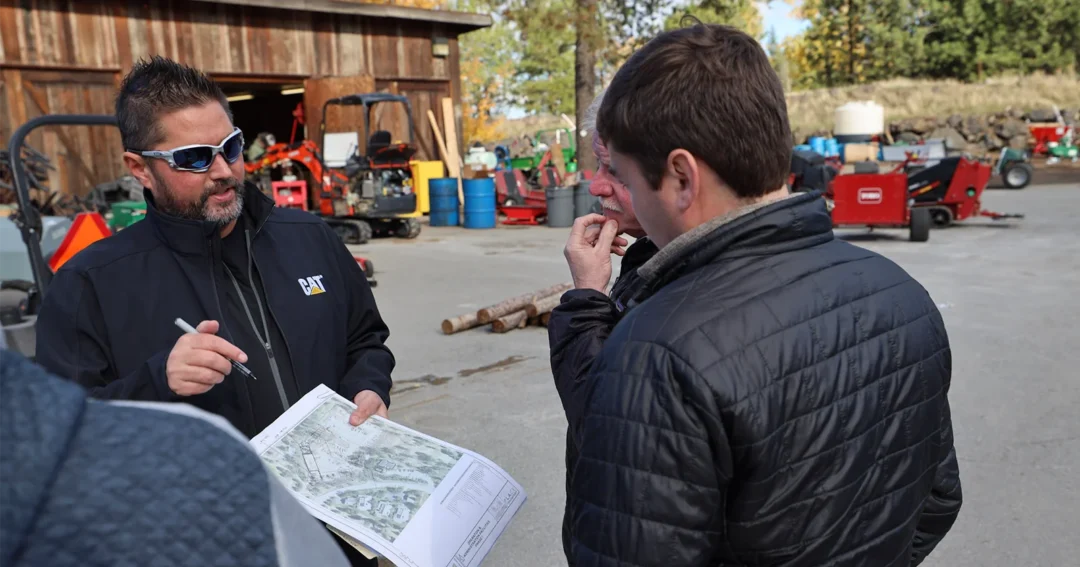
How to Find the Right Post-Frame or Metal Building Contractor
Finding a good pole barn contractor or metal building builder near you is one of the most important decisions you will make on your entire project. Get it right and the build goes smoothly, the quality holds up for decades, and you have someone you can actually call if something needs attention afterward. Get it wrong and you are looking at cost overruns, poor workmanship, or in the worst cases, a contractor who takes a deposit and disappears.
This guide is designed to give you a practical framework for finding, vetting, and hiring the right contractor for a post-frame or metal building project. We will walk through where to look, what to look for, what questions to ask, and which warning signs to take seriously.
Post-Frame vs. Metal Building Contractors: Is There a Difference?
Before diving into the hiring process, it helps to understand that post-frame building contractors and metal building contractors are sometimes the same company and sometimes quite different.
Post-frame contractors specialize in the pole barn construction method, setting large structural posts, installing engineered trusses, attaching girts and purlins, and finishing the exterior with metal panels. Some post-frame contractors also build barndominiums and residential shop-homes, which require additional skill sets around interior finishing, insulation, and residential code compliance. Steel Structures America is one of these contractors.
Metal building contractors typically work with pre-engineered steel building packages: rigid steel frames that are designed, fabricated, and delivered as a kit, then erected on a concrete slab foundation. Some contractors specialize exclusively in one type; others are comfortable with both.
If you want to understand the structural differences between these two building systems before you start talking to contractors, our article What Is Post-Frame Construction? How Pole Barns Are Built covers that in detail. Knowing the basics will help you ask smarter questions and recognize whether a contractor actually understands the system they are proposing to build.
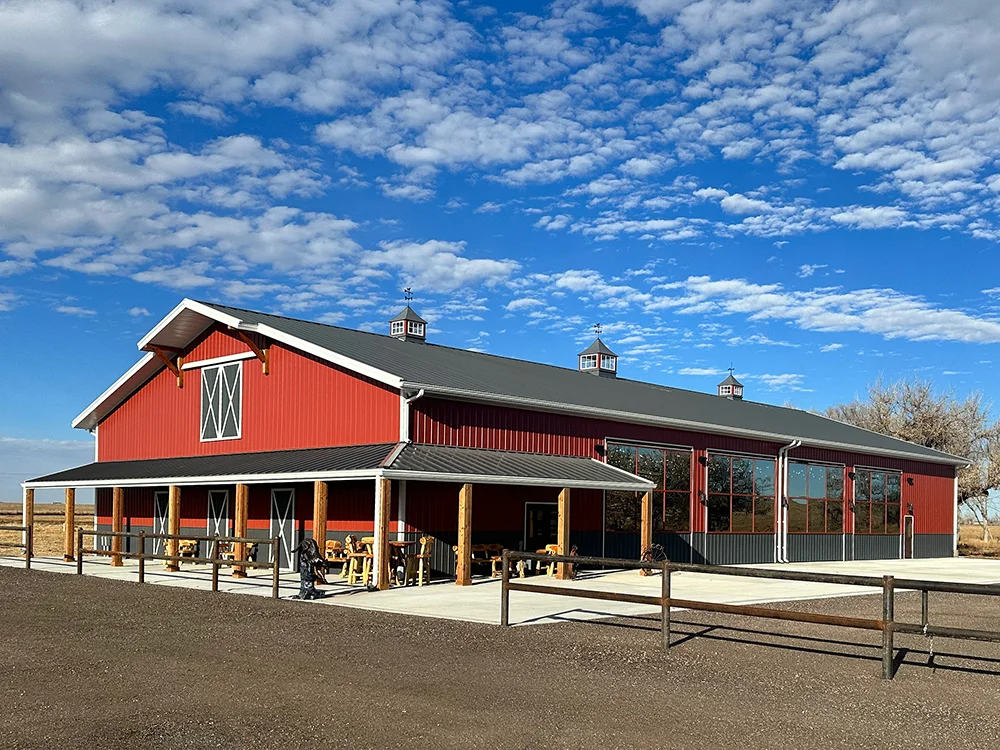
Where to Find Qualified Contractors
Start With Local Referrals
The most reliable way to find a good contractor is still a referral from someone who has been through the process. Ask neighbors, farmers, ranchers, or business owners in your area who have recently built a pole barn or metal building who they used and whether they would hire them again. A firsthand account of how a contractor performs on the job, communicates during the project, and stands behind their work after completion is worth more than any online review.
Search Online With Specific Intent
Searching for a pole barn contractor near you or a metal building builder in your county will surface local options. Pay attention to businesses that have been operating in your area for several years, have a real physical address, and show actual completed projects in their portfolio rather than stock photos.
Check Manufacturer and Supplier Networks
Many building material manufacturers and component suppliers maintain dealer or contractor networks. Builders who are affiliated with specific manufacturers have typically gone through a vetting process and have access to manufacturer support and warranties. This is not a guarantee of quality, but it is a meaningful signal that the contractor is an established business.
Steel Structures America is a Perma-Column partner and works with a consistent network of suppliers across Idaho, Washington, Oregon, Colorado, and Montana. If you are in our service area, we are glad to be on your list.
Talk to Your Local Lumber Yard or Building Supply Store
Regional lumber yards and building material suppliers often know who the active, reliable builders in an area are because those contractors are the ones buying materials consistently and paying their accounts. It is a simple question to ask and often yields a useful short list of names.
How to Vet a Contractor Before You Commit

Once you have a list of candidates, the vetting process matters more than most buyers realize. Here is a structured way to evaluate each contractor:
Verify Licensing and Insurance
This is non-negotiable. Before you go any further, confirm that the contractor holds the required contractor license for your state and carries both general liability insurance and workers compensation coverage. Ask for certificates of insurance directly. A legitimate contractor will provide them without hesitation.
If an unlicensed or uninsured contractor is injured on your property, or causes damage during construction, your exposure as the property owner can be significant. Licensing also signals that the contractor has met the minimum competency and financial requirements your state sets for building professionals.
Review Their Portfolio of Completed Projects
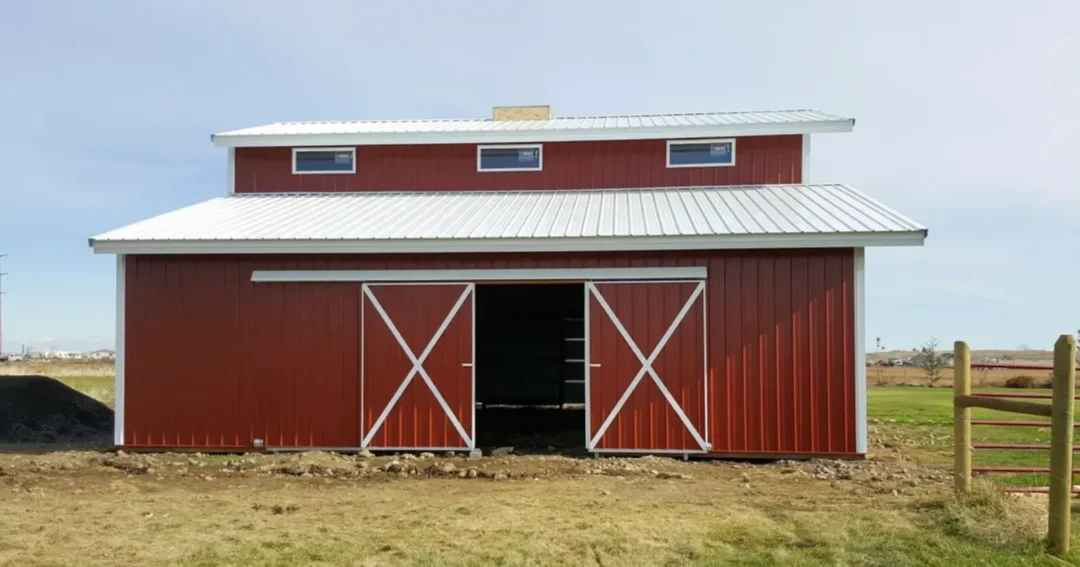
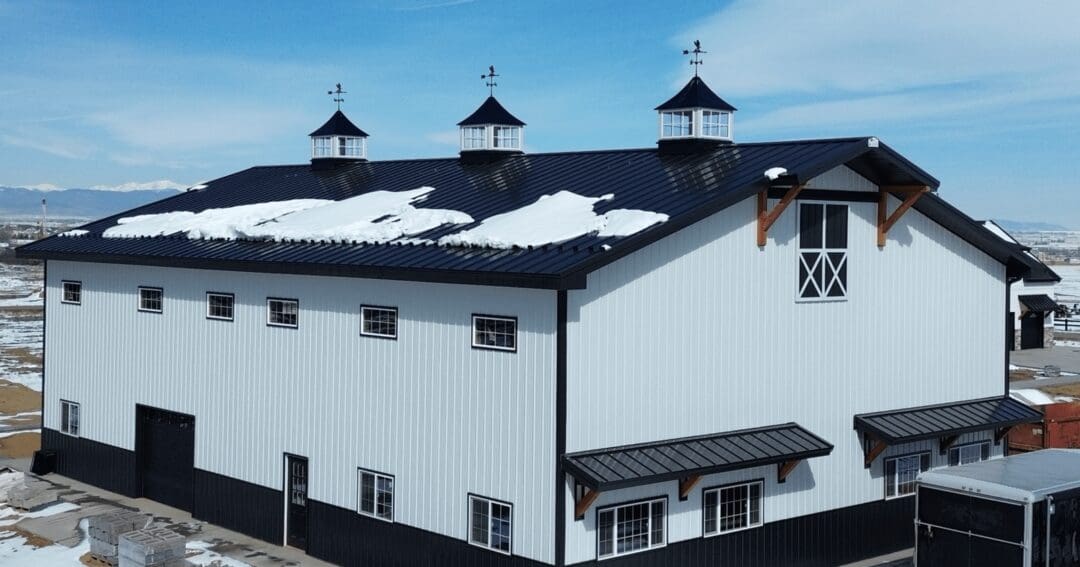
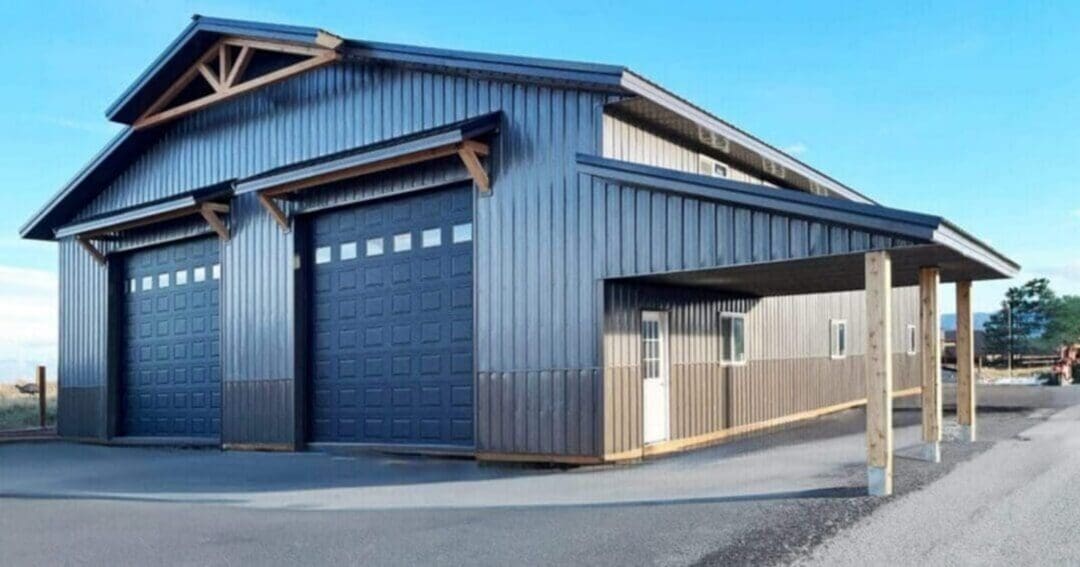
Ask to see photos or, better yet, visit completed projects in person. Look for buildings that are similar in type and scale to what you want to build. A contractor who primarily builds basic agricultural storage buildings may not be the right fit for a finished barndominium with living quarters, and vice versa.
Pay attention to the quality of the details: are the siding panels straight and evenly spaced? Are the trim pieces clean and well-fitted? Are the overhead door openings plumb and square? Quality at the detail level is usually a reliable indicator of overall workmanship.
Check References — and Actually Call Them
Ask every contractor you are seriously considering to provide references from recent clients; specifically clients who built projects similar to yours in the past two or three years. Then call those references. Useful questions to ask:
- Did the project come in close to the original quote, or were there significant cost additions along the way?
- Was the contractor easy to communicate with during the project?
- Did construction stay on schedule, or were there significant delays?
- Were there any quality issues after completion, and if so, how did the contractor respond?
- Would you hire them again?
A contractor who hesitates to provide references, or who can only provide references from projects completed several years ago, is worth a second look before proceeding.
Understand Their Subcontractor Relationships
Many contractors use subcontractors for portions of the work such as concrete, electrical, plumbing, and insulation. Ask who will be performing each phase and whether those subcontractors are licensed and insured as well. On a well-run project, the general contractor takes responsibility for the quality of all work on the site, including subcontractors. Make sure that expectation is clear before you sign.
Evaluate How They Communicate
How a contractor communicates during the pre-sale process is usually a preview of how they will communicate during construction. Do they return calls and emails promptly? Do they give you clear, direct answers? Are they willing to put things in writing? Contractors who are vague during the quoting process, slow to respond, or who pressure you to sign quickly without time to review the details are not the contractors you want managing your project.
Getting and Comparing Quotes
Getting multiple quotes is standard practice, but comparing them accurately requires knowing what to look for. A quote that looks significantly lower than the others is not necessarily the best deal. It may simply be missing line items that will show up as change orders once the project is underway.
When you receive quotes, make sure each one clearly specifies:
- The exact dimensions of the building (width, length, eave height, and peak height)
- The post size, spacing, and embedment depth or foundation system
- The truss design and engineering specifications
- The roofing and siding panel profile, gauge, and color
- The size, quantity, and type of overhead doors and entry doors
- Whether concrete work is included and at what specifications
- Whether electrical rough-in is included
- What insulation, if any, is included
- The permit allowance, if permits are being pulled by the contractor
- The payment schedule and any deposit requirements
- The warranty on labor and materials
If any of these items are missing from a quote, ask for clarification in writing before you proceed. Scope gaps are where budget surprises come from.
Questions to Ask a Pole Barn or Metal Building Contractor
Here is a reference list of questions worth asking during your contractor conversations. You do not need to ask all of them in every situation, but having them in front of you ensures you cover the ground that matters most.
| Question | What You Are Learning |
| How long have you been building post-frame or metal buildings in this area? | Experience level and familiarity with local codes and soil conditions |
| Are you licensed and insured? Can you provide certificates? | Baseline qualification check — non-negotiable |
| Will you pull the building permits, or is that my responsibility? | Who handles the permit process and whether it is included in the price |
| Do you provide engineered drawings as part of your quote? | Whether the structural engineering is included or an added cost |
| What foundation system do you use? In-ground posts, Perma-Column, or concrete slab? | Insight into their build quality and how they handle long-term durability |
| What is your typical construction timeline for a project like this? | Project scheduling and whether their timeline fits yours |
| Who will actually be on my job site? Your own crew or subcontractors? | Accountability and quality control on the ground |
| Can I visit a recently completed project similar to mine? | Direct assessment of finished work quality |
| What does your warranty cover and for how long? | Post-completion accountability and workmanship confidence |
| What is your payment schedule? | Financial structure of the project and deposit risk |
| What is your process if something needs to be fixed after the build is complete? | How they handle warranty claims and callbacks |
| Have you built in my county before, and are you familiar with the local permit requirements? | Local experience and whether they understand your jurisdiction |
Red Flags to Watch For
Most contractors are legitimate businesses doing honest work. But there are patterns worth knowing about that suggest a contractor may not be the right fit or may be a genuine risk to your project.
| Red Flag | Why It Matters |
| Cannot provide proof of insurance or a contractor license number | No insurance means you carry the risk for any on-site injury or damage |
| Reluctant to provide a written contract or detailed quote | Verbal agreements leave you with no recourse when disputes arise |
| Pressure to sign quickly or warns the price will go up | Sales pressure tactics are common with contractors who struggle to win work on merit |
| No physical address or established local presence | Traveling operations often have no local accountability after the project ends |
| References are unavailable or only from several years ago | Recent references reflect how the contractor performs today |
| Quote is dramatically lower than everyone else | Often signals missing scope, inferior materials, or a plan to recover margin through change orders |
| Vague or evasive answers to direct technical questions | A contractor who builds these structures regularly should speak confidently about their process |
Understanding the Contract Before You Sign
Once you have selected a contractor and are ready to move forward, the contract is your primary protection. Before signing, make sure the contract includes:
- A complete scope of work with building specifications
- The total contract price and a detailed breakdown of what is included
- The payment schedule tied to construction milestones, not arbitrary dates
- A start date and an estimated completion timeline
- A change order process — how scope changes are documented, priced, and approved
- Who is responsible for pulling permits and paying permit fees
- Warranty terms for both materials and labor
- A dispute resolution process
A good contractor will not have a problem with a client who reads the contract carefully. In fact, it’s usually a signal that both parties are going into the project with clear expectations, which makes the whole build go more smoothly.
A Note on Permits and the Contractor’s Role
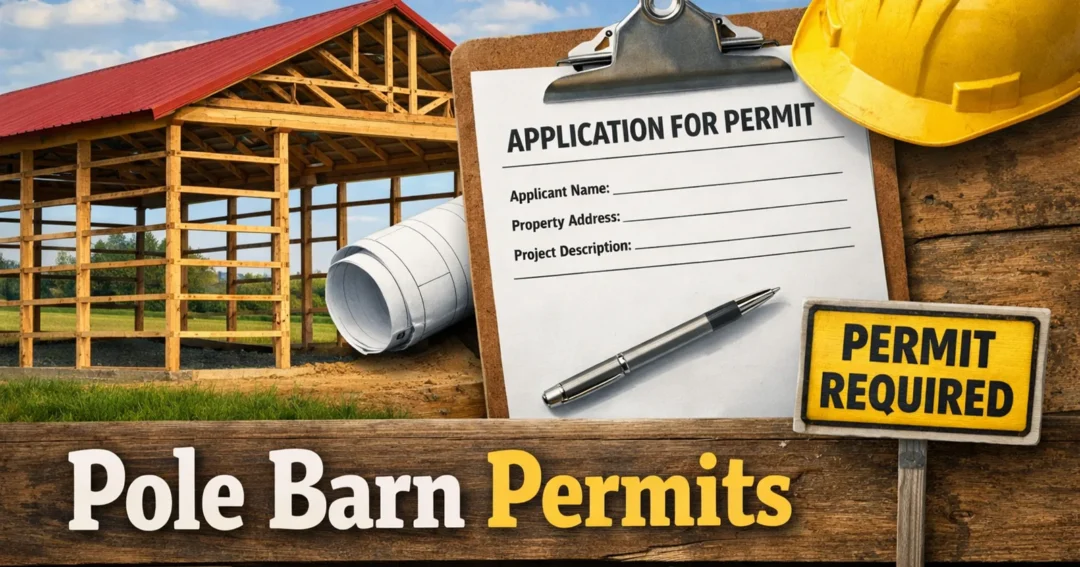
Permits are worth discussing specifically with any contractor you are considering. In some cases the contractor pulls the permits as part of their service. In others the property owner is responsible for obtaining permits before construction begins. Either arrangement can work. What matters is that it is clearly documented before the project starts. Our dedicated guide, Pole Barn Permits and Building Codes: What You Need to Know, covers what the permit process typically involves, what building codes require, and how to navigate the conversation with your local building department.
Why Local Experience Matters
One of the most underrated factors in contractor selection is genuine local experience. A contractor who has been building in your county for years knows the local building department and its typical requirements, understands local soil conditions and frost depths, has established relationships with local material suppliers and subcontractors, and knows what works and what causes problems in your specific climate and terrain.
This kind of local knowledge cannot be replicated by a contractor who is new to your area or traveling in from a distant market. When something unexpected comes up during a project (and something always does) a locally rooted contractor is far better equipped to handle it quickly and correctly.
Steel Structures America is based in Post Falls, Idaho, and builds across Idaho, Washington, Oregon, Colorado, and Montana. Our team works in these markets every day and knows the local rules, conditions, and suppliers. If your project is in our service area, we would be glad to talk through your build.
To see how our family of brands support better projects, read this article.