
Pole Barn Sizes: Complete Guide to Dimensions, Layouts, and What Fits
Pole barn sizes range from compact 20×30 footprints all the way up to sprawling 60×100 structures and beyond, which means there is a lot of ground to cover before you commit to a size for your build. Whether you are planning a simple two-car garage, a hobby shop, a farm equipment shelter, or a large commercial building, getting the dimensions right from the start saves you money, frustration, and the regret of wishing you had gone bigger.
This guide walks you through every major standard pole barn size, what each one is good for, and how to think about dimensions before you start talking to a contractor. If you already have a general size in mind and want help narrowing it down to your exact use case, check out our Pole Barn Size Selector Guide for a deeper decision-focused walkthrough.
Why Pole Barn Dimensions Matter More Than You Think
A pole barn is not something you renovate in a few years. When you build one, you are laying a foundation (literally) for how you use that property for decades. The dimensions you choose affect everything from how many vehicles you can store comfortably, to whether your equipment fits through the doors, to how much flexibility you have for future uses.
Two things that trip people up most often when choosing pole barn sizes:
- They plan for what they have now, not what they might have in five years.
- They forget to account for door placement, interior clearance, and how space actually gets used.
A 30×40 pole barn sounds like plenty of room until you realize a full-size pickup truck with the doors open takes up nearly half of a 30-foot-wide bay, and you still need room to walk around it, store tools, and maybe fit a second vehicle. Sizing up a little almost always feels smart in hindsight.
How Pole Barn Dimensions Are Listed
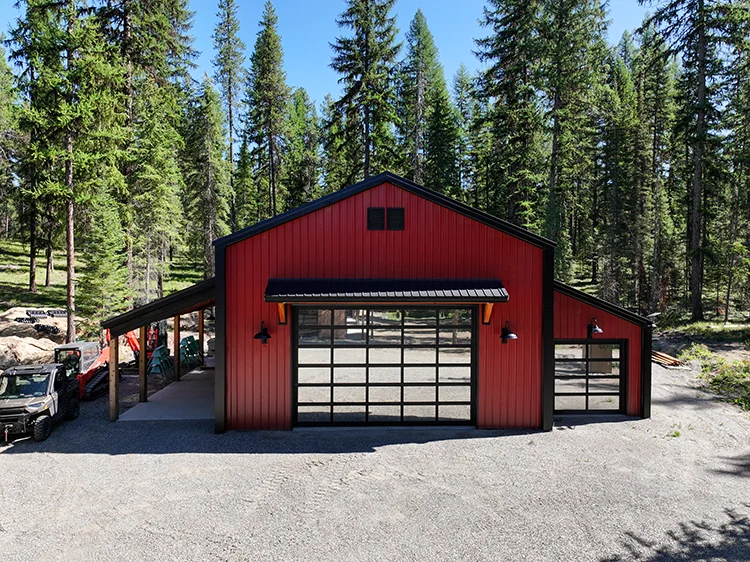
Pole barn sizes are almost always given as width x length. Width is the distance from eave to eave (the span of the building), and length is how far back the building runs. Height is listed separately, typically as the eave height, which is the distance from the ground to the bottom of the roof line.
Standard eave heights for pole barns run from about 10 feet on smaller residential buildings up to 16 feet or higher on larger agricultural and commercial structures. If you are storing tall equipment like a combine or a large RV, eave height becomes just as important as footprint.
Standard Pole Barn Sizes at a Glance
Here is a quick reference for the most common standard pole barn sizes and what they are typically used for.
| Size | Square Footage | Common Uses |
| 20×30 | 600 sq ft | Single-car garage, small storage shed, hobby workshop |
| 24×24 | 576 sq ft | Single-car garage, small workshop, storage |
| 24×36 | 864 sq ft | Two-car garage, small equipment storage |
| 30×40 | 1,200 sq ft | Two-car garage, hobby shop, small farm storage |
| 30×48 | 1,440 sq ft | Two-car garage with workshop, small equipment |
| 30×50 | 1,500 sq ft | Two or three-car garage, hobby shop, contractor storage |
| 40×60 | 2,400 sq ft | Three-car garage, contractor shop, farm equipment storage |
| 40×80 | 3,200 sq ft | Large shop, multi-vehicle storage, small commercial use |
| 50×100 | 5,000 sq ft | Large farm building, light commercial, equipment storage |
| 60×100 | 6,000 sq ft | Commercial, large equipment, agricultural storage |
| 80×120+ | 9,600+ sq ft | Large commercial or agricultural, heavy equipment |
Small Pole Barn Sizes: 20×30 to 30×50
Small pole barns in the 600 to 1,500 square foot range are some of the most popular builds for residential property owners. They cover everything from a simple garage replacement to a dedicated hobby shop or small farm outbuilding.
20×30 Pole Barn
A 20×30 pole barn gives you 600 square feet of floor space, which is on the smaller end but still plenty useful. This size works well as a single-car garage, a small storage building, or a basic hobby shop. If you are mostly storing lawn equipment, a motorcycle, small tools, and yard supplies, a 20×30 can handle it. It is a popular choice for properties where space is limited or budget is a primary concern.
Keep in mind that a standard single-car overhead door is typically 8 to 9 feet wide, and a full-size truck will take up most of the 20-foot width. If you are storing a larger vehicle, it is worth considering a 24-foot width to give yourself more comfortable clearance.
24×24 Pole Barn
The 24×24 is a classic single to small double-car garage size. At 576 square feet, it is just slightly smaller than a 20×30 but is a more square footprint, which some people prefer for garage and workshop layouts. You can fit one vehicle comfortably and still have room along the walls for tools, workbenches, or storage shelves.
30×40 Pole Barn
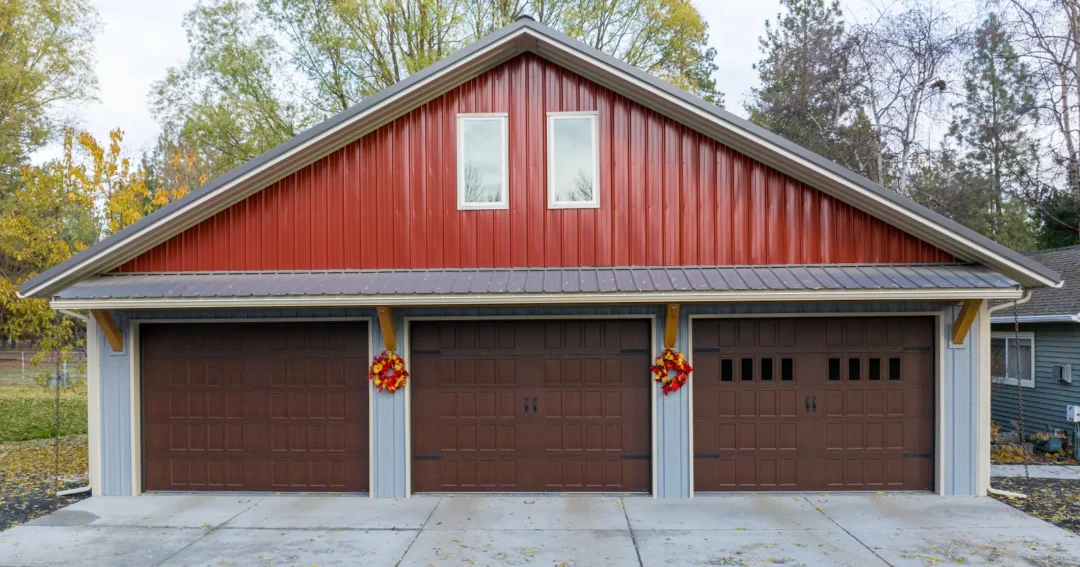
A 30×40 pole barn is one of the most popular sizes for residential pole barn builds. At 1,200 square feet, it gives you room for two vehicles side by side along with a dedicated workspace. A standard layout might include two 10-foot-wide overhead doors at the front, leaving a 10-foot section along one wall for a workbench and tool storage.
This size is a great fit for hobby shops, small contractor storage, light agricultural use, and anyone who wants a versatile outbuilding that handles most day-to-day needs. If you are storing a side-by-side, small tractor, or a couple of ATVs along with your vehicles, a 30×40 is a solid starting point.
30×48 and 30×50 Pole Barns
Adding 8 to 10 feet of length to a 30×40 opens up a meaningful amount of extra space. A 30×48 or 30×50 gives you between 1,440 and 1,500 square feet, which allows for a three-car layout or a dedicated rear workshop area separate from the parking bays. These sizes are popular for contractors who want a shop where the front holds vehicles and equipment and the back has a clean workspace for projects.
Mid-Range Pole Barn Sizes: 40×60 to 40×80
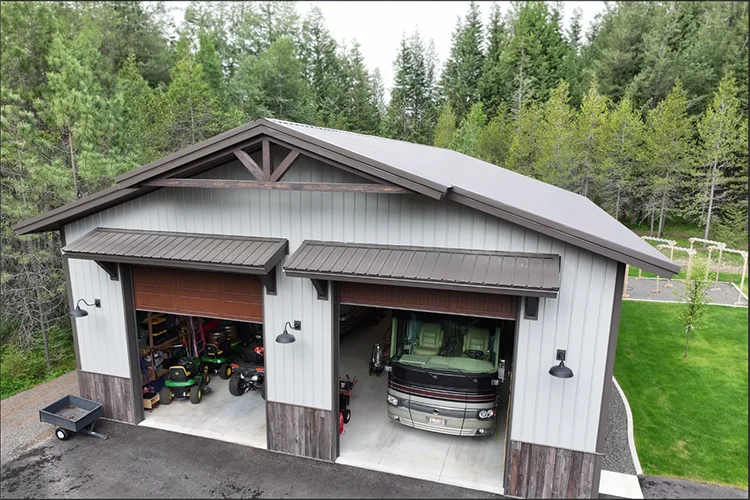
Once you move into the 40-foot width, the building starts to feel like a serious structure. These sizes serve a much wider range of buyers, from large hobby shop owners and contractors to farmers and small commercial operations.
40×60 Pole Barn
The 40×60 pole barn is probably the most versatile size in the lineup. At 2,400 square feet, it handles almost any residential or light commercial use case comfortably. You can fit three or four vehicles, a full workshop area, and an enclosed office or storage room without crowding the space.
Common uses for a 40×60 include:
- Contractor shop with vehicle storage and workspace
- Farm equipment storage for smaller operations
- Hobby shop or home gymnasium
- RV and boat storage
- Barndominium or shop-home combination
The 40-foot width also makes it easier to clear-span the building without interior columns, which is a big advantage for usable floor space. If there is one size that delivers the best balance of cost, space, and functionality for most buyers, a 40×60 is it.
40×80 Pole Barn
A 40×80 gives you 3,200 square feet, which is enough for a large contractor or trade shop with multiple work bays, a commercial equipment storage facility, or a mid-size agricultural building. The extra 20 feet of length compared to a 40×60 is often used for a dedicated shop area at the rear of the building, a large lean-to connection, or simply more vehicle and equipment parking space.
At this size, you are also starting to think about more doors. Many 40×80 layouts include two or three overhead doors along the front and sometimes a rear access door for drive-through configuration.
Large Pole Barn Sizes: 50×100 to 60×100
Large pole barn sizes in the 50×100 and 60×100 range are built for serious agricultural operations, commercial uses, and large-scale equipment storage. These are not typical residential builds, but they are well within what post-frame construction handles efficiently.
50×100 Pole Barn
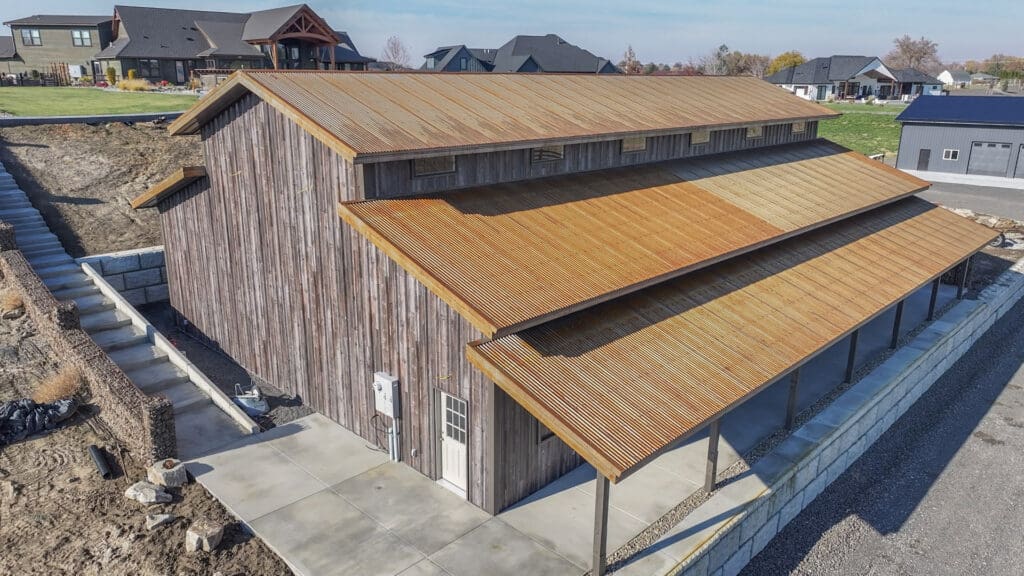
A 50×100 pole barn gives you 5,000 square feet of floor space, which is comparable to a small commercial warehouse. At this scale, the building can handle combine and large tractor storage, multiple semi-truck bays, livestock operations, hay and grain storage, or a full commercial shop or warehouse.
The 50-foot width is an important structural consideration. At this span, engineers will typically use deeper engineered columns and heavier trusses to maintain a clear interior without support columns. It is worth discussing structural specs with your contractor if you are planning large clear-span layouts at this size.
60×100 Pole Barn
A 60×100 pole barn is 6,000 square feet and begins to approach light commercial or industrial building territory. These builds are common for large farms, equipment dealers, commercial storage operations, and businesses that need significant covered workspace.
At 60 feet wide, you have enough room to drive large equipment through a door on one side, maneuver inside, and exit through a door on the opposite side, which is a common layout for agricultural drive-through buildings. Buildings at this size often include multiple large overhead doors, ventilation systems, and specialized floor drainage or utility connections.
Extra-Large and Custom Pole Barn Sizes: 80×120 and Beyond
Buildings larger than 60×100 move firmly into custom agricultural and commercial construction. Pole barn sizes of 80×120, 100×200, or larger are used for large farming operations, commercial warehouses, equipment dealers, and industrial facilities.
At these scales, the design becomes more engineering-intensive, and every build tends to be customized to the specific operational needs of the property. If you are planning a building in this range, a detailed consultation with a post-frame contractor is the right starting point. Our team at Steel Structures America works on large commercial and agricultural projects across Idaho, Washington, Oregon, Colorado, Montana, and surrounding states.
Pole Barn Height: The Dimension People Forget
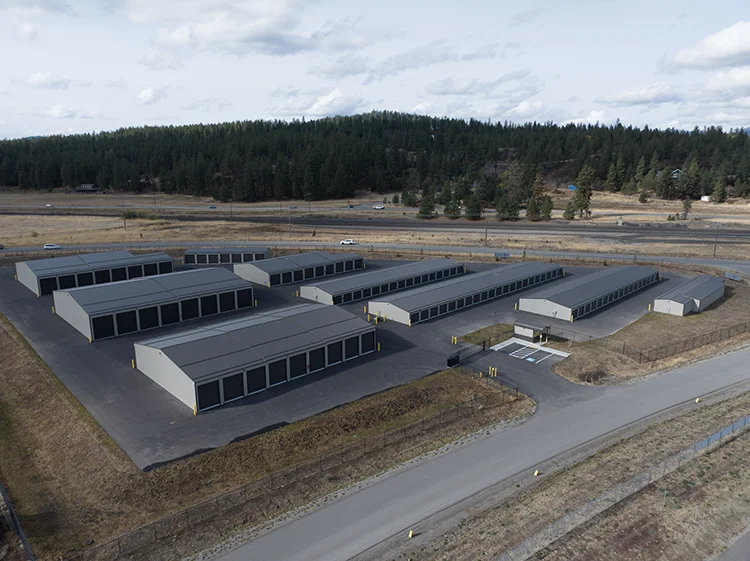
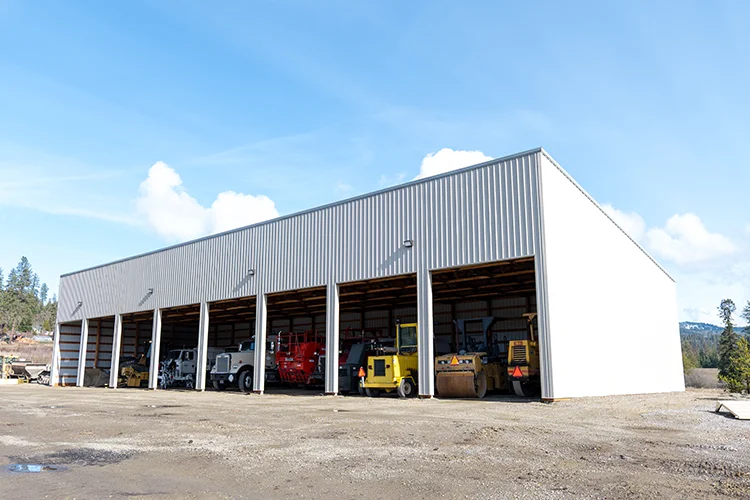
Square footage tells most of the story, but eave height determines what you can actually fit inside. Here is a quick breakdown of common eave heights and what they are used for.
| Eave Height | Good For |
| 10 feet | Standard residential garage, basic storage, small workshops |
| 12 feet | Full-size trucks and SUVs with clearance, most farm equipment |
| 14 feet | Large equipment, taller RVs, commercial clearance requirements |
| 16 feet | Combines, large grain wagons, semi-truck access, commercial buildings |
| 18-20+ feet | Industrial and specialized agricultural equipment, tall commercial structures |
When in doubt, going taller is almost always the smarter call. Adding a couple of feet to your eave height during construction adds a modest cost, but retrofitting a taller building later is expensive and sometimes not feasible.
If you are storing an RV, you need to measure the actual roof height of the vehicle and add at least 18 to 24 inches for comfortable clearance. Many Class A motorhomes run 12 to 13 feet tall, which means a 14-foot eave is the starting point, not a luxury upgrade.
How to Think About Width vs. Length
One of the most practical sizing decisions you will make is how to balance width and length. In general, width is the more important dimension because it determines your clear-span interior and affects how many vehicles or pieces of equipment can fit side by side.
Length is easier to extend in the planning stage and generally costs less per foot to add than width. If you are on the fence between two sizes, consider going with the wider width and shortening the length rather than the other way around. You can always add a lean-to addition later to expand covered space along one side of the building.
Pole Barn Size by Use Case: A Quick Reference
Here is a practical breakdown of recommended sizes for the most common pole barn use cases.
| Use Case | Recommended Size Range | Notes |
| Single-car garage | 20×30 to 24×36 | Minimum 10 ft width per bay |
| Two-car garage | 24×36 to 30×40 | Allow extra width for door swing clearance |
| Three-car garage | 36×40 to 40×60 | Consider two-door front with side entry |
| Hobby shop or workshop | 30×40 to 40×60 | Add 10-12 ft for dedicated work area beyond parking |
| RV and boat storage | 30×48 to 40×60 | Check RV height, plan 14+ ft eave |
| Contractor shop | 40×60 to 40×80 | Allow for multiple vehicles and equipment |
| Small farm equipment | 40×60 to 50×80 | Plan tall doors for tractor/implement access |
| Hay or grain storage | 40×80 to 60×100 | Open-sided or louvered designs common |
| Livestock barn | 40×80 to 60×120 | Varies by animal type and herd size |
| Light commercial / warehouse | 50×100 to 80×200+ | Consult for custom engineering requirements |
Roof Style Affects Your Effective Size
The dimensions of a pole barn are just the footprint. Your roof style can meaningfully affect how usable the interior space is, especially toward the walls. Gable roofs with steeper pitches eat into headroom near the sidewalls, while monitor-style and gambrel roofs can dramatically increase usable space at height.
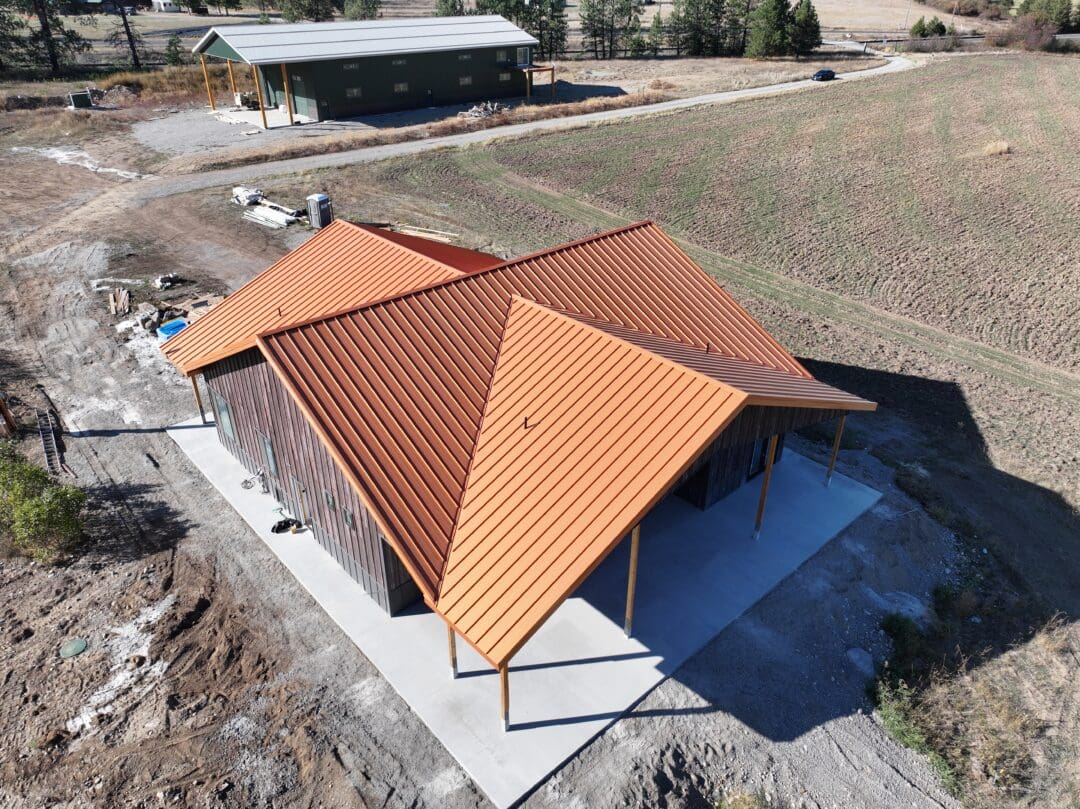
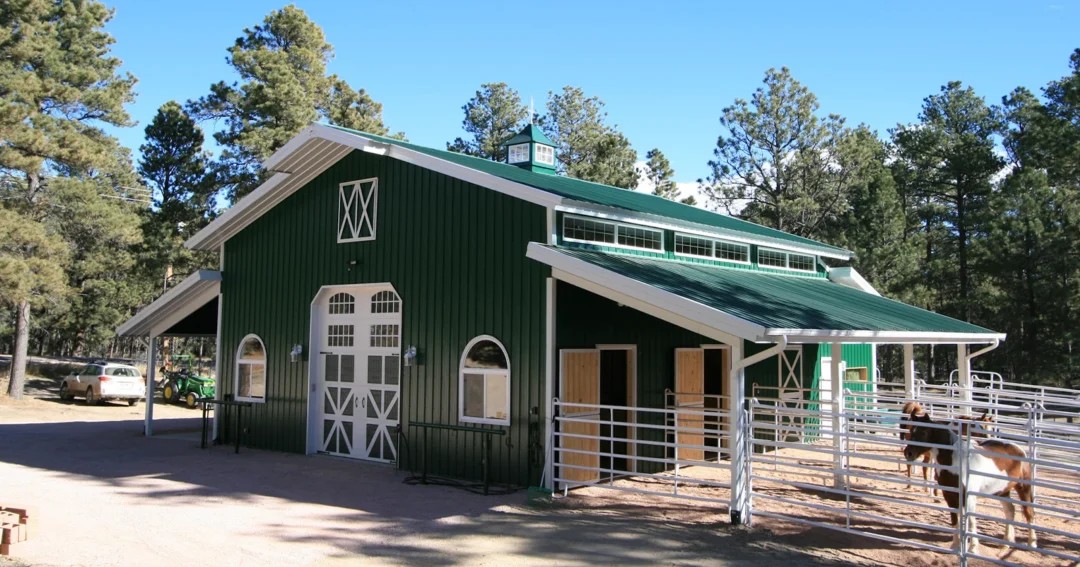
A monitor-style pole barn, for example, adds a raised center section along the ridge of the building with additional sidewalls and windows. This increases interior height in the center span and adds ventilation, making it particularly useful for livestock buildings and large shops. A gambrel roof creates a barn-shaped profile with a wider upper loft area that can be used for hay storage or additional workspace.
If you are considering either of these roof styles, the dimensions of the building interact with the roof design in ways that affect both cost and interior functionality.
Lean-To Additions and How They Affect Your Size Planning
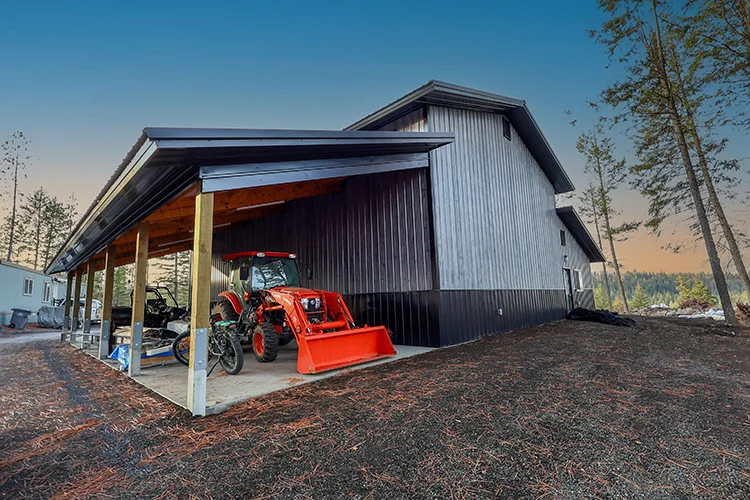
One of the most common ways to expand a pole barn without breaking the budget is to add a lean-to. A lean-to is a lower-roofed addition that attaches to one side of the main building, adding covered space without a full second structure.
Lean-tos are typically 12 to 16 feet deep and run the full length of one side of the building. A 40×60 main building with a 12-foot lean-to along one side effectively gives you 52 feet of covered width, which is a popular layout for contractor shops that want a covered parking area on one side.
If you are considering a lean-to as part of your original build, planning for it during initial construction is much more cost-effective than adding it later. Talk to your contractor about including the structural connections for a future lean-to even if you are not building it right away.
Getting the Right Pole Barn Size for Your Property
The best pole barn size is the one that fits your specific property, your current needs, and a realistic picture of what you will need in the next five to ten years. Most people who have owned a pole barn for a few years will tell you they wish they had gone a little bigger.
A few questions worth asking yourself before you finalize dimensions:
- What is the largest piece of equipment or vehicle I need to store now, and what might I own in five years?
- Do I need a dedicated work area separate from parking space, and how large does it need to be?
- Will I ever want to add a lean-to, enclosed office, or bathroom? Do my dimensions allow for that?
- What are my property setback requirements, and how do they limit where and how large I can build?
- Am I planning a barndominium or living quarters? That changes the size and layout conversation significantly.
Ready to talk through sizes and get a quote for your project? Steel Structures America serves Idaho, Washington, Oregon, Colorado, Montana, and surrounding states. Give us a call at (800) 833-9997 or reach out online to start the conversation.