
Why Steel Siding on a Post-Frame Building Is the Smartest Combination
When people hear “steel building” and “wood building,” they tend to think of them as two completely different things — like you have to pick a side. But the reality of modern post-frame construction is more interesting than that. The best buildings aren’t purely one material or the other. They’re a combination that plays to each material’s strengths.
At Steel Structures America, our buildings are wood post-frame structures clad in steel panels. That means the structural skeleton — the posts, trusses, and framing — is built with engineered wood, while the exterior walls and roof are wrapped in steel siding and metal roofing. It’s a pairing that’s been refined over decades in the construction industry, and for good reason: it flat-out works.
Here’s why this combination consistently outperforms the alternatives.
The Foundation: Why Wood Post-Frame Construction Works So Well
Post-frame (or pole barn) construction uses large vertical wood posts as the primary structural members, typically spaced 8 to 12 feet apart. These posts are either embedded in the ground with concrete or anchored to a concrete foundation. Horizontal girts run between the posts, trusses span the top, and the whole system works together to handle snow loads, wind loads, and the day-to-day demands of whatever you’re using the building for.
This framing method has some significant advantages over conventional stud-framed construction.
Fewer structural members, more open space. Because the posts carry the load — not the walls — you get wide-open interiors without support columns cluttering up your workspace. Clear spans of 40, 60, 80 feet or more are standard. That’s a lot of uninterrupted room for equipment, vehicles, livestock, or whatever your building needs to hold.
Efficient use of materials. A post-frame building uses substantially less lumber than a conventional stud-framed structure of the same size. Fewer pieces, less waste, lower material costs — without sacrificing structural integrity. The engineering is actually more efficient, not less.
Proven in extreme conditions. Post-frame buildings are engineered for the specific loads at your site — snow, wind, seismic. Across Idaho, Washington, Oregon, Colorado, and Montana, our buildings are designed to handle everything from 60+ PSF snow loads in the mountains to 100+ MPH wind gusts on the Colorado Front Range. The post-frame method handles these forces exceptionally well because the loads transfer directly through the posts into the ground.
Adaptability. Wood framing is easy to modify over time. Want to add a window, frame in a partition wall, run wiring, or bolt up shelving? Wood gives you straightforward connection points that don’t require specialized tools or welding.
So the structural frame is wood — and it’s excellent at what it does. Now let’s talk about what goes on the outside.
The Armor: Why Steel Siding Is the Right Choice
The exterior cladding on your building has one job above all else: protect everything inside from everything outside. Rain, snow, wind, UV exposure, temperature swings, and time itself are constantly working against your building’s exterior. The cladding material you choose determines how well your building holds up to that assault — and how much effort and money you’ll spend fighting it.
Steel siding wins this contest convincingly. Here’s why.
Weather Protection That Doesn’t Degrade
Steel panels shed water instantly. They don’t absorb moisture, swell, warp, or rot — ever. In our region, where buildings endure months of rain, heavy snow loads, and freeze-thaw cycles every year, this is a massive advantage.
Wood siding, vinyl siding, and fiber cement all interact with moisture to some degree. Wood absorbs it. Vinyl can allow it behind the panels. Fiber cement is more resistant but still porous. Over years and decades, that moisture interaction leads to maintenance needs, repairs, and eventually replacement.
Steel panels with modern coatings — like Galvalume or high-quality paint finishes — maintain their protective barrier for 30 to 40+ years. Some manufacturers warranty their panel finishes for 40 years against fading, chalking, and peeling. That’s a long time to not think about your siding.
Virtually Zero Maintenance
This is where the day-to-day reality of steel siding really shines. Once your building is up, the exterior maintenance checklist is short: rinse it off occasionally if it gets dirty. That’s about it.
Compare that to the alternatives. Wood siding needs staining or painting every 3 to 7 years, plus ongoing inspection for rot, insect damage, and weathering. Vinyl siding can crack in cold weather, fade in UV exposure, and warp near heat sources. Fiber cement requires periodic painting and caulking, and while it’s durable, it’s also heavy, expensive, and labor-intensive to install.
Over the life of a building, the maintenance savings from steel siding are substantial. The hours you’re not spending on a ladder with a paintbrush are hours you’re spending actually using your building. And the money you’re not putting into stain, paint, and repairs is money that stays in your pocket.
Fire Resistance
Steel is non-combustible. If your building is near brush, if you’re welding or grinding inside, or if you simply want the peace of mind that comes with a fire-resistant exterior, steel siding delivers that.
This matters for insurance, too. Many insurance carriers offer lower premiums for buildings with non-combustible exteriors. Over years of ownership, that annual savings adds up — another hidden benefit of choosing steel.
Pest Resistance
Termites don’t eat steel. Neither do carpenter ants, wood-boring beetles, or rodents. While these pests can and do attack wood-sided buildings (and even the wood framing behind other siding materials), steel panels present a barrier they simply can’t penetrate.
This is especially relevant for agricultural buildings where feed, grain, and hay attract pests — and for any building in rural areas where insect and rodent pressure is a fact of life.
Strength-to-Weight Ratio
Steel siding is remarkably light for its strength. It adds weather protection and structural rigidity (steel panels act as a diaphragm that helps the building resist racking forces) without adding significant weight to the structure. This keeps foundation requirements manageable and allows for longer spans between girts.
The Combination in Action
When you put engineered wood post-frame construction together with steel siding and roofing, each material does what it does best.
The wood frame provides the structural skeleton — it’s strong, efficient, adaptable, and cost-effective. It handles loads, provides connection points for interior buildout, and creates the open, flexible spaces that make post-frame construction so practical.
The steel cladding provides the protective envelope — it keeps weather out, requires almost no maintenance, resists fire and pests, and looks sharp for decades. It takes the beating from the elements so the wood frame inside doesn’t have to.
Together, they create a building that’s stronger, more durable, and more economical than either material could achieve alone. The wood frame would be vulnerable without the steel shell around it. The steel shell needs the wood frame to give it structure and shape. It’s a genuine partnership of materials.
What About All-Steel Buildings?
You might be wondering: if steel is so great on the outside, why not use steel framing on the inside too?
All-steel (rigid frame) buildings have their place — particularly in large commercial and industrial applications. But for the majority of shops, garages, barns, and mid-size commercial buildings, post-frame construction with steel cladding offers several advantages over all-steel.
Lower cost. All-steel rigid frame buildings generally cost more than comparable post-frame structures because of the steel fabrication involved in the framing.
Easier to modify. Attaching shelving, wiring, interior walls, and fixtures to wood framing is simpler and cheaper than attaching to steel framing, which often requires drilling and specialized fasteners.
No condensation on framing. Steel framing conducts temperature readily, which can cause condensation on the interior framing members in humid conditions. Wood framing doesn’t have this issue.
Comparable strength. For the building sizes and loads common in our service area, engineered wood post-frame construction meets or exceeds the structural requirements. You’re not giving up strength — you’re just getting it through a different (and often more efficient) structural system.
There are scenarios where all-steel framing makes sense — very large clear spans, specific commercial code requirements, or applications with extreme loads. But for the vast majority of buildings we construct, post-frame with steel cladding is the right answer.
Siding Options: Not All Steel Panels Are Created Equal
If you’ve decided on steel siding (smart move), there are still choices to make about the specific panels.
Panel profile. The most common profiles are PBR (Purlin Bearing Rib) for roofing and AG panel or PBR for walls. Standing seam panels offer a more premium look and superior weather resistance at the joints but come at a higher price point.
Gauge (thickness). Standard wall panels are typically 29-gauge, while roofing panels are often 26-gauge for added durability against foot traffic, hail, and snow. Heavier gauge (lower number) means thicker, more durable steel.
Coating. Galvalume (a zinc-aluminum alloy coating) provides excellent corrosion resistance and is the standard base coating for most steel panels. Paint finishes add color and additional UV protection. Premium paint systems (like PVDF/Kynar) resist fading and chalking far longer than standard polyester paint.
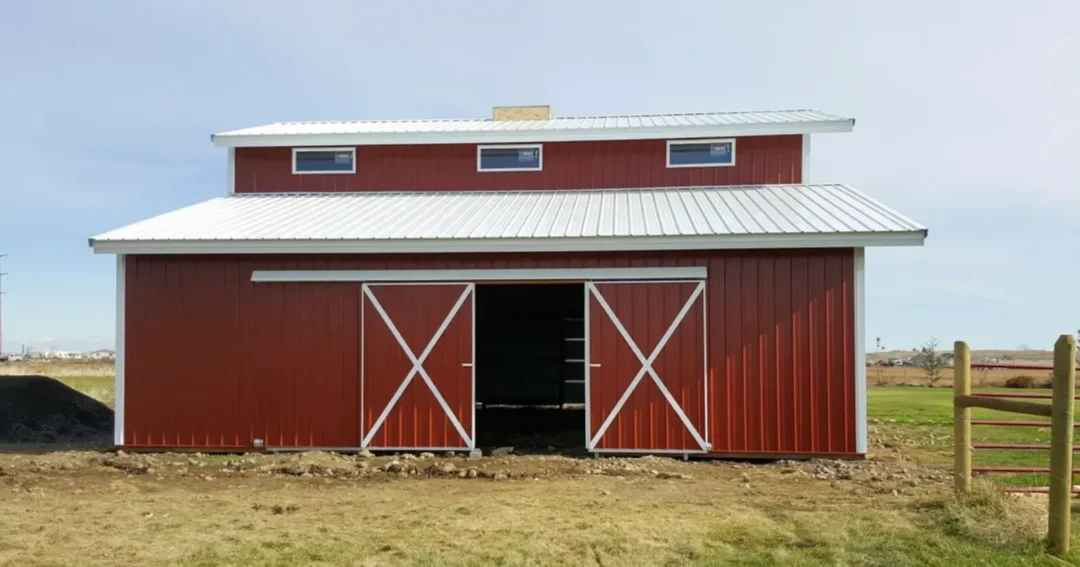
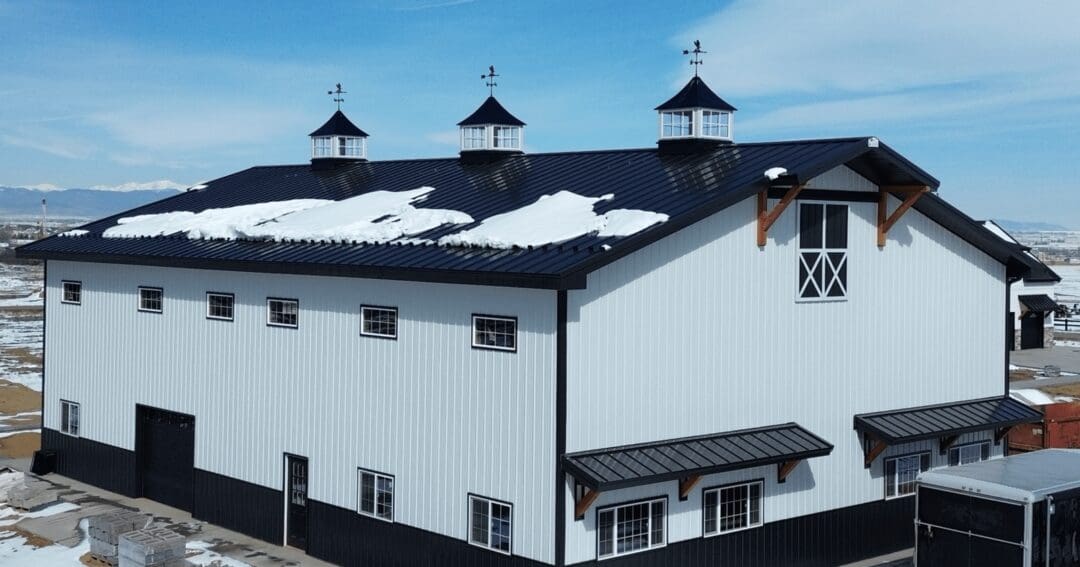
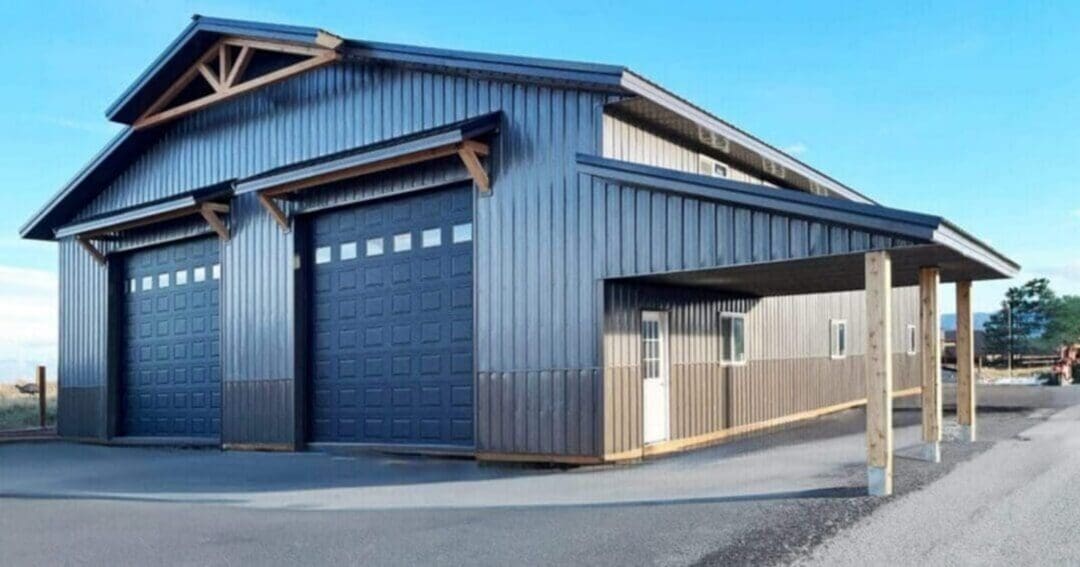
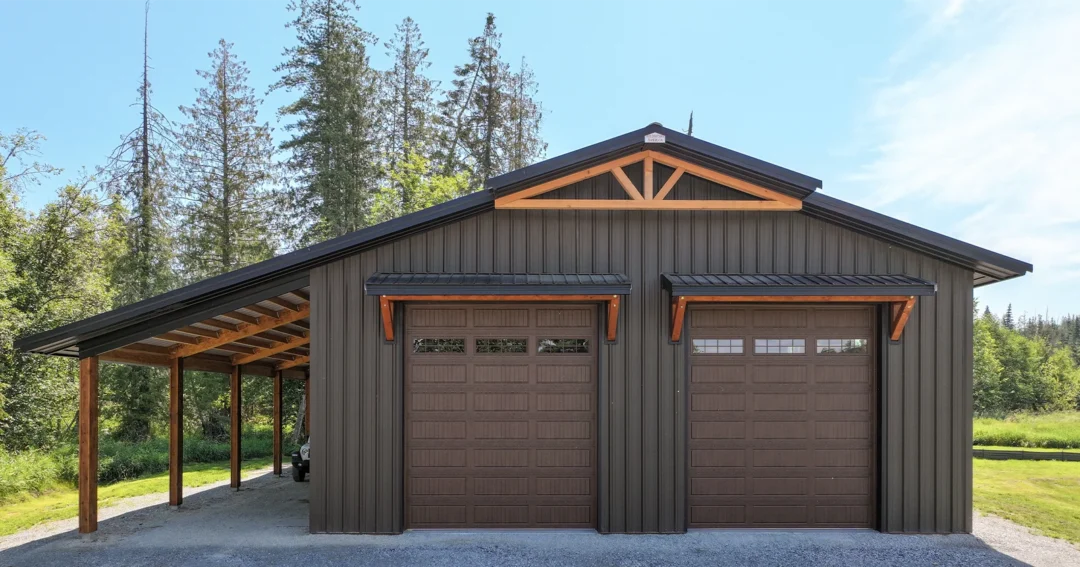
Color. This is the fun part. Modern steel panels come in a wide range of colors — from classic barn red and forest green to contemporary charcoal, bronze, and slate. Two-tone combinations (one color for the walls, another for the roof and trim) add visual interest and can dramatically change the look of a building. Check out our Color offerings here →
At SSA, we help you choose the right panel specs and colors for your building during the design process. It’s one of the details that turns a functional building into one you’re genuinely proud of.
Why This Matters for Your Next Building
Understanding what your building is actually made of — and why — helps you make better decisions during the planning process. When a builder says “steel building,” it’s worth asking: steel frame, steel siding, or both? When someone says “wood building,” do they mean wood framing with wood siding, or wood framing with something else on the outside?
At Steel Structures America, our answer is clear: engineered wood post-frame construction wrapped in steel siding and roofing. It’s the combination we’ve trusted for over 30 years and 15,000+ buildings, and it’s the one we’d choose for our own properties.
Want to see what this looks like for your project? Request a free estimate → or call (800) 833-9997. We’ll walk you through the options and help you design a building that’s built right from the frame out.
Steel Structures America has been designing and building custom post-frame structures with steel cladding since 1992. With six offices across Idaho, Washington, Oregon, and Colorado, we combine local expertise with 15,000+ projects of experience. See our gallery of Projects →