
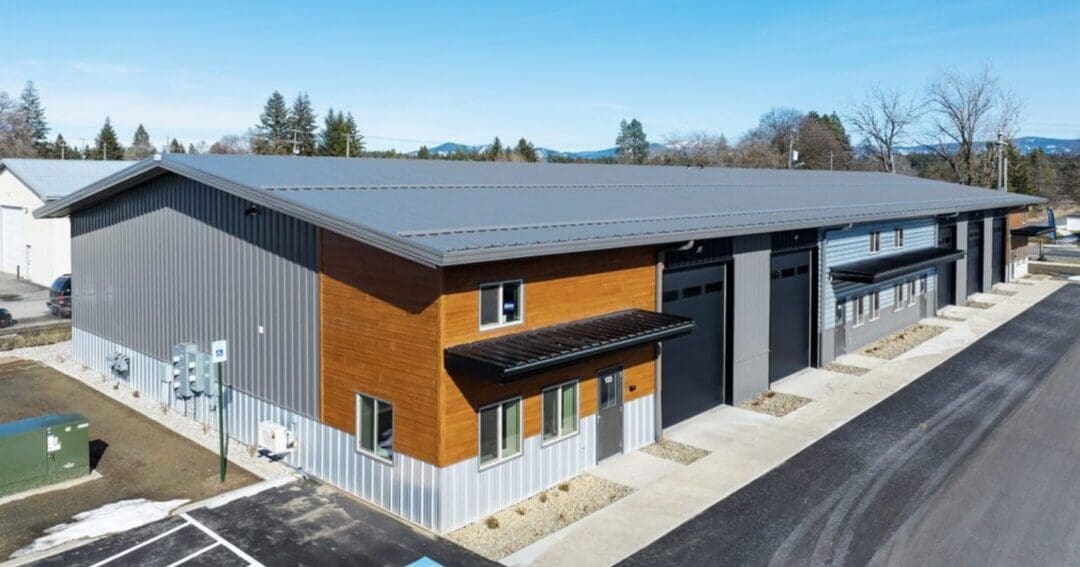
Red Iron Metal Buildings vs Post-Frame: Which Should You Build?
If you’re weighing red iron metal buildings against post-frame construction, the honest answer is that neither one wins across the board. They’re two different structural systems, and the right call depends on your span, your budget, and what’s going inside the building. No sales pitch, just the information you need to tell them apart.
Here’s the short version. Red iron is a welded structural steel frame, and it earns its keep on wide, tall, heavy commercial spans. Post-frame uses engineered laminated columns and trusses, and it usually wins on cost and build time for shops, garages, barns, and homes.
What red iron metal buildings are
Red iron gets its name from the red oxide primer sprayed on structural steel to keep it from rusting before it’s erected. The frame is made of steel I-beams: columns bolted to a concrete foundation, rafters welded or bolted into rigid frames, then purlins and girts spanning between them to carry the roofing and siding.
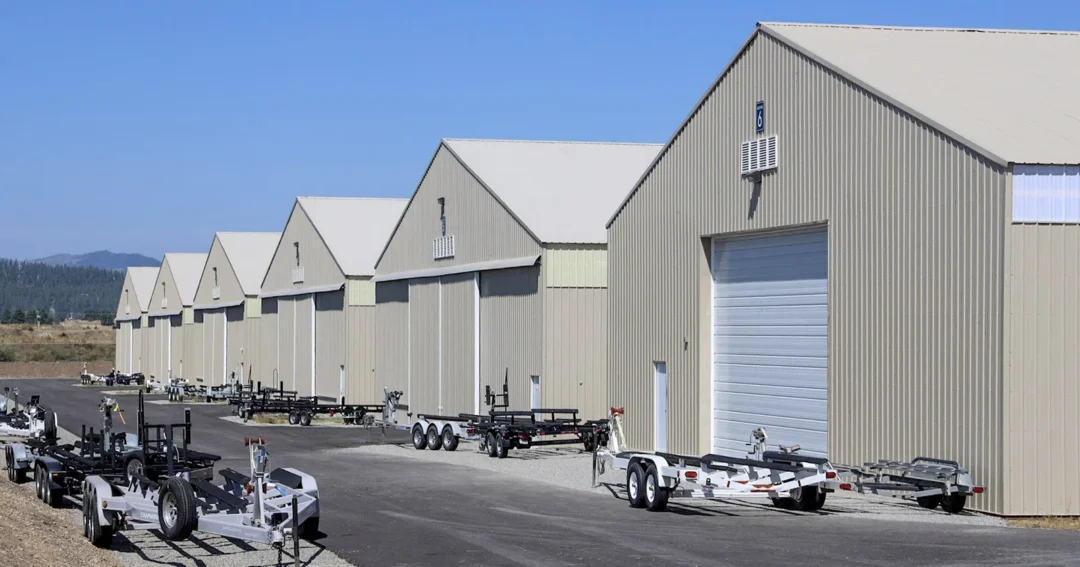
The defining trait is the rigid frame. Because the columns and rafters act as one connected unit, a red iron frame can carry very long clear spans without interior posts, and it can be engineered tall. That’s why you see red iron on warehouses, distribution centers, aircraft hangars, and manufacturing plants.
The trade-offs are real too. Red iron frames are usually fabricated off site to a fixed engineering package, so changes after the order goes in get expensive. The foundation is a bigger part of the job, since every column concentrates load onto an anchored footing. And erecting steel takes cranes and crews trained on steel.
How post-frame construction differs
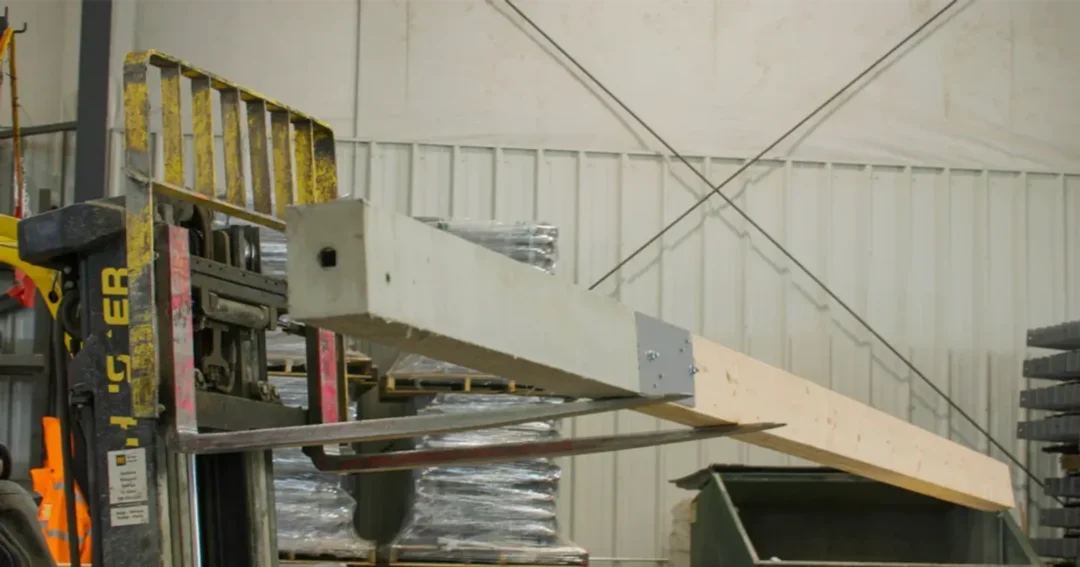
Post-frame, what most people call a pole barn, carries load on engineered laminated columns set at wider intervals, typically 8 to 12 feet apart. Trusses span between the columns, purlins run across the trusses, and girts run horizontally across the walls. The steel goes on the outside as roofing and siding rather than being the frame itself.
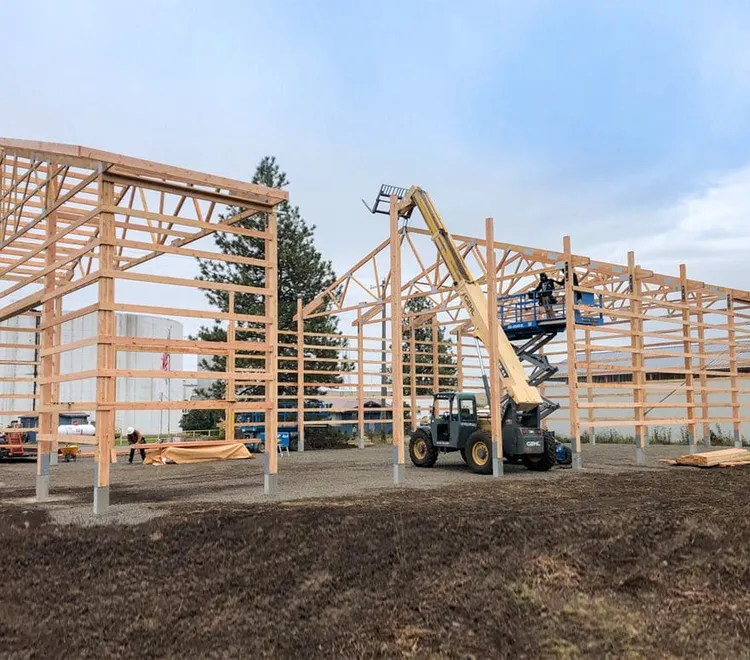
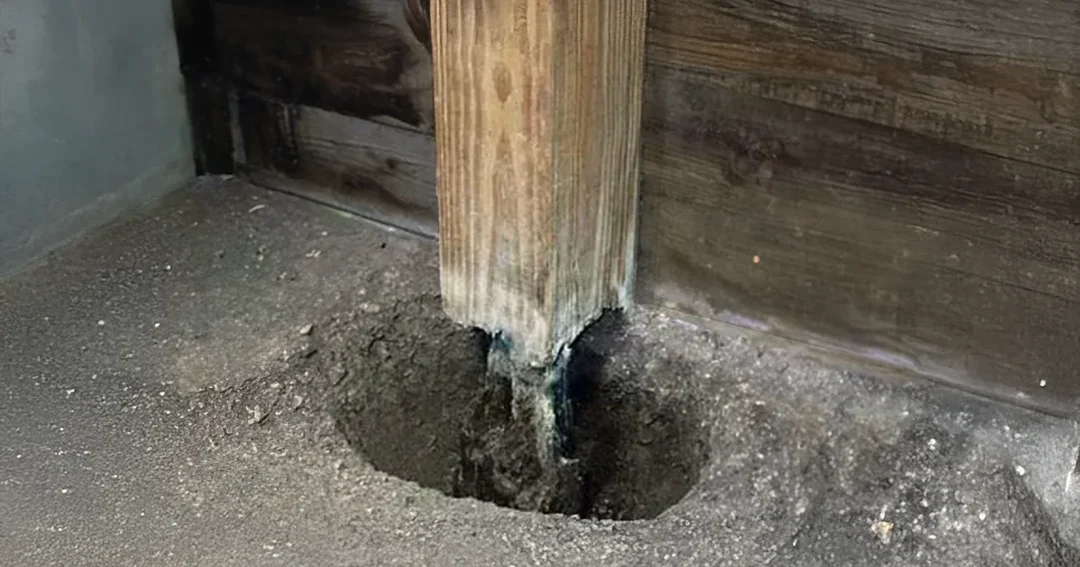
Because the columns do the work, post-frame skips the continuous perimeter foundation that steel frames usually need. Posts go into engineered holes or land on precast concrete brackets. That’s less concrete, less excavation, and a shorter schedule. If you want the full walkthrough, we’ve covered what post-frame construction is and how pole barns are built in detail.
Red iron metal buildings vs post-frame: the comparison
| Factor | Red iron | Post-frame |
|---|---|---|
| Clear span | Very long spans, no interior posts | Long spans, practical up to most residential and ag needs |
| Height | Engineered tall with ease | Tall eave heights available, sized to the build |
| Foundation | Anchored footings at every column, more concrete | Embedded posts or precast brackets, less concrete |
| Cost driver | Steel tonnage and foundation work | Columns, trusses, and finish package |
| Build time | Longer, fabrication lead time plus steel erection | Shorter, crews frame and skin on site |
| Design changes | Hard once the frame is ordered | Easier during design |
| Best fit | Large commercial and industrial spans | Shops, garages, barns, arenas, homes, light commercial |
Where each one makes sense
Red iron is worth it when
- You need a very wide clear span with nothing in the middle of the floor.
- The building is tall, heavily loaded, or carrying cranes and equipment off the frame.
- It’s a large commercial or industrial footprint where steel tonnage pencils out.
- Your use case or insurer specifically calls for a structural steel frame.
Post-frame is usually the better buy when
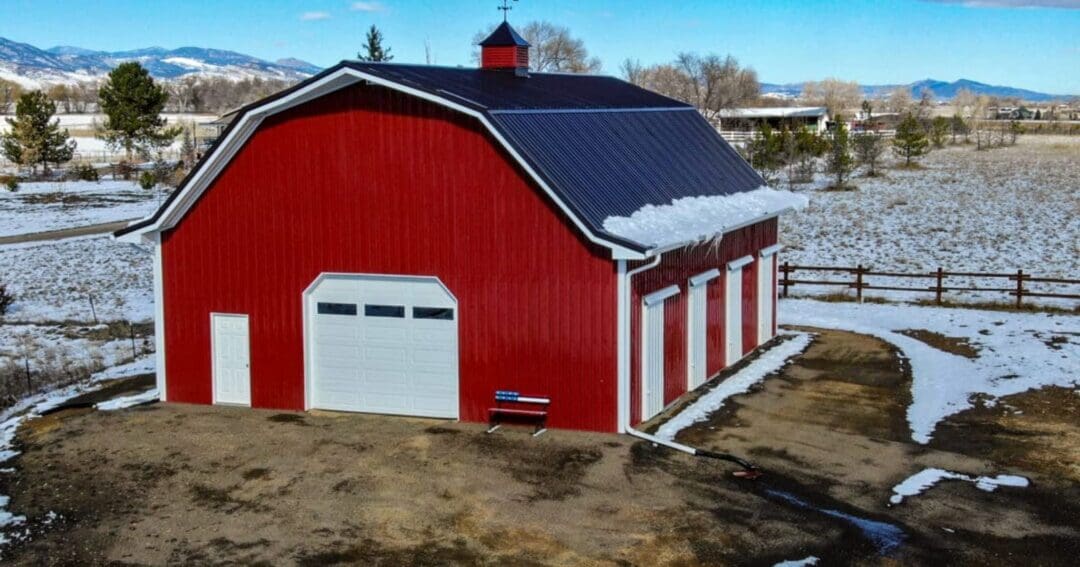
- You’re building a shop, garage, barn, riding arena, shouse, or barndominium.
- You want the money in finishes, insulation, and doors rather than in the frame.
- You want a shorter schedule and more flexibility while you’re still designing.
- You’re building on acreage where a continuous foundation would mean serious excavation.
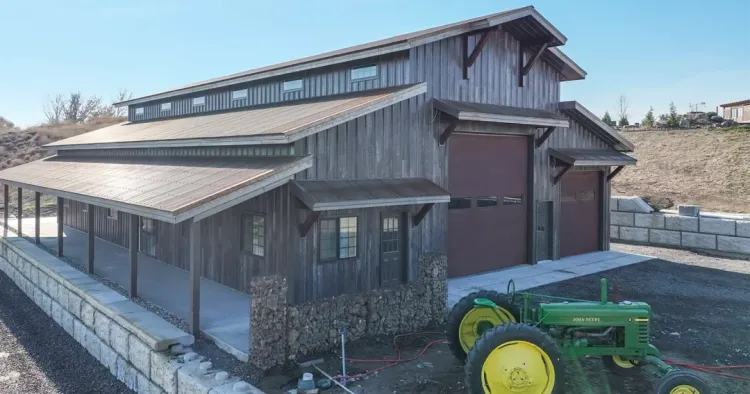
For most of what we build across Idaho, Washington, Oregon, Montana, and Colorado, post-frame does the job for less. That isn’t a knock on steel frames. It’s that the spans people request for shops and barns sit comfortably inside what post-frame handles well. If you’re weighing formats more broadly, our breakdown of Quonset huts vs pole barns vs metal buildings covers the third option people ask about.
What doesn’t change either way
Some things matter regardless of which frame you pick.
The skin. Both systems get clad in steel roofing and siding. Our sister company Metal America makes the panels we install, in 26 and 29 gauge WeatherXL SMP stock colors, 24 gauge PVDF premium colors, wood-look prints, Cor-Ten weathering steel, and pre-weathered GALVALUME. A red iron building and a post-frame building can look identical from the driveway.
Engineering and permits. Both need stamped plans and both answer to local snow and wind loads. In the Inland Northwest and the Intermountain West that’s not a formality. Snow load drives truss and frame design more than anything else on the plan set.
The concrete floor. Whichever frame you choose, you’ll want a properly poured slab. We’ve written up pole barn concrete floor thickness, cost, and process if you’re planning that part.
Who builds it. The frame type matters less than the crew. Our guide to finding the right post-frame or metal building contractor covers what to verify before you sign.
Frequently asked questions
Are red iron metal buildings stronger than post-frame?
Stronger isn’t the right frame for the question. Both systems get engineered to the same code and the same local loads, so both are designed to hold up what you’re asking them to hold. Red iron’s advantage is span and height, not survivability. A properly engineered post-frame building meets the same snow and wind requirements as a steel frame on the same lot.
Is red iron more expensive?
For the sizes most people build, usually yes, because you’re paying for steel tonnage and a heavier foundation. That gap narrows as the building gets bigger and the spans get longer, which is where red iron starts to make financial sense. We don’t publish flat prices for either, since site prep, doors, height, and finish move the number more than the frame type does.
Does Steel Structures America build steel frame buildings?
We build custom post-frame buildings and all-steel buildings, all designed, engineered, and permitted in house. The right starting point is a conversation about span, height, and use, not a format picked in advance. Give us a call and we’ll tell you honestly which one your project wants.
The bottom line
Red iron metal buildings are the right tool for long spans, tall walls, and heavy industrial loads. Post-frame is the better value for the shops, garages, barns, and homes most people are building, and it gets there faster with less concrete. Both end up wearing the same steel and answering to the same engineering.
If you’re not sure which side of that line your project falls on, tell us the footprint you have in mind and what’s going inside. If you already have a size in mind, our guides to the 40×40 metal building and to metal building sizes are a good next stop. Otherwise, request a free quote or give us a call at (800) 833-9997, and we’ll walk you through it with no pressure.
More on post-frame engineering standards from the National Frame Building Association.