
Pole Barn Post Rot: What Causes It and How to Build So It Never Starts
Pole barn post rot is the one failure people worry about most with post-frame buildings, and it’s a fair worry. The posts carry the whole building, and the part most likely to decay is the part you can’t see. The honest answer: rot isn’t inevitable, it’s not random, and it’s almost entirely decided by how the post meets the ground. Here’s what causes it, how to check a building you already own, and how to build a new one so the question never comes up.
What causes pole barn post rot
Wood doesn’t rot because it’s old. It rots because decay fungi are feeding on it, and those fungi need four things at once: wood to eat, moisture, oxygen, and mild temperatures. Take away any one and decay stops.
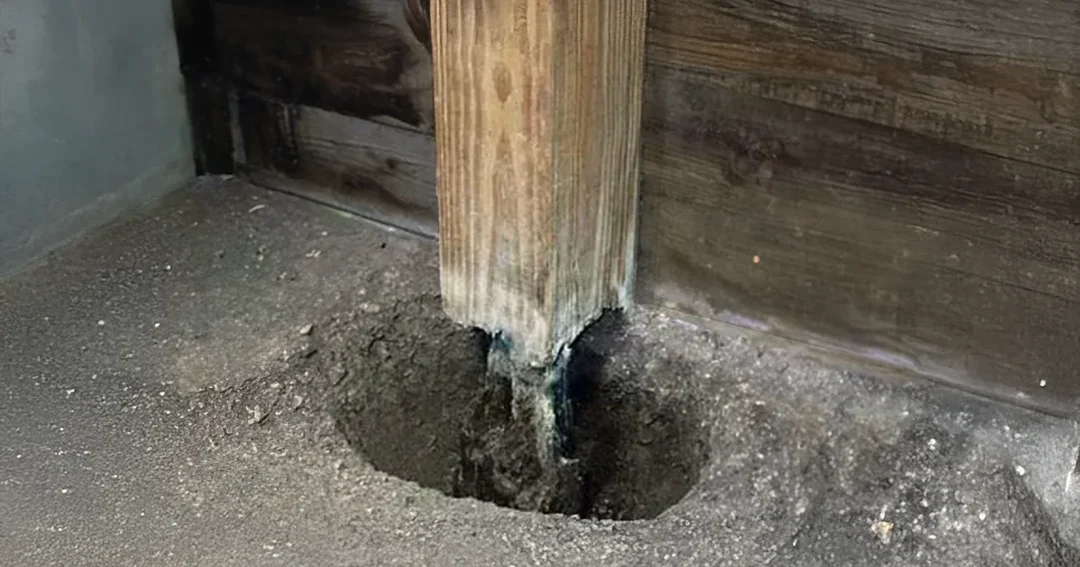
That’s why rot shows up in such a predictable place. Deep in the hole, there’s plenty of moisture but very little oxygen. Up on the wall, there’s plenty of oxygen but the wood stays dry. Right at the grade line, and in the first several inches below it, the post gets both. That narrow band is where nearly all post decay happens.
A few things make that band worse:
- Poor drainage. Water that runs toward the building or ponds along the wall keeps the soil at the post wet for months instead of days.
- Soil, mulch, or manure piled against the wall. Raising the grade after the build moves the wet zone up onto wood and skirt boards that were never meant to sit in it.
- The wrong treatment. Not all pressure-treated lumber is rated for structural use in the ground. Lumber treated for decks or fence pickets isn’t the same product as a building post.
- Field cuts and notches. Cutting a treated post exposes less-protected wood at the cut. If that cut ends up in the ground, it’s a weak spot.
- Wet-dry cycles. Across the Northwest, soil at the surface swings between saturated in spring and dry in late summer. That cycling is hard on any wood at grade.
How to tell if your posts are rotting
If you own an older building, you can check it yourself in an afternoon. You’re looking at the bottom of each post, at and just below the soil line.
- Probe it. Dig a few inches down beside a post and push a screwdriver or awl into the wood. Sound wood resists. Decayed wood is soft, stringy, or crumbles.
- Look at the walls. Posts that have lost section at the base let the building move. Watch for a wall that leans, a roofline that dips, or sliding and overhead doors that used to work and now bind.
- Check the skirt board. The treated board at the bottom of the wall sits in the same conditions. If it’s soft, the posts behind it deserve a closer look.
- Follow the water. Staining, standing water, or downspouts dumping at the wall tell you which posts to check first.
If you find soft wood, get a builder or engineer to look at it before you do anything else. How much of the post is left, and how many posts are affected, decides whether it’s a repair or a bigger conversation.
How to prevent post rot in a new building
There are two ways to deal with rot: slow it down, or remove the conditions for it entirely.
Slowing it down: properly treated posts and good drainage
A traditional in-ground post can last a long time when it’s done right. That means posts treated to a heavy-duty ground-contact rating (ask your builder which AWPA use category the posts carry; UC4B is the one meant for structural building posts), no untreated cuts below grade, and a site that sheds water away from the building. Our guide to site prep for a pole barn covers the grading and drainage side, and poles for a pole barn covers post types and depth.
This approach works. It’s also still wood in the ground, so you’re managing the risk, not eliminating it.
Removing the cause: keep the wood out of the ground
The other approach is simple. If no wood sits at or below grade, there’s nothing in the rot zone to decay. You get there three ways:
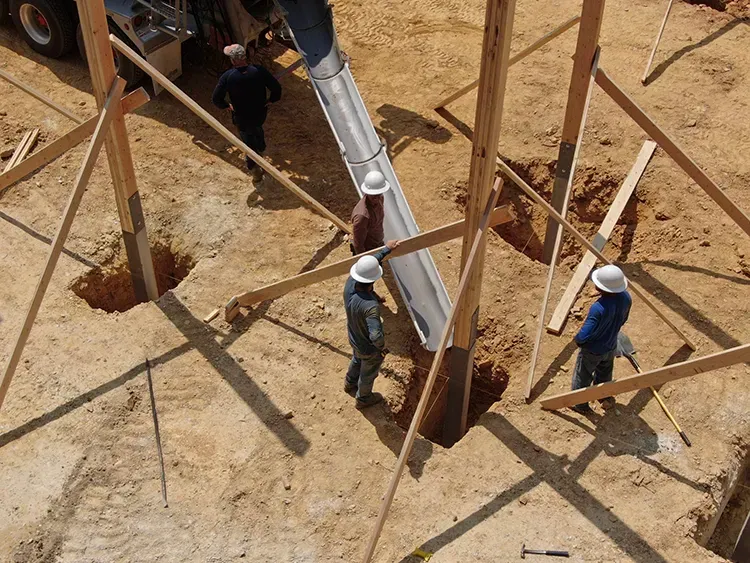
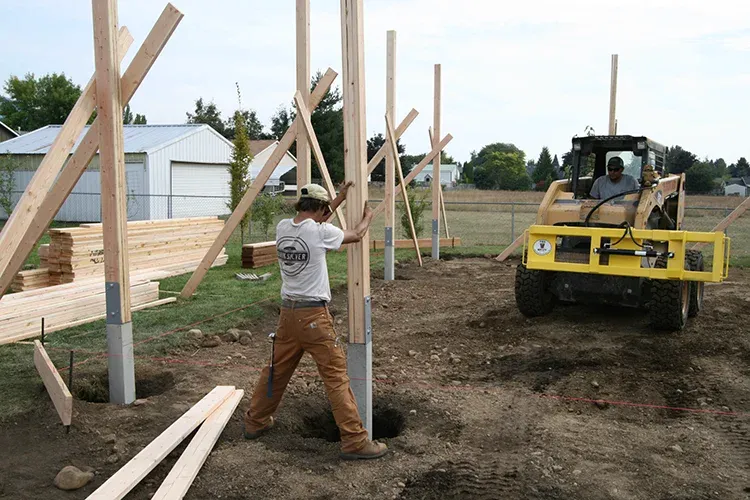
- Precast concrete columns. A Perma-Column is a precast concrete column that goes in the ground where the wood would’ve gone. A steel bracket on top holds the laminated wood column above grade, so the only thing touching soil is concrete.
- Poured concrete piers. Concrete is poured in the hole on site and a bracket connects the post on top. We compare the two in our guide to concrete piers for a pole barn.
- Brackets on a slab or foundation wall. When the building sits on a concrete foundation, steel brackets like Sturdi-Wall brackets anchor each post to the concrete.
For a side-by-side look at the tradeoffs, see pole barn posts in the ground vs. on concrete, and our overview of pole barn foundation options.
| Approach | Wood in the rot zone? | What you’re relying on |
|---|---|---|
| Treated post in the ground | Yes | Treatment quality and drainage |
| Precast concrete column | No | Concrete below grade, wood above |
| Poured pier with bracket | No | Site-poured concrete and bracket placement |
| Bracket on slab or foundation wall | No | The foundation and the bracket connection |
Frequently asked questions
Do all pole barn posts rot eventually?
No. A properly treated post on a well-drained site can outlast the people who built it, and a post that never touches soil has no path to ground-contact decay at all. The buildings that fail early usually have a drainage problem, the wrong lumber, or both.
Does setting a post in concrete stop rot?
Not by itself. A wood post encased in concrete is still wood below grade, and concrete can hold moisture against it. What stops rot is getting the wood above grade, which is what precast columns and brackets do. The USDA Forest Products Laboratory publishes the research behind how wood decays and how it’s protected.
Can a rotted pole barn post be repaired?
Often, yes. The usual fix is to support the building, cut out the decayed section, and put concrete where the bad wood was. It depends on how far the decay has gone and how many posts are involved, so it starts with an inspection.
The bottom line
Rot needs wood, water, and air in the same spot, and on a pole barn that spot is the grade line. You can manage it with the right treatment and good drainage, or you can design it out by keeping the wood off the ground from day one. If you’re planning a building in Idaho, Washington, Oregon, Montana, or Colorado and want to talk through which foundation fits your site, give us a call at (800) 833-9997 or request a free quote.