
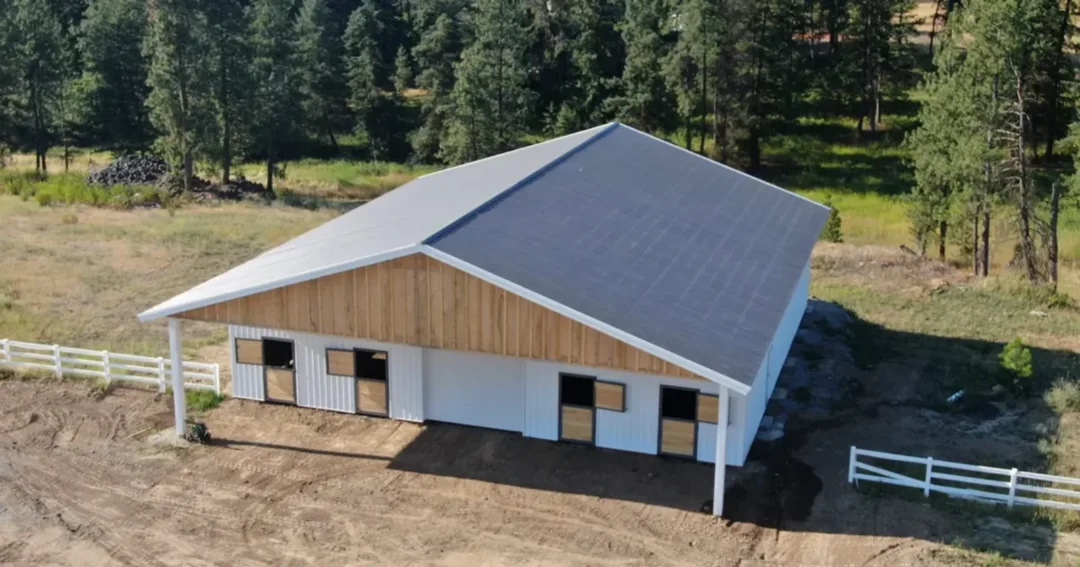
Livestock Shelters: Run-In Sheds, Loafing Sheds, and When You Need a Barn
Livestock shelters give your animals a dry, shaded place out of the wind without the cost of a fully enclosed barn. For a lot of cattle, horse, sheep, and goat operations, an open-front shelter is all the animals need most of the year. The honest answer to “do I need a barn or just a shelter?” comes down to your herd, your winters, and how you manage your animals.
Here’s a plain-English breakdown of the main types of livestock shelters, how to size and place one, and when it makes sense to step up to a full barn.
Types of livestock shelters
Most livestock shelters fall into a few common designs. All of them can be built as post-frame structures with steel roofing and siding.
- Run-in shed. Three walls and a roof, with one side open so animals can come and go on their own. It’s the classic shelter for horses and cattle on pasture.
- Loafing shed. A larger open-sided building where a group of animals can rest out of the weather. It’s common for cattle, and it often sits next to a feeding area or corral.
- Lean-to shelter. A roof and posts attached to the side of an existing barn or shop. It’s one of the most cost-effective ways to add covered space, because one wall is already there.
- Windbreak shelter. A roof with one or two solid walls placed to block the prevailing wind. It works well on open ground where wind is the main problem.
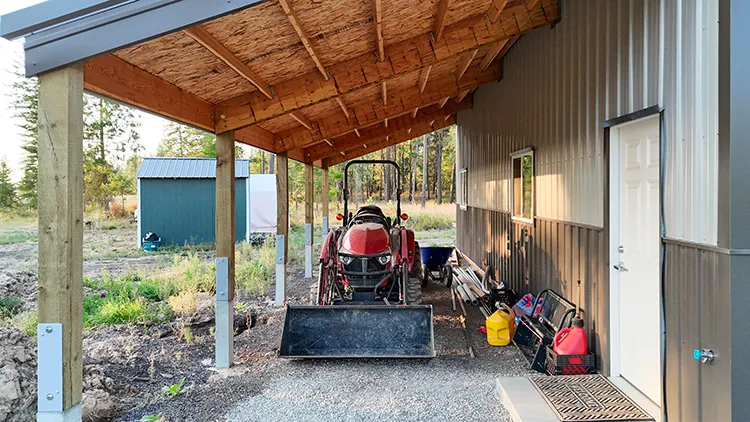
If you want the details on lean-tos specifically, our lean-to buildings guide covers sizes, roof pitch, and how they attach.
How to size and place livestock shelters
Size is about more than square footage. A few things matter just as much:
- Head count and future growth. Plan for the herd you expect to have, not just the one you have now. Dominant animals will push others out of a crowded shelter.
- Depth and opening height. A deeper shelter keeps blowing rain and snow off the back half. A taller opening lets you clean it out with a tractor instead of a shovel.
- Orientation. Face the open side away from the prevailing winter wind on your property.
- Drainage. Put the shelter on high, well-drained ground and keep roof runoff away from the bedding area. A wet shelter is one animals won’t use.
- Ventilation. Open-front designs breathe well, but enclosed corners still need airflow to keep moisture and ammonia down.
Space recommendations per animal vary by species and breed. Your local extension office is the best source for numbers specific to your animals and climate.
Built for Northwest and Mountain West weather
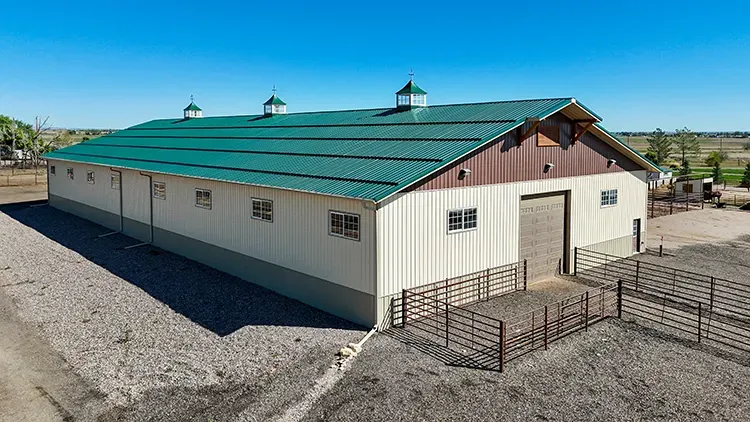
In Idaho, Washington, Oregon, Montana, and Colorado, a livestock shelter has to handle real snow and wind. A shelter that’s under-built for snow load is a risk to your animals, not just your investment. Every Steel Structures America building is engineered for the snow and wind loads at its site, and our in-house team handles the engineering and permitting.
The base matters too. Posts sit in wet, manure-heavy ground, so the foundation needs to resist rot. Precast concrete columns from Perma-Column keep wood out of the ground entirely. Our pole barn foundations guide compares the options. Many ag shelters also qualify for reduced permitting, which our agricultural building permit exemption guide explains state by state.
Livestock shelter or full barn?
An open shelter is usually enough when your animals live on pasture and you don’t need to confine, treat, or feed them indoors. It’s time to look at an enclosed barn when you need:
- Stalls or pens for calving, lambing, or sick animals
- Indoor feeding and hay storage in the same building
- Lockable space for tack, feed, or equipment
- Full protection through long, harsh winters
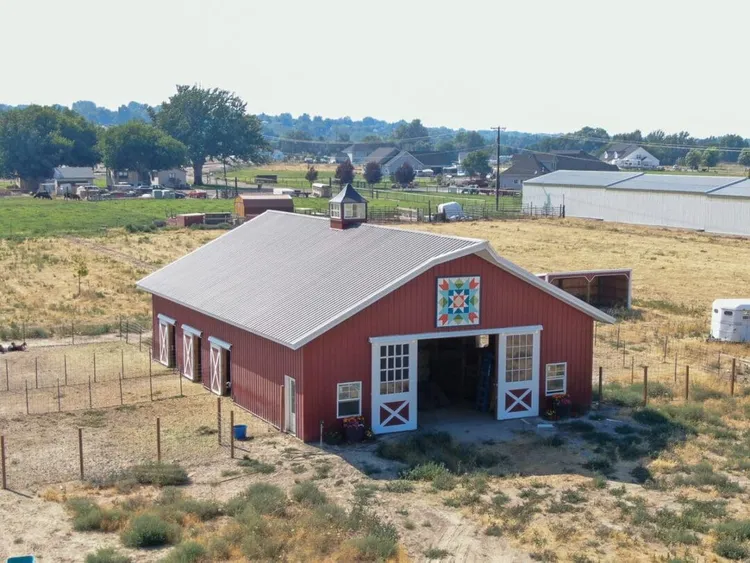
Plenty of operations end up with both: a barn for the work and open livestock shelters out in the pastures. For enclosed buildings, see our livestock pole barns guide for cattle, hogs, and poultry, and our hay storage buildings guide if feed storage is part of the plan.
Frequently asked questions
What’s the difference between a run-in shed and a loafing shed?
They’re both open-sided livestock shelters. A run-in shed is usually smaller and sits out on pasture. A loafing shed is usually larger, built for a group, and placed near a feeding area or corral.
Which way should a livestock shelter face?
Face the open side away from the prevailing winter wind on your property. Watch how snow drifts on your land before you pick a spot.
Can I add a livestock shelter to my existing barn?
Yes. A lean-to on the side of an existing pole barn or shop is one of the most common ways to add covered space for animals.
The bottom line
The right livestock shelter keeps your animals dry and out of the wind without paying for more building than you need. Pick the type that fits how you manage your herd, place it on dry ground facing away from the wind, and make sure it’s engineered for your snow load. Steel Structures America builds agricultural buildings across Idaho, Washington, Oregon, Montana, and Colorado. Request a free quote or give us a call at (800) 833-9997.