
Perma-Column Pole Barn Foundations: What They Are and Why They Matter
If you have been researching pole barn construction for any length of time, you’ve probably come across Perma-Column. It comes up in conversations about post rot, foundation longevity, and what separates a well-built pole barn from a basic one. And there is a good reason for that.
Perma-Column is a precast concrete column system designed specifically for post-frame construction. It is one of the most meaningful upgrades available in the pole barn world, and it solves a problem that has existed in post-frame construction since the beginning: wood posts buried in the ground eventually rot. Steel Structures America is a licensed Perma-Column installer, and we use it regularly on projects where clients want the best available foundation system.
This article covers what Perma-Column is, how it works, what the installation process looks like, how it compares to traditional wood posts, and what the cost difference looks like in practice.
What Is Perma-Column?
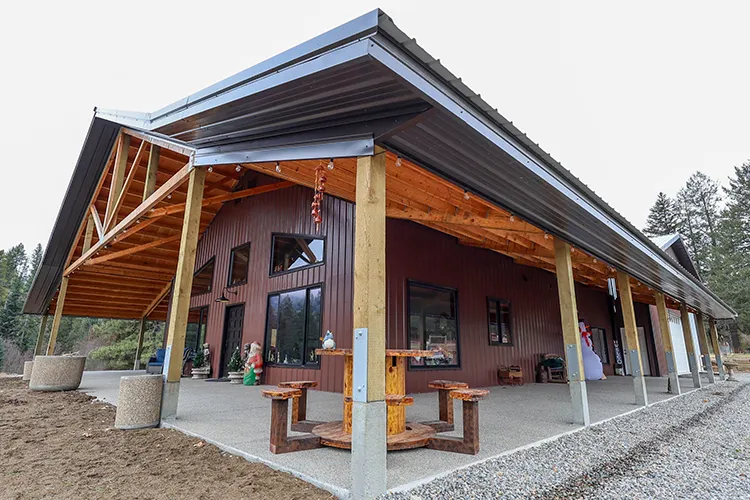
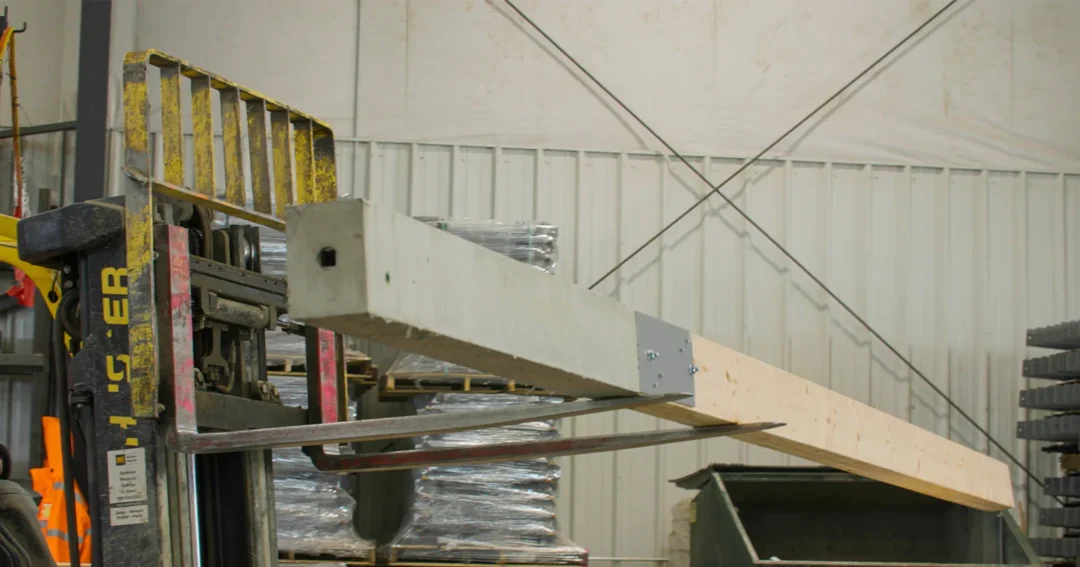
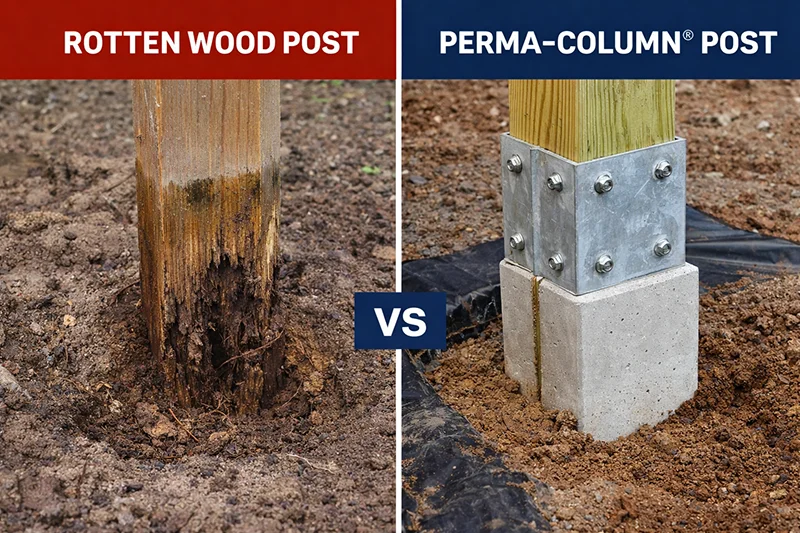
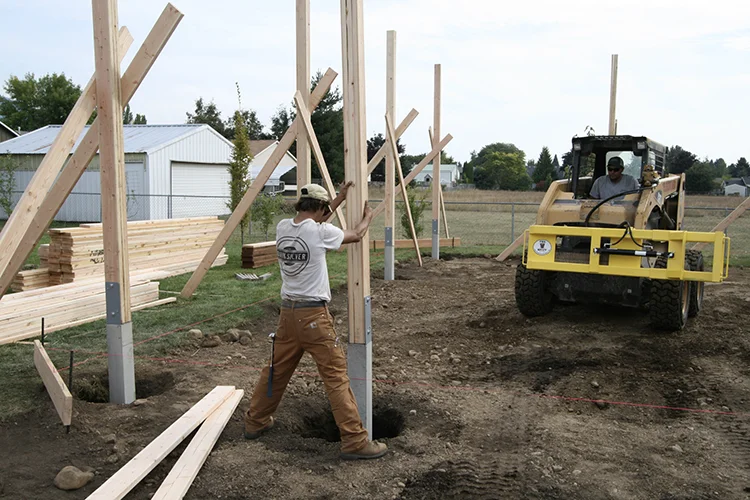
Perma-Column is a precast concrete column unit engineered for pole barn and post-frame building foundations. The basic concept is straightforward: instead of burying a wood post directly in the ground, you bury a precast concrete column instead. The concrete handles everything that happens below grade including moisture exposure, soil contact, freeze-thaw cycles, and structural load transfer. The wood post connects to the top of the Perma-Column unit above grade, where it stays dry and never touches the soil.
The product is manufactured in standard sizes that correspond to common post-frame post dimensions and spacing. Each unit is reinforced precast concrete, shaped to go in the ground the same way a traditional post would, with a mounting system at the top that accepts the wood post and locks it securely in place.
The Problem Perma-Column Solves
Post-frame construction has always had one fundamental vulnerability: the zone where the wood post transitions from above-ground to below-ground. That transition point (right at grade level ) is where wood is most exposed to the cycles of wet and dry, freeze and thaw, and constant contact with soil moisture and organisms that cause rot.
Pressure-treated lumber resists rot far better than untreated wood, but it does not eliminate the risk. Treatment chemistry slows the process, and higher treatment ratings slow it further. But in wet climates, clay soils, or sites with poor drainage, even well-treated posts can develop problems within 20 years. In favorable conditions, they may last 40 years. But 40 years is still not concrete.
Perma-Column eliminates that vulnerability entirely. The wood never goes in the ground. Concrete does, and concrete doesn’t rot.
How Perma-Column Works: The System Explained
The Precast Concrete Column
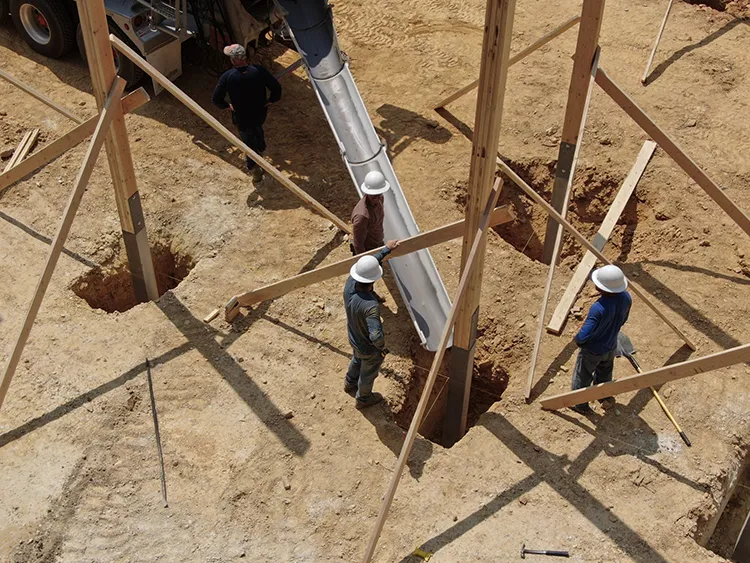
Each Perma-Column unit is a precast concrete column, typically 4 feet in length, designed to occupy the below-grade portion of the post embedment. The concrete is dense, reinforced, and manufactured to handle the structural demands of a post-frame foundation: downward load from the building, lateral load from wind, and uplift resistance against wind trying to lift the structure.
The column is shaped to be augered into the ground like a traditional post. The footprint is similar, the installation process is similar, and the concrete backfill around it provides the same mass-based uplift resistance as a traditionally installed in-ground post with a concrete collar.
The Post Bracket Connection
At the top of the Perma-Column unit, there is a connection system which is usually a steel bracket that accepts the dimensional lumber post from above. The post is secured to this bracket, creating a solid, engineered connection between the precast column and the above-grade structure.
This connection keeps the wood post at or just above the top of the concrete column, which means it sits at or slightly above grade level. The post never touches the soil. The concrete handles everything from grade down.
What Happens Below Grade
Once the Perma-Column unit is set in the augered hole and the post is connected above, concrete is poured around the precast column to backfill and lock it in place just like a traditional in-ground post installation. The result is a below-grade foundation that has all the structural characteristics of a standard in-ground post system, but with concrete in the ground instead of wood.
Perma-Column Installation Process
The installation follows closely to standard pole barn post setting, which is one of the reasons it integrates well into normal post-frame construction without dramatically changing the build sequence.
- Holes are augered at each post location to the required depth for the local frost line
- The Perma-Column precast unit is set in the hole and checked for plumb and alignment
- The wood post is secured to the Perma-Column bracket above grade
- Concrete is poured around the precast unit to backfill the hole and lock the column in place
- The concrete is finished at grade with a slope away from the post to direct water runoff
- Construction continues from this point exactly as it would with a standard post-frame build
The main installation consideration is coordination between the precast column length, the required post embedment depth for your frost zone, and the overall building layout. A qualified post-frame builder who is experienced with Perma-Column handles this as part of the normal engineering and layout process.
Perma-Column vs. Wood Post: Head-to-Head Comparison
| Category | Traditional In-Ground Wood Post | Perma-Column System |
| Material below grade | Pressure-treated lumber | Precast reinforced concrete |
| Wood-to-soil contact | Yes – full embedded length | None – wood above grade only |
| Rot susceptibility | Present; rate varies by conditions | Eliminated – concrete does not rot |
| Uplift resistance | Excellent (concrete collar mass) | Excellent (precast + concrete backfill) |
| Load bearing performance | Strong | Equal or better |
| Moisture vulnerability | Grade-level transition is high-risk zone | No vulnerable zone – concrete handles below grade |
| Expected lifespan (favorable conditions) | 30-40+ years | 50+ years (concrete lifespan) |
| Expected lifespan (wet/clay soil) | 15-25 years before potential issues | 50+ years – conditions do not affect concrete |
| Maintenance | Periodic inspection of grade-level wood | Minimal – no wood at or below grade |
| Relative cost | Lowest | Medium-high (see cost section) |
Perma-Column vs. Posts Set On Concrete Pads
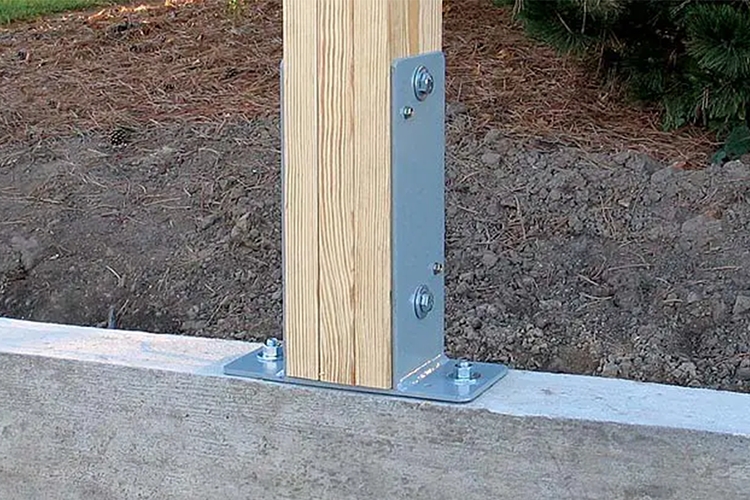
Perma-Column is sometimes compared to another alternative: simply setting posts on a concrete footing pad using surface-mount brackets. Both approaches keep wood out of the soil, but they are different in important ways.
- Perma-Column goes in the ground, giving it the same mass-based uplift resistance as a traditional in-ground post. A post sitting on a surface pad relies entirely on the anchor bolt pattern and footing weight for uplift resistance, which requires more careful engineering in high-wind areas.
- Perma-Column is a purpose-built system with tested, specified structural performance. Surface-mount brackets vary widely in quality and capacity depending on the product used.
- Perma-Column installation is more predictable because the below-grade component is a manufactured product with consistent dimensions. Poured footings require accurate placement of anchors before concrete sets, and errors are difficult to correct.
- Building departments and structural engineers are familiar with Perma-Column. Custom on-slab anchor designs may require additional engineering documentation in some jurisdictions.
For most post-frame applications, Perma-Column is the more reliable and better-proven alternative to posts on concrete pads.
Perma-Column Cost: What to Expect
Perma-Column does cost more upfront than standard in-ground post installation. Here is an honest breakdown of where those costs come from and how to think about the value.
| Cost Factor | Typical Range | Notes |
| Perma-Column unit (per post) | $200 – $400+ | Varies by post size and regional pricing |
| Installation labor (per post) | Included in above or minimal add | Process is similar to standard post setting |
| Concrete backfill (per post) | Similar to in-ground post cost | Same backfill process as standard post |
| Total upgrade vs. standard posts | Approximately $150 – $300 per post net | Depends on building size and post count |
| Typical full building upgrade cost | $2,000 – $8,000+ total | Varies by building size and post count |
On a 40×60 building with 14 to 16 posts, the Perma-Column upgrade might add $3,000 to $6,000 to the total project cost. For a building that will be used as a finished shop, a barndominium, or a contractor facility (where interior finishing, equipment, and long-term use represent a significant investment ) that difference is often straightforward to justify.
Think about it this way: if post rot forces a repair or a rebuild 20 years from now, the cost of that work will far exceed the Perma-Column upgrade cost. And a building on Perma-Column should not have that problem.
Who Should Use Perma-Column?
Perma-Column is the right choice when one or more of the following apply to your project:
Your Site Has Challenging Soil or Drainage Conditions
Clay soil, high water tables, sites that collect water, or areas with poor natural drainage all accelerate post rot. If your site has any of these characteristics, Perma-Column is a smart investment.
You Are Building in a Wet Climate
The Pacific Northwest, western Oregon, and higher-rainfall areas of the regions SSA serves are harder on buried wood posts. More moisture means more rot risk, and Perma-Column eliminates that variable.
Your Building Has a Significant Interior Investment
If you are building a finished shop, a barndominium, a contractor facility, or any structure where you will invest in insulation, electrical, plumbing, or interior finishing, you want the foundation to outlast everything you put inside. Perma-Column is the right starting point for that kind of build.
You Want the Building to Last 50 Years or More
Perma-Column simply extends the realistic lifespan of a post-frame building in a way that treated wood alone cannot match. For buyers who are thinking generationally and want a building that will stand for decades, Perma-Column is the better foundation choice.
You Want Peace of Mind
Even in favorable conditions, in-ground wood posts have a failure mode that Perma-Column eliminates entirely. For many buyers, the value is as much about confidence in the foundation as it is about the actual expected lifespan numbers.
Steel Structures America and Perma-Column
Steel Structures America is a licensed Perma-Column installer. We build post-frame and metal buildings throughout Idaho, Washington, Oregon, Colorado, and Montana, and we offer Perma-Column as a foundation option on projects where it makes sense for the site conditions, budget, and intended use.
When a client is building a high-value shop, a barndominium, or any structure where foundation longevity matters, we walk them through the Perma-Column option as part of the quoting process. It is not the right fit for every project, but for the ones where it is, we think it is the best available foundation upgrade in post-frame construction.
If you want to learn more about Perma-Column and whether it makes sense for your build, contact Steel Structures America at (866) 490-4012 or fill out our online quote request. We will evaluate your site conditions and give you an honest recommendation.