
Run In Sheds: Sizing, Placement, and How They’re Built
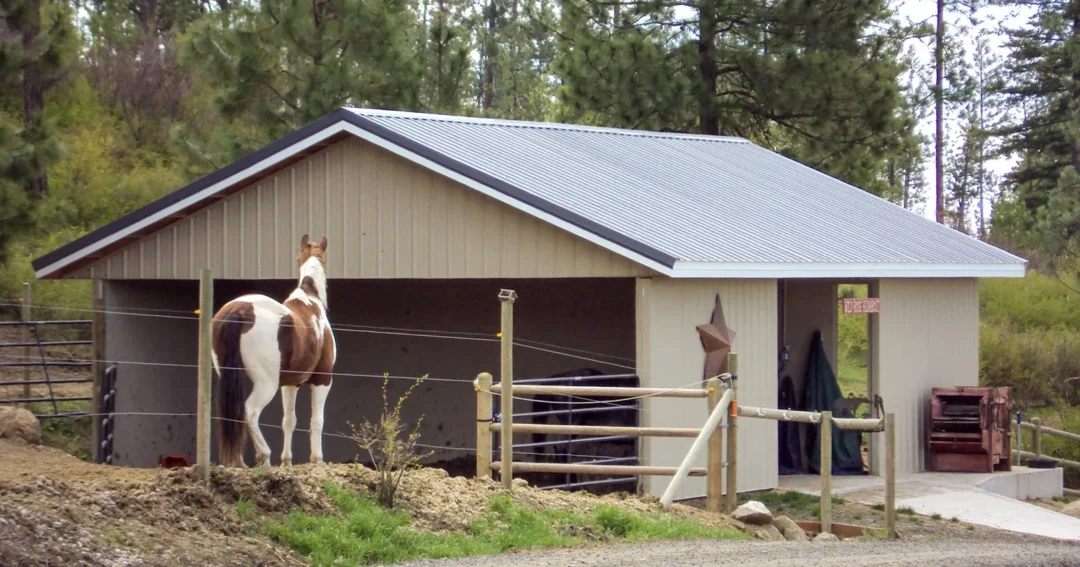
Run in sheds are three-sided shelters that sit out in the pasture or paddock so your horses can come and go as they please. They’re simpler than a full barn, they cost less to build, and for a lot of herds they’re all the shelter horses really need. The catch is that a run in shed only works if it’s sized, placed, and built for how horses behave and for the weather it’s going to face.
Here’s a plain-English breakdown of what to plan before you build one, from a post-frame builder that puts up agricultural buildings across the Northwest and Intermountain West.
What Run In Sheds Do (and What They Don’t)
A run in shed gives pastured horses a place to get out of sun, rain, snow, and wind without being shut in a stall. Because the horses choose when to use it, you skip a lot of the daily stall cleaning and bedding that comes with a traditional barn, and your horses keep moving and grazing with their herd.
What it doesn’t do is replace a barn for everything. There’s no place to lock up an injured horse, no secure tack or feed room, and no aisle to work in. If you need stalls, a wash bay, or indoor space to handle horses, look at a full horse barn instead, or plan both.
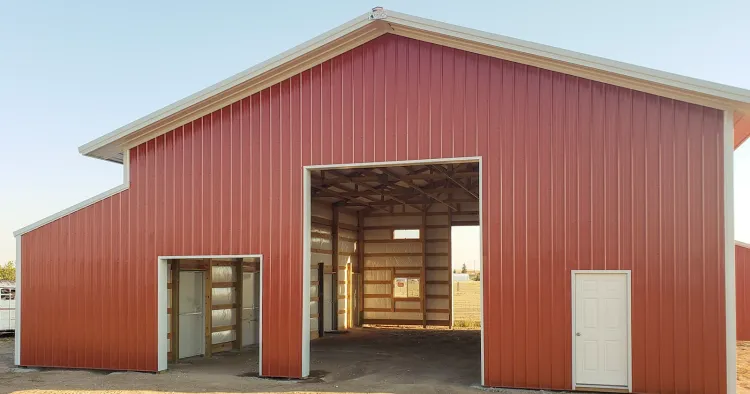
How Big Should Run In Sheds Be?
Size is where most run in sheds go wrong. The honest answer is that it depends on how many horses you have and how they get along, but a few principles hold up everywhere.
-
Plan by the horse. Kentucky Equine Research recommends giving each horse at least 100 square feet inside the shed, and more is better.
-
Go wide, not deep. A shed that’s wider than it is deep keeps horses near the opening, so a lower-ranking horse can’t get pinned in a back corner.
-
Keep the front open. Partial front walls and narrow openings get in the way when a dominant horse pushes another one out. The bigger the opening, the safer the shed.
-
Give it height. Horses rear, toss their heads, and spook. The same source suggests the lowest part of the opening and roof sit at least 10 to 12 feet high.
-
Split big herds. For a field with a lot of horses, two or three smaller run in sheds usually work better than one large one, because they spread out the pecking order.
If you’re working with a narrow footprint, our breakdown of a 10×30 horse barn walks through what a shallow shed row can and can’t hold, and when to widen instead of lengthen.
Where to Put a Run In Shed
Placement matters as much as size. A well-built shed in the wrong spot turns into a mud hole or a wind tunnel.
-
Face the open side away from prevailing wind. In much of our region that means paying attention to winter storm direction, not just the summer breeze.
-
Pick high, well-drained ground. Horses concentrate traffic right at the opening, so water that sits there becomes deep mud fast. Grading and shallow drainage swales to carry water away are worth doing before the posts go in. Our guide to pole barn site prep covers grading and drainage in more detail.
-
Stay clear of trees. Branches that come down in a wind or ice storm can take out a roof.
-
Think about chores. You’ll be hauling hay, checking water, and cleaning out the shed. Close enough to reach easily in January beats the perfect spot at the far end of the pasture.
Building Run In Sheds With Post-Frame Construction
Post-frame is a natural fit for run in sheds. Laminated columns carry the roof, trusses span the width, and girts and purlins tie it together, so you get a clear-span interior with no posts in the middle for horses to run into. It’s the same system we use for full barns, just with one side left open.
A few details are worth settling with your builder:
-
Snow and wind loads. An open-front building catches wind differently than an enclosed one, and Northwest and Rocky Mountain snow loads are serious. The shed should be engineered for your site, not pulled off a generic plan.
-
Foundation. Posts can go in the ground or on concrete brackets. Precast options like Perma-Column foundations keep wood out of the wet soil and manure that collect at the base of a horse shelter.
-
Interior lining. Horses kick and chew. Plan a sturdy lining on the lower interior walls so a hoof doesn’t go through the steel panel.
-
Roof overhang. Some owners extend the roof past the open front so horses that don’t want to go inside can still stand in the shade or out of the rain.
-
Steel finish. Steel siding and roofing hold up to weather and won’t burn. The panels we install are made by our sister company, Metal America, in stock WeatherXL colors or premium PVDF finishes.
Run In Shed or Lean-To?
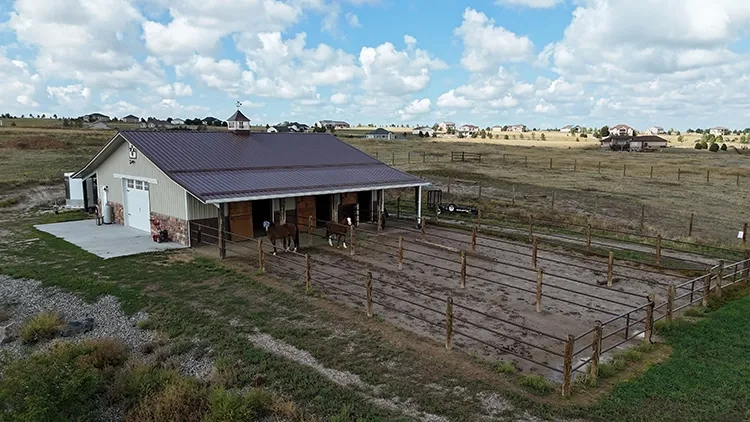
If you already have a barn or shop near your pasture, a lean-to off the side can do the same job as a freestanding run in shed. It shares a wall and roof line with the main building, which can save material and keeps shelter close to your hay and water. The tradeoff is location: a lean-to has to go where the building is, while a freestanding shed can go wherever the pasture needs it. Our lean-to buildings guide covers how those additions are framed and sized.
Frequently Asked Questions
Do run in sheds need a permit?
It depends on your county. Some areas treat agricultural buildings differently than residential ones, and some don’t. Check with your local building department before you build, or have your builder handle the permit as part of the project.
Can run in sheds be used for other livestock?
Yes. The same three-sided design works as a loafing shed for cattle, goats, and other animals. Sizing and interior details change with the animal, so tell your builder what’s going to live in it. You’ll find more options in our overview of agricultural buildings.
Should the floor be concrete or dirt?
Most run in sheds use a well-drained base rather than a full slab, since horses stand more comfortably on a softer surface. What matters most is that the base sits higher than the surrounding ground so water drains away from the opening.
The Bottom Line
Good run in sheds are wide, open, tall, and built on high ground with the back to the wind. Get those basics right and engineer the building for your snow and wind, and your horses get shelter they’ll use for decades. If you’re planning one in Idaho, Washington, Oregon, Montana, or Colorado, give us a call at (800) 833-9997 or request a free quote, and we’ll help you size it for your herd and your site.