
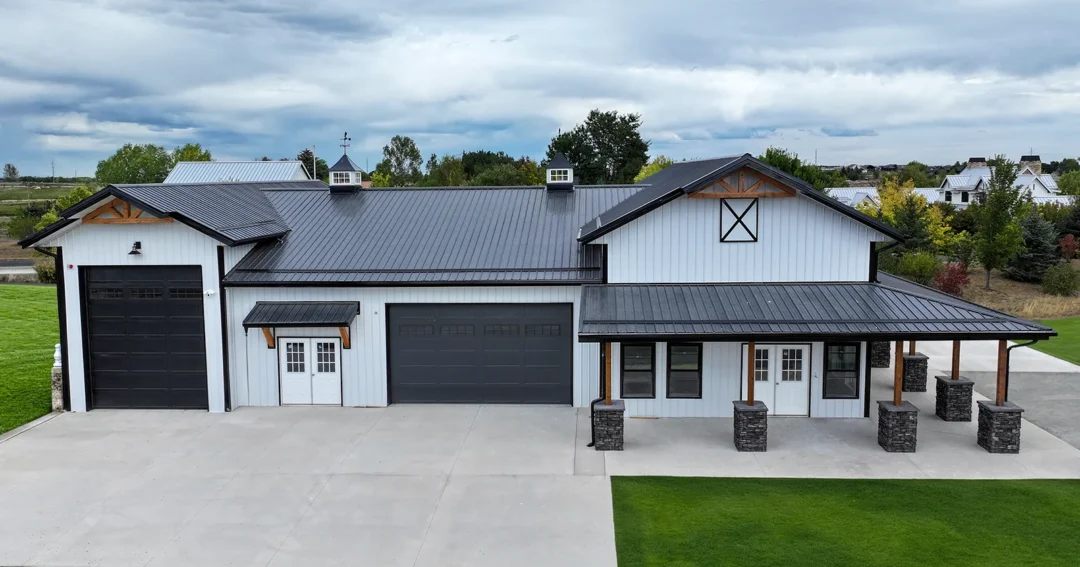
Shouses: What They Are, What They Cost, and How to Build One
A shouse is one of the most practical and flexible building concepts to come along in years, and if you’re looking for a home that gives you serious workshop or garage space alongside genuine living quarters, you’re in the right place. In this guide, we’ll walk you through everything you need to know about shouses, from what they are and what they cost to the floor plans people are building and how to find the right shouse builder for your project.
What’s in this guide:
- What is a shouse?
- Shouse vs. barndominium vs. stick-built home
- Popular shouse sizes and floor plans
- How much does a shouse cost?
- What to look for in a shouse builder
- Shouse design ideas and features
- Is a shouse right for you?
What Is a Shouse?
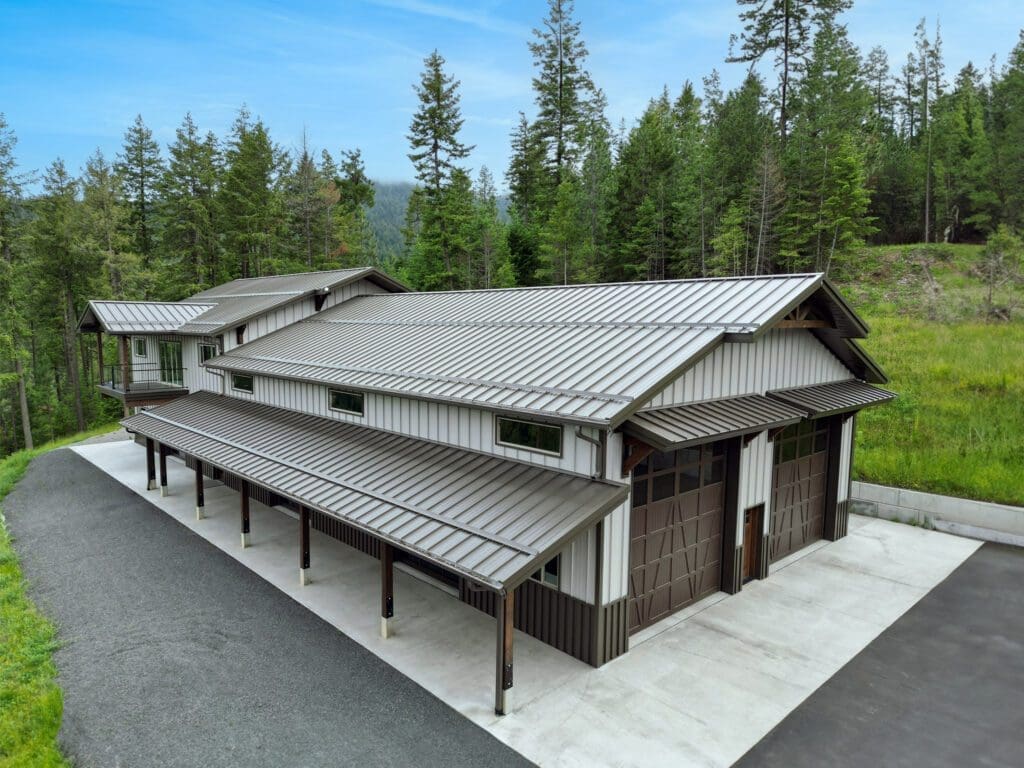
A shouse, short for shop house or shop home, is a metal building that combines a functional workshop or garage with a comfortable living area in one structure. The shop portion is typically a large, clear-span space with tall ceilings and wide overhead doors, while the living quarters are finished to the same standards you’d expect from a well-built home, complete with bedrooms, bathrooms, a kitchen, and living areas.
Shouses are almost always built using steel or post-frame construction, which makes them extremely durable, fast to build, and cost-effective compared to a traditional stick-built home with a separate shop. The idea is simple: instead of building a house and then building a separate shop on the same property, you put both under one roof and share the foundation, walls, and roofline.
The result is a building that works hard every day. You can pull your truck straight from the shop into the garage bay, run a small business out of the same property where you live, or simply enjoy having a large, organized workspace a few steps from your kitchen. For a lot of people, especially those in rural areas or on acreage, a shouse ends up being the single most practical structure they’ve ever built.
Common Names for a Shouse
You might hear a shouse called by several different names depending on who you’re talking to. All of these terms generally describe the same concept:
- Shouse (the most common shorthand)
- Shop house or shop home
- Metal shop home
- Metal building with living quarters
- Metal home with garage
- Live-work metal building
The term ‘barndominium’ is sometimes used interchangeably with shouse, but there are meaningful differences between the two that are worth understanding before you start planning your build. We’ll get into that in the next section.
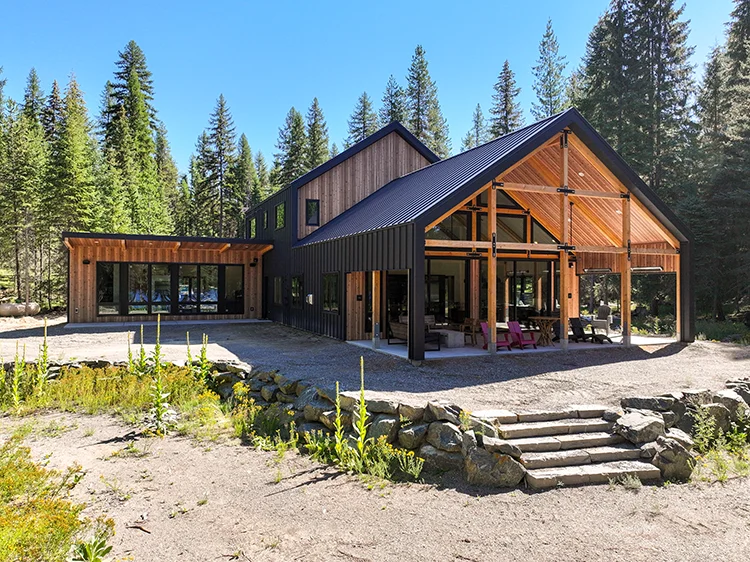
Shouse vs. Barndominium vs. Stick-Built Home
A lot of people use shouse and barndominium to mean the same thing, but if you’re planning a build, it helps to understand how they differ. And if you’re considering a traditional stick-built home with a separate shop, the comparison gets even more interesting.
Shouse vs. Barndominium
The core difference comes down to what the building is primarily designed to do. In a shouse, the shop is a major functional part of the building. You’re not just adding a two-car garage, you’re building a serious workspace with tall ceilings, large overhead doors, and floor space designed for vehicles, equipment, or a working trade business. The living quarters are high quality but secondary in footprint to the shop.
A barndominium, on the other hand, is primarily a home. It tends to have a more residential layout with an attached garage or small shop area, but the living space dominates the footprint. Barndominiums often have more traditional residential finishes and a floor plan that looks more like a house with a big garage rather than a shop with a living area attached.
In practice, there’s a spectrum here. A large barndominium might have a substantial shop, and a well-finished shouse might have a very comfortable living area. But if you’re describing what drives your decision and your floor plan, the distinction is useful.
Shouse vs. Stick-Built Home
| Factor | Shouse (Metal) | Stick-Built Home + Shop |
| Construction Speed | Faster, fewer tradespeople needed | Longer timeline, more subs |
| Cost | Often lower per sq ft | Higher, especially with separate shop |
| Design Flexibility | High, large open spans | Moderate, limited by framing |
| Durability | Excellent, low maintenance | Good, higher maintenance |
| Financing | Available, some lender learning curve | Easy, conventional mortgage |
| Resale / Appraisal | Growing market, still less comps | Easier to appraise |
For most people who want both a quality home and a serious workspace, a shouse built on steel or post-frame construction is simply a better value than building a house and a shop separately. You get the footprint you need, under one roof, for less money overall.
Popular Shouse Sizes
Shouses come in a wide range of sizes depending on how much shop space and how much living space you need. Here are some of the most common footprints we see buyers choose:
| Size | Typical Shop Portion | Typical Living Portion | Best For |
| 30×60 | 30×30 (900 sq ft) | 30×30 (900 sq ft) | Small shouse, couple or single |
| 40×60 | 40×30 (1,200 sq ft) | 40×30 (1,200 sq ft) | Most popular size, 2-3 BR living |
| 40×80 | 40×40 (1,600 sq ft) | 40×40 (1,600 sq ft) | Larger shop, comfortable living |
| 50×80 | 50×40 (2,000 sq ft) | 50×40 (2,000 sq ft) | 3-4 BR with large shop |
| 50×100 | 50×60 (3,000 sq ft) | 50×40 (2,000 sq ft) | Business-grade shop + full home |
These proportions are flexible. Some buyers want more living space and a smaller shop, others go the opposite direction. One of the advantages of metal building construction is that you have real design freedom over how the interior is divided. A good shouse builder will work with you to figure out what split makes the most sense for how you actually plan to use the building.
The 40×60 Shouse: Why It’s the Most Popular Size
If you’re early in your research and aren’t sure what size to start with, the 40×60 shouse is a great reference point. At 2,400 total square feet, it gives you enough space for a comfortable two- or three-bedroom living area alongside a shop that can handle three or four vehicles, or a serious working trade space. It’s also a size that fits well on a typical rural lot without feeling overwhelming on the site.
Shouse Floor Plans: How the Layout Works
Shouse floor plans are typically organized in one of a few configurations. Understanding the basic layouts will help you have a much better conversation with your builder when it comes time to design your building.

Side-by-Side Layout
The most common shouse layout puts the shop and the living quarters side by side along the length of the building. If you have a 40×80 shouse, for example, you might divide it into a 40×40 shop on one end and a 40×40 living area on the other. A shared interior wall separates the two spaces, often with a direct access door between them. This layout is popular because both sections get good natural light from exterior windows, and neither space feels tucked away or secondary.
Shop-Front, Living-Rear Layout
Some buyers prefer to orient their shouse so the shop faces the road or driveway with large overhead doors at the front, and the living quarters are tucked in behind or on one side where they’re more private. This layout works especially well for people who run a business out of the shop, since it creates a clear separation between the professional workspace and the private living area.
Living Above the Shop
In some designs, the living quarters are built on a second floor or mezzanine above part of the shop. This is a more complex and expensive build, but it works well when you have a smaller footprint and want to maximize both shop floor space and living area. A loft-style living space above a one-story shop can be surprisingly spacious and has a great industrial aesthetic that a lot of buyers love.
Key Features in Shouse Floor Plans
Regardless of the layout, the best shouse floor plans share a few things in common:
- At least one direct interior door connecting the shop to the living area
- Tall overhead doors in the shop (10×10 or 12×12 is standard for most vehicles; taller if you’re storing RVs or large equipment)
- Insulation and vapor barrier details that keep the living side comfortable year-round
- Utility rough-ins planned from the beginning, including floor drains in the shop and plumbing stub-outs in the right locations
- Adequate electrical service for both residential use and shop equipment
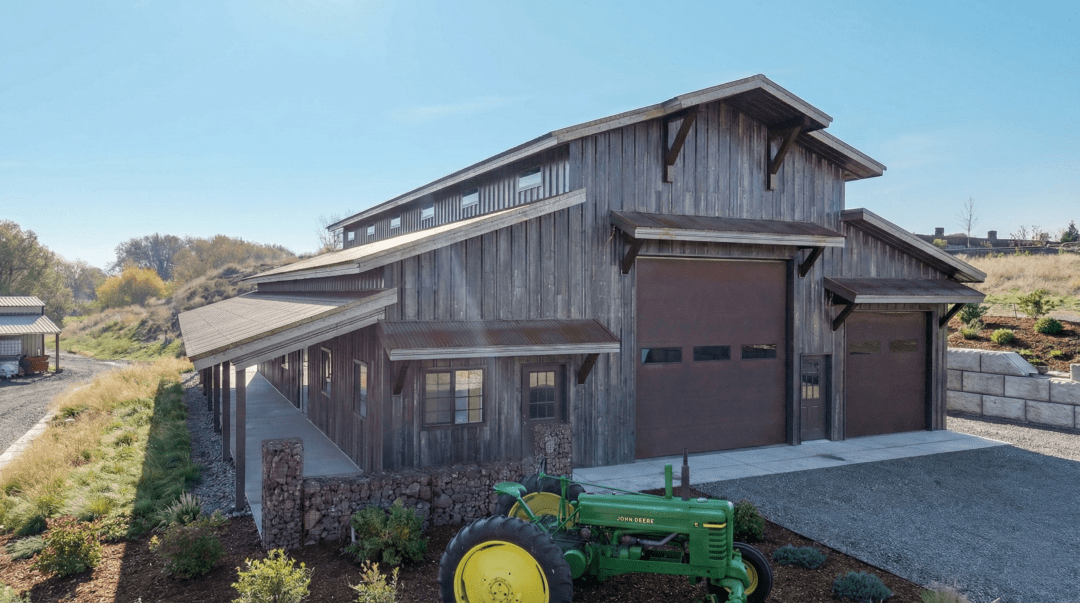
How Much Does a Shouse Cost?
Shouse cost is one of the first questions people ask, and it’s a fair one, because the price range is genuinely wide. A basic shouse with modest finishes in a rural area might run $80 to $120 per square foot for the entire structure. A well-finished shouse with quality interior work, spray foam insulation, custom cabinetry, and a premium exterior package can easily reach $150 to $200 per square foot or more depending on the market.
Here are the main factors that drive shouse pricing:
Size
Larger buildings cost more in absolute terms but tend to have lower cost per square foot because fixed costs like foundation, site prep, and overhead doors are spread across more space. A 50×100 shouse will cost more than a 40×60, but not twice as much.
Shop-to-Living Ratio
The living quarters are significantly more expensive to build per square foot than the shop portion. Finishing a living area requires insulation, drywall, flooring, cabinetry, plumbing, HVAC, and all the details that go into a finished home. The shop side needs a concrete floor, insulation, and utilities, but the per-square-foot cost is much lower. A shouse with a larger living area will cost more overall than one with a larger shop.
Finish Level
This is where you have the most control over budget. Standard finishes like LVP flooring, stock cabinetry, and builder-grade fixtures keep costs manageable. Custom tile, high-end countertops, radiant heat floors, and designer lighting add up quickly. You don’t have to choose between quality and budget, but you do have to be intentional about where you spend.
Location and Site Conditions
Labor costs vary significantly by region. Building in a rural area of Idaho or Montana is typically less expensive than building in the suburbs of Denver or Seattle. Site conditions like rock, steep slopes, or poor drainage can also add to foundation and site prep costs.
Quick Shouse Cost Reference
| Size | Total Sq Ft | Estimated Cost Range | Notes |
| 30×60 | 1,800 sq ft | $150,000 to $270,000 | Basic to mid-range finishes |
| 40×60 | 2,400 sq ft | $195,000 to $360,000 | Most popular size |
| 40×80 | 3,200 sq ft | $256,000 to $480,000 | More space, more flexibility |
| 50×80 | 4,000 sq ft | $320,000 to $600,000 | Large shop plus full home |
| 50×100 | 5,000 sq ft | $400,000 to $750,000+ | Premium builds, business-grade |
These ranges are estimates. Your actual cost will depend on your location, your finish selections, your site conditions, and which builder you work with.
Shouse Construction: How It’s Built
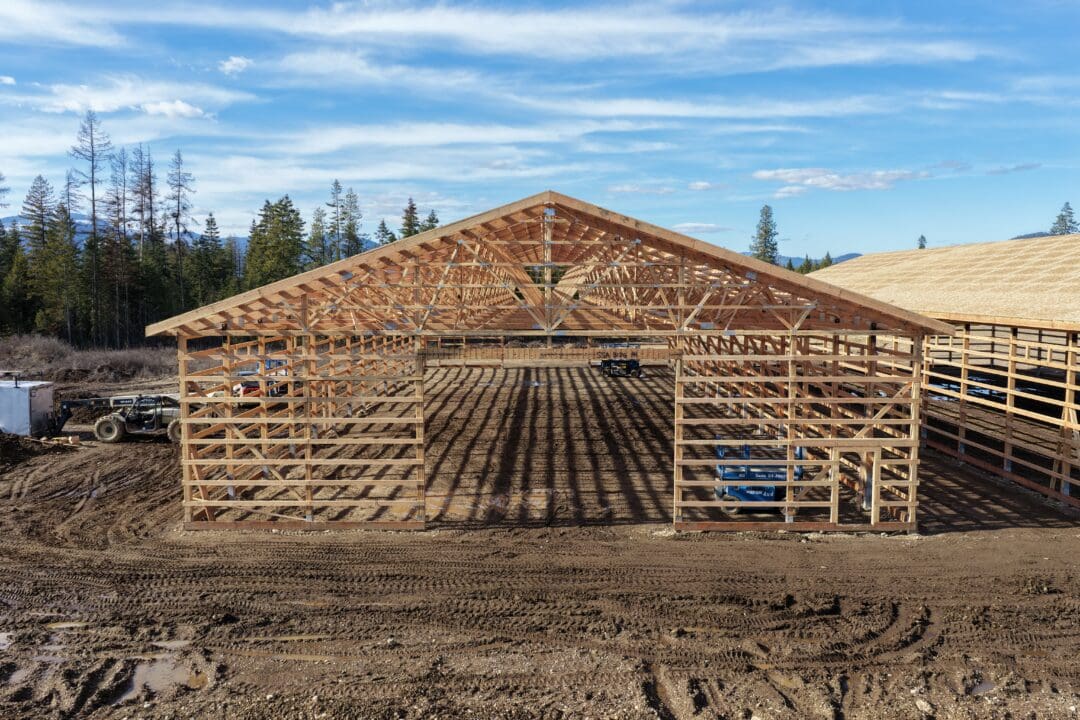
Most shouses are built using one of two structural systems: steel frame construction or post-frame construction. Both work well for shouses, and both have genuine advantages depending on your site, your budget, and what you’re trying to accomplish.
Steel Frame Shouses
A steel frame shouse uses a pre-engineered rigid frame as the structural skeleton of the building. These frames are designed and fabricated off-site, then erected on your foundation. Steel frame buildings tend to be extremely strong, have excellent clear-span capability (meaning the interior has no columns), and are well-suited for large openings like the wide overhead doors typical in a shouse shop.
Steel frame buildings also have a very clean, modern look that translates well to the exterior design of a shouse. Many of the most attractive shouses you’ll see online are steel frame structures.
Post-Frame Shouses
Post-frame shouses use large, engineered wood columns set into the ground or anchored on concrete piers or a Perma-Column system. The columns support the roof and wall framing without the need for a continuous perimeter foundation. Post-frame construction is fast, cost-effective, and works extremely well for large clear-span buildings.
One thing to keep in mind with post-frame shouses is that financing and appraisal can be slightly more complicated than with a steel frame building. Some lenders treat post-frame residential structures differently. It’s worth having this conversation with your lender early in the planning process.
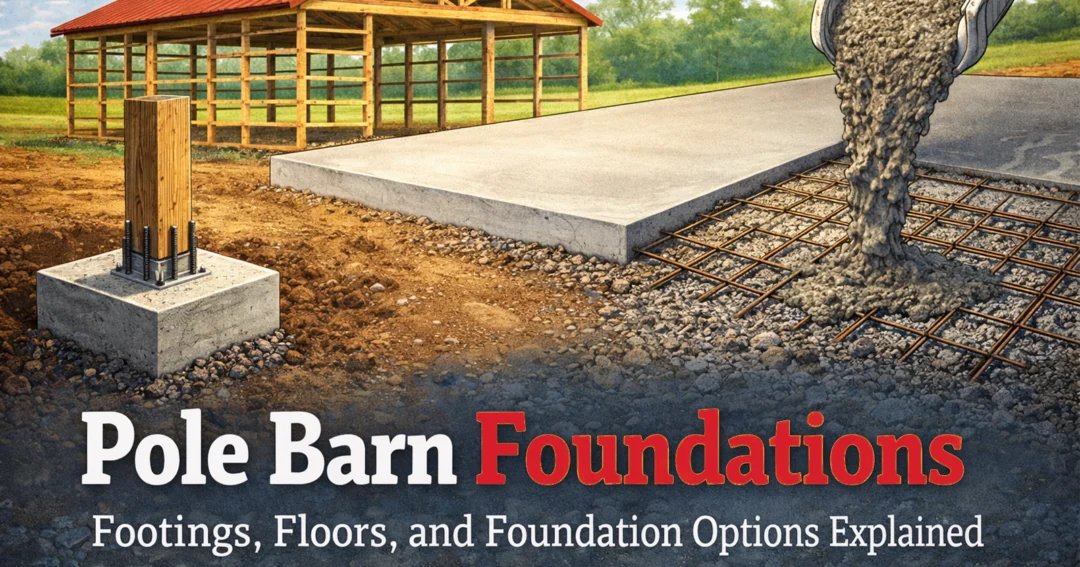
Foundation Options for a Shouse
The foundation of your shouse matters a lot, especially for the living quarters portion. Common approaches include:
- Full concrete slab: The entire building sits on one continuous concrete slab. This is the most common approach and is well-suited for shouses because both the shop and the living area benefit from a solid, level concrete floor. Polished or stained concrete is a popular flooring choice in the living area.
- Perimeter foundation with interior slab: A concrete perimeter foundation or stemwall with a poured interior slab. This is more common in areas with frost depth requirements or where the building is being appraised as a residential structure.
- Partial foundation: Some shouses use a perimeter foundation under the living quarters and a standard monolithic slab under the shop. This can save cost while still meeting residential code requirements for the finished portion of the building.
Shouse Design Ideas and Features
One of the things people love most about shouses is how much design flexibility they offer. Because you’re starting with a large, open metal building, you get to make a lot of decisions that are already locked in by the time you walk through a traditional spec home. Here are some of the features and design choices that make shouses such compelling buildings.
Exterior Design
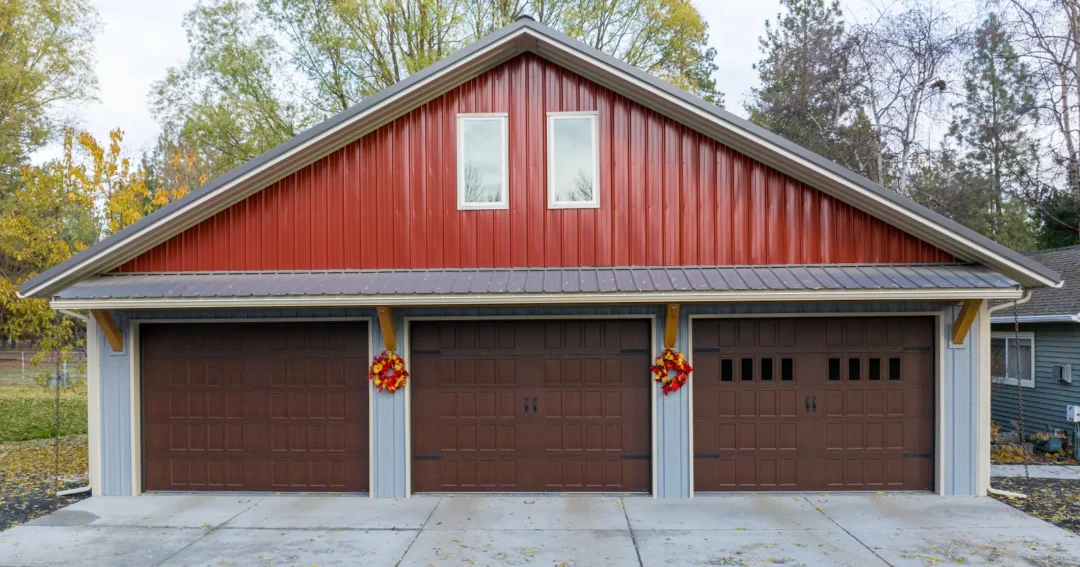
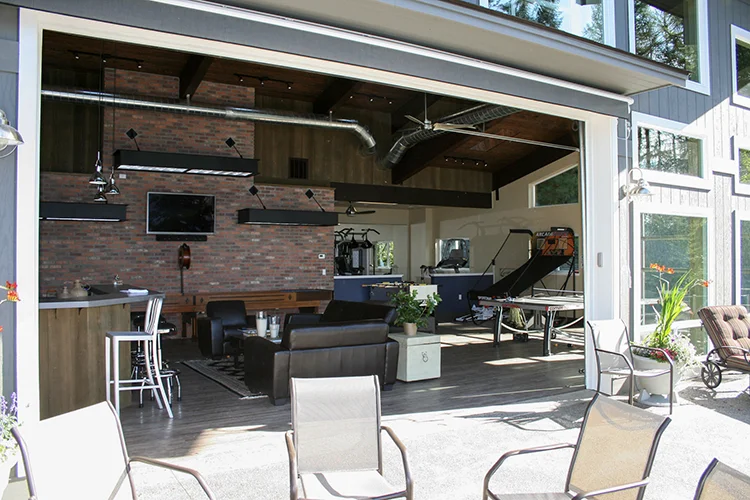
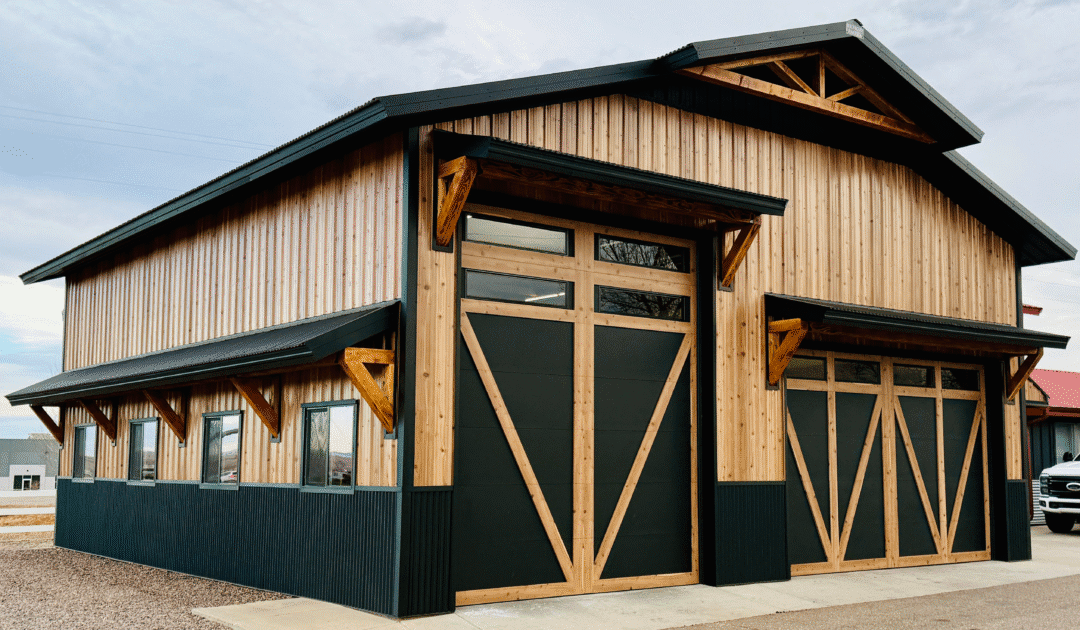
Shouses tend to have a strong, modern exterior look. The combination of metal panel siding, large overhead doors, and clean horizontal lines gives them a distinctive industrial-meets-farmhouse aesthetic that’s become very popular. Some popular exterior choices include:
- Two-tone metal panel siding (dark lower, light upper, or the reverse)
- Board and batten style metal siding for a more residential look
- Black framed windows and glass entry doors that contrast against lighter siding
- Covered porch or lean-to addition on the living side for outdoor living space
- Overhead doors with windows to bring light into the shop without sacrificing wall space
Shop Features
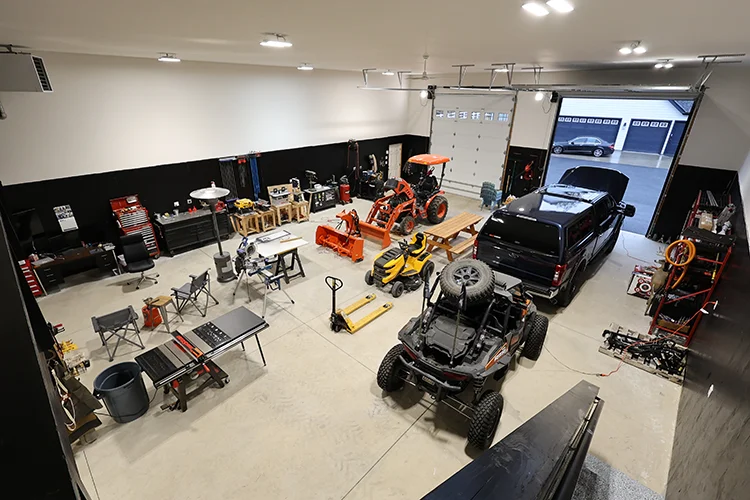
The shop portion of a shouse is where you really get to customize for how you work. Things worth planning for from the beginning include:
- Floor drains: Almost impossible to add after the slab is poured, so plan them early
- 220V and 480V electrical circuits for tools, welders, and compressors
- Air compressor lines plumbed into the walls
- A vehicle lift rough-in if you plan to do your own maintenance
- In-floor radiant heat in climates where you’ll be working through cold winters
- Mezzanine storage above part of the shop floor
- Separate entry for clients or employees if you’re running a business
Living Area Features
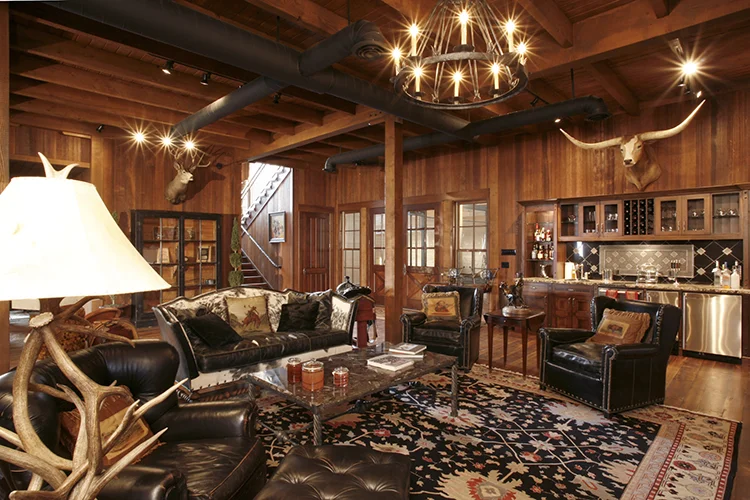
The living quarters of a well-designed shouse don’t look like an afterthought. In fact, some of the most impressive interiors we’ve seen are in shouses, partly because the open floor plan and tall ceilings give designers a lot to work with. Popular choices include:
- Open concept kitchen, dining, and living area with vaulted or exposed truss ceilings
- Polished, stained, or epoxy-coated concrete floors throughout
- Large windows and glass doors that bring in natural light
- Industrial-style fixtures and hardware that complement the metal building exterior
- Master suite positioned away from the shop wall for better sound insulation
- Mudroom or utility space between the shop and the main living area as a transition zone
Shouse Insulation: Getting This Right Matters
Insulation is one of the most important decisions you’ll make in a shouse build, and it’s worth thinking about carefully before the walls go up. Metal buildings have different insulation requirements than stick-built homes, and the shop and living areas have different needs from each other.
In the living quarters, you want the same level of thermal performance you’d expect from a well-built home. Spray foam insulation is the most popular choice for metal building homes because it seals the building envelope tightly, controls condensation, and delivers excellent R-values in a relatively thin application. Two-inch closed-cell spray foam is common on walls, with additional batts or blown-in insulation in the ceiling.
In the shop, the level of insulation depends on how you’ll use the space and what climate you’re building in. If you’re in the Pacific Northwest or Mountain West and planning to work in the shop year-round, insulating the shop well from the start is much less expensive than trying to add it later. At a minimum, a radiant barrier and fiberglass blanket insulation at the roof line will make a significant difference in comfort.
The wall between the shop and the living area should be treated like an exterior wall for both thermal and sound insulation purposes. Dense-pack cellulose or spray foam in this wall will keep heat and noise in the shop where it belongs.
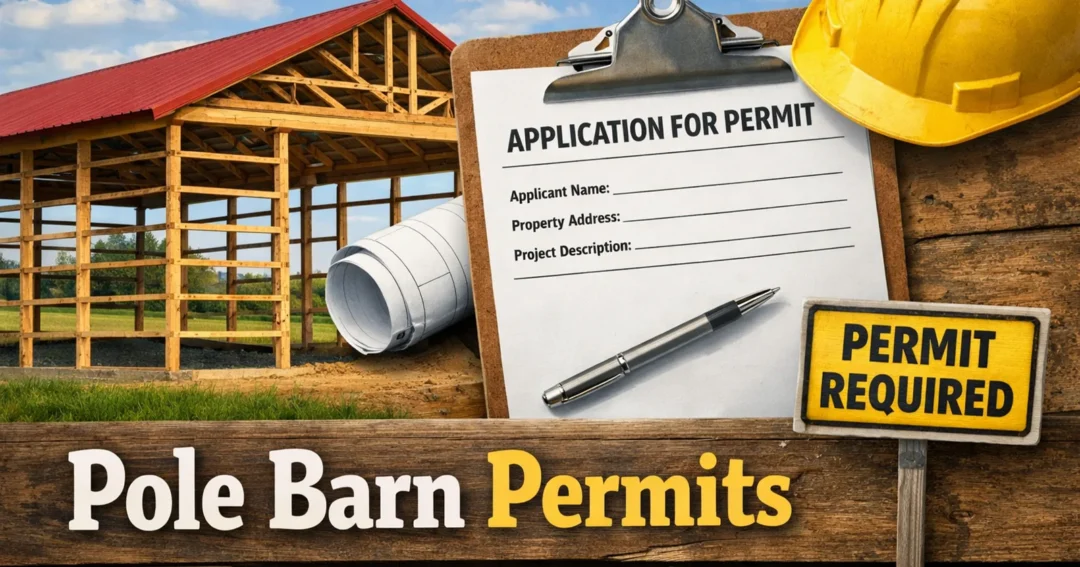
Permits, Zoning, and Shouse Building Codes
Shouses fall into a somewhat unique category when it comes to permits and zoning. In many jurisdictions, the structure is treated as a residential building with an attached garage or accessory use, which means it needs to meet residential building codes for the living portion. In some areas, the shop portion may be classified as an accessory structure or commercial use, depending on how it’s used and permitted.
The key things to sort out before you start:
- Zoning: Check whether your property is zoned for residential use. Most rural residential and agricultural zones allow shouse-style buildings, but you’ll want to confirm setbacks, height limits, and any restrictions on commercial activity.
- Residential building codes: The living quarters will need to meet your local residential building code, including energy codes, egress requirements, and minimum room sizes.
- Septic and water: If you’re on rural land, you’ll need an approved septic system design and well permit before construction starts.
- Utility connections: Coordinate electrical service capacity with your utility provider early. A shouse with a working shop may need a larger service than a typical home.
A good local shouse builder will be familiar with the permit process in your area and can help you navigate these requirements. It’s much easier to get this right at the planning stage than to make changes after construction begins.
How to Finance a Shouse
Financing a shouse is more straightforward than it used to be, but it’s still worth doing your homework before you start talking to builders. Lenders are increasingly familiar with metal building homes, and several financing options work well for shouse projects.
Construction-to-Permanent Loans
This is the most common financing path for a custom shouse. You get a construction loan that funds the build in draws as work is completed, and then it converts to a permanent mortgage once the building is done and a certificate of occupancy is issued. The key is finding a lender who is comfortable appraising a metal building home, which is becoming less of a challenge as shouses become more common.
USDA Rural Development Loans
If your property is in a qualifying rural area, USDA construction loans can be an excellent option. They typically offer favorable terms and are designed for exactly the kind of rural residential construction that shouses represent.
Personal Loans and Home Equity
For smaller shouse projects or buyers who own land outright, personal loans or home equity loans can cover part or all of the build cost. These are simpler to arrange but carry higher interest rates than construction-to-permanent loans.
The most important step in financing a shouse is getting a preliminary conversation with a lender before you commit to a builder or a building plan. Understanding your budget ceiling from a financing standpoint will shape every other decision you make.
Finding Shouse Builders Near You
Finding the right shouse builder is one of the most important decisions you’ll make. A shouse is not a project for a builder who has never done one before. The combination of metal building systems, residential finishing, and the specific requirements of a live-work space requires a contractor who understands all three.
What to Look for in a Shouse Builder
- Demonstrated experience with metal building homes, not just commercial or agricultural metal buildings
- A portfolio of completed shouse projects with photos of both the exterior and the finished interior
- References from shouse clients you can actually call
- Familiarity with local permitting and residential building codes
- In-house design capability or a trusted partnership with a designer or architect
- Transparent, itemized quotes that break down material costs, labor, and allowances clearly
Questions to Ask a Shouse Builder
When you’re interviewing builders, these questions will help you separate experienced shouse contractors from those who are figuring it out as they go:
- How many shouses have you completed in the last two years?
- Can you show me examples of your work at similar sizes and finish levels to what I’m considering?
- How do you handle the transition between the shop and the living quarters in terms of insulation and sound control?
- What does your typical build timeline look like from contract to move-in?
- Who handles the residential finish work, and is that in-house or subcontracted?
- Have you worked with lenders on shouse construction loans before?
Steel Structures America: Shouse Builders Serving the Northwest and Mountain West
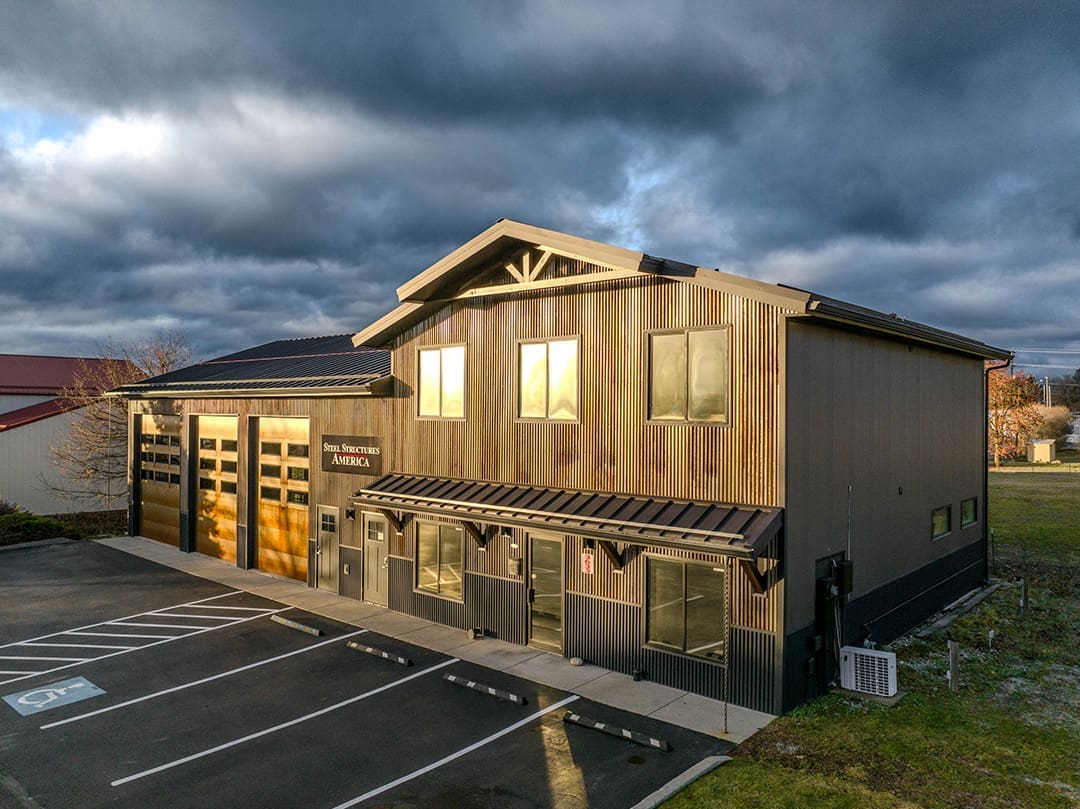
Steel Structures America builds custom shouses throughout Idaho, Washington, Oregon, Colorado, Montana, and surrounding states. We specialize in post-frame and steel frame metal building homes that combine a serious shop with high-quality living quarters, and we’ve helped hundreds of landowners bring their shouse vision to life.
If you’re looking for an experienced shouse builder near you, we’d love to talk about your project. Give us a call at (800) 833-9997 or reach out through our contact page to start the conversation.
Who Is a Shouse Right For?
A shouse is not the right building for everyone, but for the right buyer, it’s hard to beat. Here’s a quick summary of who tends to love this building type most:
It’s a great fit if you:
- Own or are buying acreage or rural land and want a permanent home with serious garage or shop space
- Work in the trades and want to run your business out of the same property where you live
- Own expensive equipment, vehicles, or recreational gear that you want to store and work on under cover
- Value the ability to design your own space from the ground up rather than buying a house that mostly works for you
- Want a durable, low-maintenance home that can take the wear and tear of a working rural lifestyle
- Are looking for better value per square foot than a traditional custom home with a separate shop
It might not be ideal if you:
- Are buying in a suburban neighborhood with restrictive HOA or zoning rules that limit metal buildings or shop use
- Need conventional financing and are working with a lender who isn’t comfortable with non-traditional residential construction
- Want a finished home right away rather than a custom build that takes six to twelve months from planning to occupancy
Ready to Build Your Shouse?
A shouse is one of the most rewarding building projects you can take on, and when it’s done right, it’s a home and a workspace you’ll use every single day. The key is working with a builder who knows this building type well, planning your layout and budget before you break ground, and making the big decisions about insulation, electrical, and finish level early when they’re easy to change.
Steel Structures America builds custom shouses across the Northwest and Mountain West. If you’re ready to start planning, we’d love to help. Call us at (800) 833-9997 or use our submit an online quote request to get started.