
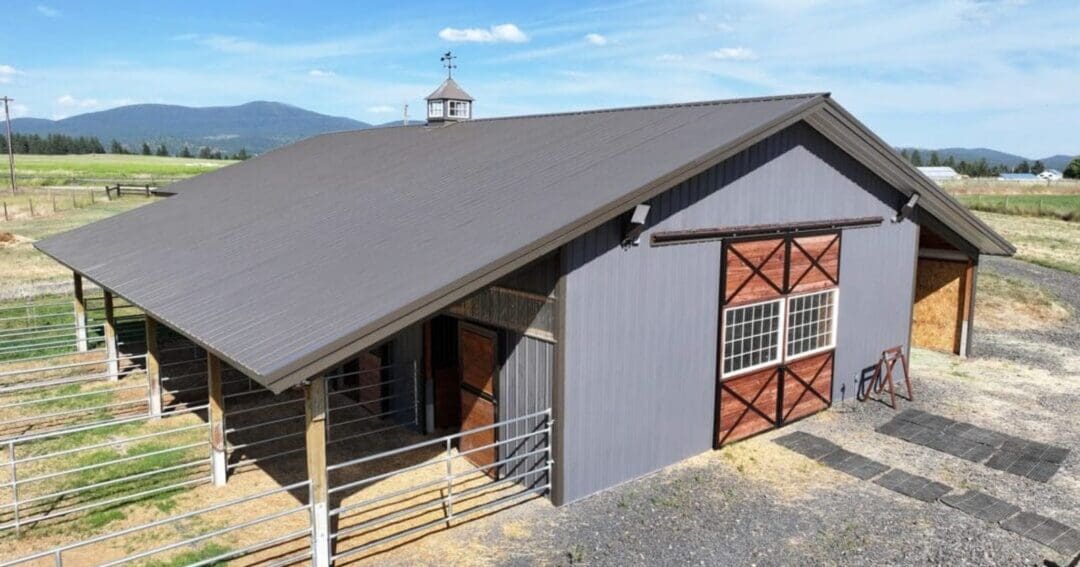
Horse Barn Builders: How to Choose the Right One for Your Property
Plenty of companies will put up a barn. Fewer of them build barns that work well for horses over twenty years. That’s the real question when you’re comparing horse barn builders: not whether they can frame a building, but whether they understand what living animals do to one.
Here’s what separates a genuine equestrian builder from a general contractor with a nail gun, and what to ask before you hire anybody.
What horse barn builders get right that others miss
Horses generate heat, moisture, ammonia, and dust, and they lean on, chew, and kick whatever’s within reach. A builder who works with horses regularly designs around that from the start:
- Ventilation as a design decision, not an afterthought. Air has to move through the barn continuously, including in winter when you’d rather close everything up. Poor airflow is the most common problem in barns built by people who don’t specialize.
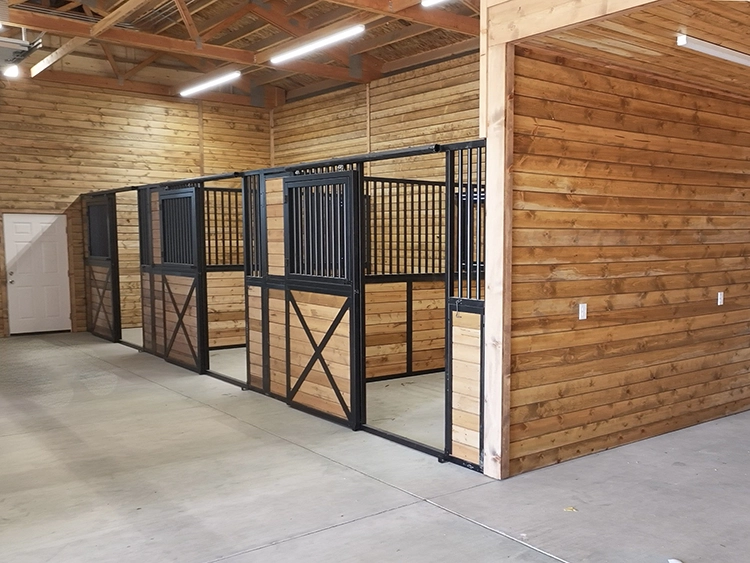
- Surfaces that survive contact. Stall fronts, kick boards, and anything at horse height need materials chosen for abuse.
- Drainage and footing. How water moves through the aisle, the stalls, and the ground around the barn matters more than most owners expect.
- Fire and electrical detail. Wiring in a dusty barn full of hay and bedding gets treated differently than wiring in a shop.
Our guide to ventilation in post-frame buildings covers why airflow gets designed in rather than added later.
Questions to ask horse barn builders
- How many horse barns have you built, and can I visit one? Photos are easy. A barn you can walk through, ideally a few years old, tells you far more.
- Who handles engineering and permits? Snow and wind loads in the Northwest and Intermountain West are not trivial, and an ag building still has to be engineered for your site.
- How do you approach ventilation here? If the answer is a couple of vents and a shrug, keep looking.
- What’s the stall system, and can it be reconfigured? Herds change. A barn that can’t adapt gets expensive.
- Do you build arenas too? Even if it’s not in this phase, a builder who does both will site the barn with that in mind.
- What’s not in this quote? Site prep, water, electrical, and footing material are the usual gaps.
What to look at in their past work
Go see finished barns and pay attention to the parts nobody photographs. Is the aisle dry? Does the barn smell of ammonia? Are stall fronts chewed through or holding up? Is there condensation on the underside of the roof on a cold morning? Ask the owner what they’d change. Owners are honest about barns.
The design calls a good builder raises first
Before dimensions get set, a builder who knows horses will ask you about:
- How many horses now, and how many you might have in five years
- Stall size and aisle width based on your horses and your equipment, rather than a template
- Whether you need a tack room, wash bay, feed room, or hay storage under the same roof
- How the tractor gets in and out, and whether you can drive through
- Turnout access and where the paddocks sit relative to the doors
- Whether an indoor arena is coming later
If hay is going under the same roof or in a separate building, our guide to hay storage buildings covers the ventilation and fire considerations. For arena sizing, see horse riding arena buildings. Land grant university extension programs publish solid, non-commercial guidance on equine facility design through eXtension.
Why post-frame suits horse barns
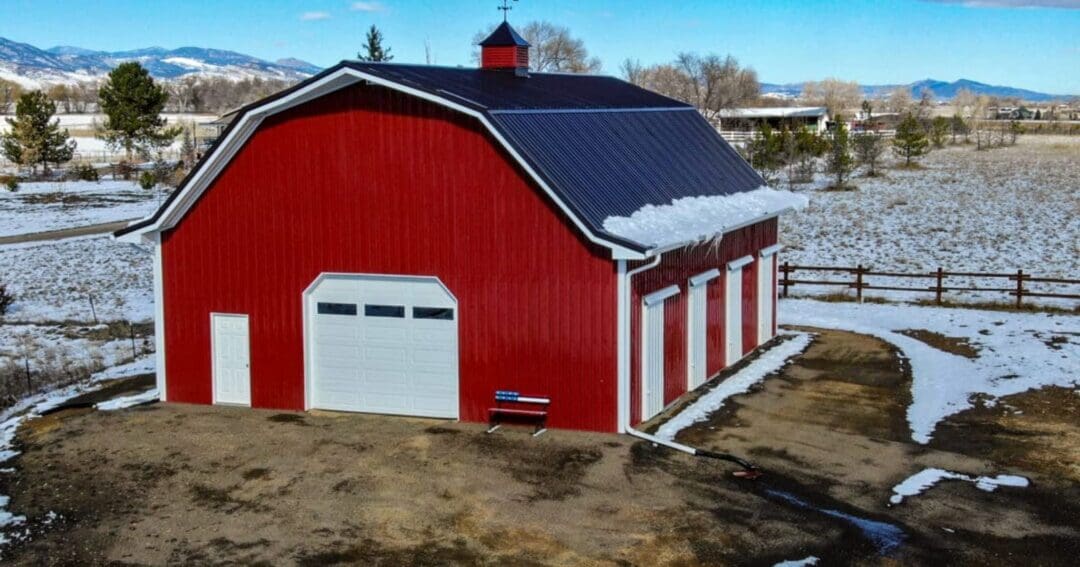
Post-frame construction gives you clear-span interiors, so there are no posts in the middle of an aisle or an arena. It also handles tall sidewalls and wide door openings without complicated engineering, and it’s straightforward to modify later when your stall count changes. That combination is why so many equestrian facilities are built this way. Our full guide to horse barns covers sizes and designs in depth, and agricultural buildings puts it in the wider farm and ranch context.
Frequently asked questions
Do I need a specialist, or will a general contractor do?
A good general contractor can build a sound structure. The difference shows up in the details that keep horses healthy, which come from having built a lot of these before.
Should the barn and arena be built at the same time?
Not necessarily, but they should be planned at the same time. Siting, drainage, and access are much cheaper to get right once.
How far ahead should I start?
Earlier than you think. Design, engineering, and permitting all take time before a crew ever shows up, and you want the shell closed in before the weather turns.
The bottom line
The right horse barn builders will ask you more questions than you ask them, and most of those questions will be about your horses rather than your budget. That’s the signal worth looking for.
Steel Structures America has built agricultural and equestrian buildings across Idaho, Washington, Oregon, Montana, Wyoming, and Colorado for more than 30 years, with design, engineering, and permitting handled in-house. Give us a call at (800) 833-9997 or request a free quote and we’ll talk through your property.