
Post-Frame vs Stick-Frame Construction: Which Is Better?
When you’re planning a shop, barn, garage, or home, one of the first big decisions is how it’ll be built. The post-frame vs stick-frame question comes up on almost every project, and the right answer depends on what you’re building and how you’ll use it. Here’s a straight comparison of the two methods so you can choose with confidence.
What Each Method Is
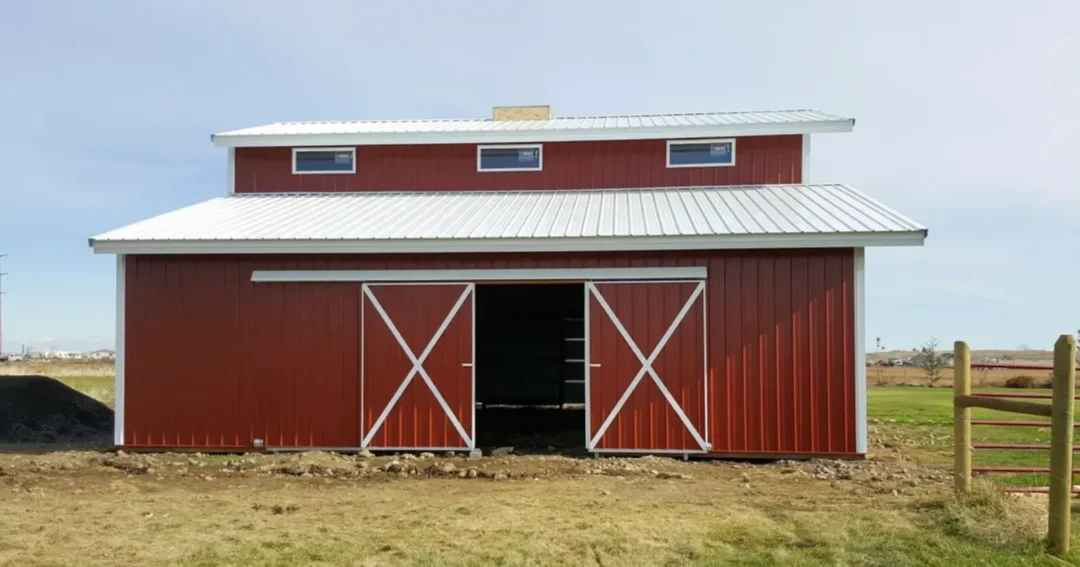
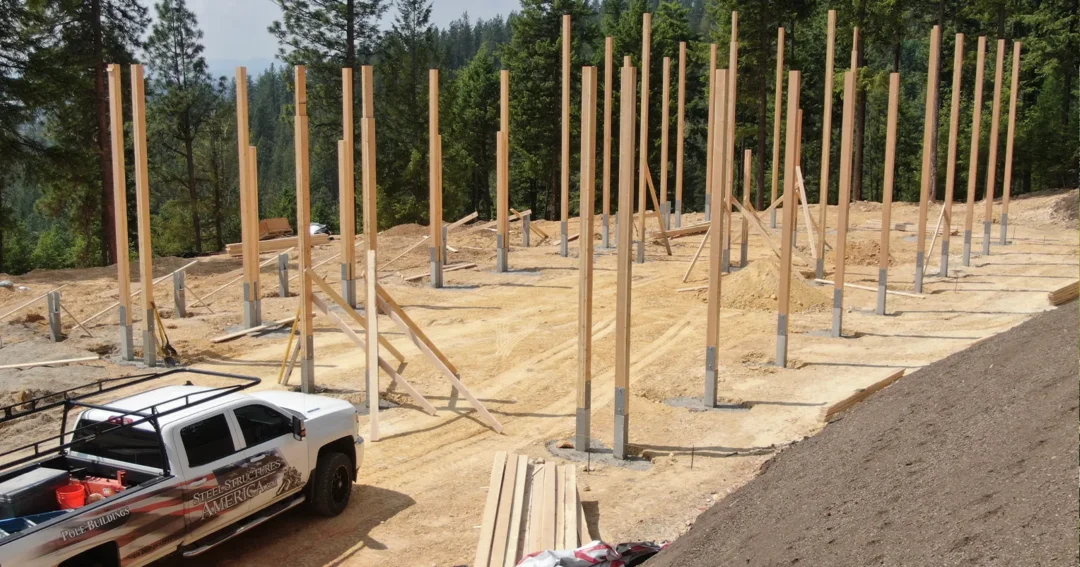
Post-frame construction, the method behind pole barns, carries the building on large posts set in the ground or on brackets, spaced several feet apart. Big trusses span between them, so there are no interior load-bearing walls. Our guide to post-frame construction covers it in depth.
Stick-frame is traditional construction: closely spaced wood studs (usually every 16 or 24 inches) on a full continuous concrete foundation, with the walls carrying the load. It’s how most conventional houses are built.
Post-Frame vs Stick-Frame at a Glance
- Foundation: post-frame uses posts or piers, so it skips the full perimeter foundation stick-frame requires. That’s a big cost and time savings.
- Speed: post-frame goes up faster, with fewer parts and a frame a small crew can raise quickly.
- Cost: post-frame is usually cheaper to build for the same footprint, especially at larger sizes.
- Open space: post-frame gives clear-span, column-free interiors. Stick-frame needs interior bearing walls or added beams for wide spans.
- Flexibility: post-frame makes it easy to add tall doors, lean-tos, and big open bays.
- Familiarity: stick-frame is understood by every builder and lender, which occasionally matters for financing or unusual urban lots.
Where Post-Frame Wins
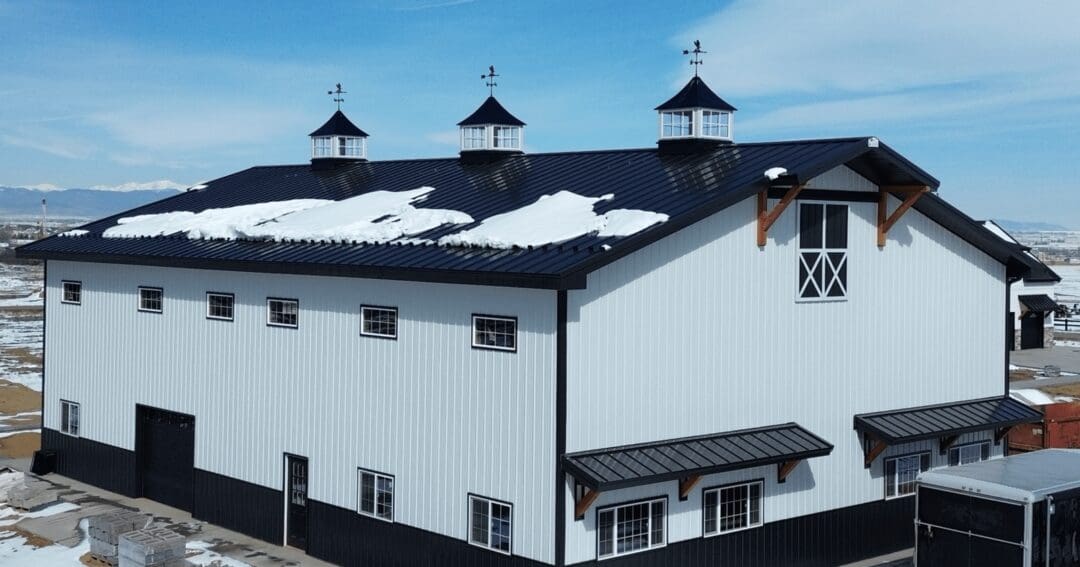
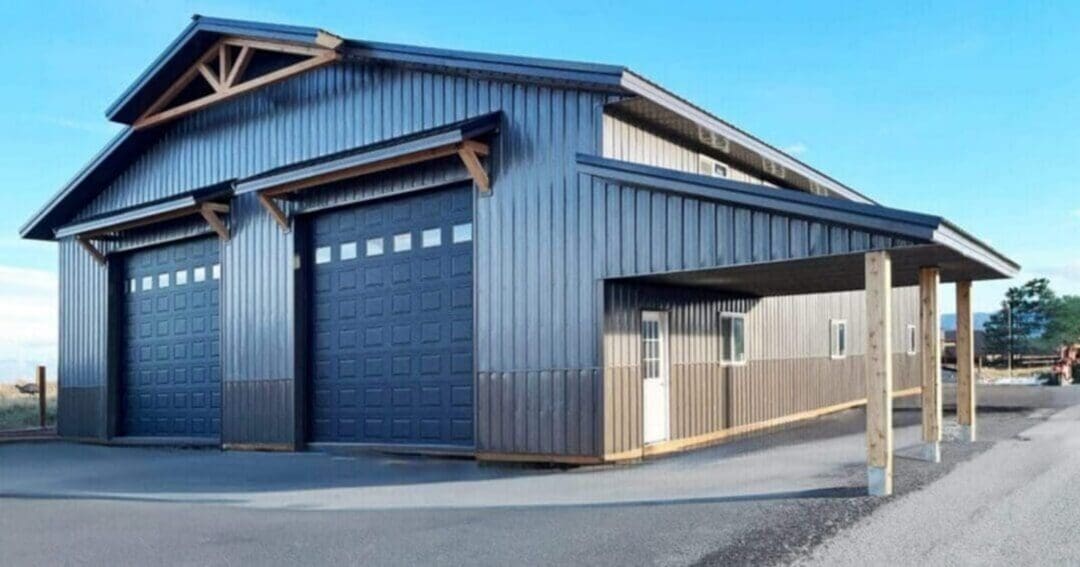
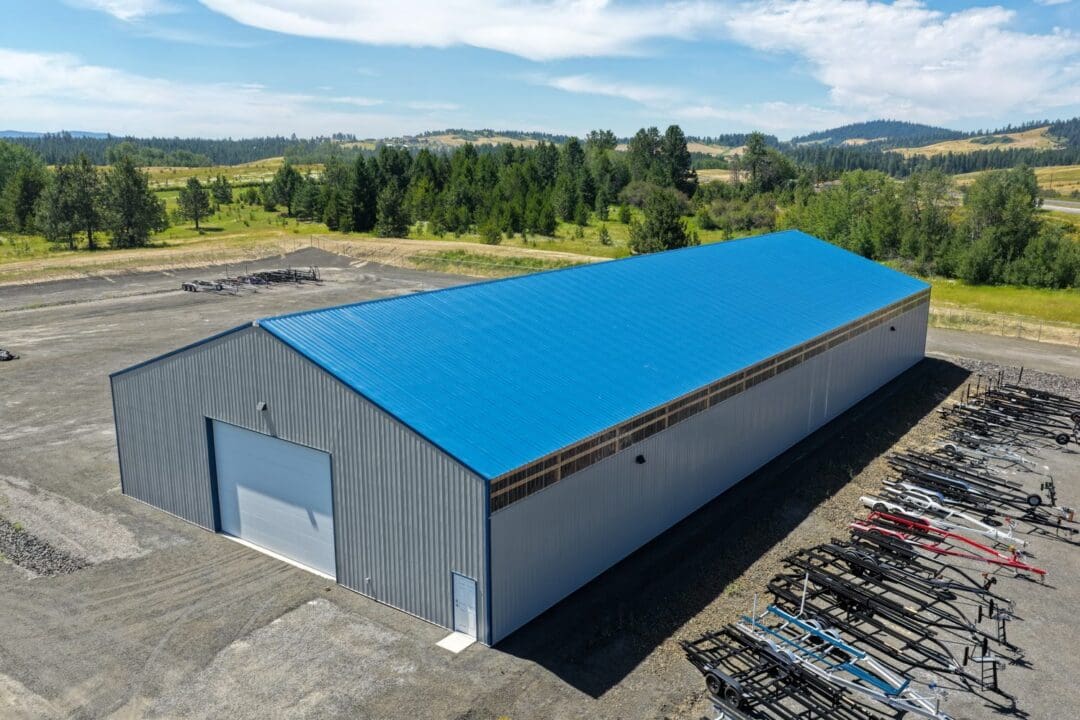
For shops, garages, barns, agricultural buildings, and even homes and barndominiums on acreage, post-frame is usually the better value. You get more usable space for the money, a faster build, and the wide-open interior that makes these buildings so useful. It’s why post-frame dominates rural construction across Idaho, Washington, Oregon, Montana, and Colorado. The clear-span advantage comes straight from the pole barn framing system.
Where Stick-Frame Still Fits
Stick-frame can make sense for smaller, highly compartmentalized buildings with lots of interior walls, or on tight urban lots where the design and codes favor conventional construction. For a home chopped into many small rooms, the difference narrows.
What About Cost?
Across most shop, garage, barn, and rural-home projects, post-frame comes in lower than stick-frame for the same size, largely because it skips the full foundation and goes up faster. For real numbers on a post-frame build, see our breakdown of pole barn cost. If you’re also weighing steel-frame options, our comparison of a quonset hut vs pole barn vs metal building is worth a look.
Choosing the Right Method
For the vast majority of shops, barns, garages, and rural homes, post-frame is the faster, more affordable, more flexible choice. Stick-frame keeps its place for specific conventional builds. The best move is to match the method to your project with a builder who does both kinds of work every day.
Steel Structures America builds post-frame pole barns and metal buildings across the Northwest and Intermountain West. Give us a call at (800) 833-9997 or request a free quote to talk through the right approach for your build.