
Quonset Hut vs. Pole Barn vs. Metal Building: Which Is Right for You?
Quonset huts come up early in a lot of rural property owner searches. They are cheap-looking online, easy to find, and the arched profile is distinctive enough to stick in your memory. If you are trying to figure out what kind of large building to put on your land, a quonset hut might be the first thing you price out.
But most buyers who seriously compare a quonset hut against a pole barn or pre-engineered metal building end up choosing one of the latter two. Not because quonset huts are bad buildings, but because they come with a set of practical limitations that most buyers have not fully thought through when they start shopping.
This article gives you an honest side-by-side of all three. What each one is, what it actually costs, where each shines, and where each falls short.
What Each Building Type Actually Is
Quonset Hut
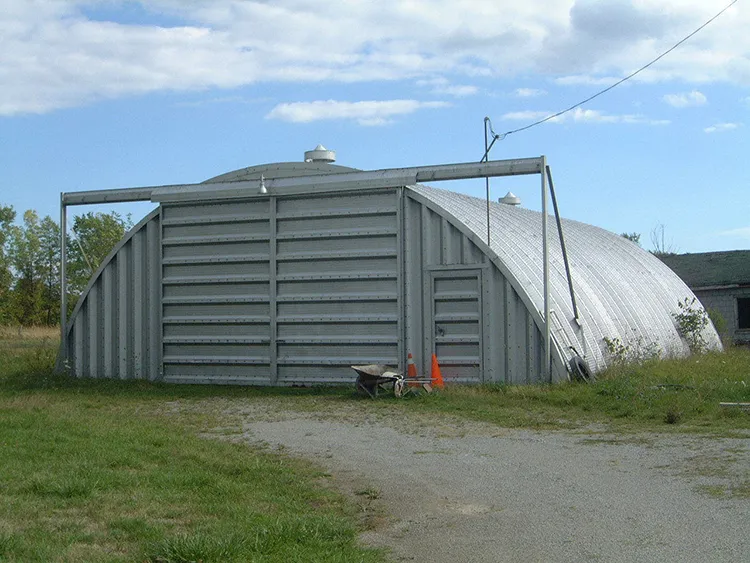
A quonset hut is a prefabricated arch-shaped structure made from corrugated steel panels that form both the walls and the roof in a continuous curved surface. The design originated as military field structures in World War II and has remained largely unchanged since. There are no interior columns, no separate wall and roof framing: just the arch itself sitting on a foundation. They are typically sold as kits and assembled by the buyer or a general crew. The arch shape is their defining feature and their most significant limitation.
Pole Barn (Post-Frame Building)
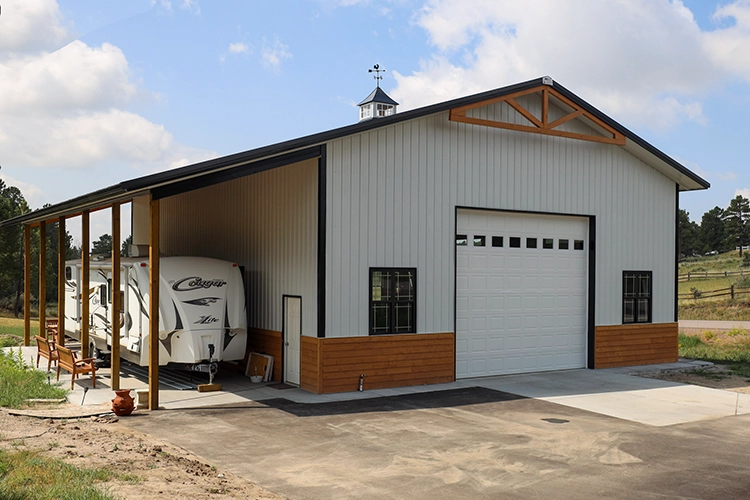
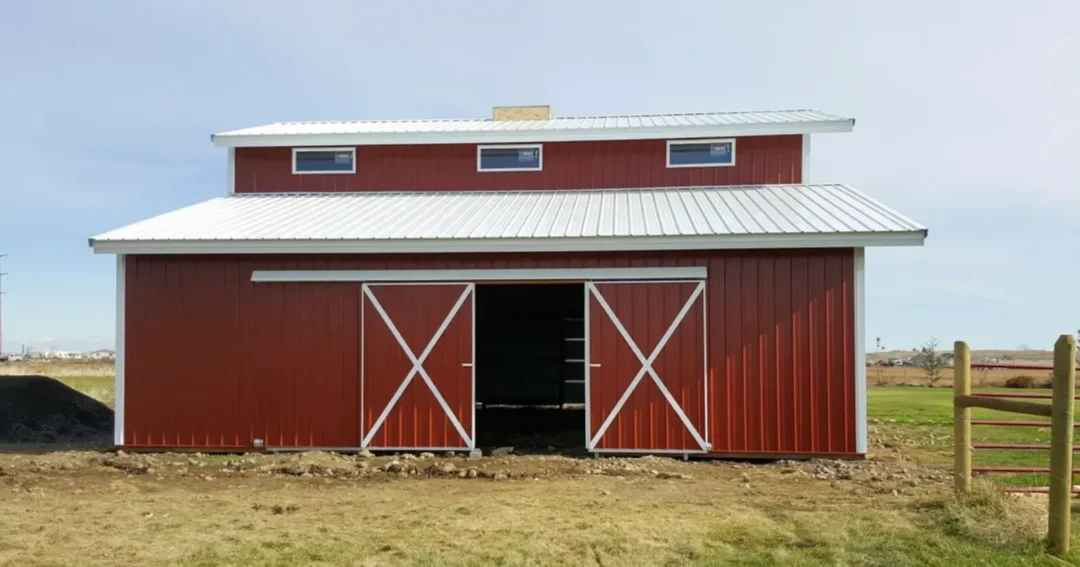
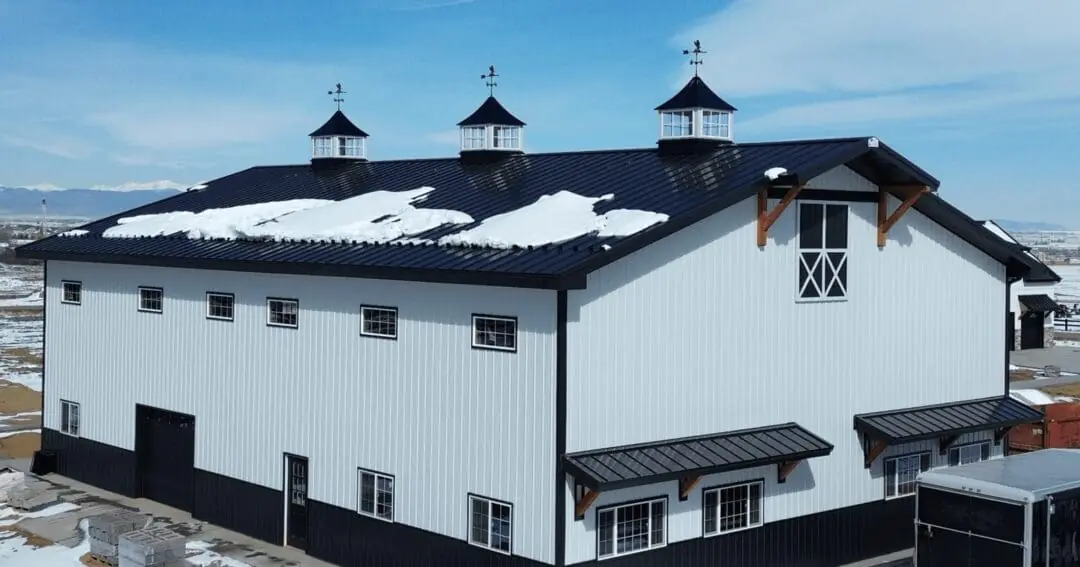
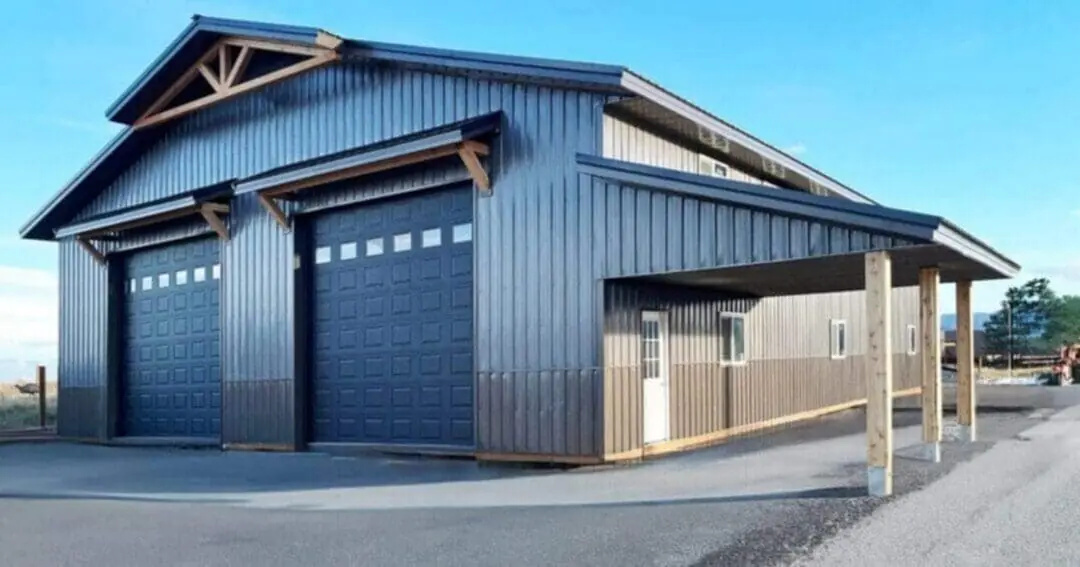
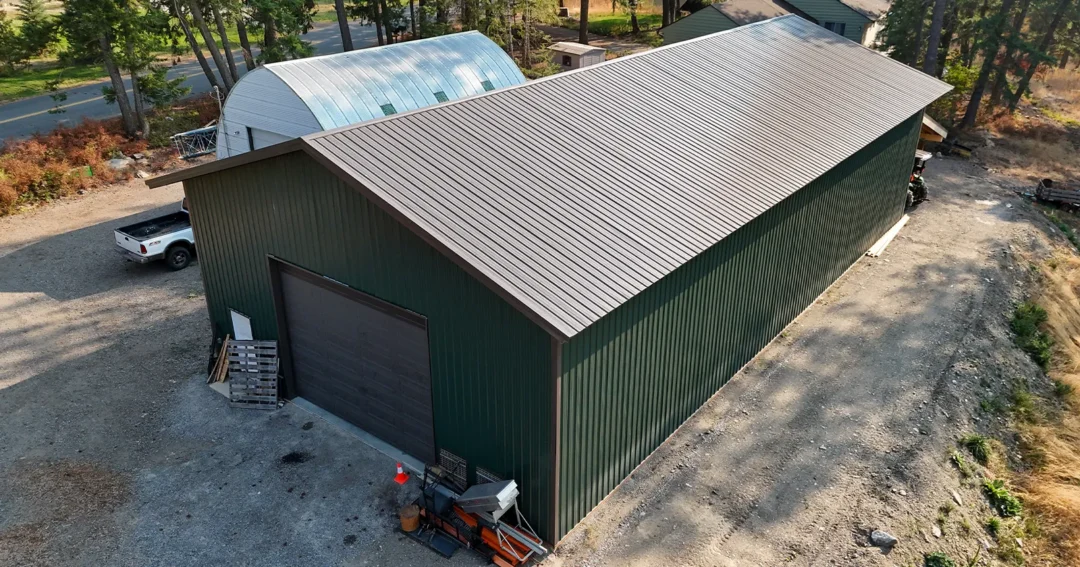
A pole barn (more accurately called a post-frame building) is constructed with large structural columns embedded in the ground or set on concrete piers, with a conventional gable roof framed on top. The columns carry the roof loads directly, which eliminates the need for interior load-bearing walls and creates open, clear-span interiors. Walls are straight and vertical. Rooflines are standard gable, gambrel, or monitor style. Post-frame buildings can be configured for almost any use (agricultural, residential, commercial, shop, garage) and finished to any level.
Pre-Engineered Metal Building
A pre-engineered metal building uses a rigid steel frame, typically with I-beam columns and rafters and metal wall and roof panels attached to the outside. The frame is engineered and fabricated off-site, then bolted together on your foundation. Like post-frame, metal buildings have straight vertical walls, conventional rooflines, and clear-span interiors. They are typically stronger and more engineering-intensive than post-frame at very large commercial spans, and they are the standard for warehouses, large commercial facilities, and aviation hangars. They are also more expensive per square foot than post-frame at most residential and agricultural sizes.
Side-by-Side Comparison
| Category | Quonset Hut | Pole Barn | Pre-Engineered Metal Building |
| Wall style | Curved arch with no flat walls | Straight vertical walls | Straight vertical walls |
| Interior usable space | Reduced: curved walls limit usable corners | Full clear-span rectangular interior | Full clear-span rectangular interior |
| Roof style | Arch only | Gable, gambrel, monitor, single-slope | Gable or single-slope standard |
| Clear span interior | Yes. No interior columns | Yes. No interior columns | Yes. No interior columns |
| Residential use | Difficult. Requires significant modification for livability | Excellent. Widely used for barndominiums and shouses | Possible. Less common but feasible |
| Design flexibility | Very limited – shape is fixed | High – floor plan, height, additions are all flexible | High – engineered to specification |
| Windows and doors | Difficult to frame into curved walls | Easy – standard framing at any location | Easy – standard framing at any location |
| Lean-to additions | Very difficult with arch profile | Easy – standard addition method | Possible with engineering |
| Insulation | Challenging: condensation is a major issue with curved steel arch | Straightforward: standard insulation methods work well | Straightforward: standard methods |
| Permitting | Sometimes simpler for storage-only use | Standard ag or residential permit process | Standard commercial or residential process |
| Typical cost (40×60) | $25,000 – $55,000 (kit price only) | $65,000 – $110,000 (turnkey) | $85,000 – $140,000 (turnkey) |
| Kit vs. turnkey | Typically sold as kits for self-assembly | Available turnkey from local contractors | Available turnkey from local contractors |
| Longevity | Good for storage, limited for residential | Excellent. 40-plus years with proper maintenance | Excellent. 40-plus years |
| Best for | Simple covered storage, agricultural use, temporary structures | Shops, garages, barns, homes, barndominiums, agricultural | Large commercial spans, warehouses, aviation |
Where Quonset Huts Fall Short
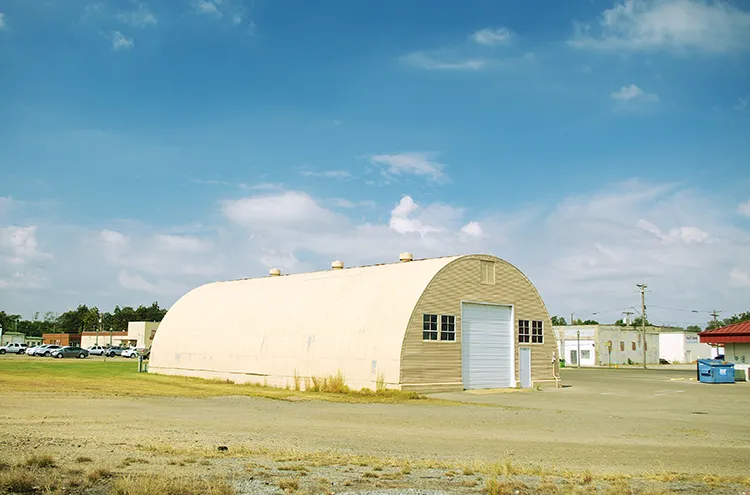
Quonset huts look inexpensive in search results because the prices shown are almost always kit prices, not installed prices. A quonset hut kit for a 40×60 footprint might be listed at $18,000 to $35,000. That price does not include your foundation, concrete, site preparation, labor to erect the arch panels, insulation, electrical, doors, windows, or any interior work. By the time you add those costs, the price gap between a quonset and a pole barn narrows considerably, and you still end up with a curved building.
The curved wall is the core problem for most buyers. Here is what it actually means in practice:
- Lost usable floor space. The arch curve starts at the foundation and bows inward as it rises. Along the side walls, you lose significant floor-to-ceiling height. A 40-foot wide quonset might only give you truly usable vertical space in the center 20 to 25 feet of the width. Anything pushed toward the walls, like shelving, equipment, or vehicles, runs into the curvature.
- Windows and doors are difficult. Framing a standard rectangular window or door into a curved corrugated steel panel requires custom fabrication and flashing work. Most quonset buildings end up with doors only at the flat end walls, which limits natural light and ventilation throughout the building.
- Condensation is a serious issue. The unbroken metal arch is a condensation machine in climates with cold winters and temperature swings. Without a proper insulation system that is technically difficult to apply to a curved interior surface, moisture problems develop quickly. This is a significant issue in Idaho, Montana, Colorado, and the Pacific Northwest.
- Very hard to expand or modify. Adding a lean-to, extending the building, or modifying the footprint is structurally complicated with an arch structure. Pole barns and metal buildings are straightforward to add onto. Quonset huts generally are not.
- Residential use requires significant modification. Turning a quonset hut into a livable home is possible but it requires interior framing that essentially builds a conventional rectangular room structure inside the arch. At that point you are doing nearly as much work as building a new pole barn or metal building home from scratch, without the design flexibility those options provide.
Where Quonset Huts Do Make Sense
To be fair, there are situations where a quonset hut is a reasonable choice:
- Temporary or semi-permanent storage. If you need covered storage quickly and do not plan to use the building long-term, a quonset kit can be erected faster than a conventional building.
- Simple agricultural storage without insulation needs. Hay, grain, and equipment that does not require climate control can be stored effectively in a quonset hut without the condensation problems that affect finished or insulated buildings.
- Very tight budgets with self-assembly capability. If the full installed cost still pencils out lower for your specific use case and you or your crew can do the assembly, a quonset may be appropriate.
For anything involving living space, finished interiors, frequent human use, climate control, or a building you want to be proud of in 20 years, a pole barn or metal building is the better investment.
Pole Barn vs. Metal Building: How to Choose Between the Two
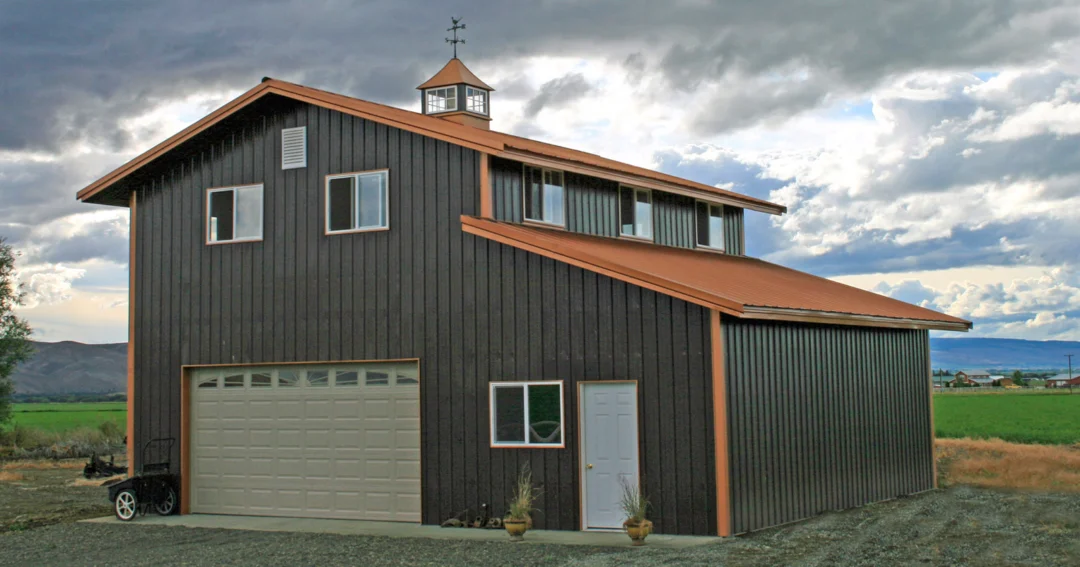
Once most buyers rule out the quonset, the real question becomes pole barn versus pre-engineered metal building. The honest answer is that for the majority of residential, agricultural, and small commercial projects in SSA’s service area, a pole barn is the better choice. Here is why:
- Post-frame construction is typically less expensive per square foot than pre-engineered metal at residential and agricultural sizes. The cost advantage is most pronounced in the 30×40 to 60×100 range that most hobby shop, garage, farm building, and barndominium buyers are working in.
- Design flexibility. Post-frame buildings accommodate lean-to additions, mixed roof styles, residential floor plans, and custom configurations more easily than metal building systems, which are optimized for standardized commercial layouts.
- Local contractor availability. Experienced post-frame contractors are common throughout rural Idaho, Washington, Oregon, Colorado, and Montana. Pre-engineered metal building erectors are less common in smaller markets.
- Residential and barndominium use. Post-frame construction is the dominant method for barndominiums and rural residential homes. The building systems are well-understood by local contractors and building departments.
Pre-engineered metal buildings are the right choice for:
- Very large commercial spans. Warehouses, distribution centers, and aviation hangars over 100 feet wide are typically better served by rigid steel frame construction.
- Projects requiring specific commercial engineering certifications. Some commercial construction projects require IBC-compliant metal building systems with specific engineering documentation.
- High-wind and high-seismic commercial sites. Rigid steel frame systems have specific engineering advantages in certain high-load commercial environments.
The Bottom Line
If you started your search looking at quonset huts, you are probably in the same place most buyers end up: realizing that the curved arch profile creates real practical limitations for the way you actually plan to use the building. For the vast majority of rural property owners building a shop, garage, barn, or home in the Pacific Northwest and Intermountain West, a post-frame pole barn gives you the most usable space, the most design flexibility, and the best long-term value for the money.
Pre-engineered metal buildings are the right call for large commercial spans and specific commercial applications. Post-frame construction is the right call for nearly everything else.
Frequently Asked Questions
Are quonset hut homes a good idea?
They can work, but they require significant interior modification to function as comfortable living spaces. The curved walls mean standard furniture, cabinets, and built-ins do not fit neatly against the walls. Insulation and condensation management are more technically challenging than in a rectangular building. Most buyers who want a rural home with non-traditional architecture find that a barndominium or shouse built with post-frame construction gives them a more livable result at a similar or lower total cost.
Why are quonset huts cheaper than pole barns?
The prices you see advertised for quonset huts are almost always kit prices: the cost of the steel arch panels only, shipped to your property. They do not include foundation, labor, concrete, insulation, doors, windows, or electrical. A fully installed quonset hut is significantly more expensive than the kit price suggests. When you compare total installed costs, the gap between a quonset and a pole barn is much smaller than the initial price comparison implies.
Can you insulate a quonset hut?
Yes, but it is more difficult than insulating a rectangular building. Spray foam applied directly to the interior of the arch panels is the most effective approach, but it is expensive and the curved surface means there is no flat cavity to fill with standard batt insulation. Without proper insulation, condensation on the interior of the steel arch is a persistent problem in cold climates.
What is a quonset barn alternative?
A post-frame pole barn is the most direct quonset alternative. It gives you the same clear-span interior without the curved wall profile, at a comparable or lower installed cost, with far more flexibility in design, windows, doors, additions, and livability. If you were drawn to a quonset for its simplicity and cost, a basic post-frame building from a local contractor is worth pricing before you commit.
Not Sure Which Building Type Fits Your Project?
Steel Structures America builds pole barns and metal buildings throughout Idaho, Washington, Oregon, Colorado, and Montana. We are happy to talk through your project, give you an honest assessment of which building type makes the most sense for your use case, and put together a detailed quote. We don’t sell quonset kits, we build structures that people are still proud of in 30 years.
Call us at (866) 421-0412 or request a free quote online.