
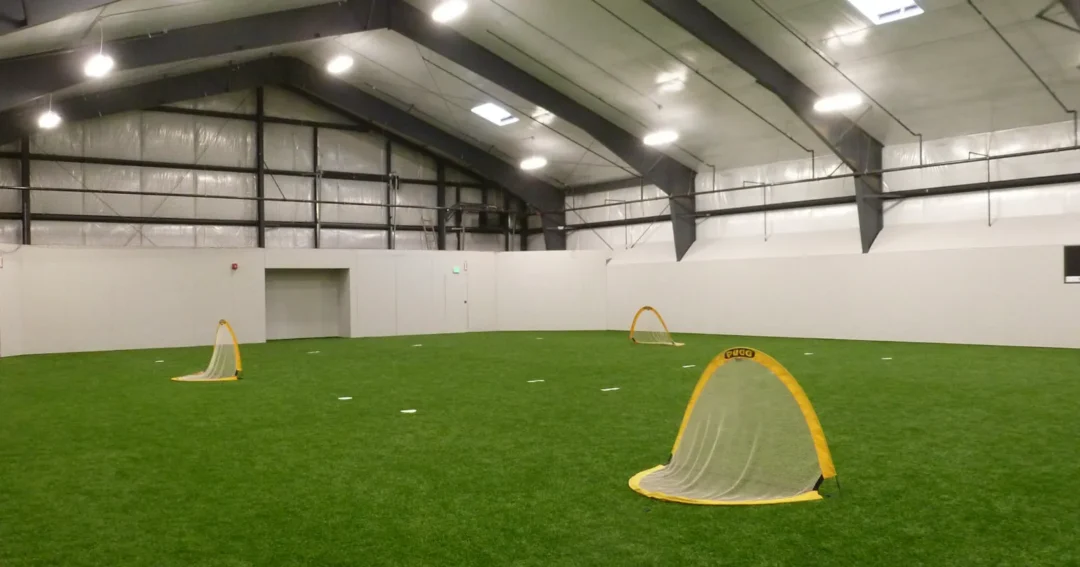
Indoor Sports Courts: Building a Tennis, Pickleball, or Basketball Court
Private indoor sports courts have moved well outside the category of things only professional athletes build. Rural and semi-rural property owners across the Pacific Northwest and Intermountain West are building tennis courts, pickleball courts, basketball courts, and multi-sport facilities on their own land at a rate that would have seemed unusual fifteen years ago. The combination of acreage to work with, a growing culture of home-based recreation, and the increasing popularity of pickleball in particular has put indoor courts on the planning list for a meaningful segment of rural property buyers.
Post-frame and pre-engineered metal building construction are the standard methods for these projects. The structural requirements (wide clear spans, significant ceiling height, durable enclosure) are exactly what these building systems deliver efficiently. This article covers what size building each sport requires, what the building itself needs to include, what it costs, and what to look for in a contractor.
Court Dimensions: How Much Building Do You Actually Need?
The court itself sets the minimum interior dimensions of the building. Every sport has regulated court dimensions, and you need additional clearance around all four sides for player movement, walls, and mechanical systems. Here are the standard court sizes and the minimum building footprints that accommodate them:
| Sport | Court Size (playing surface) | Recommended Interior Clearance | Minimum Building Footprint | Minimum Ceiling / Eave Height |
| Pickleball (single court) | 20 x 44 ft | 10 ft each side, 10 ft each end | 40 x 64 ft | 20 ft |
| Pickleball (2 courts side by side) | 44 x 64 ft | 10 ft each side, 10 ft each end | 64 x 84 ft | 20 ft |
| Tennis (single court) | 36 x 78 ft | 12 ft each side, 21 ft each end | 60 x 120 ft | 35-40 ft |
| Tennis (doubles) | 36 x 78 ft | 15 ft each side, 21 ft each end | 66 x 120 ft | 35-40 ft |
| Basketball (full court) | 50 x 94 ft | 10 ft each side, 10 ft each end | 70 x 114 ft | 25-28 ft |
| Basketball (half court) | 50 x 47 ft | 10 ft each side, 10 ft each end | 70 x 67 ft | 25-28 ft |
| Volleyball | 30 x 60 ft | 10 ft each side, 10 ft each end | 50 x 80 ft | 25 ft |
| Multi-sport (pickleball + basketball) | 50 x 94 ft | 12 ft each side | 74 x 118 ft | 28 ft |
Tennis is the most demanding sport in terms of building size. A single indoor tennis court requires a building of at least 60 x 120 feet with 35 to 40 feet of clear interior height; significantly larger and taller than any other sport on this list. Pickleball, by contrast, is remarkably space-efficient: two courts side by side fit in a 64 x 84 foot building with a standard 20-foot eave height, which is within the footprint of a large agricultural or commercial pole barn.
Why Pickleball Courts Are the Fastest-Growing Private Build
Pickleball has fundamentally changed the economics of private sports facilities. A single pickleball court requires a building that is well within the size range of a standard post-frame or metal building, a 40×64 footprint is smaller than many agricultural shops. Two courts side by side fit in a 64×84 building. The sport is playable by a wide age range, requires minimal athletic conditioning compared to tennis, and the equipment and court preparation costs are a fraction of what a tennis facility requires.
For rural property owners who want a year-round recreational facility, two indoor pickleball courts in a well-built metal building is one of the best investments available. The building itself serves multiple purposes. It can double as an entertainment space, a covered area for outdoor events, or a community gathering space that also happens to have two pickleball courts painted on the floor.
What the Building Needs to Include
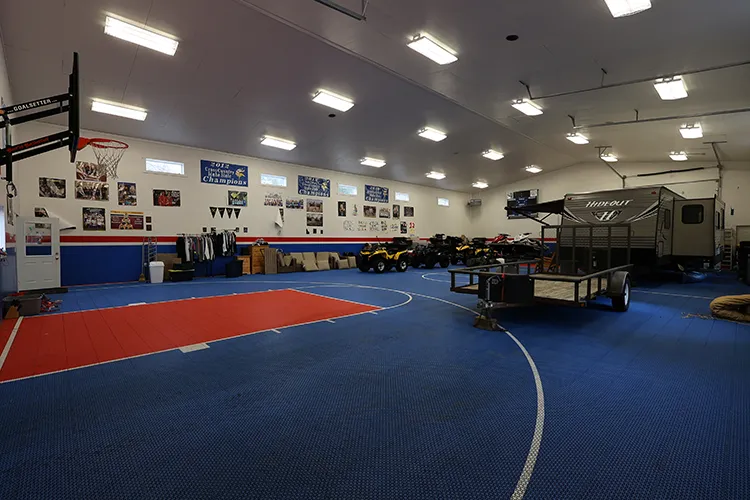
A sports court building has specific requirements beyond what a standard shop or garage needs. Here is what your contractor needs to account for during the design phase:
Clear Span Interior
No interior columns anywhere within the court footprint. This is non-negotiable for any sport. A column in the court is a safety hazard and makes the space unusable. Your contractor must design the building with full clear-span framing across the court width. For pickleball and basketball, this is routinely achievable with standard post-frame and metal building systems. For tennis, the 60-foot-plus clear span at 35-foot height requires heavier engineering and is best handled with a pre-engineered rigid steel frame system.
Ceiling Height
Adequate ceiling clearance above the court is a playing requirement, not just a preference. Pickleball and basketball at 20 to 28 feet of eave height work well with standard post-frame or metal building construction. Tennis at 35 to 40 feet requires a taller building that is closer to commercial warehouse height. Make sure your contractor understands the sport-specific height requirements before finalizing eave height. Adding two feet of eave height after the fact is expensive.
Court Surface
The court surface sits on top of your concrete slab and is one of the most important decisions in the project after the building itself. Options include:
- Poured acrylic or sport court tile over concrete. The standard surface for pickleball and tennis. Provides consistent ball bounce, defined traction, and clear line visibility. Acrylic is more durable; interlocking sport court tile is easier to repair if damaged.
- Hardwood flooring. The standard for basketball and volleyball. Requires a subfloor system above the concrete slab for proper spring and ball response. Significantly more expensive than acrylic surfaces.
- Sealed concrete with painted lines. The most basic and cost-effective option. Functional for recreational play, though ball bounce on raw concrete is harder on joints than sport-specific surfaces. Common for casual multi-sport spaces.
The court surface is typically specified by a sports flooring subcontractor rather than the building contractor. Plan this as a separate line item and get the surface spec finalized before your concrete slab is poured: the slab flatness and finish requirements differ by surface type.
Lighting
Sports court lighting has specific requirements for uniformity, intensity, and glare control that standard shop lighting does not meet. LED sports lighting fixtures mounted at the appropriate height and spacing for your specific sport are available from several manufacturers. Your contractor will rough in the electrical for lighting during building construction, but the fixture specification and layout is typically handled by a lighting specialist. Budget $8,000 to $20,000 for sport-spec LED lighting in a single-court building, depending on the sport and ceiling height.
Ventilation and Climate Control
An enclosed sports court generates significant heat from active play. Without adequate ventilation, the building becomes uncomfortable quickly. At minimum, the building needs ridge ventilation and operable eave vents to allow natural airflow. For climate-controlled facilities that are heated in winter, and cooled in summer, a commercial HVAC or unit heater system sized appropriately for the building volume is needed. Climate control is a significant additional cost but dramatically extends the usability of the facility in Idaho, Montana, and Colorado winters.
Entry and Spectator Area
A small entry vestibule with a door prevents the court interior from being exposed to outdoor air every time someone enters or exits. A bench area or bleacher space along one wall (even a simple 10-foot-wide zone separated from the court by netting) makes the facility more usable for groups. Plan these spaces during the building design phase so they are incorporated into the footprint rather than squeezed in afterward.
Indoor Sports Court Building Cost
The cost ranges below cover the building shell and concrete slab only. Court surface installation, sport lighting, netting and equipment, and HVAC are additional and are broken out separately.
| Facility | Building Size | Building Shell + Slab | Sport Lighting | Court Surface | Total Estimated Range |
| Single pickleball court | 40×64 | $85,000 – $130,000 | $8,000 – $14,000 | $15,000 – $30,000 | $110,000 – $175,000 |
| Two pickleball courts | 64×84 | $145,000 – $210,000 | $14,000 – $22,000 | $28,000 – $55,000 | $190,000 – $290,000 |
| Half-court basketball | 70×67 | $120,000 – $175,000 | $12,000 – $20,000 | $25,000 – $60,000 | $160,000 – $260,000 |
| Full-court basketball | 70×114 | $190,000 – $270,000 | $18,000 – $30,000 | $45,000 – $100,000 | $255,000 – $405,000 |
| Single tennis court | 60×120 | $280,000 – $420,000+ | $25,000 – $45,000 | $35,000 – $75,000 | $345,000 – $545,000+ |
| Multi-sport (pickleball + BB) | 74×118 | $215,000 – $310,000 | $20,000 – $35,000 | $35,000 – $75,000 | $275,000 – $425,000 |
Tennis court buildings are in a different cost category than other sports. The combination of the 60-plus-foot clear span, 35 to 40-foot eave height, and the structural engineering required pushes a single indoor tennis court building into the $280,000 to $420,000 range for the shell alone before any court or lighting work. Pickleball is dramatically more accessible. A two-court facility comes in at roughly a third of the cost of a single tennis facility at comparable quality.
Residential vs. Commercial Use: Does It Change the Build?
A private sports court on residential or agricultural property in rural Idaho, Washington, Oregon, Colorado, or Montana is typically permitted as an accessory building under agricultural or residential zoning. It does not require the same commercial occupancy classifications, fire suppression systems, or ADA compliance that a public or commercial sports facility would.
If the facility will ever be used for instruction, league play, rentals, or any revenue-generating activity, check with your local building department before finalizing your design. Commercial occupancy classifications change the permitting requirements and may require additional code compliance. A contractor experienced with both agricultural and commercial building permits can tell you exactly what category your project falls into.
Frequently Asked Questions
Can I build an indoor pickleball court in a standard pole barn size?
Yes. A single pickleball court fits comfortably in a 40×64 building, and two courts fit in a 64×84. Both are well within the range of standard post-frame construction. The 20-foot eave height required for pickleball is common in agricultural and commercial pole barns. This is one reason pickleball courts have become so popular as private builds: the building requirements align closely with structures many rural property owners are already considering for other purposes.
Can one building serve multiple sports?
Yes, and this is a popular approach. A 74×118 building with 28-foot eave height can accommodate a full basketball court and four pickleball courts on the same floor, with lines painted for each sport. Multi-sport surfaces are designed to serve multiple games. The key is sizing the building for the largest court that needs to fit and then designing the surface and lighting to serve all intended sports. Your contractor and a sports flooring specialist can help you plan this during the design phase.
How long does it take to build an indoor sports court facility?
The building shell and concrete slab for a single or two-court pickleball or basketball facility typically takes six to ten weeks to construct once permits are approved and materials are on site. Court surface installation, lighting, and any HVAC work follow the shell and add two to six weeks depending on subcontractor schedules. Total timeline from permit application to a finished, playable facility is typically four to eight months.
Do I need special permits for an indoor sports court?
For private residential use on agricultural or rural property, an indoor sports court is typically permitted as an accessory building or large agricultural structure. Many rural counties in SSA’s service area have straightforward permit processes for buildings in this category. Commercial use, public access, or seating for spectators may trigger additional requirements. Your contractor will confirm the permit requirements for your specific property and county before construction begins.
Is an indoor tennis court worth building privately?
An indoor tennis court is a very significant investment, typically $345,000 to $545,000 or more all-in, and is best suited for serious players who use a court multiple times per week year-round, families where multiple members play at a competitive level, or properties where the facility has real resale value to a specific buyer pool. For more casual players or buyers looking for a recreational facility, two indoor pickleball courts deliver most of the same benefit at roughly a third of the cost.
Ready to Plan Your Indoor Sports Facility?
Steel Structures America builds post-frame and metal buildings for private sports courts, recreation facilities, and multi-use buildings throughout Idaho, Washington, Oregon, Colorado, and Montana. Whether you are planning a single pickleball court or a full multi-sport facility, we will help you size the building correctly, coordinate the engineering, and give you a detailed line-item quote.
Call us at (866) 421-0412 or request a free quote online.