
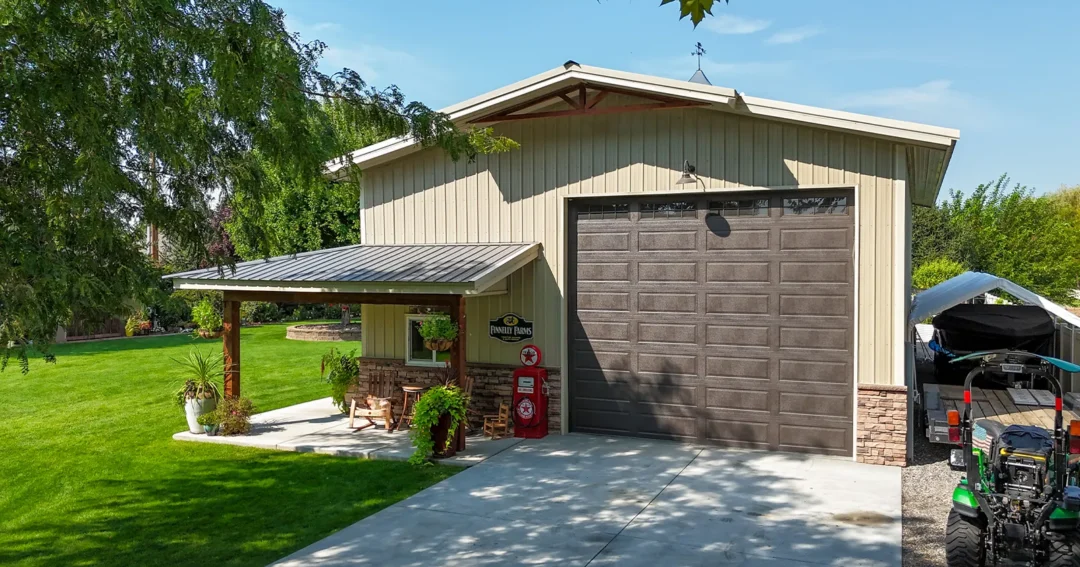
What Affects Pole Barn Prices? 10 Factors That Drive Up Cost
Pole barn price factors are the real reason two buildings with the same footprint can come in $40,000, $80,000, or even $150,000 apart. The size of your building sets the baseline, but it is the decisions layered on top of that footprint that actually determine what you spend. Understanding what drives cost up, and by how much, lets you make smarter trade-offs when you are building your budget.
This guide walks through the 10 biggest variables that affect pole barn pricing, with realistic cost ranges for each based on our recently completed project experience across Idaho, Washington, Oregon, Colorado, and Montana.
1. Concrete Floor
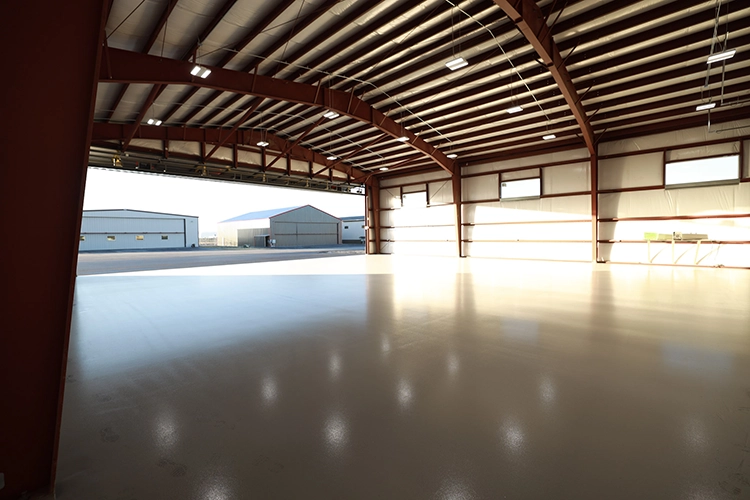
The concrete slab is often the single largest add-on cost after the building structure itself, and it is one of the items most commonly left out of early quotes. If a contractor gives you a number that seems surprisingly low, ask whether it includes the concrete. More often than not, it does not.
| Slab Type | Typical Cost Range | Notes |
| 4-inch slab with wire mesh (standard) | $8 to $12 per sq ft | Suitable for most garage and shop uses |
| 5-inch to 6-inch with rebar | $12 to $18 per sq ft | Better for heavier equipment and vehicles |
| Thickened edge or turn-down slab | $14 to $20 per sq ft | Required by some jurisdictions or load situations |
| In-floor radiant heat added | $20 to $35 per sq ft | Comfort upgrade with significant upfront cost |
For a 30×40 building, a standard 4-inch slab typically runs $9,000 to $15,000. For a 40×60, plan on $15,000 to $25,000. Rough, sloped, or poorly draining sites can push those numbers higher before a shovel even touches the ground.
2. Wall Height
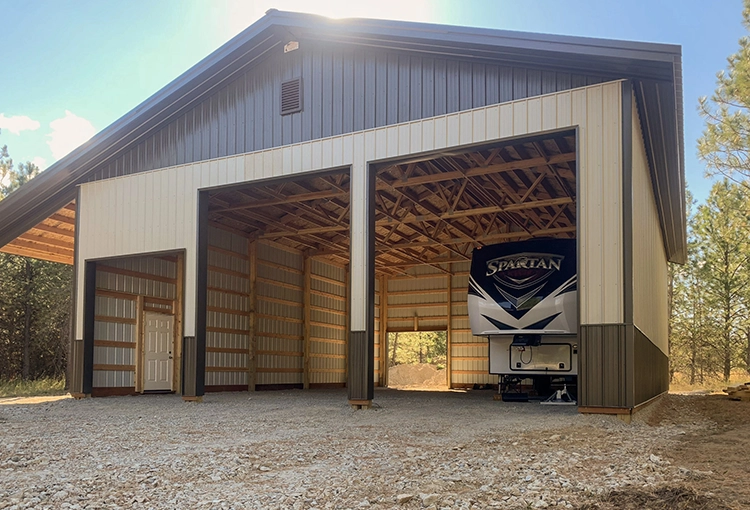
Taller walls mean more steel, more siding, more insulation surface area, and sometimes more complex framing. Most buyers do not think about wall height as a major cost variable, but it is one of the more impactful decisions you can make at the planning stage.
| Wall Height | Common Use Case | Relative Cost Impact |
| 10-foot walls | Basic garage, small storage building | Baseline pricing |
| 12-foot walls | Standard shop or garage | Modest increase over 10-foot |
| 14-foot walls | Taller vehicles, small lifts, most shops | Moderate increase |
| 16-foot walls | Large equipment, RV storage, commercial use | Noticeable increase |
| 18-foot to 20-foot walls | Very tall equipment, specialty commercial | Significant increase, may trigger additional engineering |
Within our 30×40 project data, for example, buildings with 16-foot walls had a median cost of $72,000 compared to $68,000 for 14-foot walls. That gap grows on larger buildings where more total wall area is involved. If you are planning to store an RV, run a car lift, or handle tall agricultural equipment, factor in the wall height early.
3. Overhead Doors
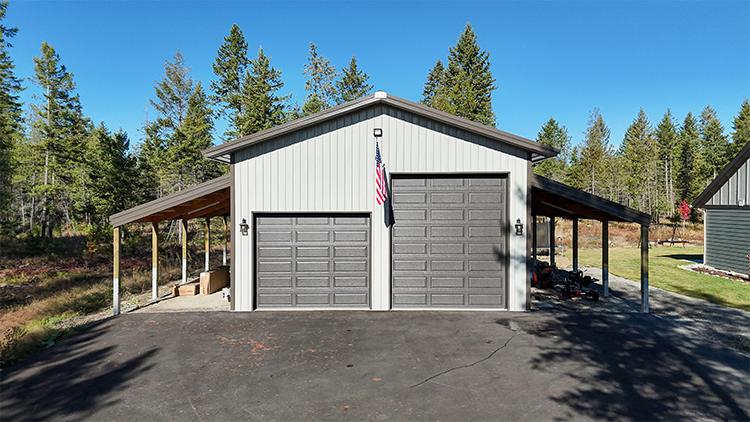
Overhead garage doors are one of the most visible upgrades on a pole barn, and one of the most underestimated line items in a budget. A single basic door sounds cheap until you add up multiple openings, larger clearances, insulation, and openers.
| Door Type | Typical Installed Cost |
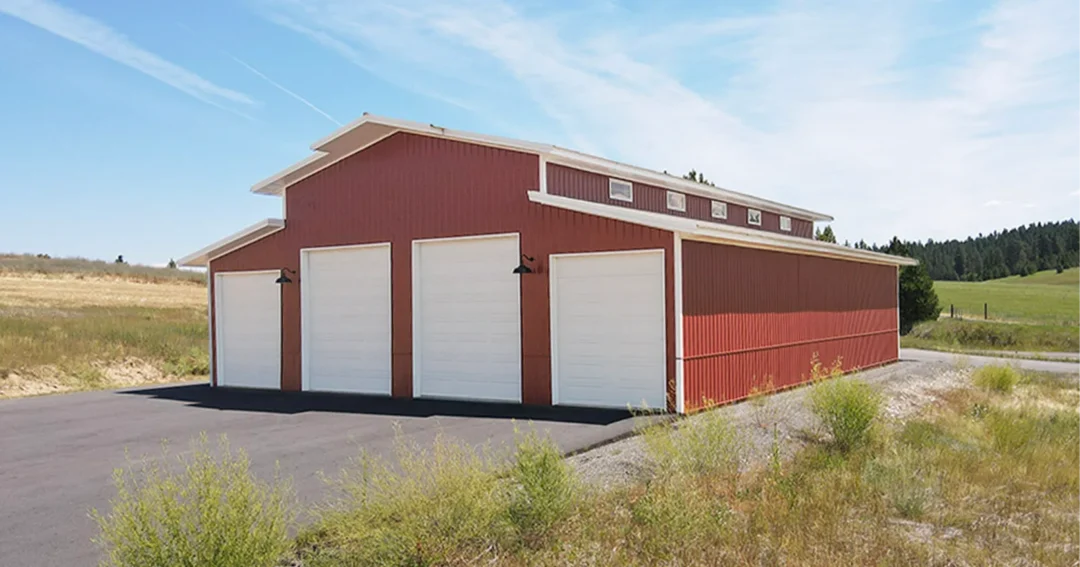
| Standard 9×8 insulated steel door with opener | $1,400 to $2,200 |
| 10×10 insulated door with opener | $1,800 to $2,800 |
| 12×12 insulated door (RV or taller equipment) | $2,500 to $4,000 |
| 14×14 or 16×16 tall clearance door | $3,500 to $6,000+ |
| Glass or decorative panel upgrade per door | $800 to $2,500 additional |
Four insulated overhead doors on a 40×60 shop can easily add $8,000 to $18,000 to your project before you touch anything else. If you are planning a multi-bay shop, list every door opening you need early so it is captured in your quote rather than added later as a change order.
4. Insulation
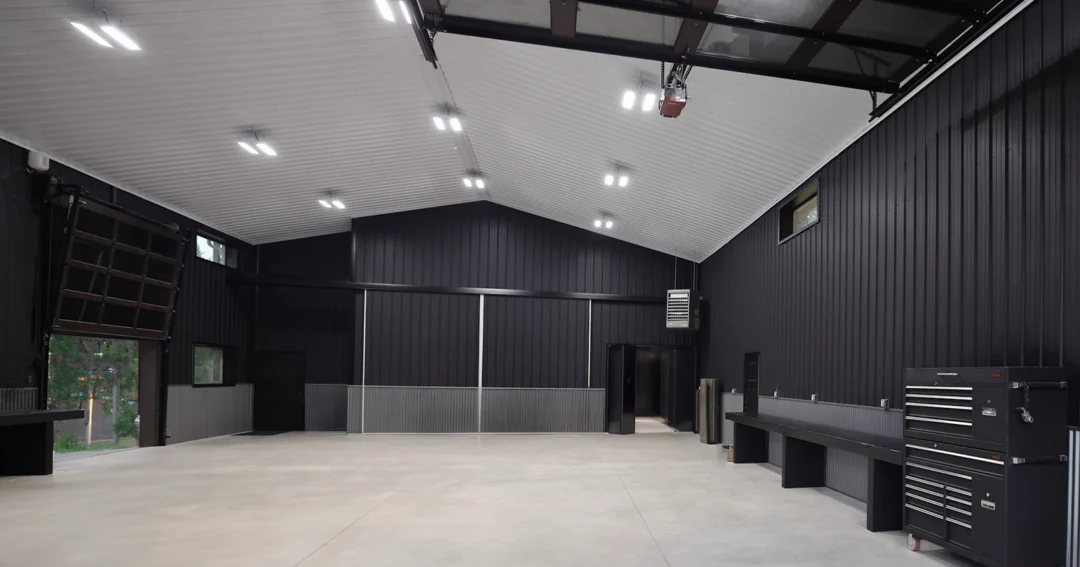
Insulation is one of the most common items buyers try to cut to reduce cost, and one of the decisions they most frequently regret. A well-insulated building is dramatically more comfortable to work in, more energy efficient to heat and cool, and better protected against condensation damage to equipment and finishes.
| Insulation Type | Cost Per Sq Ft Installed | Best For |
| Fiberglass batt (2-inch wall blanket) | $0.60 to $1.20 per sq ft | Basic moisture and temperature buffer, budget-conscious builds |
| Fiberglass batt (walls and ceiling combined) | $1.50 to $2.50 per sq ft | Standard shop or garage insulation |
| Rigid board insulation | $2.00 to $3.50 per sq ft | Good performance, moderate cost |
| Open-cell spray foam | $2.50 to $4.00 per sq ft | Good air sealing, more comfortable workspace |
| Closed-cell spray foam (walls and roof) | $4.00 to $7.00+ per sq ft | Best performance, highest cost, ideal for conditioned spaces |
For a 40×60 shop, fully insulating the walls and ceiling with a mid-range option like open-cell spray foam typically adds $15,000 to $28,000. Closed-cell foam on the same building can run $28,000 to $45,000. If you plan to heat and cool the space, better insulation pays back over time in lower energy costs and a more livable workspace.
5. Electrical
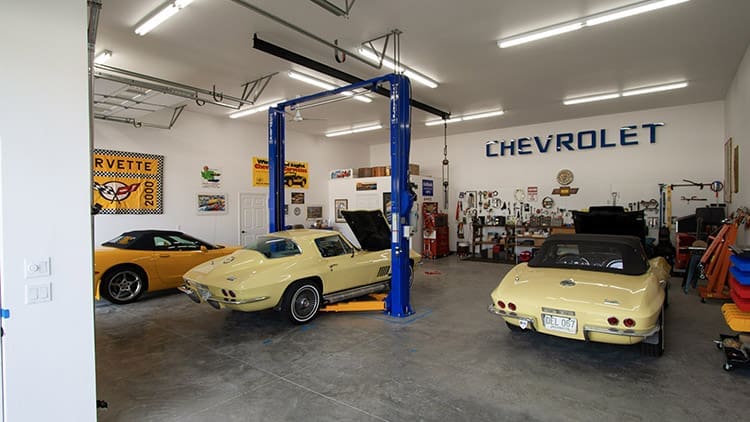
Electrical is another item that often does not appear in base quotes or appears only in a simplified form. A fully wired shop is very different from a building with a single circuit and a few outlets.
| Electrical Scope | Typical Cost Range |
| Basic service: one circuit, few outlets, single light fixture | $3,000 to $5,000 |
| Standard shop: 100-amp service, multiple circuits, shop lighting throughout | $6,000 to $10,000 |
| Full shop: 200-amp service, dedicated circuits, LED lighting, subpanel | $10,000 to $20,000 |
| Commercial or heavy equipment: 200-amp+ with 240V circuits and welding outlets | $15,000 to $30,000+ |
If you plan to run power tools, a compressor, a welder, or any significant equipment in your shop, do not undersize your electrical. Upgrading from a 100-amp panel to a 200-amp panel after the fact costs more than doing it right the first time. Specify your electrical needs clearly when getting quotes so you are comparing apples to apples.
6. Site Preparation and Grading
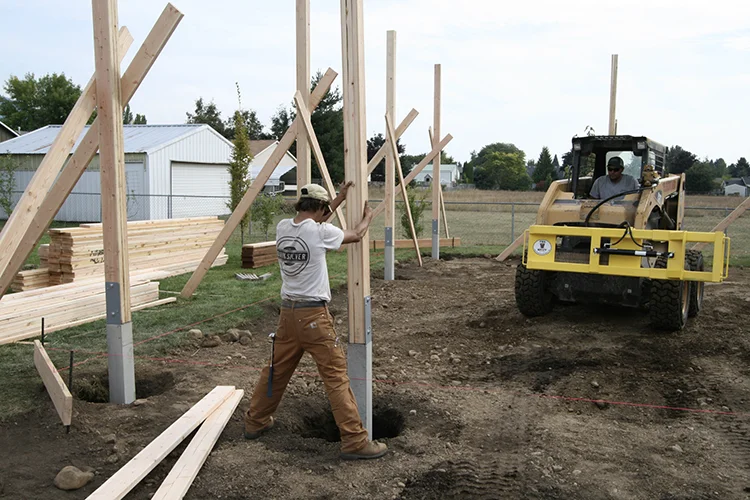
Site prep is one of the least predictable cost variables in any building project. A flat, dry, accessible site with stable soil adds minimal cost. Anything else can add significantly to your total.
| Site Condition | Typical Additional Cost |
| Flat, accessible, stable soil, minimal clearing | $1,500 to $4,000 |
| Light grading needed, minimal clearing | $3,000 to $8,000 |
| Significant grading or sloped site | $8,000 to $18,000 |
| Heavy clearing, tree removal, or poor soil requiring base work | $12,000 to $25,000+ |
Before you finalize a site for your building, walk it with your contractor or have a grader look at it. Surprises in site prep are one of the most common sources of budget overruns on pole barn projects, especially on rural properties where the ground has not been disturbed before.
7. Plumbing
Not every pole barn needs plumbing, but if you want a bathroom, a utility sink, floor drains, or a wash bay, it adds meaningful cost. The further your building sits from your main water and sewer lines, the more it adds.
| Plumbing Scope | Typical Cost Range |
| Single utility sink with cold water only | $2,000 to $4,000 |
| Full bathroom (toilet, sink, hot water) | $6,000 to $12,000 |
| Bathroom plus utility sink and floor drain | $10,000 to $18,000 |
| Wash bay or pressure wash area with floor drain | $4,000 to $10,000+ |
If your building is more than 50 to 100 feet from existing water and sewer connections, factor in the additional trenching and pipe run costs. On rural properties where a septic system is needed, that is its own significant budget item outside the building cost.
8. HVAC and Heating
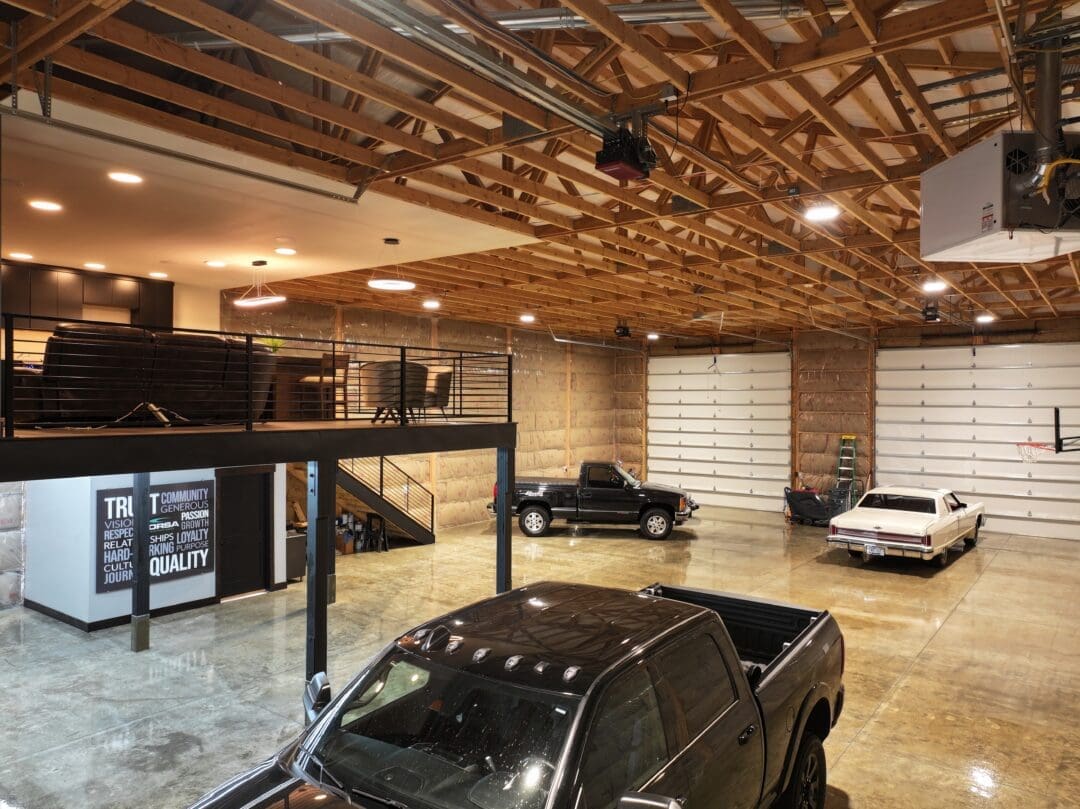
Heating and cooling a pole barn depends on how well you insulate it and what system you choose. In colder climates like Idaho and Montana, heating is not optional if you plan to work in your building year-round. In milder areas, a basic unit heater may be sufficient.
| Heating and Cooling Option | Typical Cost Range | Best For |
| Propane or natural gas unit heater | $2,000 to $5,000 installed | Basic shop heating, minimal comfort needs |
| Forced air furnace | $4,000 to $8,000 installed | Larger spaces, more consistent heat |
| Mini-split system (one zone) | $3,500 to $6,500 installed | Both heating and cooling, well-insulated spaces |
| Mini-split system (multi-zone) | $8,000 to $18,000 installed | Larger buildings with multiple zones |
| In-floor radiant heat | $15,000 to $35,000 installed | Best comfort for well-finished shops, high upfront cost |
HVAC is almost always a separate cost from the building quote. Budget for it early rather than treating it as an afterthought. A 40×60 shop with spray foam insulation and a two-zone mini-split system is a very different building experience from an uninsulated shell with a single propane heater, and the cost difference reflects that.
9. Roof Style and Pitch
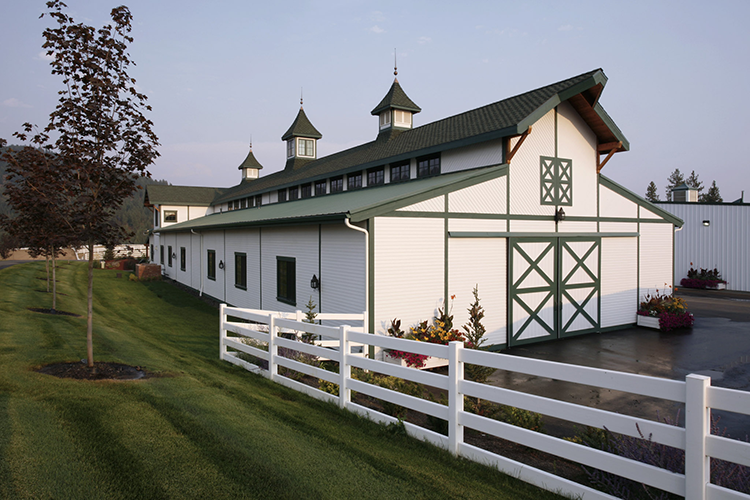
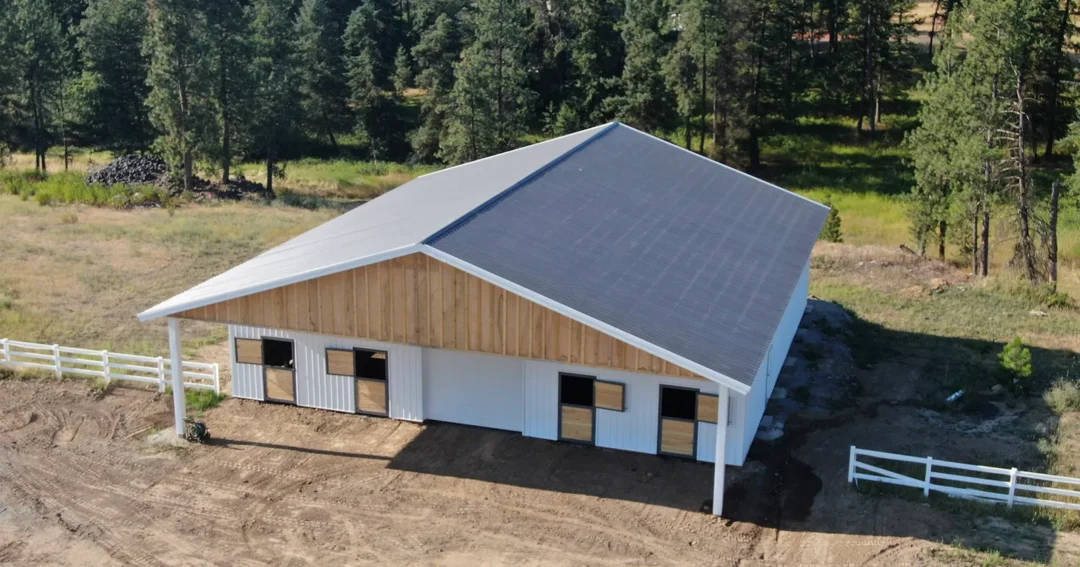
Standard pole barns come with a simple gable roof at a relatively low pitch, typically 3:12 or 4:12. Changes to the roof design add cost and, in snow country, can also affect structural requirements.
| Roof Variation | Typical Cost Impact |
| Standard gable roof (3:12 to 4:12 pitch) | Baseline, no additional cost |
| Steeper pitch (6:12 or greater) | $3,000 to $8,000+ depending on building size |
| Monitor or raised-center aisle roof | $8,000 to $20,000+ depending on size |
| Lean-to addition on one or both sides | $10,000 to $35,000+ depending on size and length |
| Cupola or venting features | $1,500 to $5,000+ |
In heavy snow regions, a steeper pitch helps shed snow more effectively, which can reduce structural load requirements. In some cases, the engineering savings on the frame offset part of the added roof cost. Talk to your contractor about what makes sense for your specific location and load environment.
10. Location and Regional Pricing
Where you build affects what you pay. Labor costs vary meaningfully across the Pacific Northwest and Intermountain West. Material delivery distances add cost in more remote areas. Local permit fees, soil conditions, and snow and wind load engineering requirements all vary by region and sometimes by county.
- Labor rates in urban or suburban markets are generally higher than in rural areas.
- Remote sites with difficult access add delivery and mobilization costs.
- High snow load areas require heavier engineering, which shows up in both the steel package cost and the engineering drawings fee.
- Local permit and inspection fees vary widely, sometimes by thousands of dollars, between jurisdictions.
There is limited benefit to trying to game regional pricing differences. The best approach is to get multiple competitive quotes from contractors who regularly build in your area and understand the local requirements. That is more reliable than chasing the cheapest bid from a supplier unfamiliar with your specific site conditions.
How Much Do These Factors Add Up To?
To put it in practical terms, here is how the same 40×60 footprint can land at very different price points depending on the choices made:
| Build Scenario | Estimated Total Cost |
| Basic shell on gravel, one standard door, minimal electric | $60,000 to $75,000 |
| Concrete slab, two insulated overhead doors, 100-amp electrical | $85,000 to $105,000 |
| Above plus fiberglass insulation, LED lighting, propane heat | $100,000 to $125,000 |
| Above plus spray foam insulation, 200-amp service, mini-split HVAC | $130,000 to $165,000 |
| Above plus bathroom, full interior liner panels, premium doors | $160,000 to $200,000+ |
None of these scenarios involve anything exotic or unusual. They are just different points on the spectrum of what a 40×60 pole barn can be. The best approach is to decide which finish level matches your actual needs and budget for that, rather than starting with a low-end estimate and discovering later that you need everything that was left out.
Steel Structures America: Building Right the First Time
Steel Structures America builds pole barns and metal buildings across Idaho, Washington, Oregon, Colorado, and Montana. We are direct about what things cost and what drives cost up, because buyers who understand their project make better decisions and end up with buildings they are happy with long-term.
Call us at (866) 839-0506 or submit a quote request online to talk through your project and get a detailed, itemized quote.