
Livestock Pole Barns: Cattle, Hogs, and Poultry Building Guide
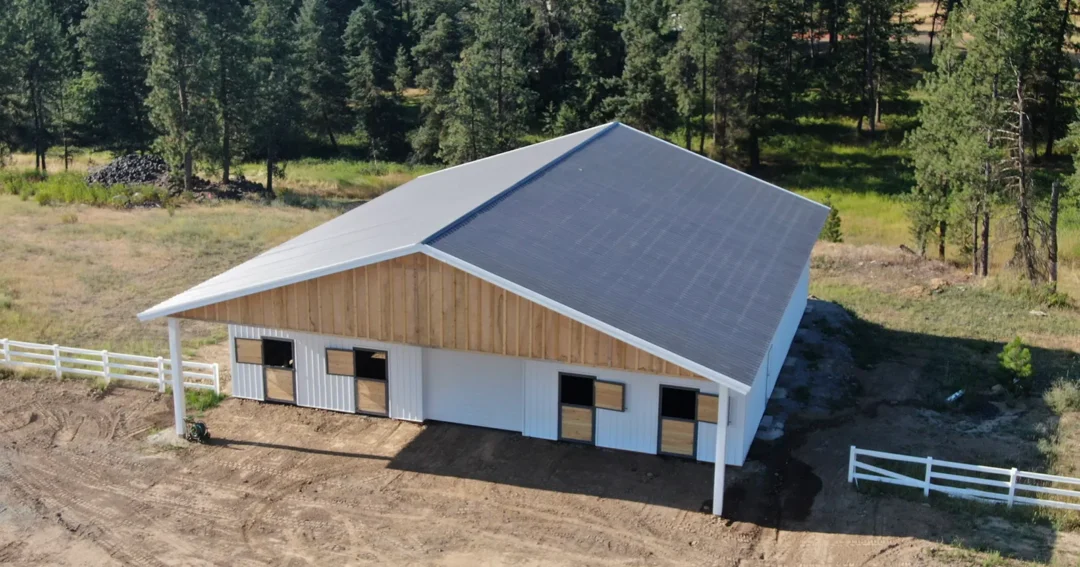
A livestock pole barn is one of the most important structures on a working farm or ranch. The animals housed inside depend on it for shelter from extreme weather, a healthy environment, and a layout that supports efficient daily management. When the building is designed well, your operation runs more smoothly. When it is not, you are dealing with animal health problems, poor ventilation, inefficient workflows, and structures that need constant repairs.
Post-frame construction, commonly called pole barn construction, is the go-to method for livestock facilities across Idaho, Washington, Oregon, Colorado, Montana, and the surrounding region. It delivers large clear-span interiors, flexible layout options, fast construction timelines, and a cost efficiency that traditional stick-built construction simply cannot match at agricultural scale.
This guide covers the design requirements, sizing guidance, and key feawtures for three of the most common livestock building types: cattle barns, hog buildings, and poultry facilities. If you are planning a horse barn specifically, that topic has its own dedicated guide, since equestrian buildings involve a distinct set of design priorities and buyer considerations.
Why Livestock Pole Barns Are Different From General Storage Buildings
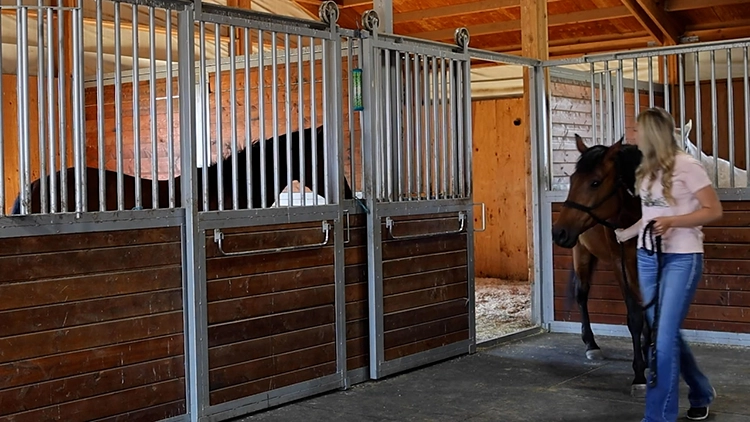
A livestock building is not just a big shed with animals in it. The design requirements that come with housing live animals are genuinely different from those for equipment storage or general agricultural use. Here is what sets livestock pole barn design apart:
- Ventilation is critical. Animals produce heat, moisture, and gases including ammonia and hydrogen sulfide. Without proper airflow, these accumulate quickly and directly harm animal health, reduce production performance, and create hazardous conditions for workers.
- Drainage and sanitation matter. Moisture management inside the building affects flooring, air quality, and animal health. Buildings need to be designed so that manure, urine, and wash water drain away efficiently.
- Layout affects workflow. A poorly designed livestock building wastes labor every single day. Pen placement, alleyway width, gate positioning, and equipment access all affect how quickly and efficiently you can feed, manage, and handle animals.
- Animals can damage buildings. Cattle in particular are hard on buildings. Posts, gates, panels, and floors need to withstand significant physical force. Material choices and structural design need to reflect that reality.
- Environmental controls vary by species. Cattle, hogs, and poultry have very different temperature and air quality requirements. A building that works well for one species is not necessarily suited for another without significant modification.
Cattle Pole Barns
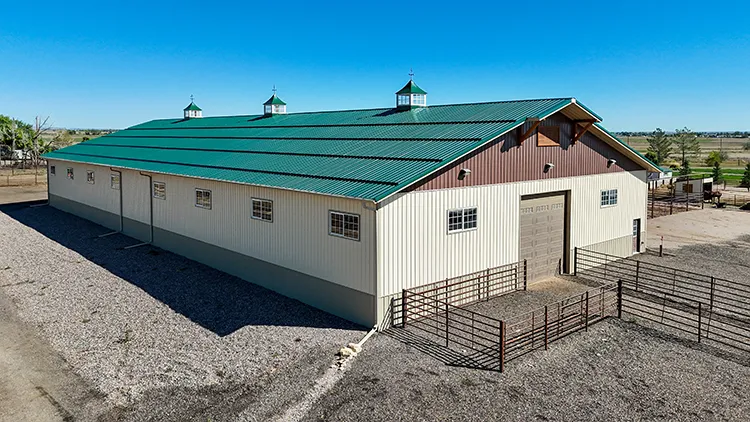
Cattle barns are the most common livestock pole building we build, and they come in a wider range of configurations than most buyers initially expect. The right cattle barn design depends on your herd size, your cattle type, your management system, and your climate.
Types of Cattle Barn Designs
Here is a quick overview of the most common cattle barn configurations:
| Barn Type | Description | Best For |
| Open loafing shed | 3-sided structure open on the south or lee side | Cow-calf pairs, beef herds, dry lot operations |
| Enclosed barn | Fully enclosed with ventilation openings and doors | Cold climates, calving barns, dairy operations |
| Monoslope barn | Single-slope roof, open on the downslope side | Feedlot cover, bedded pack systems |
| Compost bedded pack barn | Large enclosed building with deep bedded area | Dairy herds, colder climates |
| Calving barn | Fully enclosed, divided into individual pens | Spring calving operations, high-monitoring scenarios |
Cattle Barn Sizing Guide
Space requirements for cattle vary based on your management system. Here are general space allowances and building size recommendations:
| Herd Size | Recommended Building Size | Space Allowance Notes |
| 10-20 cow-calf pairs | 40×60 to 40×80 | Approx. 100-150 sq ft per pair in loafing barn |
| 20-40 cow-calf pairs | 50×80 to 60×100 | More space needed if using deep bedded pack system |
| 40-80 beef cattle | 60×100 to 80×120 | Feedlot cover or bedded pack; add bunk space on perimeter |
| Calving barn (20-40 cows) | 40×60 to 50×80 | Individual 12×16 calving pens plus alleyway |
Key Features for Cattle Barns
- Overhead door height of at least 12 to 14 feet to allow loader tractors and silage wagons to enter for bedding and feeding.
- Wide alleyways of 12 to 16 feet minimum for equipment movement and safe handling.
- Heavy-duty gate and panel attachment points built into posts during framing.
- Concrete apron at entries and in alleyways where equipment traffic is heaviest.
- Ridge ventilation and open sidewall or eave ventilation to support continuous airflow.
- Gutters and site grading that direct roof runoff away from pen areas.
Ventilation in Cattle Barns
Cattle barns are typically ventilated through a combination of natural airflow and strategic building design rather than mechanical systems. Open sidewalls, ridge vents, and proper building orientation relative to prevailing winds are the primary tools. The goal is to keep fresh air moving through the building without creating cold drafts directly on resting animals.
A common and effective approach is to orient the building so the open side or largest ventilation openings face away from the prevailing winter wind, while still capturing summer breezes. Buildings that are too tight create moisture and ammonia problems. Buildings that are too open become cold and drafty in harsh winter climates. Getting the balance right for your specific location is something our team works through with you during the design process.
Hog and Swine Buildings
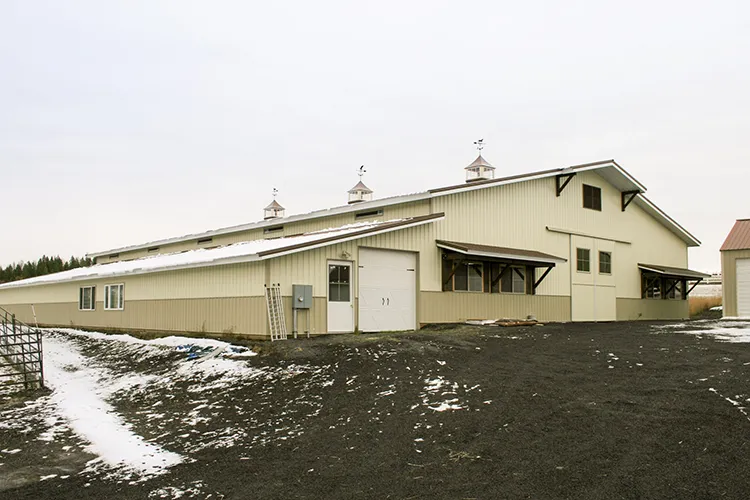
Hog barns are among the most specialized livestock buildings in agricultural construction. Swine are highly sensitive to temperature extremes, and their production performance drops sharply in poorly ventilated or poorly temperature-controlled environments. A hog barn pole building needs to be designed with environmental control as a primary consideration, not an afterthought.
Environmental Control Requirements
Hogs require different conditions at different life stages. Farrowing rooms need to be warm, typically 80 to 90 degrees Fahrenheit near the heat lamp, while finishing barns can operate at lower temperatures. Getting this right requires insulation, ventilation systems, and often supplemental heat in colder climates.
The primary ventilation concerns in swine facilities are ammonia and moisture buildup. Ammonia from urine and manure accumulates rapidly in a poorly ventilated building and directly impacts respiratory health in both animals and workers. Moisture buildup encourages disease. Most modern hog buildings use mechanical ventilation systems, including fans, curtain sidewalls, and inlet controllers, to maintain precise environmental conditions.
Hog Building Design Features
- Insulated walls and ceiling to allow temperature control in both summer and winter.
- Mechanical ventilation with fans sized to provide the required air exchanges per hour for your herd size and life stage.
- Solid concrete floors with slotted or slatted areas over manure pits for waste management.
- Durable interior surfaces that can withstand high-pressure washing between groups.
- Proper building orientation and curtain sidewall systems for summer ventilation in naturally ventilated designs.
Common Swine Building Sizes
| Building Type | Common Size Range | Capacity Notes |
| Farrow-to-finish unit | 40×120 to 50×200 | Varies widely based on system and herd size |
| Finishing barn | 40×120 to 60×200 | Allow 7-8 sq ft per market hog in fully slatted systems |
| Farrowing barn | 30×60 to 40×80 | Allow for individual farrowing crates or pens |
| Nursery | 30×60 to 40×80 | Allow 2-3 sq ft per pig for early nursery |
Swine facility design is highly specialized, and the right specifications depend heavily on your production system, manure management approach, and regulatory requirements in your county and state. Our team works closely with producers to make sure the building structure supports whatever interior system you are planning.
Poultry Barns
Poultry barns, whether built for laying hens, meat birds (broilers), or turkeys, share a common design philosophy: long, narrow buildings that support mechanical ventilation through tunnel cooling or cross-ventilation. The structural shell of a poultry barn pole building is relatively straightforward, but the interior systems are highly specialized and must be integrated from the start.
Poultry Barn Dimensions and Layout
Most commercial poultry barns run 40 to 60 feet wide and anywhere from 200 to 600 feet long, depending on flock size and production system. The narrow width relative to length is deliberate: it allows tunnel ventilation systems to move air efficiently from one end to the other, maintaining consistent temperature and air quality throughout the building.
| Poultry Type | Typical Building Width | Typical Building Length | Air Flow Approach |
| Broilers (meat birds) | 40-50 ft | 300-500 ft | Tunnel ventilation, end-to-end |
| Laying hens (cage system) | 40-60 ft | 300-600 ft | Tunnel or cross-ventilation |
| Turkeys (grow-out) | 50-60 ft | 300-400 ft | Tunnel ventilation |
| Small flock (backyard/hobby) | 20-30 ft | 40-80 ft | Natural ventilation with fans |
Ventilation in Poultry Buildings
Ventilation in a poultry barn is not optional and cannot be improvised after the building is up. Tunnel ventilation systems pull air through the building from one end to the other using large exhaust fans at one end and open inlets at the other. This creates a wind chill effect that keeps birds comfortable in summer heat, which is critical for bird performance and mortality rates.
The building structure needs to accommodate inlet openings, fan housing, emergency manual override systems, and power supply for fans. These need to be coordinated with the building design during the planning phase, not retrofit afterward.
Key Features for Poultry Barns
- Tight building envelope to allow precise environmental control. Air should move where the ventilation system directs it, not leak through gaps.
- Durable metal roofing and siding that handles condensation, pressure washing, and the corrosive environment of a poultry house.
- Concrete floors throughout for sanitation and durability.
- Wide enough eaves to protect sidewall inlets from rain intrusion.
- Electrical service sized for fans, lighting, feeding systems, and waterers.
Planning Your Livestock Pole Barn: Key Questions to Answer
Before you sit down with a builder, working through these questions will help you get a more accurate quote and a building design that actually fits your operation:
- How many animals are you housing now, and what is your expected growth over the next 5 years?
- What is your management system? Pasture-based with a shelter, confinement, or a combination?
- What are your climate extremes? Both summer heat and winter cold affect ventilation and insulation requirements.
- What equipment will need to enter the building? Loader tractors, feed wagons, and portable panels all require door height and width planning.
- What are your county or state permit and regulatory requirements for livestock facilities?
- What utilities does the building need? Water, electrical, and heating requirements vary significantly between species and systems.
Getting the Foundation Right
Livestock buildings deal with moisture constantly, from rain, from animal waste, and from cleaning operations. This makes foundation durability more important in livestock facilities than in almost any other building type. Traditional buried wood posts are a known weak point over time in wet environments.
Perma-Column precast concrete foundation columns eliminate the wood-to-soil contact that leads to post rot. For a livestock pole barn that is expected to serve your operation for 30, 40, or 50 years, Perma-Column is an upgrade worth discussing with your contractor. Steel Structures America is a Perma-Column partner and can walk you through how the system works and whether it makes sense for your project.
Ready to Plan Your Livestock Pole Barn?
Steel Structures America builds livestock facilities for farmers and ranchers across Idaho, Washington, Oregon, Colorado, and Montana. We understand that livestock buildings are not general-purpose structures. They are working environments where the design directly affects animal health, daily workflow, and the long-term success of your operation.
Whether you are planning a cattle loafing shed, a calving barn, a hog finishing facility, or a poultry house, we can help you work through the design requirements and build a structure that fits your operation and your budget.
Call us at (866) 839-0506 or submit a quote request online to get started.