
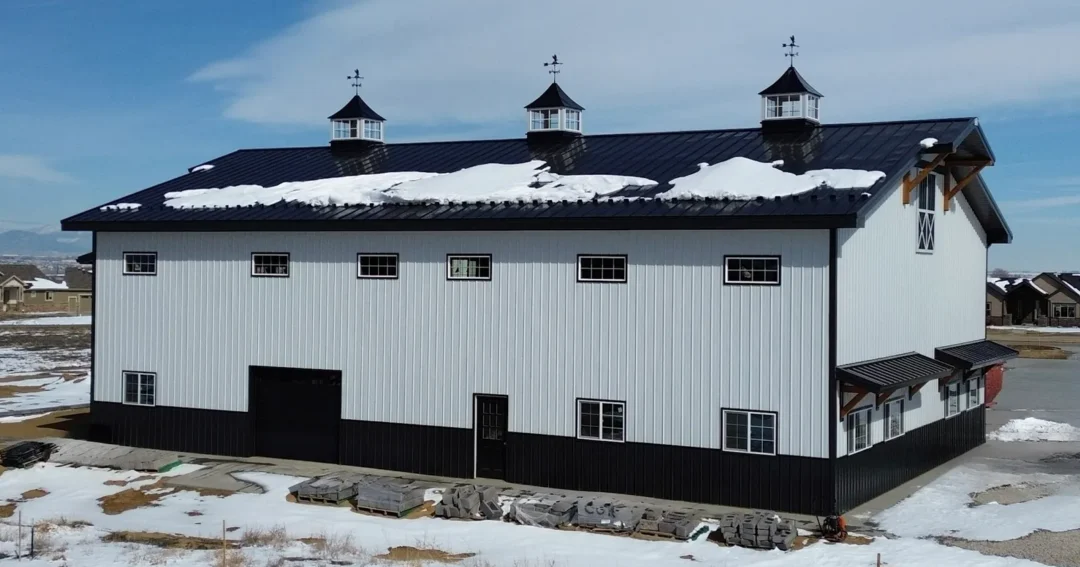
Two-Story Pole Barn: Designs, Uses, and What to Expect from Your Builder
A two-story pole barn gives you significantly more usable space on the same building footprint, and post-frame construction handles multi-story layouts very well. Whether you want a full second floor for living quarters above a shop, a loft apartment above a garage, an open hay storage level above the main barn floor, or a two-story barndominium with vaulted spaces and upper-level bedrooms, the post-frame building method is flexible enough to accommodate all of it.
This article covers the most common two-story pole barn designs, what each one involves structurally, typical costs, and what to expect from your contractor during the planning and build process.
How Post-Frame Construction Handles a Second Floor
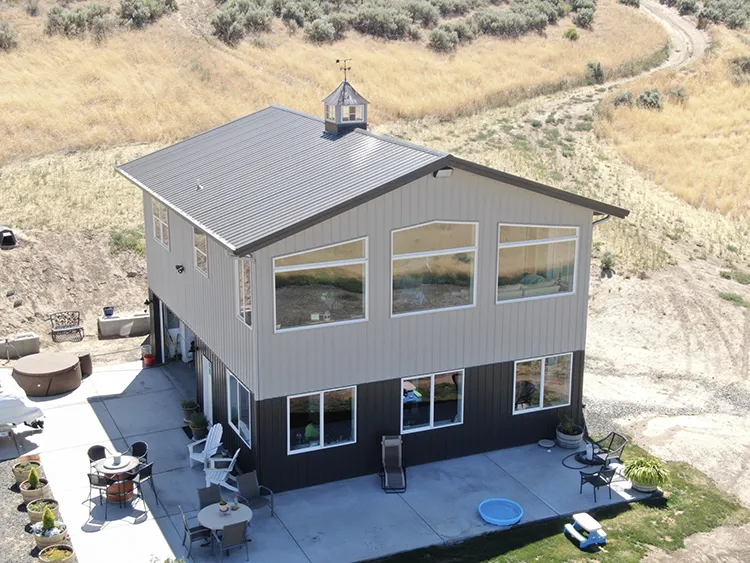
Post-frame construction is well-suited to two-story buildings because the structural columns run the full height of the building, carrying roof and floor loads efficiently without interior bearing walls. This gives you flexibility in how the second floor is laid out and how open or subdivided you want the spaces below.
A second floor in a post-frame building is typically framed with engineered lumber floor trusses or I-joists spanning between the structural columns or a flush beam system. Your contractor and engineer will size the floor framing based on the span, the intended use of the second floor, and the local snow and live load requirements for your area. In Colorado and Montana especially, floor systems in two-story buildings are engineered conservatively to account for the loads those structures carry.
One important note: a fully habitable second floor with bedrooms, bathrooms, or a kitchen is subject to residential building code requirements in most jurisdictions, including energy code compliance, egress window sizing, stair dimensions, and fire separation from any attached garage or shop. Your contractor will walk you through what applies to your specific project and location.
Common Two-Story Pole Barn Designs
Two-story pole barns come in several distinct configurations depending on how you plan to use each level. Here are the most common:
Shop Below, Living Quarters Above
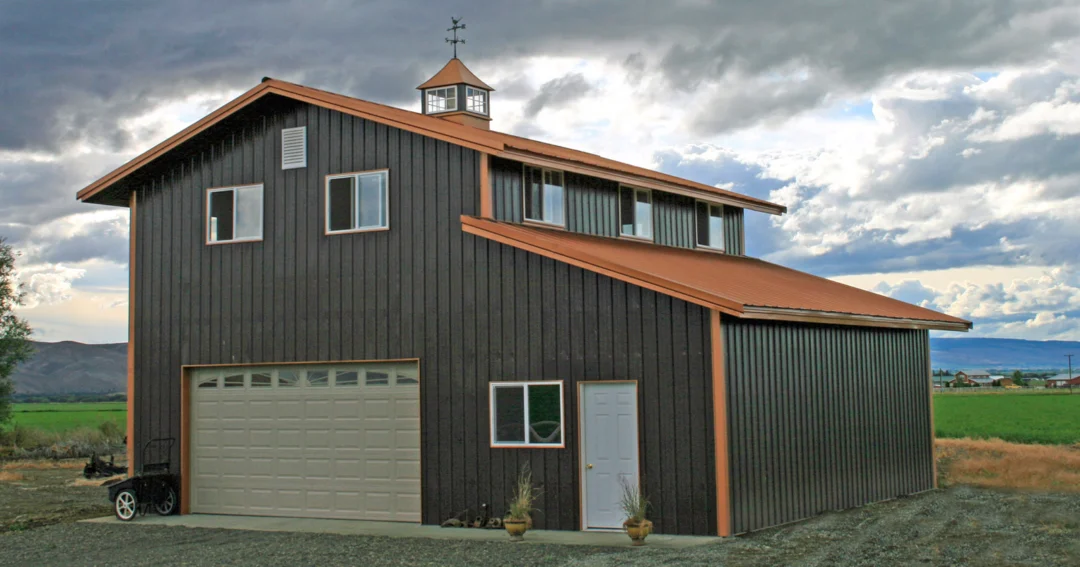
This is the most popular two-story post-frame layout. The ground floor is a fully functional shop or garage with high ceilings, overhead doors, and workspace. The upper floor contains a finished apartment, studio, or full living quarters. It is a practical arrangement for property caretakers, contractors who want to live on their land while they build a permanent home, or buyers who want an income-generating rental unit above their shop. This layout is sometimes called a shouse with living quarters or a garage apartment.
Two-Story Barndominium
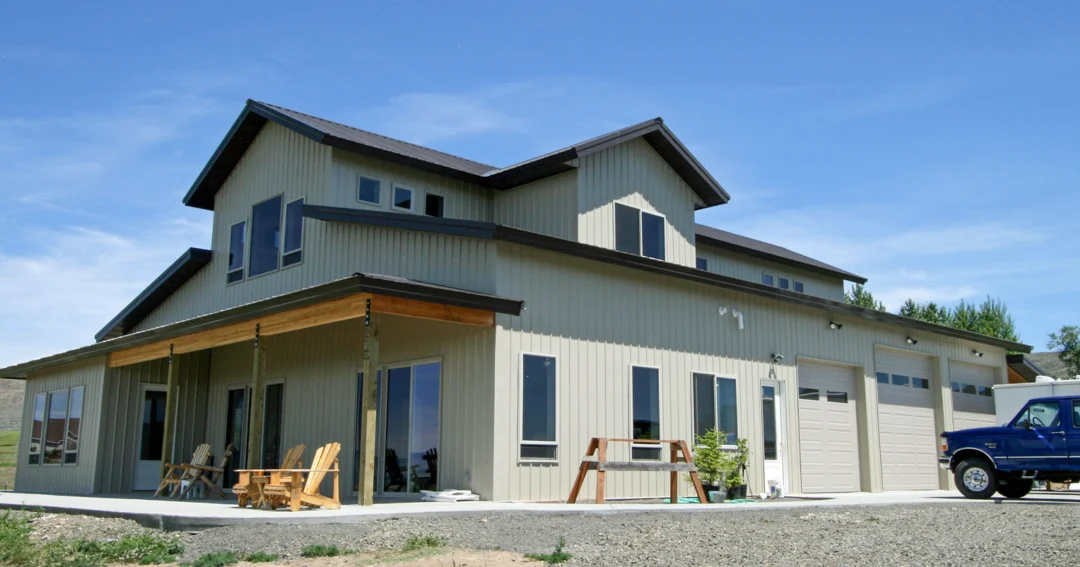
A two-story barndominium is a full residential home built with post-frame construction, with living spaces spread across two floors rather than a single-story open plan. The main floor typically contains the kitchen, living, and dining areas along with the attached garage, while the upper level has bedrooms and bathrooms. Two-story barndominiums are a good option on smaller lots where square footage is needed but the building footprint cannot expand outward, or for buyers who prefer a traditional two-story home layout with post-frame construction efficiency and durability.
Barn with Open Loft or Hay Storage Level
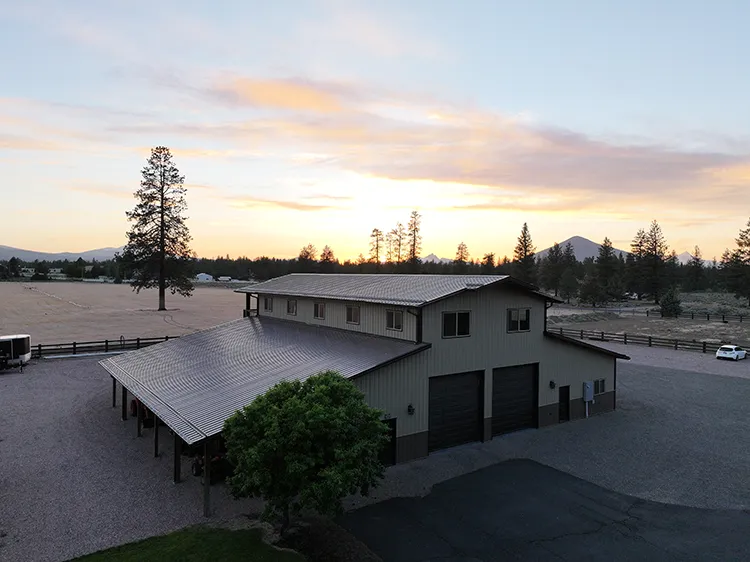
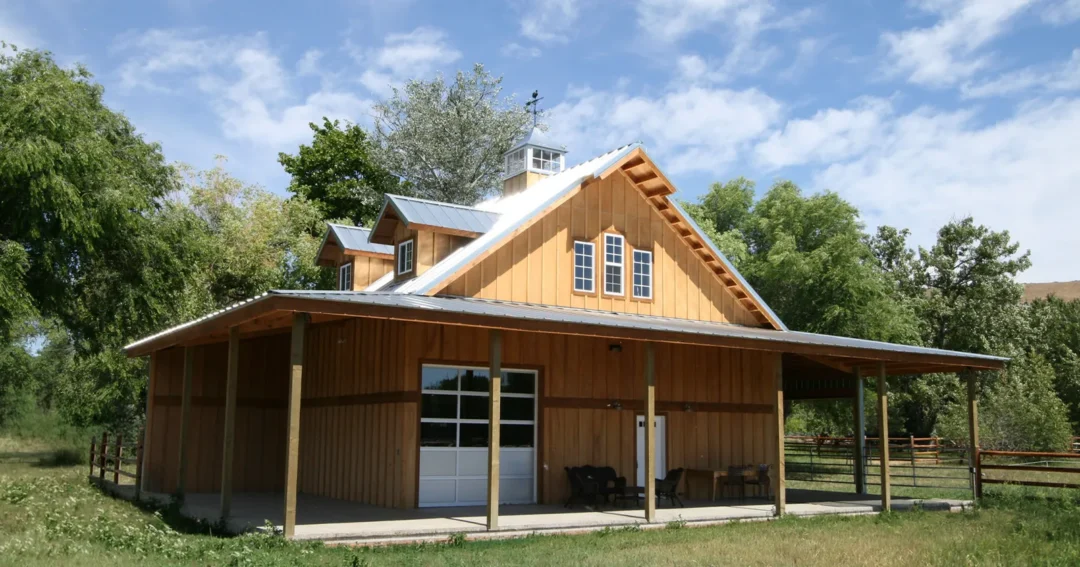
In an agricultural setting, a two-story barn often means a main floor for livestock, equipment, or workspace and an upper level for hay, straw, or general storage. The upper level does not need to be fully floored across the entire building. It is common to have a partial loft over one end or one side with the main floor remaining open to the ridge above it. This combination of vaulted open space and covered storage above is one of the most practical and attractive layouts in agricultural post-frame construction.
Two-Story Hobby Shop or Garage with Loft
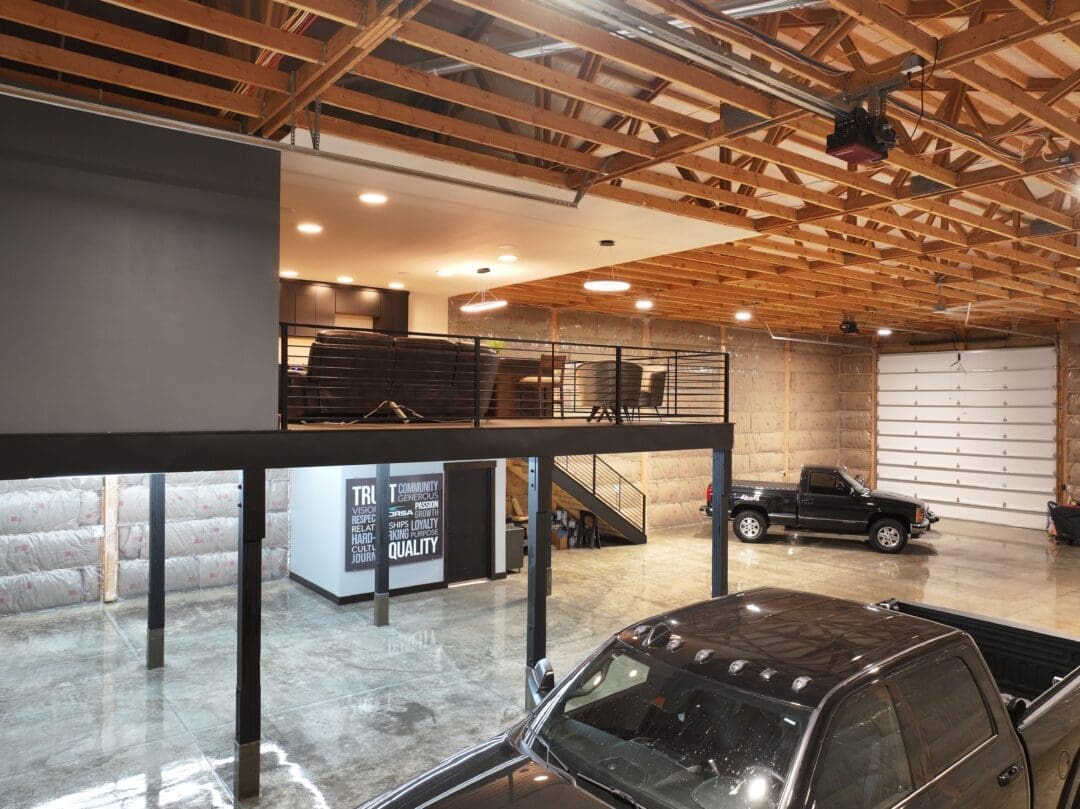
For residential and recreational use, a two-story garage or shop with a loft above is one of the most functional layouts for acreage owners. The main floor handles vehicles, equipment, and workspace while the loft above serves as additional storage, a finished hangout space, a home gym, or an office. The loft does not have to span the full building. A partial loft over one end of the building preserves open ceiling height in the main bay while still delivering significant usable square footage above.
Two-Story Design Comparison
| Design | Main Floor | Upper Floor | Best For | Permit Complexity |
| Shop + Living Quarters | Shop / garage with overhead doors | Finished apartment or studio | Contractors, caretakers, rental income | Higher: residential code applies upstairs |
| Two-Story Barndominium | Living, kitchen, dining, garage | Bedrooms and bathrooms | Full-time rural residential use | Higher: full residential code throughout |
| Barn with Loft Storage | Livestock, equipment, or workspace | Open hay / straw / general storage | Agricultural operations | Low: often ag-exempt |
| Garage / Shop with Loft | Vehicles, tools, workspace | Storage, office, hangout, or gym | Acreage owners, hobbyists, RV owners | Low to medium depending on loft finish |
What a Two-Story Pole Barn Costs
Two-story construction costs more per square foot than single-story construction because of the added floor framing, stairs, additional wall height, and in habitable layouts, the mechanical and finish work required on the upper level. Here are general ranges for SSA’s service area:
| Layout | Building Size | Estimated Cost Range | Notes |
| Shop + basic loft (open, unfinished) | 40×60 | $90,000 – $130,000 | Loft framed and decked, no finish work. Stairs or ladder access. |
| Shop + finished loft apartment | 40×60 | $140,000 – $200,000 | Loft finished to residential standard. Electrical, HVAC, plumbing. |
| Two-story barndominium | 40×60 | $200,000 – $320,000+ | Full residential finish both floors. Varies widely with selections. |
| Two-story barn with ag loft | 40×80 | $100,000 – $155,000 | Open main floor, partial or full hay loft. Minimal interior finish. |
| Garage with finished upper loft | 30×50 | $95,000 – $145,000 | Shop below, finished bonus room or living space above. |
These are general estimates. The cost gap between an unfinished loft and a finished habitable second floor is substantial because of insulation, drywall, HVAC, plumbing rough-in, electrical, and code compliance costs. Be specific with your contractor about what level of finish you want on each level so you get an accurate quote.
Key Design Decisions to Make Before You Call a Contractor
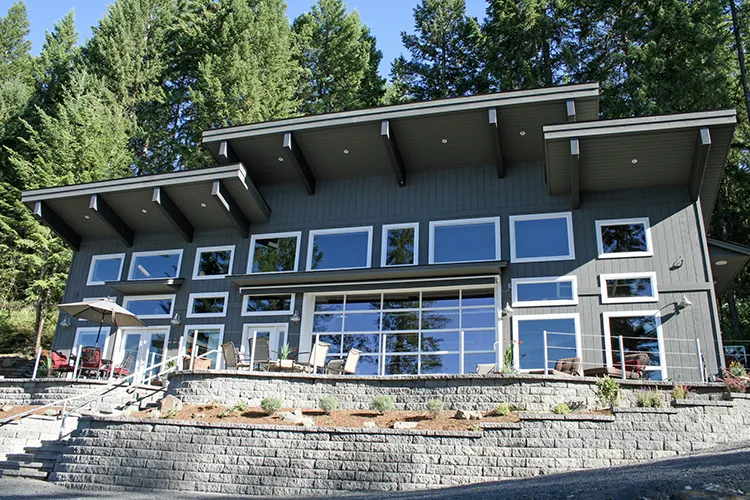
A two-story pole barn involves more upfront planning decisions than a single-story building. Working through these before your first contractor conversation makes the quoting process faster and the design phase smoother:
- Habitable or storage use on the upper floor? This single decision determines whether residential code applies to the upper level, which has a large effect on cost, timeline, and permitting.
- Full floor or partial loft? A full second floor maximizes square footage. A partial loft over one end of the building preserves open volume in the main bay, which many shop and barn owners prefer.
- Stair location and configuration. Interior stairs take up floor space on both levels. Consider where they land relative to your main floor layout and whether an exterior staircase is appropriate for your use case.
- Ceiling height on the main floor. A two-story building requires more overall wall height. Your contractor will calculate the eave height needed to give you usable ceiling clearance on both levels. For a shop with overhead doors below and habitable space above, a 20 to 24-foot eave is common.
- Mechanical systems. If the upper level will be heated and cooled, plan for HVAC early. Mini-split systems are the most common solution for finished upper floors in post-frame buildings and are far easier to plan for during design than to retrofit after construction.
- Egress requirements. Habitable rooms on upper floors require properly sized egress windows or doors. Your contractor and the local building department will confirm the requirements for your project.
What to Expect from Your Contractor
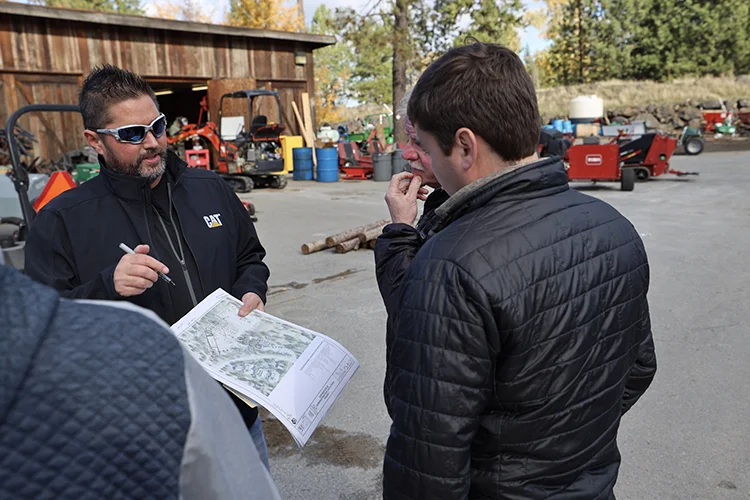
A two-story post-frame building is a more complex project than a standard single-story shop or barn. Here is what a qualified contractor should provide:
- Engineered drawings. Two-story post-frame buildings almost always require engineer-stamped structural drawings, particularly in high-wind and high-snow-load states like Colorado, Montana, and Idaho. Your contractor should coordinate the engineering as part of the project.
- A clear permit plan. The permit requirements for a two-story building with habitable space are more involved than for a simple agricultural structure. A qualified contractor will tell you exactly what permits are required and handle the submissions on your behalf.
- Subcontractor coordination. Finished upper floors require coordination between the framing crew, electricians, plumbers, and HVAC installers. Ask your contractor how they manage subcontractor scheduling and whether they handle that coordination or leave it to you.
- A line-item proposal. Two-story projects have more cost variables than single-story builds. A detailed proposal that breaks out foundation, framing, exterior, flooring system, stairs, and interior finish costs by level gives you a clear picture of where your money is going and where you can adjust if needed.
If you want a guide on choosing the right contractor, we’ve got one for you.
Frequently Asked Questions
Can any post-frame contractor build a two-story building?
Not all post-frame contractors have experience with two-story construction, particularly the habitable upper floor layouts that require residential code compliance. Ask specifically about their experience with multi-story projects and request examples. The engineering and code requirements are more demanding than single-story work.
Is a two-story pole barn more expensive per square foot than a single-story?
Yes, generally. The floor framing system, added wall height, stairs, and the additional mechanical and finish work on a second level all add cost. However, you are getting twice the square footage on the same foundation footprint, so the cost per total square foot is often competitive with building two separate single-story structures.
Do I need a permit for a two-story pole barn?
In most cases, yes. Single-story agricultural buildings on qualifying rural land sometimes qualify for exemptions, but two-story buildings with habitable upper floors trigger residential code requirements in most jurisdictions in SSA’s service area. Your contractor will confirm the requirements for your specific county and property.
Planning a Two-Story Pole Barn?
Steel Structures America builds two-story post-frame shops, barndominiums, garage apartments, and agricultural barns throughout Idaho, Washington, Oregon, Colorado, and Montana. We handle the engineering coordination, permitting, and construction from start to finish so you get a building that is done right the first time.
Call us at (866) 988-0072 or request a free quote online.