
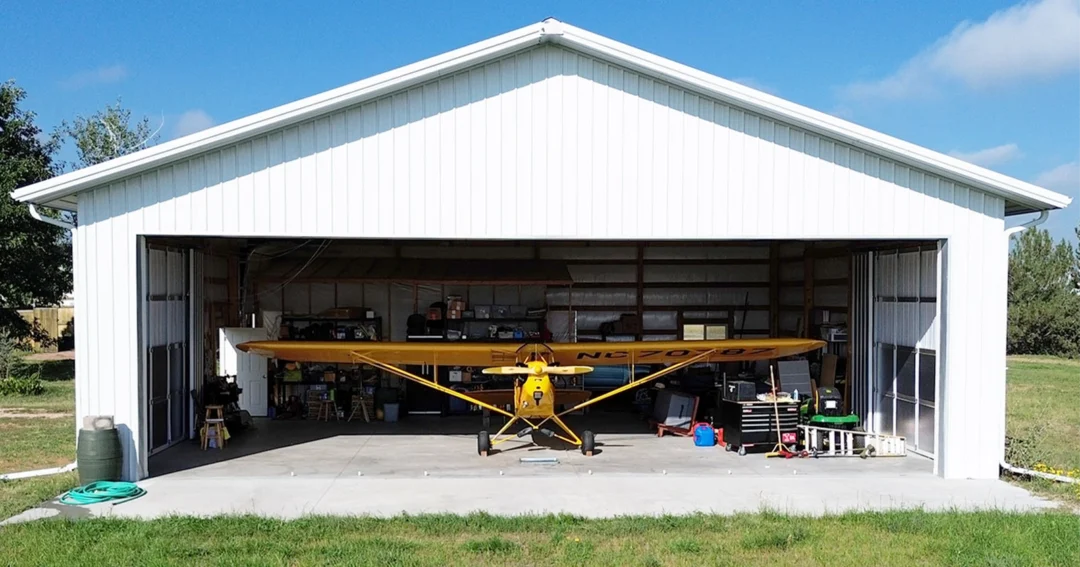
Airplane Hangars: Can Post-Frame Construction Work for You?
Private pilots who own rural property in Idaho, Washington, Oregon, Colorado, or Montana often have one project on the long-term list above everything else: a hangar of their own. Airport tie-down fees add up, shared hangars come with compromises, and nothing beats walking out your door and into a building where your aircraft is protected, accessible, and ready to fly on your schedule.
Post-frame and steel-frame construction are both well-suited to private airplane hangars and are far more cost-effective than the precast or engineered steel alternatives often marketed to commercial aviation facilities. This article covers hangar sizes, door types, what they cost, and what to look for in a contractor who has built hangars before.
Why Post-Frame and Metal Building Construction Works for Private Hangars
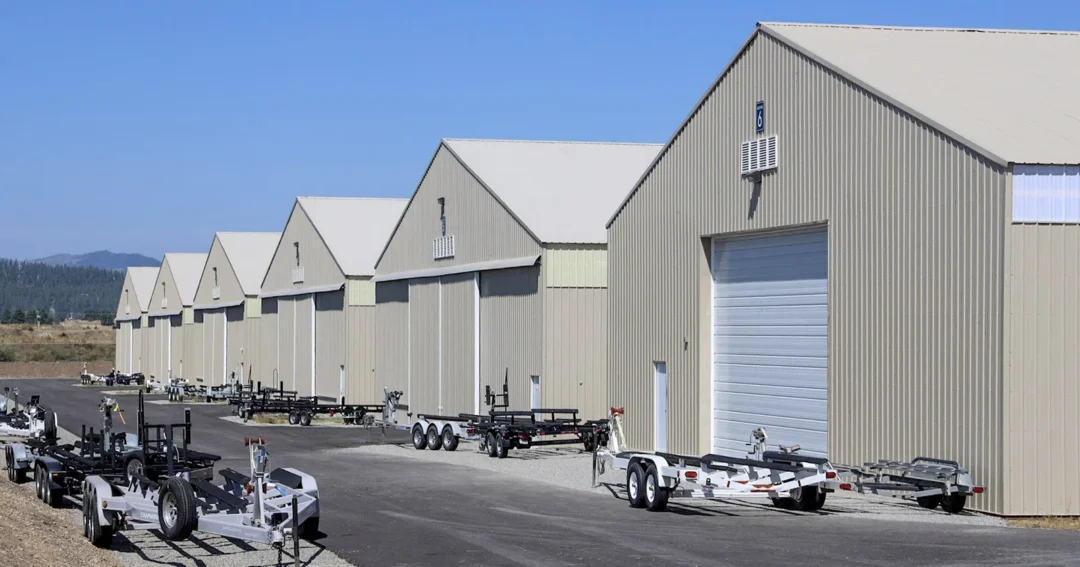
A private airplane hangar has one non-negotiable structural requirement: a wide, tall, unobstructed opening for the aircraft to pass through, with a clear-span interior that has no columns in the path of wing movement. Post-frame and metal building construction both deliver this naturally.
Compared to stick-built or masonry construction, post-frame and pre-engineered metal buildings offer:
- Clear-span interiors. No interior columns to work around. Your aircraft, ground equipment, and maintenance tools have the full floor area to work in.
- Large door openings. Post-frame and metal building systems are engineered to handle very wide header spans at 40, 50, or 60 feet, that would be structurally complex and expensive in conventional framing.
- Durable metal exterior. Standing seam or ribbed metal roofing and siding holds up to the weather, wildlife, and UV exposure that aircraft finishes cannot tolerate. A well-built metal exterior requires minimal maintenance and lasts decades.
- Fast construction. Post-frame hangars can be framed and dried in quickly, which matters when you are paying for alternative aircraft storage in the meantime.
- Cost-effective at wide spans. The wider and taller the building needs to be, the more competitive post-frame and metal building construction becomes relative to other methods.
Hangar Sizes: Sizing for Your Aircraft
The right hangar size depends on the aircraft you are housing, your wingspan and tail height, whether you want wing space to work on the aircraft comfortably, and whether you want to store other equipment or vehicles in the same building.
Here are typical dimensions for common private aircraft categories and the minimum hangar size that accommodates them comfortably:
| Aircraft Type | Typical Wingspan | Typical Height | Min. Building Width | Min. Building Depth | Min. Door Width |
| Single-engine piston (small) e.g. Cessna 152, Piper Tomahawk | 34 ft | 8 ft | 40 ft | 40 ft | 38 ft |
| Single-engine piston (mid) e.g. Cessna 172, Piper Cherokee | 36 ft | 9 ft | 42 ft | 40 ft | 40 ft |
| Single-engine piston (large) e.g. Cessna 182, Mooney, Bonanza | 36-38 ft | 9-10 ft | 44 ft | 44 ft | 42 ft |
| Twin-engine piston e.g. Cessna 310, Piper Seneca, Beechcraft Baron | 38-42 ft | 9-11 ft | 48 ft | 48 ft | 46 ft |
| Light sport / ultralight | 26-32 ft | 7-8 ft | 36 ft | 36 ft | 32 ft |
| Turboprop / light jet e.g. King Air, Pilatus PC-12 | 46-55 ft | 14-16 ft | 60 ft | 55 ft | 50 ft |
| Helicopter | Rotor: 35-50 ft | 12-15 ft | 50 ft | 50 ft | 40 ft |
Always add a minimum of 5 feet of clearance on each side of the wingspan to give yourself room to move the aircraft in and out without stress, work on the wings, and maneuver ground equipment around the plane. A tight hangar is a hangar where damage happens.
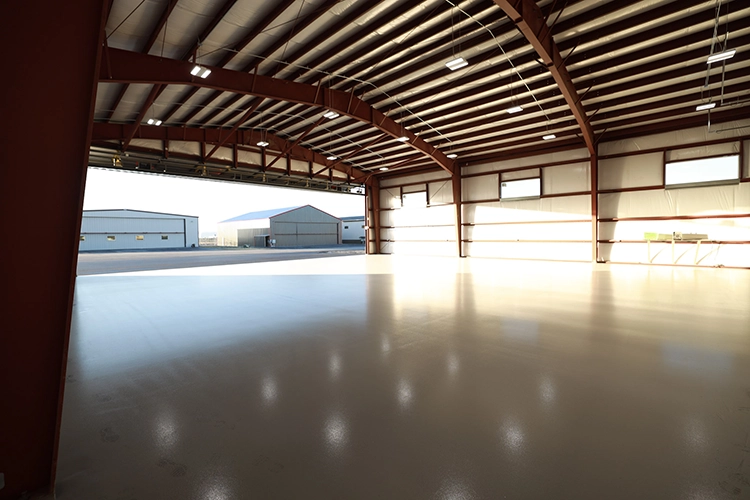
Hangar Door Types: The Most Important Decision You Will Make
The hangar door is the most technically and financially significant component of the building. It has to open fast, span a wide opening reliably, hold up in the weather conditions of your region, and clear your aircraft’s tail height with room to spare. There are three main door types used on private hangars:
Bi-Fold Hydraulic Doors
The premium choice for private hangars. A bi-fold door folds up vertically, opening the entire face of the building in under a minute with a push of a button. The door is supported by a hydraulic or electric actuator system mounted to the building frame. Because it folds up rather than sliding or swinging, it works in virtually any wind condition and does not require clearance on the sides of the building. Bi-fold doors are available in widths from 30 to 60+ feet and heights up to 16 feet or more. They are the most expensive hangar door option but are widely considered the best for private aircraft use. Cost typically ranges from $15,000 to $45,000 depending on size and manufacturer.
Sliding Doors
Sliding doors move horizontally along a track system mounted above the opening. They require clear space on one or both sides of the building for the door panels to travel into, which affects how the building is sited on your property. Sliding doors are mechanically simpler and less expensive than bi-fold doors, and they hold up well over time. They are a practical choice when the budget for a bi-fold is not there and the site allows for the lateral clearance the door travel requires. Cost typically ranges from $6,000 to $20,000 depending on size and configuration.
Schweiss Strap or Cable-Lift Doors
A Schweiss-style door is a single-panel door that swings or lifts upward on a strap or cable system, similar in concept to a bi-fold but with a single panel rather than a folding pair. These doors are popular in agricultural and light aviation use for their simplicity and lower cost relative to hydraulic bi-fold systems. They are well-suited to hangars in the 40 to 50-foot wide range and are a strong mid-tier option when a full hydraulic bi-fold is not in the budget.
| Door Type | Typical Cost | Width Range | Best For | Clearance Required |
| Bi-fold hydraulic | $15,000 – $45,000 | 30 to 60+ ft | Best overall option for private hangars | None on sides |
| Sliding | $6,000 – $20,000 | 24 to 60 ft | Budget-conscious builds with side clearance | Full door width on one or both sides |
| Strap / cable lift | $8,000 – $18,000 | 30 to 50 ft | Mid-tier option, simple and reliable | Minimal — door swings up |
Private Airplane Hangar Cost: What to Budget
Hangar costs vary significantly based on size, door type, site conditions, and finish level. The ranges below reflect turnkey post-frame or metal building construction in SSA’s service area and include the building shell, foundation, basic electrical, and the hangar door. They do not include interior finishing, climate control, or office or bathroom buildout.
| Hangar Size | Shell + Basic Door | With Upgraded Door + Electrical | With Office / Bathroom Buildout |
| 40×40 (small single-engine) | $55,000 – $80,000 | $80,000 – $115,000 | $105,000 – $150,000 |
| 50×50 (mid-size single-engine) | $80,000 – $115,000 | $115,000 – $160,000 | $145,000 – $205,000 |
| 60×60 (twin or turboprop) | $115,000 – $165,000 | $160,000 – $225,000 | $200,000 – $285,000 |
| 60×80 (large or multiple aircraft) | $145,000 – $210,000 | $200,000 – $275,000 | $250,000 – $350,000+ |
The hangar door is often 15 to 25 percent of the total project cost. This surprises some buyers. Sizing up your door opening slightly at design time (adding two or three feet of width or height) costs relatively little compared to the door’s total price and future-proofs the hangar for a larger aircraft.
Features Worth Including in a Private Hangar
A basic shell hangar protects your aircraft from weather. A well-planned hangar makes it genuinely enjoyable to own and maintain your plane. These are the features most pilots are glad they included from day one:
- An insulated hangar protects your aircraft’s avionics, seals, and finishes from temperature extremes, reduces condensation on metal surfaces, and makes working in the building comfortable year-round. In Montana and Colorado especially, an uninsulated hangar can see conditions that damage aircraft components over time.
- Epoxy or sealed concrete floor. A smooth, sealed concrete floor is safer, easier to clean, and dramatically more pleasant to spend time on than bare concrete or compacted gravel. Discuss floor drain options with your contractor if you plan to wash aircraft inside.
- Compressed air and shop electrical. Adequate electrical service with dedicated circuits for maintenance equipment, a compressor hookup, and bright overhead LED lighting turns a storage building into a functional maintenance facility.
- Aircraft tiedown anchors. Even in an enclosed hangar, interior tiedown anchors set into the concrete slab allow you to secure the aircraft during maintenance or high-wind events. These cost very little to include during the concrete pour and cannot be added cost-effectively afterward.
- Office or pilot’s lounge. A small finished room with heat, a desk, and a couch turns your hangar into a comfortable base of operations. Most pilots who build without one wish they had included it.
- Bathroom rough-in. Even if you do not finish the bathroom immediately, roughing in the plumbing during construction costs a fraction of what it takes to add it later.
FAA, Airport Authority, and Local Permit Considerations
Building a private hangar involves a few regulatory layers that differ from a standard agricultural or commercial building project:
- On-airport hangars. If your hangar is located on a public or private airport property, the airport authority or FBO will have its own site plan, design, and construction approval process separate from the local building department. Your contractor needs to be familiar with coordinating with airport management in addition to the standard permit process.
- Private airstrip hangars. A hangar on your own rural property adjacent to your private airstrip is typically treated as an agricultural or accessory structure by the local building department. Many rural counties in SSA’s service area apply agricultural exemptions that simplify the permit process significantly.
- FAA notification. Structures near existing airports or under approach paths may require FAA notification under Part 77, which establishes obstruction standards for navigable airspace. Your contractor and a local aviation attorney or the local FSDO office can help you determine whether your project site triggers this requirement.
- Fire code. Hangars that store fuel or have fueling systems are subject to NFPA 409 standards for aircraft hangar fire protection. A basic storage hangar without onsite fueling generally does not trigger these requirements, but confirm with your local building department.
A contractor who has built hangars before will already understand most of this. Ask specifically about their experience with airport authority coordination and aviation-specific permit requirements before you sign a contract.
Frequently Asked Questions
Can I build a hangar on my own rural property without an airport?
Yes, if you have or are building a private airstrip on your property. Private airstrips on rural land are legal in most states with appropriate zoning, and a hangar on the same property is treated as an accessory or agricultural structure. SSA’s service area includes significant rural acreage in Idaho, Montana, and Eastern Oregon and Washington where private airstrips and hangars are not uncommon.
What is the minimum door height for a hangar?
Most single-engine piston aircraft need a minimum door height of 10 to 11 feet to clear the tail. Build in at least two feet of margin above your tallest aircraft dimension. A 12-foot door height is a reasonable standard for most single-engine hangars, and 14 feet covers most twin-engine and turboprop aircraft. Measure your aircraft’s actual tail height before finalizing the door specification.
How long does it take to build a private hangar?
A straightforward post-frame hangar in the 50×50 range can be framed and dried in within four to eight weeks once construction starts, depending on crew size and weather. Site preparation, permits, and hangar door lead times often add to the overall timeline. Bi-fold hydraulic doors in particular can have lead times of eight to sixteen weeks depending on the manufacturer, so ordering the door early is critical.
Do post-frame hangars hold up in high-wind and high-snow areas?
Yes, when engineered correctly for local conditions. Post-frame and metal building systems are routinely designed for the snow loads in Montana and Colorado and the wind speeds common in Idaho and Eastern Washington. Your contractor should be providing engineer-stamped drawings that specify the building is designed for your local wind and snow load requirements. Do not accept a quote from a contractor who cannot confirm the building is engineered for your specific site conditions.
Ready to Build Your Hangar?
Steel Structures America builds private airplane hangars, agricultural hangars, and multi-use hangar and shop buildings throughout Idaho, Washington, Oregon, Colorado, and Montana. We handle the engineering, permitting, and construction from the ground up and can coordinate with airport authorities when your project requires it.
Call us at (866) 839-0506 or request a free quote at online.