

Hobbyist and Woodworking Shop Buildings: Sizes and Features
A hobby shop building changes everything about how you work on the things you love. If you are a woodworker, a metalworker, a restorer, a maker of any kind, you already know the frustration of working in a cramped garage with sawdust on your car, tools jammed onto shelves you cannot easily reach, and projects that have to be torn down and stored before the next one can start. A dedicated hobbyist shop building eliminates all of that.
This guide is specifically for the personal and hobbyist buyer: the woodworker who wants a real shop, the restorer who needs room to move around a project car, the craftsman who takes their work seriously enough to deserve a space that does too. We will cover the right sizes, the features that matter most, and how to design a hobby shop layout that actually serves your work.
If you are looking for a more general pole barn size guide, we’ve got one for you here.
What Makes a Hobby Shop Different from a Contractor Shop
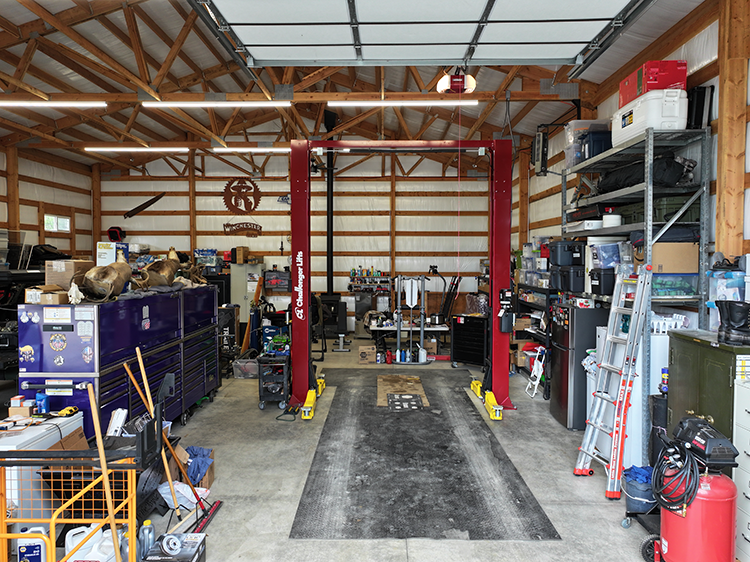
The pillar article on shop buildings covers the full range of shop building types, including commercial contractor shops, agricultural facilities, and business operations. This article focuses on something different: the personal hobbyist shop, which has its own distinct set of priorities.
A hobby shop is designed around a specific craft or set of crafts rather than around a business operation. The buyer is typically building a space for personal use, not employee use. The priorities shift accordingly:
- Craft-specific layout: A woodworking shop needs radically different machine placement and workflow design than a mechanic’s shop or a welding shop.
- Dust and debris management: Woodworking generates enormous amounts of fine dust that needs to be collected and controlled at the source. This shapes electrical needs, layout, and ventilation requirements in ways that commercial shops do not face.
- Lighting quality: Hobbyists doing detailed work need high-quality, even lighting over the whole shop, not just overhead industrial fixtures.
- Personal comfort: A hobby shop is a space you want to spend time in. Climate control, good storage, and a comfortable work environment matter more than raw efficiency.
- Modest scale: Most hobbyist shops are in the 24×30 to 40×60 range, smaller than contractor or commercial shops. Getting the details right within a smaller footprint is the key challenge.
How Much Space Does a Hobby Shop or Woodworking Shop Need?
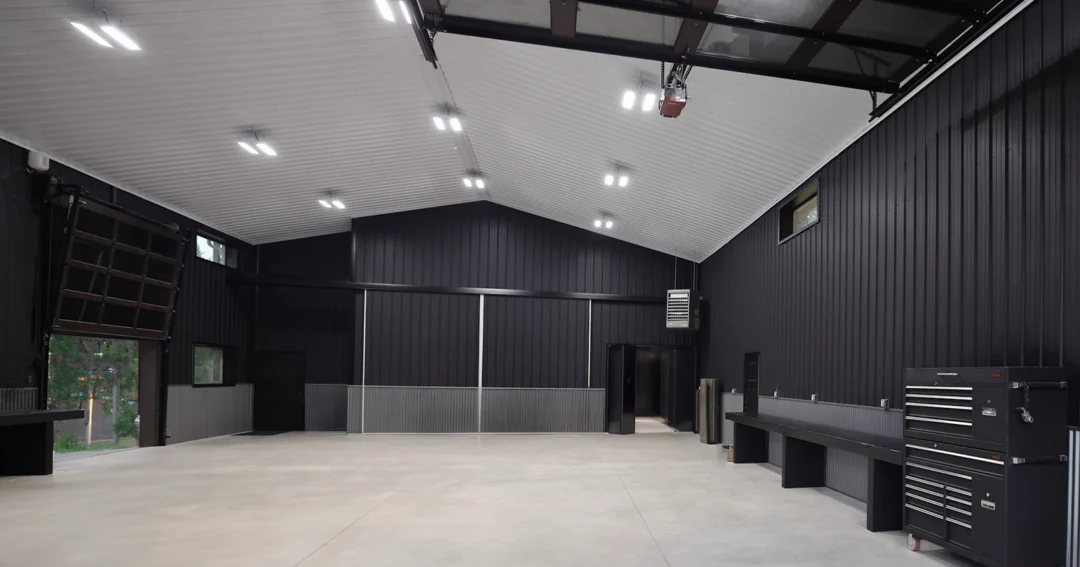
One of the biggest mistakes hobbyists make is building too small because they are thinking about the equipment they have today rather than the workflow they want to support. Here is how to think about size for different hobbyist use cases.
For a general guide on sizing considerations in a pole barn, see this guide.
Woodworking Shop Size Guide
Woodworking shops have some of the most demanding space requirements of any hobby because of the outfeed and infeed needs of stationary machinery. A table saw needs clear space in front of, behind, and to the left to handle full sheets of plywood or long boards. A jointer needs run-in and run-out space for long boards. A planer needs clearance in front and behind for boards passing through.
| Size | Sq Ft | What It Supports |
| 20×24 | 480 sq ft | Hobby starter setup: table saw, workbench, basic hand tool storage. Tight but workable for casual use. |
| 24×30 | 720 sq ft | Solid hobbyist setup: table saw, jointer or planer, workbench, dust collector. Room to move but not spacious. |
| 30×40 | 1,200 sq ft | Serious woodworker sweet spot: table saw, jointer, planer, band saw, drill press, workbench, finishing area, lumber storage. |
| 40×60 | 2,400 sq ft | Professional hobbyist or small craft business: full stationary tool lineup, dedicated finishing room, lumber yard storage area, room to build large pieces. |
For most serious woodworkers, 30×40 is the minimum size that feels genuinely comfortable. The 24×30 works with careful planning, but you will feel the constraints when building large furniture or working with long boards. If you can stretch to 40×60, you will not regret it.
Classic Car and Vehicle Restoration Shop Size Guide
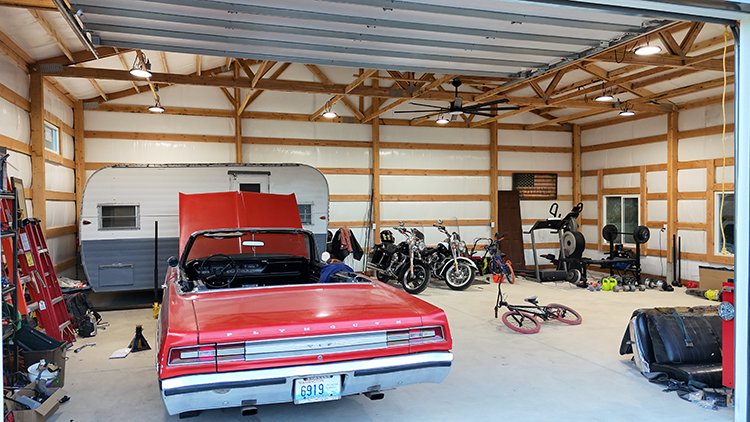
Vehicle restoration shops are driven by footprint requirements for the vehicles themselves. A standard car is about 6 by 16 feet. A truck is 7 by 22 feet or more. You also need working clearance all the way around the vehicle: at least 4 feet on each side and 6 feet at each end.
- Single-vehicle restoration shop: 24×40 minimum. This gives you room for one car with working clearance plus a workbench zone along one wall.
- Two-vehicle shop or one vehicle plus storage: 30×50 to 40×60. More comfortable working clearance and room for a parts storage area.
- Serious multi-project shop: 40×80 or larger. Multiple vehicles in progress simultaneously, dedicated paint prep area, parts cleaning station, and full tool storage.
Metalworking and Welding Shop Size Guide
Welding shops need good ventilation above all else. Welding fume extraction or at minimum strong cross-ventilation is a safety requirement, not an optional upgrade. Beyond ventilation:
- A small personal welding shop can function in a 20×30 space if the work is small-scale fabrication.
- For larger fabrication work with a welding table, metal storage rack, plasma cutter, grinder station, and layout table, plan for 30×40 to 40×60.
- If you are storing and cutting long steel stock, you need more length. A 16-foot section of steel needs run-out space at the saw, which eats linear footage fast.
General Purpose Hobby Shop
Many hobby builders want a shop that can do a little of everything: woodworking, metalworking, some mechanical work, storage for the riding mower and ATV, maybe a workbench for electronics or leatherwork. For a general purpose shop:
- 30×40 is a comfortable size that handles most personal hobby uses without feeling cramped.
- A 40×60 gives you genuine freedom to set up dedicated zones for different activities.
- Anything smaller than 24×30 tends to feel limiting within a year or two as you add tools and equipment.
Layout Tips for Hobby Shop Buildings
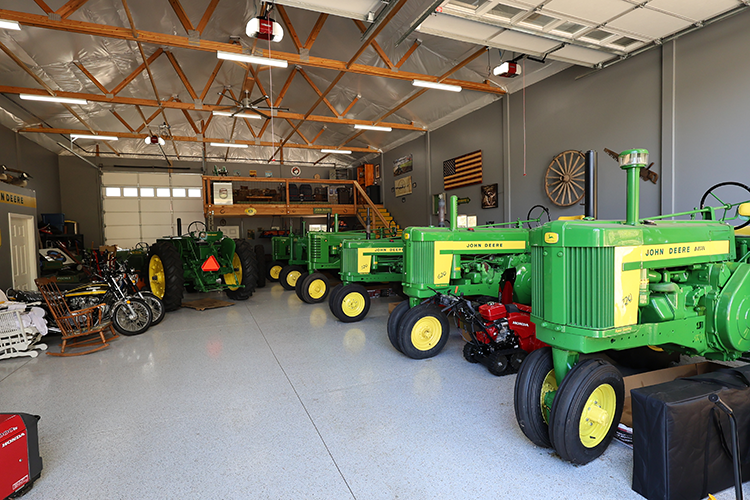
Layout is where a hobby shop either works beautifully or frustrates you every time you walk in. Here is how to think about it by craft.
Woodworking Shop Layout
The workflow in a woodworking shop follows a general arc: rough lumber comes in, gets processed at stationary machines, moves to the bench for detail work, and finished pieces go out. Organizing your shop to support this flow without constant backtracking saves enormous amounts of time and effort.
- Place your table saw near the center of the shop so boards can feed in from one side and exit the other without hitting walls or equipment.
- Group machines that work in sequence: jointer, planer, and table saw should be near each other because rough lumber goes through them in order.
- Put your workbench against a wall with good lighting above it, ideally near a window or under dedicated task lights.
- Reserve wall space for a clamp rack, a French cleat tool storage system, or shelving. These eat wall space but keep the floor clear.
- Plan a dedicated finishing area away from dust-generating machines. Even a curtained partition can help.
- Lumber storage works best along one full wall, horizontal on a lumber rack. Vertical lumber storage saves space but makes accessing individual boards harder.
Restoration Shop Layout
A vehicle restoration shop needs one dominant zone: the vehicle bay. Everything else works around it.
- Center the vehicle lengthwise in the building with working clearance on all sides.
- Locate the workbench and parts storage on one side wall where it is accessible without walking around the vehicle.
- If you need a parts washer or media blaster, put it in a corner or a defined zone that is easy to contain and clean.
- Leave one wall relatively open for rolling tool chests, creepers, floor jacks, and other mobile equipment.
- If you plan to paint or do body work, consider a separate partitioned area at one end of the building to contain dust and fumes.
Welding and Fabrication Shop Layout
Welding shops need to account for the hazards of the work: fumes, sparks, hot metal, and flying scale. Layout should isolate the welding zone somewhat from other work areas and always prioritize ventilation.
- Position the welding table under or near the main exhaust fan or fume extraction point.
- Keep flammable materials (wood, solvents, compressed gas cylinders with the exception of welding gas) in separate storage areas away from the welding zone.
- Locate the grinder station near the welding table, as these operations are often sequential.
- Metal storage racks are best against a wall with access from one end so stock can be pulled without unstacking.
Features That Make a Hobby Shop Great
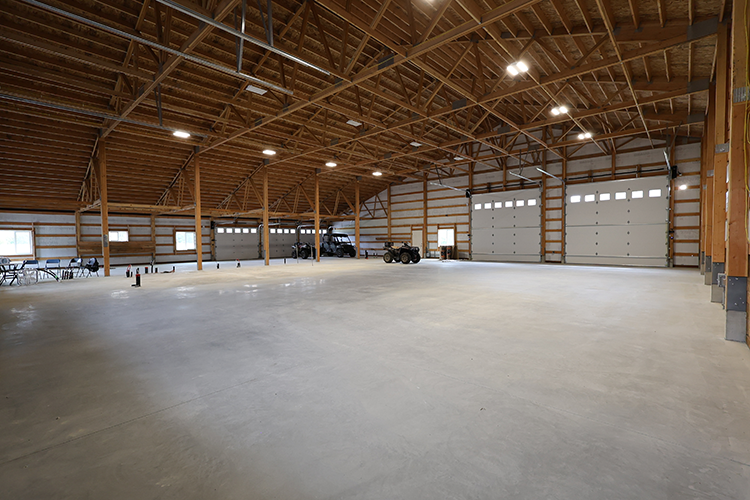
Beyond size and layout, certain specific features make an enormous difference in how enjoyable and functional a hobby shop is. These are worth prioritizing early in the planning process rather than trying to add later.
Dust Collection for Woodworking Shops
This is the most critical specialty feature for woodworking shops and the one that most first-time shop builders underestimate. Fine wood dust is both a health hazard and a fire risk, and a good dust collection system that captures dust at the source is far more effective than trying to filter it out of the air after the fact.
For a 30×40 shop with five to eight stationary machines, plan for:
- A central dust collector with at least 1.5 to 2 horsepower capacity, preferably with a cyclone separator to extend filter life.
- 4-inch or 6-inch main trunk lines running overhead along the ceiling to each machine station.
- Blast gates at each machine drop so you can direct suction to the machine in use.
- A separate ambient air filter to catch fine particles the dust collector misses.
Running the ductwork during the build is much cleaner and cheaper than retrofitting it after walls and ceilings are finished.
Electrical for Hobby Shops
A hobby shop electrical plan needs to account for every machine you own plus anything you might add. Common electrical demands in a woodworking or fabrication shop:
- Table saw: typically 3 to 5 hp, 220V single phase
- Jointer and planer: 1.5 to 3 hp each, typically 220V
- Dust collector: 1.5 to 2 hp, 220V
- Air compressor: 1.5 to 5 hp depending on size, often 220V for serious capacity
- Welder: 30 to 50 amp 240V circuits depending on the machine
- Lighting, HVAC, and miscellaneous 120V outlets
Most hobby shops benefit from 200-amp dedicated service. If you plan to do welding, run your compressor heavily, or have multiple large machines running at the same time, consider 200 amps as a minimum and think through whether 400 amps gives you more headroom.
Outlet placement matters too. Outlets every 6 to 8 feet along the walls, plus ceiling-mounted outlets above machine zones, eliminate the need for extension cords, which are a safety hazard in a shop environment.
Lighting
Good lighting is cheap to add during construction and expensive to retrofit later. Hobby shops benefit from:
- High-output LED shop lights, 4 or 8 foot, mounted at appropriate height above machine and bench zones
- Even coverage across the whole shop with no dark corners or shadowed areas
- Task lighting at workbench zones for detailed hand work and finishing
- Natural light from windows or skylights if your design allows it. Natural light is excellent for color accuracy in finishing work and makes the shop a more pleasant place to spend time.
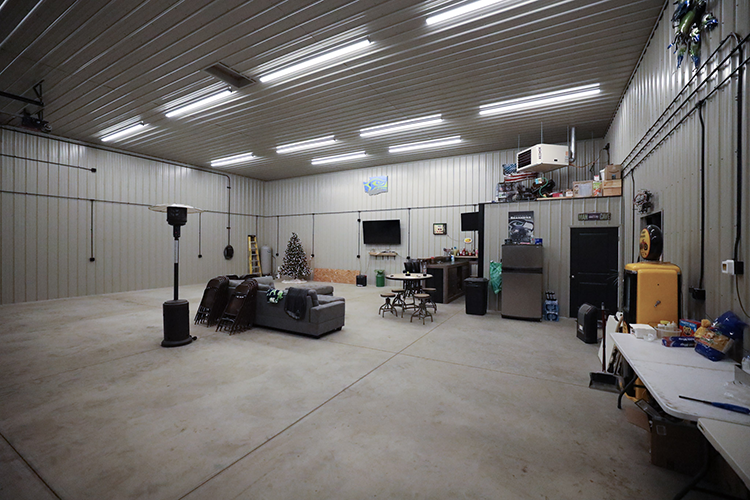
Insulation and Climate Control
A hobby shop you can work in year-round is worth significantly more than one you can only use in spring and fall. The right approach depends on your climate and budget.
For most hobbyists across Idaho, Washington, Oregon, Colorado, and Montana, the practical options are:
- Spray foam insulation provides the best performance and also eliminates condensation issues that are a real problem in metal and post-frame buildings where temperature swings are significant.
- Fiberglass batt insulation with a good vapor barrier is a budget-friendly alternative that works well if installed correctly.
- A mini-split heat pump handles most hobby shop sizes comfortably and provides both heating and cooling.
- A propane or natural gas unit heater is a lower-cost option for heating only, though you will want supplemental cooling options for summer use.
Windows and Natural Light
Hobby shop builders often skip windows to save money on the initial build and then regret it. Windows in a hobby shop serve several purposes beyond just light: they provide natural ventilation, they make the space feel less like a box, and for crafts where color accuracy matters (finishing, painting, restoration work), natural light is genuinely useful.
Plan for at minimum two to four windows in a 30×40 shop. Position them high on the walls for better light distribution and to maximize usable wall space below.
Storage and Organization Systems
Good storage keeps a hobby shop functional. Wall space is the most valuable asset in a smaller shop, and how you use it determines whether the space feels workable or chaotic.
- French cleat systems: A wall-mounted grid of angled wood strips that accepts interchangeable holders for tools, jigs, and accessories. Extremely versatile and customizable.
- Pegboard: A classic and affordable option for tool storage. Works best for frequently used hand tools in defined zones.
- Open shelving: For supplies, finishing products, hardware, and smaller power tools, simple open shelving keeps things accessible.
- Lumber storage: Horizontal lumber racks along a full wall allow you to store and access boards efficiently without the hassle of pulling everything off a vertical rack.
- Cabinet storage: Closed cabinets are worth adding for finishing supplies, chemicals, and items you want to keep dust-free.
Sliding Barn Doors
Not only do they add a unique sense of style to your build, but using sliding barn doors can open up use of more ceiling space for your lighting, ventilation, or tall lifts that would otherwise be in the way of an overhead door.
Pole Barn vs. Metal Building for a Hobby Shop
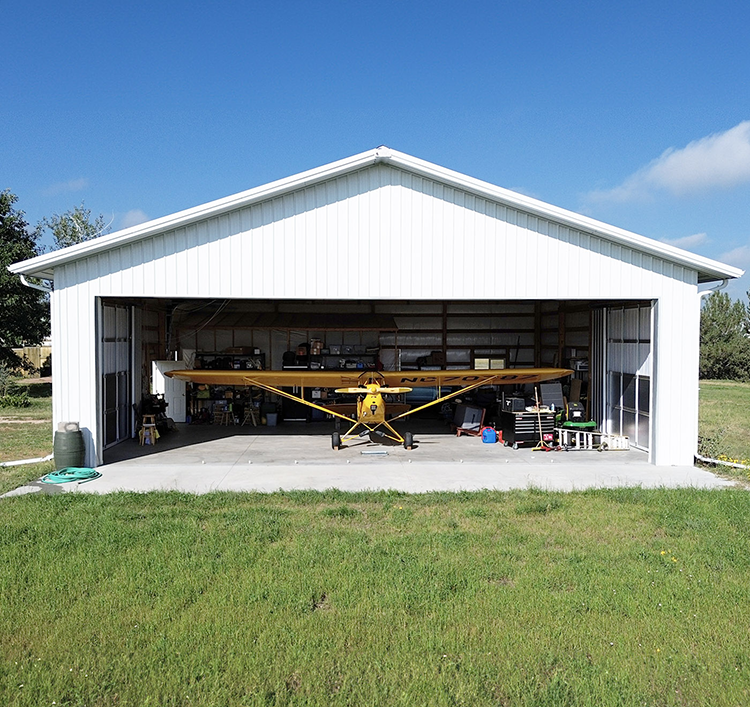
Both pole barn shops and metal building workshops work well for hobbyist use cases. The choice comes down to a few practical factors.
| Factor | Pole Barn Shop | Metal Building Shop |
| Cost | Generally lower upfront for smaller sizes | Competitive, may cost more per sq ft at smaller sizes |
| Customization | Highly flexible interior, easy to run utilities | Flexible but interior finishing has more steps |
| Condensation | Less of an issue with wood framing | Requires good insulation to control condensation |
| Aesthetics | Classic, warm look that many hobbyists prefer | Clean modern look, suits contemporary builds |
| Clear-span span | Good to about 60 ft without interior columns | Excellent, over 100 ft clear-span common |
For most hobbyist shops in the 24×30 to 40×60 range, a pole barn shop is an excellent and cost-effective choice. Metal building workshops shine at larger commercial spans, but they are also a perfectly good option for hobby shops if you prefer the aesthetic or the specific engineering of a steel frame.
What Does a Hobby Shop Building Cost?
Hobby shop costs vary widely based on size, construction type, site conditions, and the features and finishes you add. Here are general ballpark ranges for reference:
| Building | Shell Only | Finished with Concrete, Electric, Insulation |
| 24×30 Pole Barn Shop | $18,000 – $28,000 | $35,000 – $55,000 |
| 30×40 Pole Barn Shop | $25,000 – $40,000 | $50,000 – $80,000 |
| 40×60 Pole Barn Shop | $45,000 – $70,000 | $90,000 – $140,000 |
| 30×40 Metal Building Shop | $30,000 – $50,000 | $60,000 – $95,000 |
These ranges reflect general market conditions across our service area. Your actual quote will depend on your specific site, the features you select, and current material pricing. Specialty items like dust collection ductwork, upgraded electrical service, and custom cabinetry are typically added on top of the base building cost.
Getting Started on Your Hobby Shop

If you are ready to start planning a hobbyist or woodworking shop building, the best first step is to make a detailed list of everything the shop needs to accommodate. Include every machine, every piece of equipment, your lumber and material storage needs, and any specialty zones like finishing areas or welding stations. Then map that list to a size.
Steel Structures America builds custom pole barn shops and metal building workshops across Idaho, Washington, Oregon, Colorado, and Montana. Whether you are planning a modest personal shop or a fully equipped hobbyist facility, we are happy to walk through your project and put together a quote that fits your vision and your budget.
Frequently Asked Questions
What is the ideal size for a woodworking shop?
For most serious hobbyist woodworkers, 30×40 is the sweet spot. It is large enough to operate a full stationary tool lineup with room to move around large assemblies and long boards, without being so large that the space becomes hard to heat and maintain. If you can go to 40×60, the extra space is rarely wasted.
Do I need a separate room for finishing in a woodworking shop?
A dedicated finishing room is ideal because it keeps dust-generating machines away from wet finishes. A full separate room is not always necessary in a hobby shop. A curtained area or a simple partition at one end of the shop can serve the same function. The key is that you can seal it off while you finish and allow it to dry without fresh sawdust contaminating the surface.
What type of lighting is best for a hobby shop?
High-output LED shop lights mounted at 10 to 12 feet provide excellent general illumination for most hobby shop sizes. For color-critical work like finishing or painting, supplement with natural light from windows and add task lighting at your bench zones. Aim for 50 foot-candles of illumination at the work surface as a minimum; 75 foot-candles is better for detailed work.
How do I control dust in a woodworking shop building?
The most effective approach is capturing dust at the source with a dedicated dust collection system: a central collector connected to each machine with proper ductwork and blast gates. Supplement this with a ceiling-mounted ambient air filter to catch fine particles that escape the dust collector. Keeping the dust collector running while you work and for a few minutes after is important because the finest particles stay airborne longer than coarser dust.
Can I build a hobby shop on a residential property?
In many cases yes, depending on local zoning, the size of your property, and applicable setback requirements. Accessory structures are permitted in most residential and rural zones, but size limits and use restrictions vary by jurisdiction. Check with your county or local planning department early in the process to understand what is permitted on your specific parcel.