
Sliding Barn Doors for Pole Barns: Sizes, Styles, and What to Expect
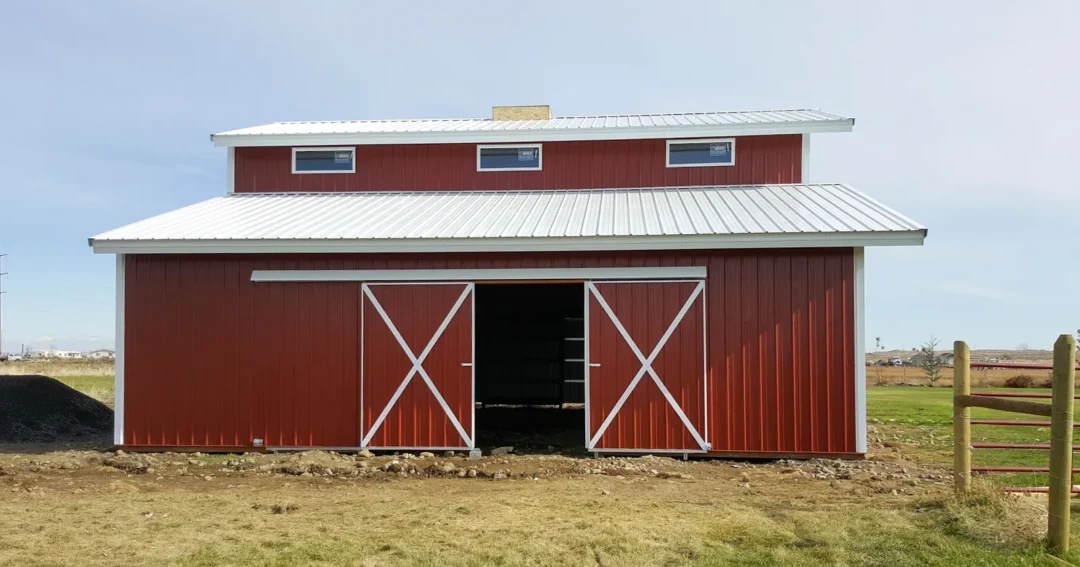
Sliding barn doors for pole barns are one of the most practical and visually appealing door options available for post-frame buildings. Unlike overhead doors, which require ceiling clearance and mechanical components, exterior sliding barn doors hang on a track above the opening and slide to the side. That simplicity is a big part of their appeal, especially for large openings where a traditional swinging door would be impractical and an overhead door would need significant header height above the opening.
This guide covers what you need to know before you talk to your contractor about sliding doors: how they work, what sizes and styles are available, how the hardware is specified, what they cost, and what questions to bring to your planning conversation.
When a Sliding Barn Door Makes More Sense Than an Overhead Door
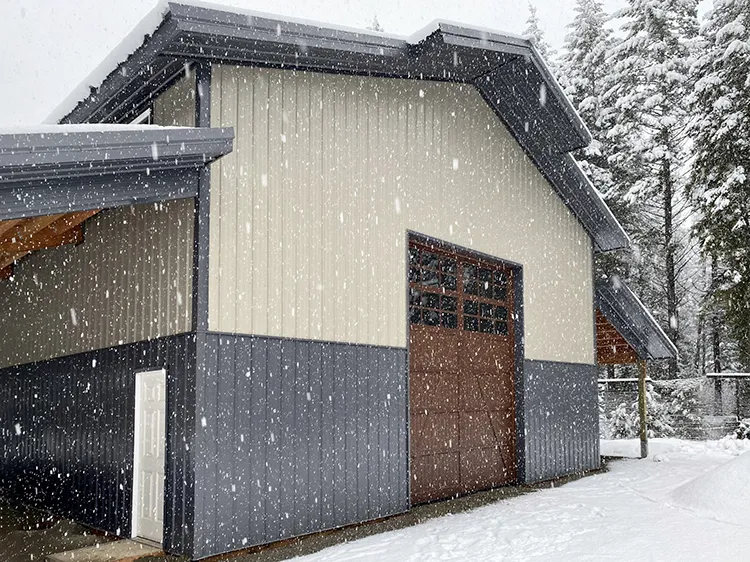
Most shop buildings and pole barns use overhead doors for vehicle and equipment access. That is usually the right call for those applications. But sliding barn doors fill a different role and are often the better choice in specific situations.
- Large equipment openings where ceiling height is limited. A sliding door can span a very wide opening without needing additional ceiling clearance for the door panels to travel upward.
- Agricultural buildings where simplicity and durability matter more than insulation or weathertight performance. A sliding door on a well-built track is about as mechanically simple as a door gets.
- Buildings where the aesthetic of a traditional barn door is part of the design intent. Barndominiums, farm buildings, and rustic shops often look better with a sliding door than with a sectional overhead.
- Pass-through openings between two areas of a building, such as between a shop bay and a covered lean-to, where an overhead door is overbuilt for the application.
- End wall openings in agricultural buildings used for equipment drive-through, where sliding doors on both ends allow straight-through access.
Overhead doors are still the right choice when weathertight sealing, security, insulation, or automation are priorities. Sliding barn doors and overhead doors serve different purposes. Your building may benefit from having both, depending on the layout.
How Exterior Sliding Barn Doors Work
The mechanics of a sliding barn door are straightforward. A steel track is mounted to the wall above the door opening, typically on a header beam that your contractor frames into the building. The door panel hangs from rollers or hangers that ride along that track. The door slides left or right along the wall to open and close.
Because the door travels along the exterior face of the wall, you need clear wall space on one or both sides of the opening to park the door panel when it is open. This is an important planning consideration. A 16-foot wide door opening needs at least 16 feet of clear wall space to one side, or 8 feet to each side if you split the opening with two door panels that slide in opposite directions.
The door itself is typically built from a steel frame with metal panel siding that matches the exterior of the building. Some builders use wood-framed doors with metal cladding. The panel design, color, and profile should be specified to match or complement your building’s exterior.
Sliding Barn Door Sizes: What Is Standard and What Is Possible
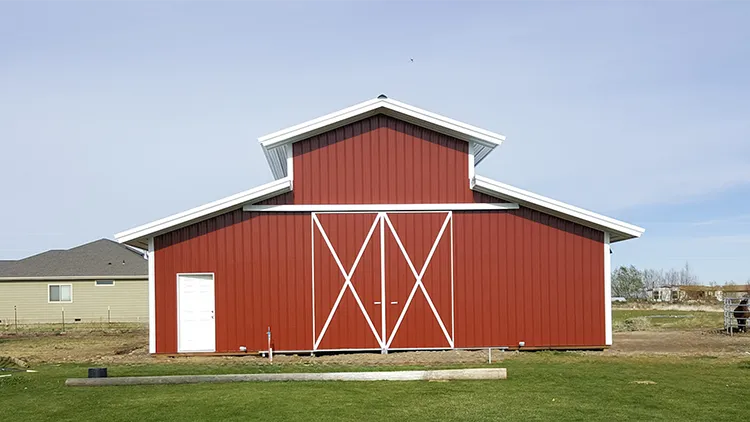
One of the real advantages of sliding barn doors in pole barns is that sizing is very flexible. Unlike overhead doors, which come in standard manufactured sizes, sliding barn doors are often custom built to the opening dimensions your contractor frames.
Common Sliding Door Opening Widths
| Opening Width | Typical Configuration | Common Use |
| 8 to 12 feet | Single panel | Smaller equipment access, pass-through openings, side entries |
| 14 to 20 feet | Single or split panel | Farm equipment, hay wagon access, tractor storage |
| 20 to 30 feet | Split panel (two doors) | Large combine or header storage, wide drive-through access |
| 30 feet and wider | Multiple panels | Oversized agricultural use, hay storage buildings, arena equipment access |
Door Height
Door height is determined by the wall height of your building and the clearance your equipment needs. Common heights for sliding barn doors in pole barns range from 10 to 16 feet, though taller doors are possible in buildings with higher eave heights. If you are storing tall equipment, work out your clearance requirements before your contractor frames the opening, because changing a rough opening after the fact is expensive.
A common planning mistake is underestimating equipment height. Measure your tallest piece of equipment with any attachments raised, then add at least 12 to 18 inches of additional clearance above that. Equipment gets taller over time, and a door that barely clears what you own today may not accommodate your next purchase.
Sliding Barn Door Styles
The style of a sliding barn door refers primarily to the panel design and how the siding is laid out on the door face. For exterior pole barn doors, the most common options are the following.
Flat Panel Metal Doors
The most common style for agricultural and shop buildings. The door panel is built from a steel frame covered with metal siding panels that match the building exterior. Simple, durable, and cost-effective. This style blends into the building and is the right choice when function is the priority over aesthetics.
Board and Batten Style
A board and batten pattern on the door face gives a more traditional agricultural look. This is achieved by using vertical metal panels with batten strips over the seams. It is a popular choice for hay barns, horse barns, and any building where the classic look of a traditional barn is part of the design intent.
X-Brace or Z-Brace Pattern
An X-brace or Z-brace design is a structural framing detail on the face of the door that mimics traditional wood barn door joinery. Beyond its visual appeal, the brace pattern does serve a structural function by stiffening the door panel against racking. This style is common in barndominiums, farm shops, and any building where appearance is part of the design brief.
Custom Panel Designs
For barndominiums and residential-adjacent buildings, some builders offer custom panel layouts with windows built into the door, decorative trim, or specific color combinations that align with the building’s overall design. These are more expensive but meaningfully elevate the look of the building.
Sliding Door Hardware: What Your Contractor Specifies
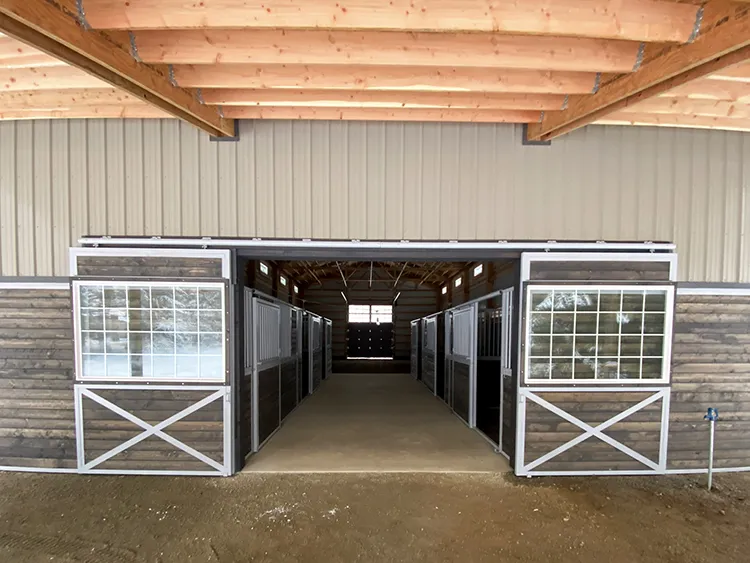
The hardware system for a sliding barn door is where quality variation matters most. A door hanging on undersized or poorly installed hardware will sag, bind, and eventually become difficult or impossible to operate. Here is what goes into a well-specified hardware system.
Track
The track is the steel rail mounted above the door opening. Track sizing is rated by load capacity, and the track must be rated for the weight of the door panel. A 16-foot wide door built from steel framing and metal panel can weigh 400 to 700 pounds or more. Track is typically available in 6-foot sections that are spliced together for longer runs. Splices should be staggered and properly aligned so hangers pass over them smoothly.
Hangers and Rollers
The hangers are the assemblies that attach to the door panel and ride along the track. Ball-bearing roller hangers are the standard for any door that will see regular use. Cheap stamped-steel hangers wear out quickly, especially on heavy doors. Your contractor should be able to tell you the load rating of the hangers they specify and confirm they are matched to the door weight.
Bottom Guide
A bottom guide keeps the door panel from swinging away from the building in wind. On lighter interior doors, a simple floor-mounted guide is adequate. For exterior doors exposed to weather and wind, a more robust bottom channel or guide system is necessary. This is an easy detail to underspecify, and a door without an adequate bottom guide will be frustrating in any area with significant wind.
Door Stops
Stop bolts or bumpers at each end of the track prevent the door from sliding off the track. These are a small detail but a critical one. Confirm your contractor’s hardware package includes proper stops at both ends of travel.
Door Latch and Lock
For agricultural buildings, a simple interior drop bar or slide bolt is adequate. For shop buildings and any building with valuable contents, a more secure latch or hasp system is appropriate. Discuss security requirements with your contractor. Sliding doors are generally less secure than overhead doors because the track and hardware can be compromised from outside, so buildings requiring serious security usually pair a sliding door with interior locking bars or add a separate personnel door with a keyed lock.
Weatherstripping and Sealing: Setting Realistic Expectations
This is where buyers sometimes have mismatched expectations. Exterior sliding barn doors are not weathertight in the way that a well-gasketed overhead door or an insulated sectional door can be. Because the door panel slides past the face of the wall rather than seating into the opening, there will always be some gap at the perimeter.
For agricultural storage buildings, this is not a problem. Air infiltration is often desirable for ventilation in hay and livestock buildings, and those buildings are rarely conditioned spaces where energy efficiency matters.
For heated shops and barndominiums where you want to minimize air infiltration, the conversation with your contractor should cover whether a sliding barn door or an insulated overhead door is the better fit for that specific opening. In many cases, the answer is an overhead door for the primary heated bay and a sliding door for a secondary access point where weathertight performance is less critical.
That said, weatherstripping can be added to sliding barn doors to reduce drafts, and a well-built door with a tight bottom guide and properly fitted side stops will perform better than a poorly specified one. Ask your contractor what weatherstripping they include and what the realistic performance expectation is for a conditioned space.
What Sliding Barn Doors Cost
Sliding barn door cost in pole barns varies based on door size, panel style, and hardware quality. Here is a general range to orient your budget conversations.
| Door Configuration | Approximate Installed Cost | Notes |
| Single panel, 10×10 ft, basic flat panel | $1,200 to $2,500 | Agricultural or basic shop use |
| Single panel, 12×12 ft, standard hardware | $2,000 to $3,500 | Shop and garage use |
| Split panel, 20×12 ft, quality hardware | $4,500 to $8,000 | Farm equipment or large shop access |
| Oversized or custom designed door | $8,000 to $20,000+ | Wide agricultural openings, custom styles |
These ranges include the door panel, hardware, and installation. The rough opening framing is typically included in the overall building cost. Custom panel styles, windows in the door panel, and upgraded hardware will push costs toward the higher end of each range.
Planning Considerations Before Your Contractor Frames the Opening

The time to finalize your sliding door plan is during the design phase, before any framing happens. Here is what needs to be decided early.
- Opening width and height: confirm your equipment clearance requirements with actual measurements, not estimates.
- Single panel or split panel: this affects how much clear wall space you need on one or both sides of the opening.
- Wall space availability: map out where the door panels will park when open and confirm no windows, posts, or other features conflict with that travel path.
- Track mounting: the track mounts to a header beam in the wall. Your contractor needs to know the door size and weight to specify the correct header and mounting system.
- Door style and panel design: specifying this early ensures the door panel siding is ordered to match the building exterior.
- Hardware grade: discuss what hardware package is included in the quote and what an upgrade looks like if you want higher-capacity or longer-life components.
- Bottom guide system: confirm the bottom guide specification, particularly for exterior doors in your climate.
- Latch and security requirements: communicate your security needs so the latch system is appropriate from the start.
Questions to Ask Your Contractor
- What sliding door hardware brand and product line do you typically use, and what is the load rating of the hangers?
- Is the door panel built on-site or fabricated off-site and delivered?
- How is the track mounted, and what header specification does that require?
- What bottom guide system do you use for exterior sliding doors?
- What weatherstripping, if any, is included, and what should I realistically expect in terms of air infiltration?
- What latch system is included, and what is my upgrade option if I need better security?
- Is the door panel siding matched to my building exterior, and who is responsible for ordering the matching material?
- What does your warranty cover on the door hardware?
Ready to Add a Sliding Barn Door to Your Build?
Steel Structures America builds custom pole barns, shops, agricultural buildings, and barndominiums across Idaho, Washington, Oregon, Colorado, and Montana. We work through door sizing, style, and hardware during the design process so your building gets exactly what it needs from the start.
Give us a call at (866) 839-0506 or reach out online to discuss your project. We are happy to walk through the right door configuration for your building and your use case.