
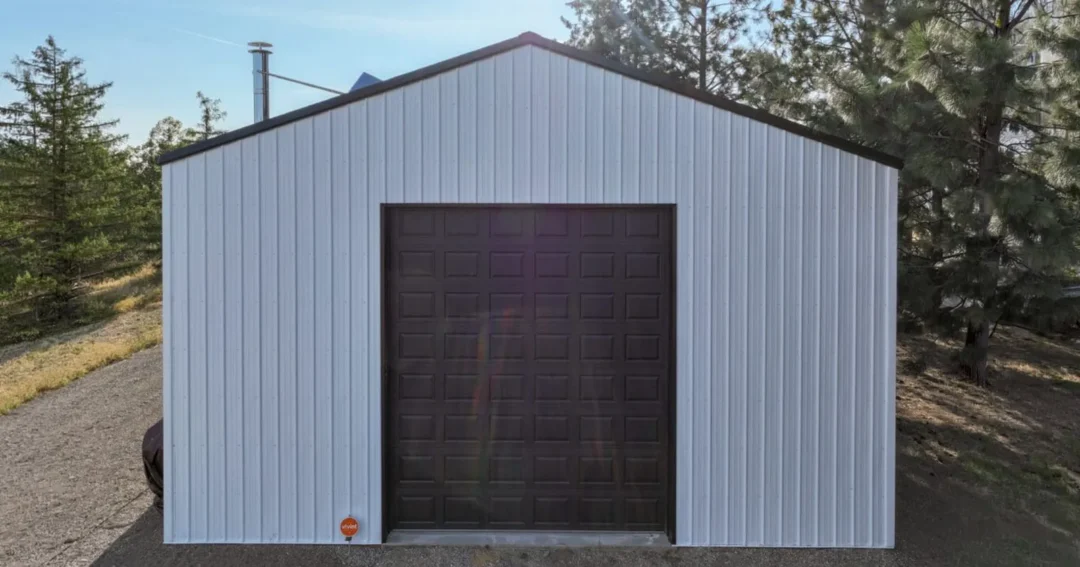
Fire Resistant Steel Siding and Roofing: What It Does in a Wildfire
Fire resistant steel siding and roofing won’t ignite. That’s the honest, unglamorous answer, and it’s worth saying plainly, because the language around fire and building materials gets fuzzy fast. Steel has no fuel in it. Embers can land on a panel, pile up in a corner, and burn themselves out, and the steel gives them nothing to work with.
What steel won’t do is make a building fireproof. Nothing does. So here’s what steel roofing and siding really buy you when embers are flying, where that protection stops, and what else has to be right on a building we put up in Idaho, Washington, Oregon, Montana, or Colorado.
How fire resistant steel siding and roofing behaves in a fire
Most homes and shops lost in a wildfire aren’t overrun by a wall of flame. They’re lit by wind-driven embers that land on a roof, get sucked into a vent, or find a pile of bark mulch against the wall. Embers can travel a mile or more ahead of the fire itself.
That changes what you’re solving for. You’re not trying to build something that survives direct flame contact for an hour. You’re trying to remove the things that catch. Steel panels do that job on the two biggest surfaces you own, the roof and the walls, and they do it passively. There’s no treatment to reapply and nothing that wears off.
Radiant heat is the other half of it. A neighbor’s house or a wood fence burning 30 feet away throws enough heat to ignite wood siding or deform vinyl with no flame ever touching the wall. Steel doesn’t care about that either.
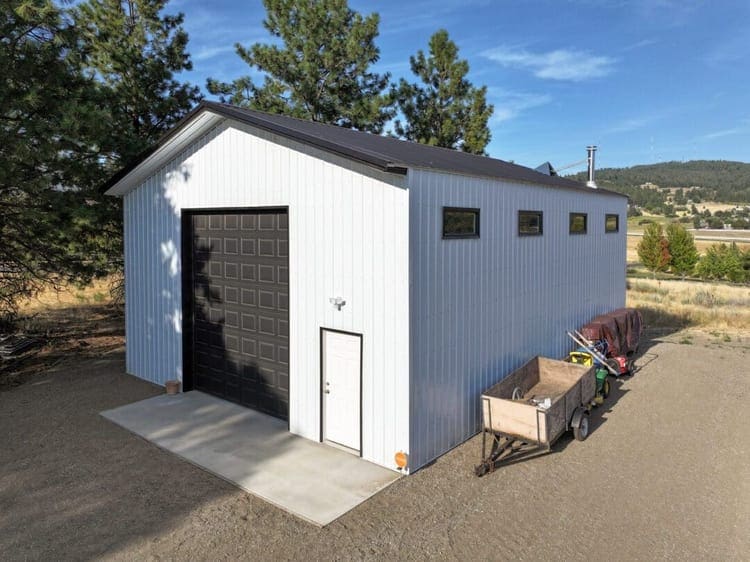
Non combustible is a defined term, not a marketing word
This is where a lot of confusion lives, so it’s worth separating three things people use interchangeably.
| Term | What it means |
|---|---|
| Non combustible | The material won’t burn at all. Verified by ASTM E136, a furnace test at roughly 1,380 degrees Fahrenheit |
| Fire resistant / fire rated | An assembly holds back fire for a measured time, usually 1 or 2 hours. It can contain combustible parts inside a protective layer |
| Fireproof | Not a code term. Nothing is genuinely fireproof |
Steel is non combustible, which is the higher bar. Wood isn’t, no matter how it’s treated. Neither is vinyl, engineered wood, or anything with wood flour or foam in it. Our sister company covers the test and the classifications in detail in their piece on the meaning of non combustible.
Two things surprise people. First, a printed wood grain finish doesn’t make a steel panel combustible. The coating is thin, and the substrate is what gets tested. Second, non combustible doesn’t mean unaffected by fire. Steel won’t burn, but at high enough temperatures it loses strength and can deform. For cladding, the practical point is that it doesn’t add fuel to the fire.
The roof does the heaviest lifting
Your roof is the largest horizontal ember target on the property. If you’re going to spend money in one place, spend it there.
In fire country, a Class A rated roof assembly is the baseline. Metal, tile, and modern composition can all get there, so it’s less about the material name and more about the tested assembly and how the edges get detailed. Steel’s advantage is simple: an ember shower lands on it and finds nothing to catch.
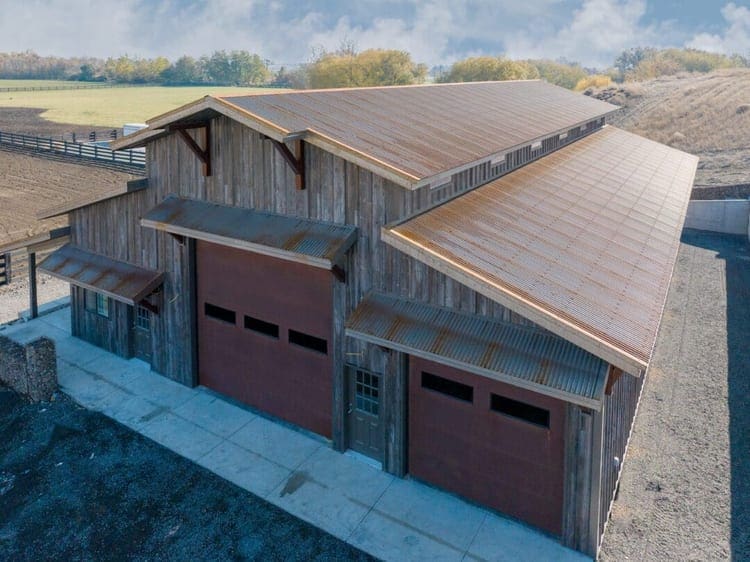
The trim is where builds go wrong. Open ridges and open eaves let embers blow up underneath the panels, into the space above the purlins, and that’s a fire inside a building with a perfectly good roof on it. Ridge closures, eave closures, and a properly detailed rake are cheap at the time of construction and miserable to retrofit. Ask about them when you’re comparing bids, along with how the builder handles ventilation on a post-frame building, since vents and closures have to work together rather than against each other.
Steel siding, without the warehouse look
Walls matter less than the roof, but they aren’t nothing, especially the elevation facing a slope, a greenbelt, or a neighbor’s fence line. Siding is a large, continuous vertical surface, and embers collect at corners, joints, and behind trim. Combustible siding gives them somewhere to work.
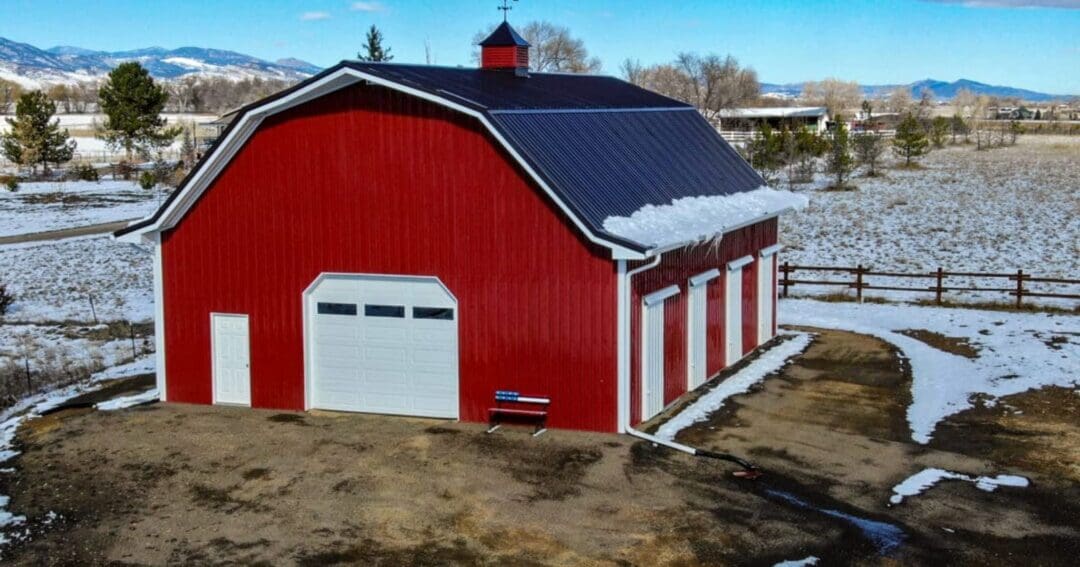
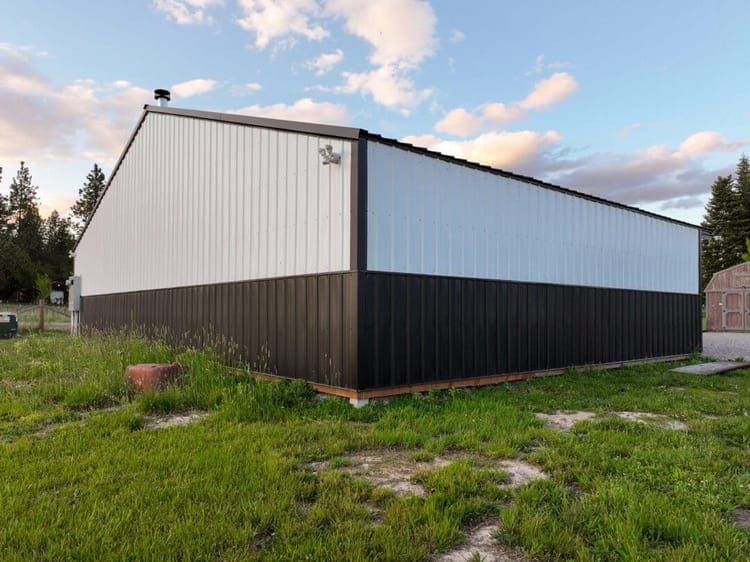
The old objection to steel was that it looked industrial. That stopped being true. The panels we install are made in house by our sister company Metal America, and the finish range covers 26 and 29 gauge WeatherXL SMP stock colors, 24 gauge PVDF premium colors, wood-look prints like Smooth Cedar, Barnwood, and Chippy White, plus Cor-Ten weathering steel and pre-weathered GALVALUME. On gauge, 26 is the most popular for siding and 24 gives the best balance of strength and cost. Neither one changes the fire story, since both are steel.
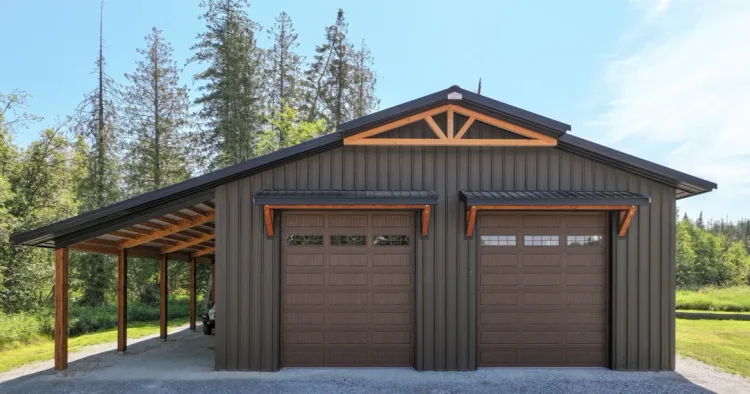
So a shouse or barndominium can read as cedar board and batten from the driveway and be non combustible steel in the assembly. If you want the full material comparison, Metal America’s guide to non combustible siding options stacks steel against brick, stucco, and fiber cement honestly. Our own metal building color and finish guide is the place to start if you’re picking a look.
What fire resistant steel siding and roofing can’t do alone
We’d rather you hear this from us than find out the hard way. A steel skin over an unhardened building can still lose. The gaps that matter:
- Vents. Attic, gable, and soffit vents are the most common way embers get inside a building that looks untouched from the street. Screen them with 1/8 inch metal mesh, not plastic or fiberglass.
- The first five feet. Bark mulch, firewood stacks, dry grass, and junipers planted tight to the wall are all fuel sitting against your siding. Gravel or bare soil in that strip is free protection.
- Gutters and roof valleys. A gutter packed with pine needles is an ember trap at the edge of your roof deck. Clear it twice a season.
- Fences and decks. A wood fence running into steel siding is a wick. Fire finds the fence somewhere down the line and walks it to the wall. Swapping the last stretch for metal or masonry breaks that fuel path.
- Glass. Radiant heat cracks single pane windows long before a steel wall is in trouble, and once the glass goes, embers are inside.
Metal America’s walkthrough on how to protect your home from wildfire works through the whole list in priority order, and the NFPA’s wildfire research is the best free source on the reasoning behind the distances.
Your construction type won’t change, and that’s fine
Here’s a question we field often, and the answer isn’t what people expect. A post-frame building with laminated wood columns is IBC Type V construction, even when it’s wrapped head to toe in steel roofing and siding. Construction type follows the structural frame, not the skin. A steel-framed building is Type II.
That’s a code classification, and it matters for allowable area, allowable height, and sometimes for what your insurer wants to see. It’s a separate question from wildfire exposure. A post-frame building with a steel skin is far better protected against an ember storm than the same building with wood siding, even though the classification on the permit doesn’t move. Metal America explains the full breakdown in their guide to non combustible construction types, and we cover the permitting side in our overview of metal building permits and engineering requirements.
Common questions
Does a steel roof make my shop fireproof?
No, and be skeptical of anyone who says otherwise. Steel is non combustible, so it won’t ignite or feed a fire, but a building is a system. A steel roof over a needle-packed gutter with unscreened vents can still burn. Non combustible materials remove fuel. They don’t remove risk.
Do wood-look steel panels burn?
No. The wood grain is a printed finish on a steel substrate. It’s thin enough that the panel stays non combustible, so you get the cedar look without the fuel load.
Is steel siding worth it if my building is already framed in wood?
Yes, for ember exposure. The frame is protected by the skin, and embers land on the outside of a building, not the inside. Steel cladding on a wood frame is a meaningful upgrade even though it doesn’t change the code classification.
What about rebuilding after the Spokane fires?
The fires that started in Spokane County on August 1, 2026 destroyed roughly 700 structures and displaced about 65,000 people. If you’re at the stage of planning a rebuild, material choice is one of the few parts of the process fully within your control. We have offices in Spokane Valley and Post Falls and crews working year round.
The bottom line
Fire resistant steel siding and roofing means the panels themselves have no fuel in them, so embers and radiant heat have nothing to catch. That’s real protection on the two largest surfaces of your building, and it’s permanent. What it isn’t is a substitute for screened vents, closed ridges and eaves, a clean gutter, and five clear feet around the walls.
We’ve been building post-frame buildings and steel buildings across the Northwest and Intermountain West for more than 30 years, and we design, engineer, permit, and build in house. If you’re planning a shop, barn, or home in fire country and want to talk through how the steel gets detailed rather than just what color it comes in, give us a call at (800) 833-9997 or request a free quote. No sales pitch, just the information you need.