
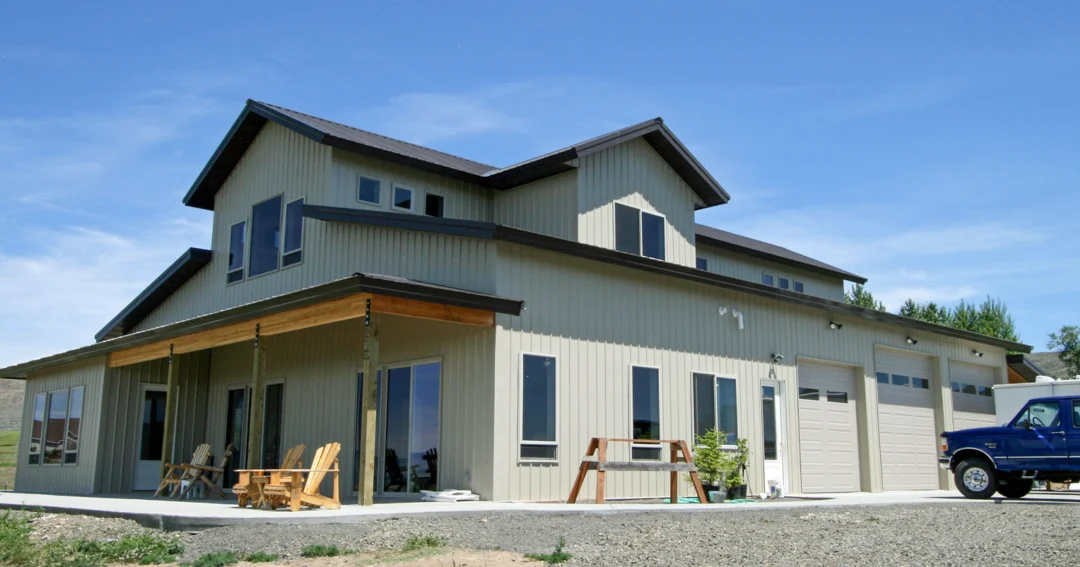
Metal Building Sizes: Complete Guide to Standard and Custom Dimensions
Metal building sizes range from compact 20×20 garages all the way up to massive 100×200 commercial and industrial structures, and picking the right footprint up front is one of the most important decisions you will make for your project. Build too small and you will be cramped within a few years. Build too large and you are paying for space you may never use. This guide breaks down every standard metal building size, what each one is typically used for, cost expectations, and how to figure out the right fit for your specific situation.
Whether you are planning a two-car garage, a contractor shop, a commercial warehouse, or an agricultural equipment building, there is a standard metal building size that lines up with your needs. And if a standard footprint does not quite work, custom sizing is always an option.
How Metal Building Sizes Work
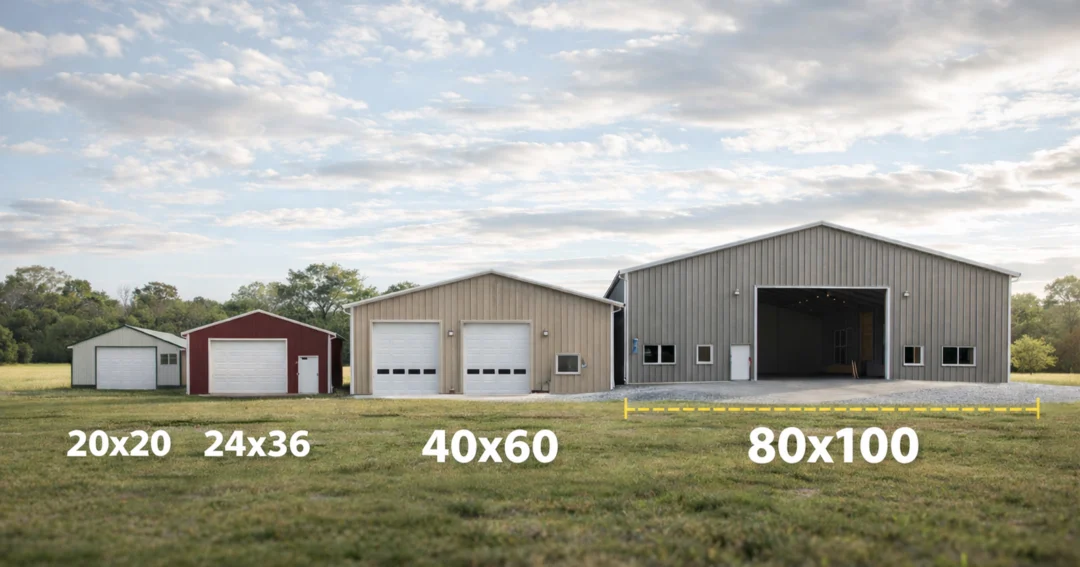
Metal building dimensions are always listed as Width x Length, and sometimes a third number is added for eave height. So when you see a “40×60 metal building,” that means the building is 40 feet wide and 60 feet long. A 40x60x14 adds a 14-foot eave height to the spec.
Width is typically the most structurally significant dimension because it determines the clear span, meaning how far the roof framing has to reach without interior support columns. Longer widths require heavier frames, which affects price. Length is generally easier and cheaper to extend, which is why many buyers start with the right width for their use case and then adjust the length to fit their budget or site.
Standard vs. Custom Metal Building Sizes
Pre-engineered metal buildings come in standard size increments, usually in 5-foot or 10-foot steps for width and length. Common standard sizes run from 20×20 up through 100×200 and beyond. Staying close to standard dimensions generally keeps costs lower because the steel framing components are engineered and manufactured in predictable configurations.
Custom sizes are also available if your site, project, or specific use case calls for it. A 37×58 building, for example, is possible but may cost more than the nearest standard footprint. Most buyers are served well by standard or near-standard sizing.
Eave Height: The Third Dimension That Matters
Eave height is the measurement from the ground to the bottom of the roof framing at the sidewall. Standard eave heights run from 10 to 16 feet for most applications. Taller options, 18 to 24 feet or more, are available for commercial and industrial buildings.
Eave height affects how comfortable the building is to use. A 12-foot eave height is the practical minimum for RV storage and equipment with tall profiles. Contractor shops that will see lifts or overhead cranes typically need 14 to 16 feet or taller. Commercial warehouses often specify 20-foot or higher clearance for racking and forklifts.
Quick-Reference: Common Metal Building Sizes at a Glance
| Size | Sq Ft | Typical Eave Ht | Common Uses | Typical Price Range (shell) |
| 20×20 | 400 | 10-12 ft | Single-car garage, storage | $8,000 – $14,000 |
| 20×30 | 600 | 10-12 ft | 2-car garage, workshop | $10,000 – $18,000 |
| 24×24 | 576 | 10-12 ft | 2-car garage, hobby shop | $10,000 – $17,000 |
| 30×40 | 1,200 | 12-14 ft | 3-car garage, small shop | $18,000 – $30,000 |
| 30×50 | 1,500 | 12-14 ft | Shop, small contractor space | $22,000 – $36,000 |
| 40×60 | 2,400 | 12-16 ft | Large shop, farm storage | $32,000 – $52,000 |
| 40×80 | 3,200 | 12-16 ft | Contractor shop, equipment storage | $42,000 – $65,000 |
| 50×100 | 5,000 | 14-18 ft | Large commercial, ag equipment | $65,000 – $100,000 |
| 60×100 | 6,000 | 16-20 ft | Warehouse, commercial shop | $80,000 – $125,000 |
| 80×100 | 8,000 | 18-24 ft | Large warehouse, industrial | $110,000 – $175,000 |
| 100×100 | 10,000 | 20-24 ft | Commercial, distribution, storage | $140,000 – $220,000 |
| 100×200 | 20,000 | 20-30 ft | Industrial, large distribution | $250,000 – $400,000+ |
Note: Prices above reflect steel shell pricing only and will vary based on location, steel market, accessories, and foundation. Installed prices with concrete, doors, windows, and insulation are higher. Request a current quote for accurate pricing.
Small Metal Building Sizes: 20×20 Through 30×50
Small metal buildings cover the range that works well for personal garages, hobby shops, home workshops, and basic storage. These are practical, affordable starting points for homeowners and small property owners.
20×20 Metal Building (400 sq ft)
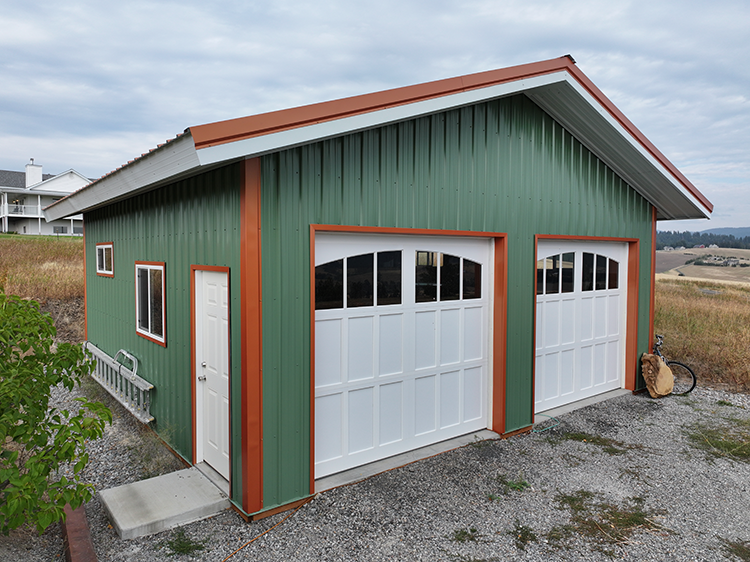
A 20×20 metal building is one of the smallest practical metal building footprints. At 400 square feet, it gives you enough room for one car with modest storage around it, a small workshop, or a utility storage building. This size is popular for people who need something functional without a large investment.
A standard 10-foot eave height works fine for passenger vehicles. If you plan to store a lifted truck or work van, consider bumping the eave to 12 feet.
20×30 and 24×24 Metal Buildings (600 and 576 sq ft)
The 20×30 and 24×24 are popular choices for two-car garages. The 20×30 gives you a long, narrow layout that works well for two vehicles in tandem or a single vehicle with a dedicated workspace alongside it. The 24×24 gives you a squarer footprint that feels more comfortable for parking side by side.
Both sizes are common for standalone detached garages and smaller hobby shops. A 10 to 12-foot eave height handles most personal vehicle storage needs well.
30×40 Metal Building (1,200 sq ft)
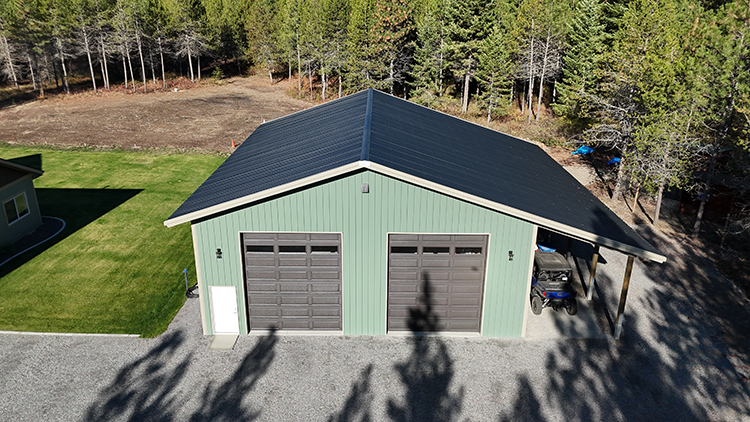
The 30×40 metal building is one of the most popular sizes for homeowners who want a real shop or a large three-car garage. At 1,200 square feet, you have room for three vehicles or two vehicles plus a dedicated workspace, tool storage, and a workbench area.
This size also works well for small business storage, farm equipment storage for smaller operations, and hobbyist shops for woodworking, automotive work, or fabrication. A 12 to 14-foot eave height is standard for this use range.
30×50 Metal Building (1,500 sq ft)
Stepping up to 1,500 square feet, the 30×50 gives you noticeably more room for a workshop or equipment storage. The extra 10 feet of length compared to the 30×40 can accommodate a larger vehicle, additional storage, or a dedicated office or bathroom area at one end of the building.
This size is a good fit for small contractors, hobby farmers, and serious hobbyists who want a well-equipped shop without jumping to the mid-range sizes.
Mid-Size Metal Buildings: 40×60 Through 50×100
The mid-range footprints are where metal buildings start earning their reputation as serious working structures. These sizes serve contractors, agricultural operations, and commercial buyers who need real capacity.
40×60 Metal Building (2,400 sq ft)
The 40×60 metal building is one of the most popular sizes in the entire metal building market. At 2,400 square feet, it is large enough to function as a full contractor shop, a serious farm equipment building, or a mid-size commercial storage facility.
Common uses include:
- Contractor shops with multiple bays for trucks and equipment
- Farm equipment storage for tractors, implements, and utility vehicles
- Auto repair shops and service garages
- Large personal garages with full workshop areas
- Small commercial storage or light manufacturing
A 14-foot eave height is standard for most 40×60 applications. Buyers who plan to use vehicle lifts, store tall equipment, or need overhead crane clearance should consider 16-foot or taller eaves.
40×80 Metal Building (3,200 sq ft)
The 40×80 gives you 3,200 square feet with the same 40-foot clear span as the 40×60, but with an extra 20 feet of length that makes a meaningful difference in how the building functions day to day. The additional space can be used for a separate storage zone, an office or break room, a covered staging area, or just more room to spread out.
This size is popular for growing contracting businesses, mid-size agricultural operations, and commercial users who need a layout that supports multiple functions within one structure.
50×100 Metal Building (5,000 sq ft)
At 5,000 square feet, the 50×100 is a serious commercial-grade structure. The 50-foot clear span width handles large farm equipment, commercial vehicles, and oversized machinery with ease. The 100-foot length gives you room to organize the space into distinct zones.
This footprint is common for:
- Agricultural equipment buildings for combines, large tractors, and hay storage
- Commercial contractor operations with multiple pieces of heavy equipment
- Self-storage facilities and multi-unit storage operations
- Light manufacturing and fabrication shops
- Distribution and logistics facilities
Eave heights in the 14 to 18-foot range are typical. Agricultural buyers storing large equipment often specify 16 to 18 feet of clearance.
Large Metal Building Sizes: 60×100 Through 100×200+
Large metal buildings move solidly into commercial and industrial territory. These structures are built for serious operational use, high-volume storage, and demanding environments.
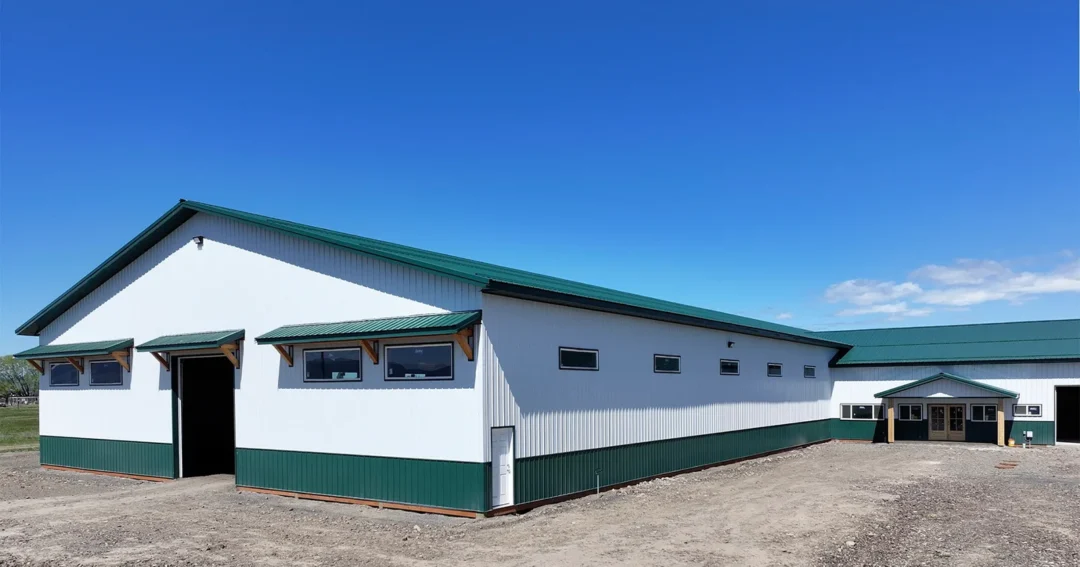
60×100 Metal Building (6,000 sq ft)
The 60×100 delivers 6,000 square feet with a 60-foot wide clearspan interior. That width is significant because it accommodates very large equipment, wide vehicle bays, and commercial racking systems without any interior columns to work around.
Typical uses include commercial shops, warehouses, agricultural facilities for large-scale farming operations, and fleet maintenance buildings. Eave heights of 16 to 20 feet are common.
80×100 Metal Building (8,000 sq ft)
The 80×100 is an 8,000-square-foot structure built for heavy commercial and industrial use. The 80-foot clearspan interior is wide enough to support large loading operations, wide-aisle warehouse racking, and multi-line production or fabrication setups.
This size is common for distribution operations, large contractor yards, commercial fleet garages, and mid-size industrial facilities. Buyers at this footprint typically specify 18 to 24-foot eave heights.
100×100 Metal Building (10,000 sq ft)
A 100×100 metal building is a full-scale commercial structure. At 10,000 square feet, this is a meaningful warehouse or industrial building. The 100-foot clearspan width is one of the widest commonly available in pre-engineered metal building systems.
Common applications include:
- Commercial warehouses and distribution centers
- Large self-storage facilities
- Manufacturing and assembly operations
- Agricultural processing and storage buildings
- Vehicle fleet garages and logistics hubs
Eave heights from 20 to 24 feet are standard. Some industrial buyers specify even taller clearances for high-bay racking or crane systems.
100×200 Metal Building and Larger (20,000+ sq ft)
Once you move into 100×200 territory and beyond, you are building large-scale industrial and commercial structures. These are serious investments designed for distribution, manufacturing, or large agricultural processing operations.
Buildings at this scale are typically fully engineered to site-specific requirements including local wind and snow load codes, foundation engineering, and specialized door and access systems. Lead times and project complexity increase at this scale, so early planning is important.
Metal Building Sizes by Use Case
If you are thinking in terms of what you need to do with the building rather than raw square footage, this section gives you a use-case first look at the right size range for common applications. For a deeper look at sizing by use case, see our Metal Building Square Footage Guide.
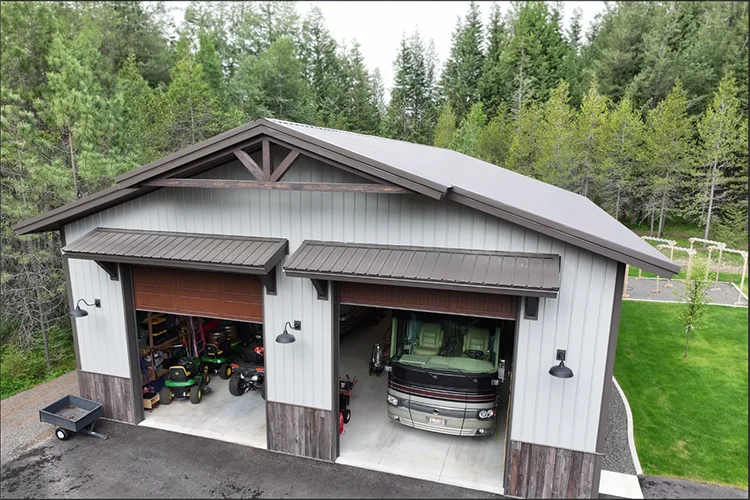
Metal Building Sizes for Garages
| Use | Recommended Size | Min Eave Height | Notes |
| 1-car garage | 20×20 to 20×24 | 10 ft | Tight but functional |
| 2-car garage | 24×24 to 24×30 | 10-12 ft | Standard family garage |
| 3-car garage | 30×40 to 36×40 | 12 ft | Comfortable for 3 vehicles |
| 4-car garage | 40×40 to 40×50 | 12-14 ft | Plus workspace |
| RV garage | 30×40 to 40×60 | 14-16 ft | Height critical for RV clearance |
| Boat storage | 20×40 to 30×60 | 12-16 ft | Depends on boat size |
Metal Building Sizes for Shops and Workshops
| Use | Recommended Size | Min Eave Height | Notes |
| Hobby/woodworking shop | 24×30 to 30×40 | 10-12 ft | Comfortable workspace |
| Home mechanic shop | 30×40 to 40×60 | 12-14 ft | Room for 2 bays + storage |
| Contractor shop (small) | 40×60 to 40×80 | 14-16 ft | Multiple vehicles + equipment |
| Contractor shop (large) | 50×80 to 60×100 | 16-18 ft | Heavy equipment clearance |
| Auto body/repair shop | 40×60 to 50×100 | 14-16 ft | Multiple bays, spray booth area |
| Fabrication/welding shop | 40×80 to 60×100 | 16-20 ft | Overhead crane clearance |
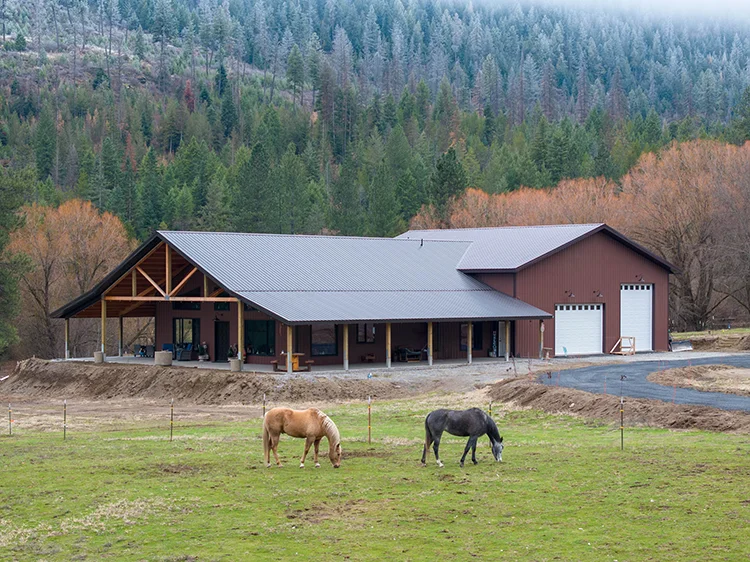
Metal Building Sizes for Agricultural Use
| Use | Recommended Size | Min Eave Height | Notes |
| Small farm equipment | 40×60 to 40×80 | 14-16 ft | Tractors, implements |
| Large farm equipment | 50×100 to 60×100 | 16-18 ft | Combines, large tillage |
| Hay storage | 40×60 to 60×100 | 14-20 ft | Open-sided options popular |
| Grain/commodity storage | 50×100+ | 16-24 ft | Height for auger systems |
| Livestock housing | 40×80 to 60×100 | 12-14 ft | Depends on animal type |
Metal Building Sizes for Commercial and Industrial Use
| Use | Recommended Size | Typical Eave Height | Notes |
| Small commercial shop | 40×60 to 50×80 | 14-16 ft | Office + work area |
| Warehouse/storage | 60×100 to 80×100 | 18-24 ft | Racking clearance |
| Self-storage facility | 30×100 to 50×200 | 10-12 ft | Multi-unit configuration |
| Light manufacturing | 60×100 to 100×200 | 18-24 ft | Process flow layout |
| Distribution center | 100×200+ | 24-30 ft | Dock doors, wide aisles |
What Size Metal Building Costs More and Why
Metal building pricing scales with size, but not always in a straight line. A few factors determine how size affects cost:
Width Costs More Per Foot Than Length
Increasing width requires heavier structural framing because the clear span increases. Going from a 40-foot wide building to a 60-foot wide building is a more significant engineering change than adding 20 feet of length. As a general rule, adding width costs more than adding length, which is why many buyers maximize length first when working within a budget.
Eave Height Adds Cost
Taller buildings use more steel and require more robust column sizing. A 14-foot eave height costs noticeably more than a 10-foot eave on the same footprint. Buyers sometimes underestimate this and are surprised when they spec up to a taller building.
Accessories and Options Add to the Base Price
The shell price is just the starting point. Overhead doors, walk doors, windows, insulation, gutters, downspouts, and interior framing all add to the final cost. A well-equipped 40×60 building with multiple overhead doors, insulation, and a concrete floor will cost significantly more than a basic shell.
How to Choose the Right Metal Building Size
The most common mistake buyers make is building too small. Equipment gets added, a side business grows, or a hobby expands, and suddenly the building that felt right two years ago is already maxed out.
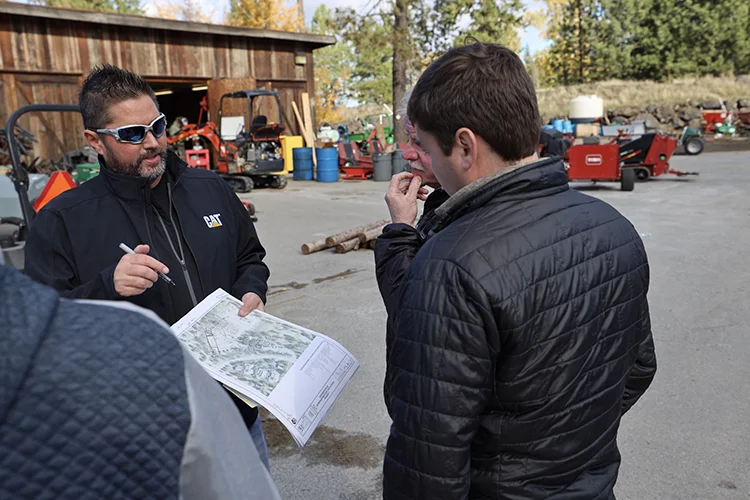
Here are the practical steps to land on the right size:
Step 1: List Everything the Building Needs to Hold
Start with every vehicle, piece of equipment, and functional area you want inside the building. Assign realistic dimensions to each. Add 20 to 30 percent of that total square footage as working clearance and traffic space.
Step 2: Account for Future Growth
Think about what you might want to store or use the building for in five to ten years. If there is any chance you will add a vehicle, take on more equipment, or expand a business operation, build to that future state now. Adding on later is possible but always costs more per square foot than building right the first time.
Step 3: Check Your Site Constraints
Lot size, setback requirements, and access points may limit how large you can build in one or both dimensions. A long and narrower building may fit better on some properties than a squarer footprint.
Step 4: Match Eave Height to Your Tallest Use
Your eave height should be determined by the tallest piece of equipment or vehicle you plan to store, plus at least 2 feet of clearance. If you are on the fence between two eave heights, go taller. The incremental cost is modest compared to the long-term limitation of a ceiling that is 6 inches too low.
Clearspan Metal Buildings and Why Width Matters
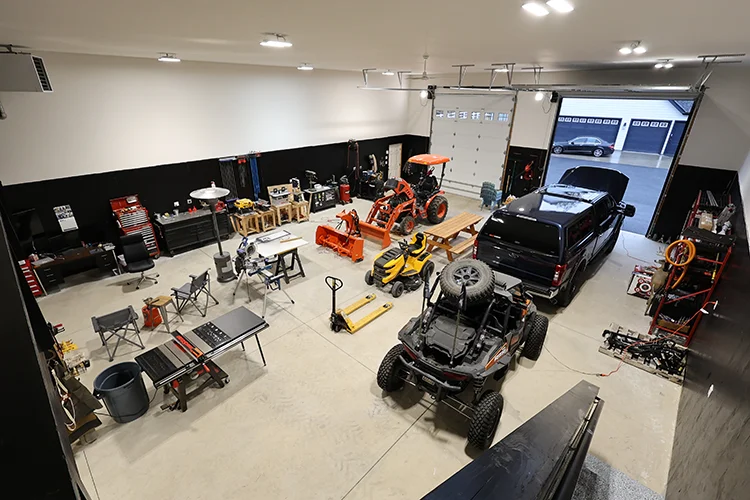
One of the biggest advantages of metal buildings is their ability to span wide distances without interior support columns. This is called a clearspan design, and it is what makes a 60-foot wide metal building functionally different from a wood-framed building of the same width, where interior posts would typically be required to support the roof.
Clearspan framing opens up the entire floor plan for flexible use. Vehicles, equipment, and people can move freely without posts interrupting the space. This is especially important for shops, warehouses, and agricultural buildings where equipment needs unrestricted floor access.
Standard pre-engineered metal buildings can achieve clearspan widths up to 150 to 200 feet in some configurations. For most buyers, clearspan options up to 100 feet wide are readily available and priced competitively.
Can You Build a Custom Metal Building Size?
Yes, custom sizing is available. While standard increments in 5 or 10-foot steps are the most common and typically the most cost-efficient, custom footprints can be engineered to match specific site dimensions, local code requirements, or unusual use cases.
If you have a site that is 53 feet wide between property lines and a setback requirement, a 48-foot wide building can be engineered to fit. If a standard 40×60 is close but you really need 45 feet of width for a specific piece of equipment, that can be accommodated.
The tradeoff with custom sizing is usually a modest increase in cost and sometimes a longer lead time compared to ordering a standard pre-engineered configuration. When you request a quote, mention your site constraints and specific requirements so those factors can be priced in from the start.
Metal Building Sizes and Local Code Requirements
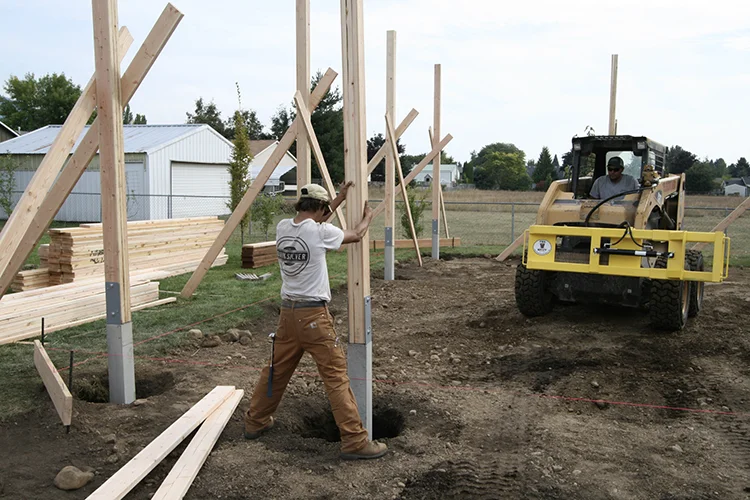
Building codes vary by state, county, and municipality, and they directly affect what size you can build and how it has to be engineered. Key code factors that interact with sizing include:
- Wind load requirements: Higher wind zones require stronger framing, which affects how size and height are engineered
- Snow load requirements: Areas with heavy snow require roof structures engineered for that load, affecting framing specifications
- Seismic zones: Certain regions require additional structural engineering for earthquake resistance
- Setback requirements: Local zoning ordinances dictate how close to property lines and other structures you can build
- Height restrictions: Some zoning districts limit maximum building height
Working with a metal building contractor who knows your local code environment is important. Steel Structures America serves Idaho, Washington, Oregon, Colorado, Montana, and surrounding states and is familiar with the code requirements across those markets. Our team can help you size a building that meets your functional needs and passes local permitting.
Why Work with Steel Structures America for Your Metal Building?
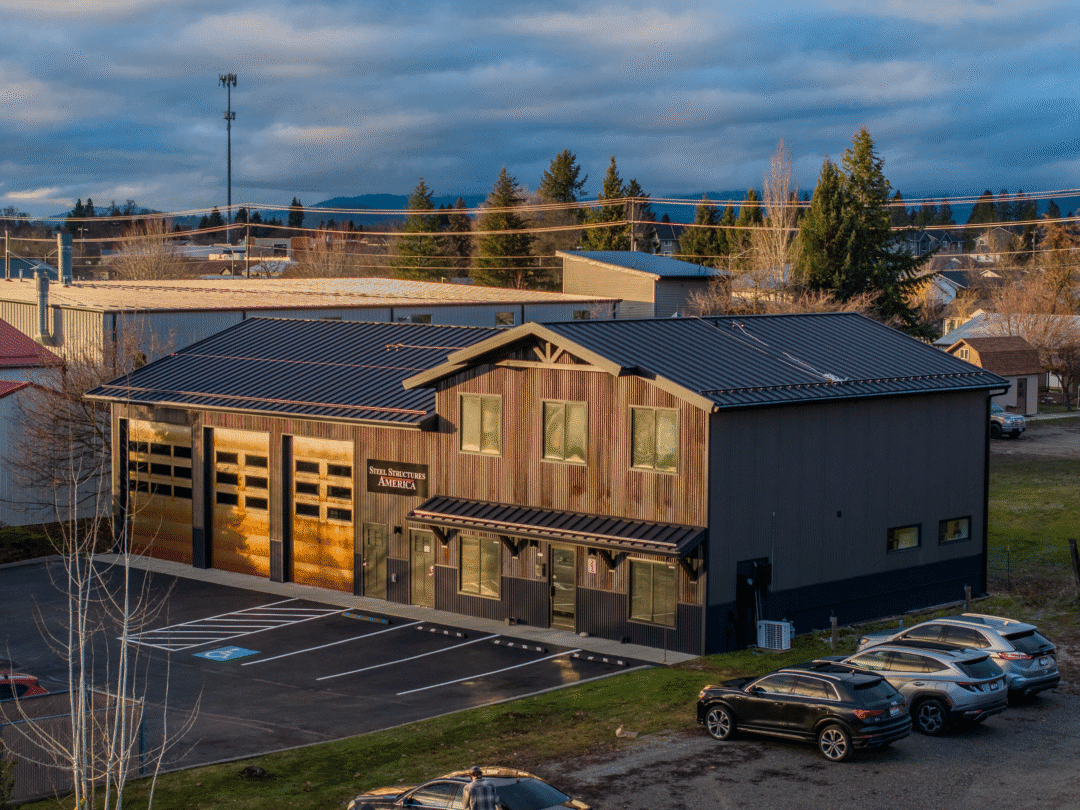
Steel Structures America is a Post Falls, Idaho-based metal building contractor serving the Pacific Northwest, Mountain West, and surrounding states. We design and build custom garages, shops, contractor buildings, agricultural structures, commercial buildings, and more.
When you work with us, you get:
- Honest sizing guidance based on what your project actually needs
- Custom metal building design with no cookie-cutter packages
- Local knowledge of permitting, wind loads, and snow loads across our service area
- Steel structures built to last with quality materials and experienced crews
- A real team you can talk to, not a call center
Call us at (866) 490-4012 or reach out online to talk through your project and get an accurate quote.