Metal Building Financing: Everything You Need to Know
Metal building financing is well-established across every segment of the market, from residential garages and shops to large commercial warehouses and agricultural facilities. The loan products are mature, lenders who specialize in steel building projects are easy to find, and the approval process follows a predictable path once you understand how lenders think about these structures.
What makes metal building financing a little different from a standard home loan is the range of buyers and uses involved. A residential hobbyist financing a 40×60 shop and a business owner financing a 100×200 warehouse are both financing a metal building, but they are working with completely different lenders and completely different products. This guide covers the full landscape so you can find the right path for your specific project.
Why Metal Building Financing Works Differently
Metal buildings are not all treated the same way by lenders. Before applying for any financing, it helps to understand how your lender will classify your project, because that classification determines which products are available to you.
Use Drives the Loan Product
A metal building used as a private garage or residential shop is evaluated like a residential or personal property improvement. A metal building used as a warehouse, distribution center, or manufacturing facility is evaluated like a commercial real estate or business asset. The same 60×100 steel structure can fall into either category depending on who is building it and what it will be used for.
This matters because residential lenders and commercial lenders use different underwriting standards, different collateral requirements, and offer different products. Applying to the wrong type of lender wastes time and can produce an unnecessary hard inquiry on your credit report.
Pre-Engineered and Custom Buildings Are Treated the Same
Whether you are buying a pre-engineered steel building kit or building a fully custom clearspan structure, lenders do not generally differentiate. What matters to them is the as-completed value of the property, the project cost documentation, and your creditworthiness. A complete quote from your contractor is the most important document in any metal building loan application.
Lender Experience with Steel Buildings Varies
Not every bank has experience with metal building projects, particularly for larger or more unusual structures. Rural agricultural lenders, Farm Credit institutions, and commercial real estate lenders tend to have the most experience with metal building financing. General consumer banks may require more explanation of what the project is and how it adds value to the property.
Your Main Metal Building Financing Options
There are six primary financing paths for metal buildings. The right one depends on your use case, your project size, your credit profile, and whether you are building as an individual or as a business entity.
1. Construction-to-Permanent Loans
A construction loan is designed specifically to fund a building project. The lender releases money in draws as construction progresses, then the loan converts to a standard long-term mortgage or real estate loan at completion. This is the most common path for larger metal building projects secured against real property.
Construction loans require a licensed contractor, a detailed project scope, and a cost breakdown. Most lenders also require an as-completed appraisal. The process takes four to eight weeks from application to closing. For metal buildings on owned land, this is typically the most cost-effective long-term financing approach because the rates are competitive and the terms can extend 15 to 30 years.
Best for: larger projects over $75,000, builds on land you own, projects being financed over 10 or more years.
2. Commercial Real Estate Loans
For metal buildings used for business purposes, a commercial real estate loan is often the right product. These loans are secured by the property and are structured for business use, typically with terms of 10 to 25 years and rates that vary based on the business financials, the property value, and the loan-to-value ratio.
Commercial real estate lenders evaluate both the borrower’s financial strength and the income-producing potential of the property. A metal warehouse that will be rented to tenants, for example, will be evaluated based on projected rental income as well as the borrower’s own balance sheet.
Best for: income-producing commercial properties, warehouse and industrial projects, large agricultural facilities financed through a business entity.
3. SBA Loans (Small Business Administration)
For business owners building a metal building as part of their business operations, SBA loan programs are worth serious consideration. The SBA 7(a) and SBA 504 programs are the two most relevant products.
The SBA 7(a) program provides flexible term loans up to $5 million for a wide range of business purposes including construction and real estate acquisition. The SBA 504 program is specifically designed for fixed asset purchases including commercial real estate and construction, with terms up to 25 years and competitive fixed rates. Both programs require the business to occupy at least 51 percent of the financed property.
SBA loans have a more involved application process than conventional loans, but the terms are often significantly better for qualifying small businesses. For a full breakdown of SBA options and how they compare to conventional commercial loans, see our guide to metal building loan types.
Best for: small businesses building an owner-occupied facility, contractor shops, light industrial operations, businesses wanting longer terms and competitive fixed rates.
4. Home Equity Loans and HELOCs
For residential buyers building a metal garage, shop, or hobby building, a home equity loan or home equity line of credit is often the simplest and most cost-effective path. Because the loan is secured by your existing home, rates are lower than unsecured products and terms can extend 10 to 20 years.
This approach works especially well for projects in the $50,000 to $200,000 range where you have adequate equity in your home and do not want to go through the more involved construction loan process. If steel prices or labor costs have increased since your last equity assessment, have your home reappraised before assuming how much you can borrow.
Best for: residential buyers with existing home equity, mid-size garages and shops, buyers who want a lower rate than an unsecured loan without a full construction loan application.
5. Farm Credit and USDA Agricultural Loans
For agricultural metal buildings, Farm Credit institutions and USDA programs offer financing products specifically designed for rural landowners and farm operators. Farm Credit lenders understand agricultural structures and can evaluate them appropriately without the confusion that sometimes arises when a rural project goes through a standard consumer bank.
The USDA Farm Service Agency and USDA Rural Development both offer programs that can apply to agricultural metal buildings, particularly for equipment storage, livestock facilities, and farm shops. Interest rates under USDA programs can be very competitive for qualifying borrowers, and terms are often longer than conventional personal loans.
Best for: farm and ranch operations, agricultural equipment storage, rural landowners in Idaho, Montana, Colorado, Oregon, and Washington who qualify for USDA programs.
6. Personal Loans
Personal loans are unsecured and available quickly, often within days. For smaller projects under $60,000 where speed matters and the buyer does not want to use home equity, a personal loan is a practical tool. The tradeoff is cost: unsecured personal loan rates run significantly higher than secured products, and repayment terms are shorter.
Personal loans are better suited as a bridge or a complement to other financing than as the primary funding source for a larger metal building project. If your credit is below 640 and secured products are not accessible, personal loans may be your most realistic near-term option. See our guide to metal building financing with bad credit for more on that situation.
Best for: smaller projects under $60,000, buyers who need funding quickly, situations where home equity is not available or preferred.
How Long Can You Finance a Metal Building?
Loan term length depends entirely on the product type and how the building is classified.
| Loan Type | Typical Term Length |
| Construction-to-permanent (real property) | 15 to 30 years |
| Commercial real estate loan | 10 to 25 years |
| SBA 504 loan | 10 or 25 years (fixed) |
| SBA 7(a) loan (real estate) | Up to 25 years |
| Home equity loan | 5 to 20 years |
| HELOC | 10 to 20 year draw and repayment period |
| USDA agricultural loan | 7 to 40 years depending on program |
| Personal loan | 2 to 7 years |
In general, the more the building is tied to real property and the more permanent the structure, the longer the available loan term. A metal building used as a commercial facility and financed through an SBA 504 loan can carry a 25-year fixed term. The same size building financed through a personal loan is limited to seven years. The difference in monthly payment between those two scenarios is substantial.
What Lenders Look At When You Apply
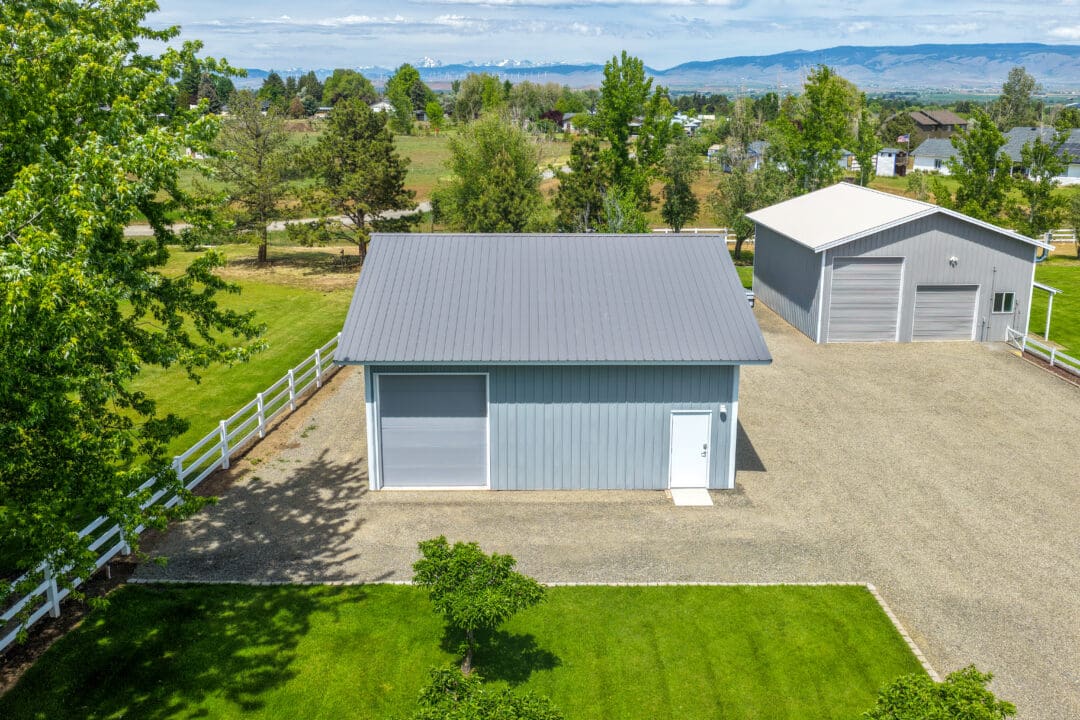
Metal building loan applications are evaluated on a combination of factors. Understanding what lenders weigh helps you prepare and avoid surprises.
Credit Score
Credit requirements vary by loan type and lender. Construction and real estate loans typically require a score of 680 or higher, though some lenders will work with scores in the 640 to 680 range with compensating factors. Commercial lenders also review business credit in addition to personal credit for business-entity borrowers. Personal loans are more flexible but carry a higher rate when the score is lower. If your credit is significantly below 640, see our guide on metal building financing with bad credit for realistic options.
Project Documentation
The most important document you can bring to any metal building loan application is a complete, itemized quote from a licensed contractor. Lenders want to know exactly what they are financing. A formal proposal from SSA that includes specifications, materials, and a full cost breakdown is exactly what lenders need. We provide this documentation as a standard part of every quote.
Use Classification
How you describe the intended use of your metal building affects which products are available. Be accurate and specific with your lender. A building described as a residential equipment garage will be underwritten differently than one described as a commercial storage facility, even if they are structurally identical. If your building has a mixed use, be prepared to explain what percentage is residential vs. commercial.
Property and Collateral
For secured loans, the lender needs to understand your property situation. Do you own the land? Is there an existing mortgage on it? What is the current appraised value? For construction loans, lenders often commission an as-completed appraisal that estimates what the property will be worth once the building is finished. The higher that number, the more they are generally willing to lend.
Debt-to-Income or Debt-Service Coverage
For individual borrowers, lenders calculate your debt-to-income ratio: total monthly debt payments divided by gross monthly income. Most lenders want this below 43 to 45 percent. For business borrowers, commercial lenders typically use a debt-service coverage ratio (DSCR) instead, which measures whether the business generates enough income to cover the loan payment. A DSCR of 1.25 or higher is a common minimum requirement.
Metal Building Costs: What You Are Financing
Before you can get a loan, you need a realistic budget. Here are general cost ranges for common metal building types in the Northwest and Mountain West region. These are turnkey ranges that include site prep, foundation, materials, and installation.
| Building Type | Typical Turnkey Cost Range |
| 30×40 residential garage or shop | $35,000 to $65,000 |
| 40×60 mid-size shop or agricultural building | $65,000 to $120,000 |
| 50×80 large hobby shop or contractor shop | $110,000 to $190,000 |
| 60×100 commercial or agricultural facility | $140,000 to $250,000 |
| 80×120 warehouse or equipment storage | $200,000 to $380,000 |
| 100×200 commercial warehouse or industrial | $350,000 to $650,000+ |
| Clearspan commercial building (custom) | Varies widely by span and specification |
Costs vary based on site conditions, steel pricing at the time of fabrication, finish level, region, and building specifications. A formal quote from SSA gives you the most accurate number to bring to a lender. For a detailed breakdown of what drives metal building prices, see our guide on what affects metal building costs.
Choosing the Right Financing Path for Your Project
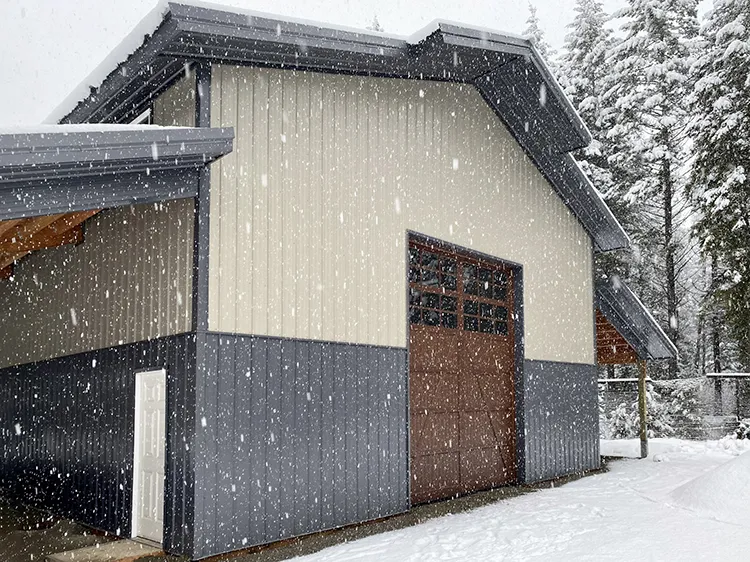
The right financing depends on your use case, your project size, and your financial profile. Here is a practical framework.
| Your Situation | Best Starting Point |
| Residential shop or garage, own home with equity | Home equity loan or HELOC |
| Residential project, own land free and clear | Construction loan secured by land |
| Business owner, owner-occupied commercial facility | SBA 504 or SBA 7(a) loan |
| Agricultural building on rural land | Farm Credit or USDA agricultural loan |
| Commercial warehouse or investment property | Commercial real estate loan |
| Smaller project under $60,000, need quick funding | Personal loan or home equity |
| Large custom or clearspan commercial building | Construction loan or commercial RE loan |
| Credit below 640 | See our guide on metal building financing with bad credit |
How to Prepare for a Metal Building Loan Application
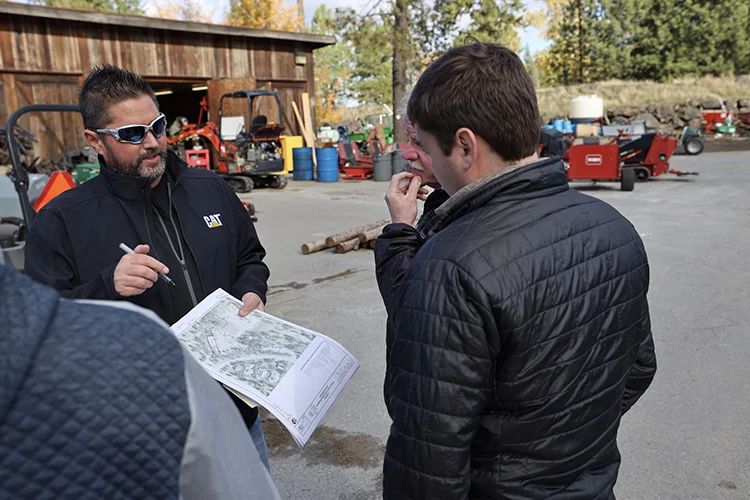
A little preparation before you apply significantly improves your chances of a smooth approval. Here is a practical checklist regardless of which loan type you pursue.
- Get a formal contractor quote. A complete itemized proposal with specifications and cost breakdown is the foundation of any application. SSA provides this as part of every quote at no charge.
- Pull your credit report. Check all three bureaus before applying. Dispute any errors. If your score is below your target, identify what is dragging it down before submitting an application.
- Calculate your debt-to-income ratio. Add up all monthly debt payments and divide by gross monthly income. If the result is above 40 percent, paying down existing debt before applying will strengthen your position.
- Gather your financial documents. Standard requirements include two years of tax returns, recent pay stubs or business financials, two to three months of bank statements, and a list of existing debts and assets.
- Know your property details. Have your parcel number, current assessed value, any existing liens, and ownership documentation ready. For commercial projects, have your business entity documents prepared.
- Talk to at least two lenders. Rates, terms, and experience with metal building projects vary more between lenders than most buyers expect. Getting quotes from multiple sources takes time but almost always produces a better outcome.
- Ask SSA if we have lender relationships. SSA has worked with lenders across Idaho, Washington, Oregon, Colorado, and Montana who understand metal building projects. We are happy to point you in the right direction.
Frequently Asked Questions
Can I finance a metal building with no money down?
In some scenarios, yes. If you own land free and clear, a construction loan against the land value may cover the full building cost without a cash down payment. USDA programs sometimes allow low or no down payment for qualifying agricultural borrowers. SBA 504 loans typically require 10 percent down, though that requirement can be lower for certain projects. Most conventional construction and commercial loans will require some down payment, typically 10 to 20 percent.
Can you get a mortgage on a metal building?
You can get a mortgage-style construction loan on a metal building if it is on real property you own and meets the lender’s requirements. A metal building with residential living quarters may also qualify for residential mortgage products depending on how it is constructed and permitted. Commercial metal buildings typically go through commercial real estate lending rather than residential mortgage products.
What is the minimum credit score for a metal building loan?
For the best rates and widest product selection, you want a score of 680 or above. Scores in the 640 to 679 range are workable for some secured products with compensating factors. Below 640 significantly narrows your options. See our guide to metal building financing with bad credit for a realistic breakdown of what is available at lower score ranges.
How long does approval take?
Personal loans can close in days. Home equity loans and HELOCs typically take two to four weeks. Construction and commercial loans take four to eight weeks from complete application to closing because they require more documentation, appraisals, and in some cases business financial review. SBA loans can take longer, typically 60 to 90 days from application to funding.
Do I need to own land before applying for a construction loan?
Not necessarily. Some lenders offer combined land and construction loans that finance both the land purchase and the building project together. These typically require a higher down payment and a stronger overall financial profile, but they are available through agricultural lenders, Farm Credit, and some commercial banks. USDA rural development programs also offer combined land and construction products.
Is it harder to finance a metal building than a traditional stick-frame building?
Not for lenders who regularly work with agricultural, rural, and commercial properties. Metal buildings are appraised and financed every day across the Mountain West and Pacific Northwest. The key is working with a lender who has experience with this building type rather than a standard consumer bank that only sees single-family residential loans. SSA can connect you with lenders who know this product well.
Does it matter whether the building is pre-engineered or fully custom?
Generally no. Lenders evaluate the as-completed value of the property and the project cost documentation rather than the manufacturing method. A pre-engineered building from a reputable manufacturer with full specifications and a contractor proposal is easier to document for a lender than an informal custom build with incomplete plans.
Ready to Get Started?
The best first step is a formal project quote you can take into any financing conversation. Knowing your exact number before approaching a lender gives you a stronger position and a faster process.
SSA provides free quotes for metal building projects across Idaho, Washington, Oregon, Colorado, and Montana. Our proposals include full specifications, material details, and cost breakdowns that meet lender documentation requirements. We can also connect you with lenders in your area who have experience financing steel building projects.
Call us at (800) 833-9997 or request a free quote online.