
Pole Barn Financing with Bad Credit: What Are Your Options?
Pole barn financing with bad credit is possible, but it requires knowing which options are actually available to you and being realistic about what they will cost. Applying for the wrong loan product wastes time and can make your credit situation worse. This guide gives you an honest look at every path forward.
If your credit score is below 640, you are not alone and you are not out of options. Plenty of buyers finance pole barn builds every year without a perfect credit history. The key is understanding what lenders will actually work with you, what compensating factors can offset a lower score, and which moves will genuinely improve your position.
For a full overview of how pole barn financing works in general, see our main pole barn financing guide. This article focuses specifically on the bad credit situation.
What Counts as Bad Credit for a Pole Barn Loan?
Credit score thresholds vary by lender and loan type, but here is a general breakdown of how scores map to your financing options.
| Credit Score Range | General Classification | Typical Loan Availability |
| 740 and above | Excellent | All products, best rates |
| 680 to 739 | Good | All products, competitive rates |
| 640 to 679 | Fair | Most products with some rate premium |
| 600 to 639 | Poor | Limited products, higher rates, may need collateral |
| Below 600 | Bad / Very Poor | Very limited, collateral-based or non-traditional lenders |
The score that matters most to a lender is not always the one you see on a free credit monitoring app. Lenders typically pull from all three major bureaus and may use different scoring models than what consumers see. Ask your lender which score they use before you assume your number is better or worse than it actually is.
Your Best Options for Pole Barn Financing with Bad Credit
1. Use Land or Property as Collateral
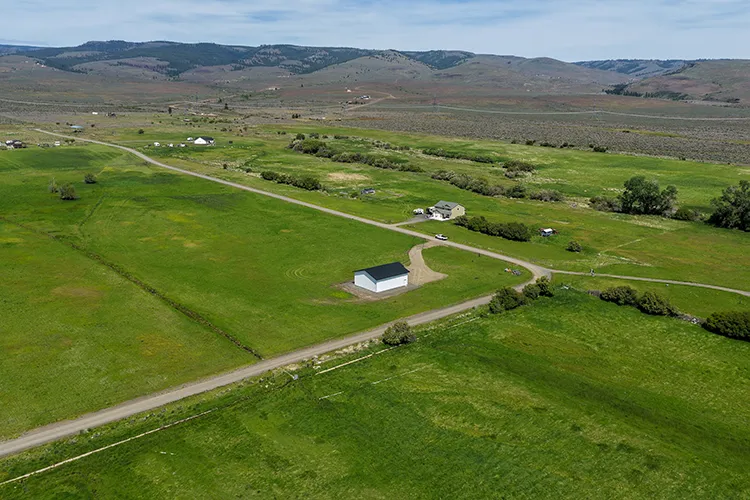
The single most effective thing you can do if you have bad credit is to bring collateral to the table. When you own land free and clear, or have significant equity in your home, lenders have a security net that makes them far more willing to work with a lower credit score.
If you own your land outright, many lenders will approve a construction loan against the land value even with a score in the 580 to 620 range, as long as your income is stable and your debt-to-income ratio is reasonable. The building is going on real property they can lien, which fundamentally changes the risk calculation.
If you own a home with equity, a home equity loan or HELOC uses your house as collateral. Again, the secured nature of the loan makes lenders more flexible on credit scores than they would be for an unsecured personal loan.
2. USDA Rural Development and Farm Service Agency Programs
If your project has an agricultural component, or if you are building on rural land, USDA programs are worth investigating. The USDA Farm Service Agency and Rural Development programs have their own credit standards, which are often more flexible than conventional lenders, particularly for low and moderate income borrowers in eligible rural areas.
USDA programs consider your overall financial picture, not just your credit score. Payment history on farm-related obligations, the nature of any past credit problems, and your ability to repay are all weighed in the decision.
These programs take longer to process and have geographic eligibility requirements, but for buyers in rural Idaho, Montana, Colorado, Oregon, and Washington, they are one of the most realistic paths to financing a larger build with imperfect credit.
3. Personal Loans from Online and Alternative Lenders
Personal loans are unsecured and rely entirely on your creditworthiness, which means they are harder to get and more expensive with a low score. However, the online lending market has expanded significantly, and there are now legitimate lenders who specialize in borrowers with credit scores in the 580 to 640 range.
The tradeoff is cost. A personal loan for a borrower with a 600 score might carry an interest rate of 18 to 24 percent, compared to 9 to 12 percent for a borrower with a 700 score. On a $50,000 loan with a 5-year term, that difference translates to hundreds of dollars more per month and thousands more in total interest.
This path makes the most sense for smaller projects where you genuinely cannot use collateral and need to move forward now rather than waiting to rebuild credit.
4. Co-Signer or Joint Application
If you have a family member or business partner with strong credit who is willing to co-sign your loan, their credit profile is factored into the approval alongside yours. This can unlock better loan products and lower rates than you would qualify for on your own.
A co-signer takes on real legal responsibility for the debt, so this is a conversation that requires honesty and trust. If you default, their credit is affected. Make sure both parties understand the commitment before moving forward.
5. Seller Financing or Owner Financing
In some cases, if you are purchasing land and building at the same time, the land seller may be willing to hold a note on the land purchase. This is more common in rural markets than in suburban ones, and it can allow you to use the land as collateral for a construction loan while the seller effectively acts as your land lender.
Owner financing terms vary widely and are negotiable. If this is an option for your situation, have a real estate attorney review any agreement before you sign.
6. Build in Phases with Cash
If financing is not accessible right now or the cost is prohibitive, a phased build strategy is worth considering. Build what you can afford outright, start with the shell and slab, then finish the interior over time as your financial situation improves.
This is not the fastest path, but it is a realistic one, and many buyers in rural areas have built excellent shops this way over two to three years. SSA can help you think through a phased build plan that makes sense for your budget and timeline.
What Lenders Actually Look At Beyond the Score
A credit score is one input, not the whole picture. Here are the factors that can work in your favor even when your score is lower than you would like.
- Stable income. Consistent employment or self-employment income over two or more years demonstrates ability to repay, even if past credit events drag your score down.
- Low debt-to-income ratio. If your existing debts are low relative to your income, lenders see more room for a new payment.
- Down payment. A significant down payment, 20 percent or more, reduces the lender’s risk and increases the likelihood of approval even with a lower score.
- Land, home equity, equipment, or other assets that can secure the loan change the risk profile substantially.
- Explanation letter. For specific past credit events like a medical emergency, job loss, or divorce, a written explanation with documentation can help a loan officer see the full picture rather than just the number.
- Recent payment history. Lenders pay attention to the direction of your credit. If your score was 580 two years ago but is now 620 and trending up, that story matters.
What to Watch Out For
When you are in a difficult credit situation and looking for financing, you are also more vulnerable to predatory products. Here are the red flags to avoid.
- No-credit-check loans for large amounts. Legitimate lenders check credit for construction or land-secured loans. A lender advertising no credit check financing for a $100,000 project is not being honest about their process or their terms.
- Extremely high origination fees. Some lenders targeting bad credit borrowers charge origination fees of 5 to 10 percent or more of the loan amount. These fees can add thousands to your cost before you ever make a payment.
- Balloon payments with no clear path to refinance. Some short-term loans have a large balloon payment due at the end of a 2 or 3-year term. If you cannot refinance by then, you could be in a difficult position.
- Pressure to sign quickly. Legitimate lenders give you time to review terms. Urgency tactics are a warning sign.
How to Improve Your Credit Before You Apply
If your project timeline allows for it, even three to six months of focused credit improvement can meaningfully change your options and your rate.
Pay Down Revolving Balances
Credit utilization, the percentage of your available revolving credit that you are using, is one of the fastest-moving factors in your score. Getting utilization below 30 percent on each card, and ideally below 10 percent overall, can produce a noticeable score increase in one to two billing cycles.
Dispute Inaccurate Items
Pull your credit report from all three bureaus at annualcreditreport.com and look for errors. Accounts that are not yours, incorrect payment histories, or debts that should have aged off can all be disputed. Successful disputes remove negative items that should not be there.
Avoid New Credit Applications
Every hard inquiry from a new credit application can drop your score by a few points. In the months before you apply for a pole barn loan, avoid opening new credit cards, taking new auto loans, or applying for financing that is not directly related to your build.
Become an Authorized User
If a family member with excellent credit is willing to add you as an authorized user on a long-standing, low-utilization credit card, their positive history on that account can flow through to your report. You do not need to actually use the card for this to have an effect.
Bring Delinquent Accounts Current
Accounts that are currently past due are one of the most damaging items on a credit report. Bringing them current stops further damage and shows lenders that the situation is being addressed.
A Realistic Timeline for Bad Credit Borrowers
| Your Situation | Realistic Path | Estimated Timeline |
| Own land with no mortgage, score 580+ | Construction loan secured by land, may need co-signer | Apply now, 4 to 8 weeks to close |
| Home equity available, score 620+ | Home equity loan or HELOC | Apply now, 2 to 4 weeks to close |
| Score 560 to 600, no collateral | Personal loan (higher rate) or credit repair first | Now or 3 to 6 months |
| Score below 560 | Credit repair, then reassess; phased build with cash | 6 to 18 months to be in a stronger position |
| Agricultural project, rural land, score 580+ | USDA FSA or Rural Development program | Apply now, 6 to 12 weeks to process |
Frequently Asked Questions
Is there truly no-credit-check pole barn financing?
For any meaningful loan amount, legitimate lenders will check credit. What exists is financing with more flexible credit standards, such as secured loans where land or property offsets a lower score, or USDA programs with alternative credit evaluation methods. Ads promising no-credit-check financing for large construction loans should be approached with caution.
Can I finance a pole barn with a 500 credit score?
It is very difficult without significant collateral. A score of 500 will disqualify you from most conventional loan products. Your best paths at that score level are a co-signer with strong credit, significant land equity to secure the loan, owner financing, or a phased build using savings while you work on credit improvement.
Will applying for a pole barn loan hurt my credit score?
A hard inquiry from a loan application typically reduces your score by 2 to 5 points temporarily. If you are shopping multiple lenders for the same loan type within a short window, typically 14 to 45 days, credit scoring models usually count those as a single inquiry rather than multiple hits. Do your comparison shopping in a concentrated period.
How long does bad credit take to improve?
It depends on what is dragging your score down. Paying down high revolving balances can show improvement in 30 to 60 days. Disputing and removing inaccurate items can take 30 to 90 days. Recovering from a bankruptcy or foreclosure takes longer, typically two to four years before scores meaningfully recover, though you may still have options during that period with secured loans.
Should I wait to build or move forward now?
That depends on your project urgency, your collateral situation, and the cost difference between acting now and waiting. If you own land and can get a secured construction loan today at a rate you can afford, waiting to save a few percent on the rate may not be worth it. If you have no collateral and the only available products are high-rate personal loans, a few months of credit repair could save you a significant amount of money. Talk through your specific numbers with a lender before deciding.
Where SSA Fits In
SSA help facilitate financing on a variety of projects. We provide complete project documentation that lenders need for construction loan applications, and we can point you toward lenders in Idaho, Washington, Oregon, Colorado, and Montana who have experience with pole barn and post-frame projects, including buyers who are working through credit challenges.
If you are not sure whether your situation qualifies for financing, the best first step is a conversation. Reach out to the SSA team at (866) 988-0072 or request a quote online. We will give you an honest picture of what your project looks like and connect you with the right resources to move forward.