
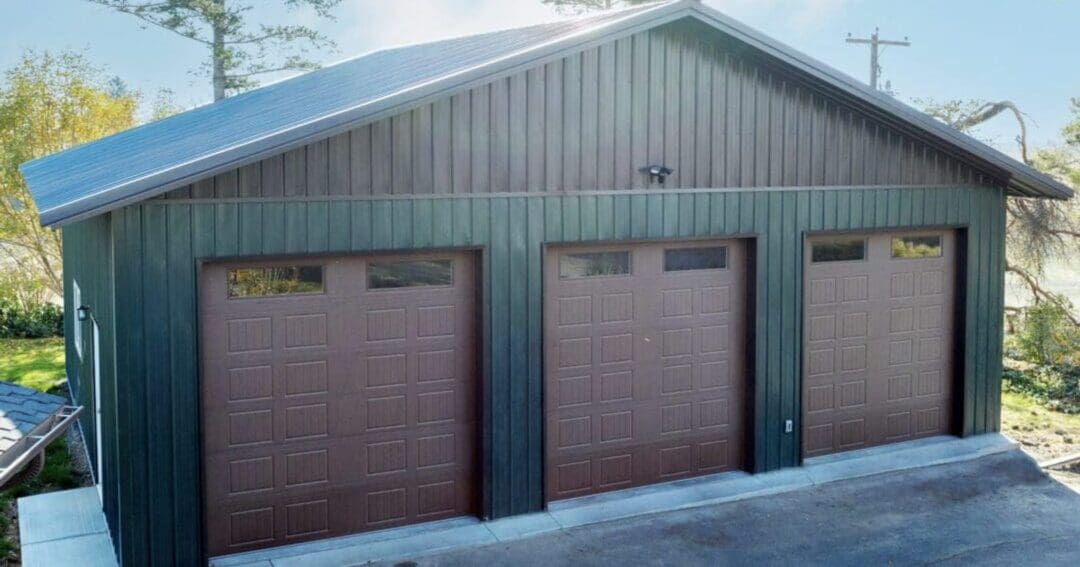
Metal Garages Near Me: Custom-Built Local Solutions
When you search “metal garages near me,” you’re looking for a contractor who can build something custom, not buy a kit from a national supplier. A local builder who understands snow load, wind, permits, and your property makes a real difference.
Here’s what you should know before you talk to a contractor about a metal garage.
Why Local Contractors Matter for Metal Garages
A metal garage you build with a local contractor is engineered specifically for your site, your climate, and your local building codes. It’s not a one-size-fits-all kit.
Site conditions: Your lot’s slope, drainage, soil type, and wind exposure all affect how the garage is designed and where you put it. A local contractor knows your property and your region.
Climate: Snow load in Boise is different from snow load in the mountains. Wind speed in Spokane is different from wind speed in the high desert. Your metal garage gets engineered to handle what your area throws at it.
Permits and codes: Building codes vary by county and state. A contractor who builds locally knows which drawings to submit, what your county will approve, and how to handle inspections without delays.
Year-round crews: A local builder with year-round crews can start work when you’re ready, finish on time, and be there if you need something fixed in year two.
A kit company can’t do any of that. They ship panels and call it a day. A local contractor builds your garage.
What a Custom Metal Garage Looks Like
A metal garage from a local contractor starts with a conversation about what you need.
- Size: 2-car, 3-car, or big enough for an RV? Single door or multiple doors?
- Use: Just cars, or also storage and a workspace?
- Features: Insulated or not? Windows for light? A second door on the side for access?
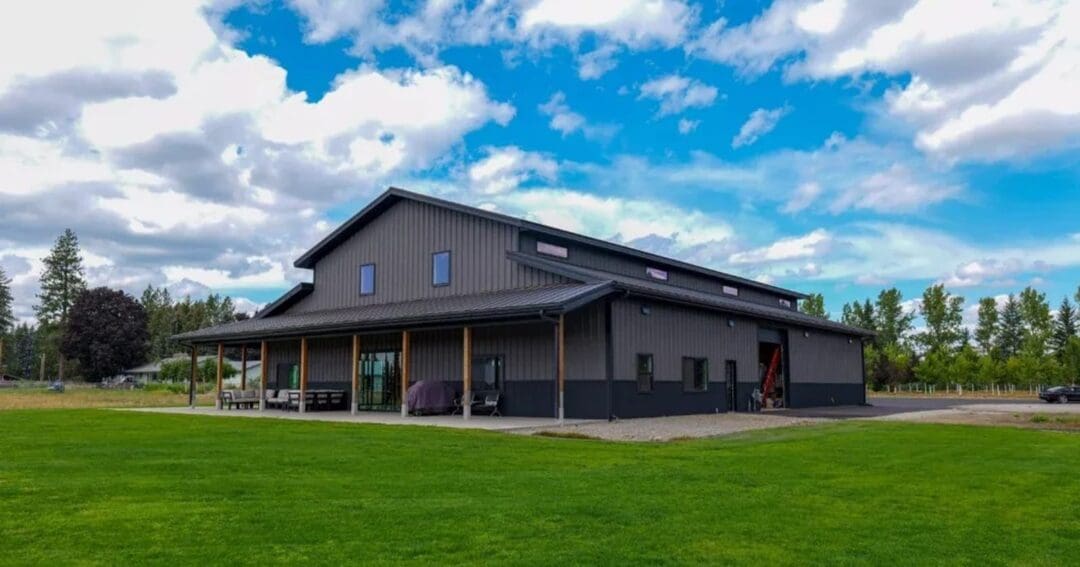
- Finishes: Color, siding style, roof pitch. Make it look like it belongs on your property.
From there, the contractor designs it, gets engineering done, pulls permits, and builds it. The whole process takes 8 to 12 weeks from start to finished.
Metal Garage Sizes and Layouts
Common metal garage sizes we build:
Two-car garage: 20×20 to 24×24 feet. Fits two standard cars side by side with a little room to move. Costs $8,000 to $15,000 depending on finishes.
Three-car garage: 30×24 to 36×24 feet. Fits three cars or two cars plus a workspace. More useful, costs $12,000 to $22,000.
RV garage: 20×45 to 30×60 feet. Room for the RV plus storage or a workspace. Costs $18,000 to $40,000.
Two-car metal garage with storage or workshop: 24×30 to 30×40 feet. Fits the cars and gives you real working space. Costs $15,000 to $28,000.
Those are ballpark numbers. The real cost depends on your site, your finishes, and whether you add extras like insulation, a second door, windows, or a power system.
Metal Garage Styles and Finishes
You’ve got choices on how your metal garage looks.
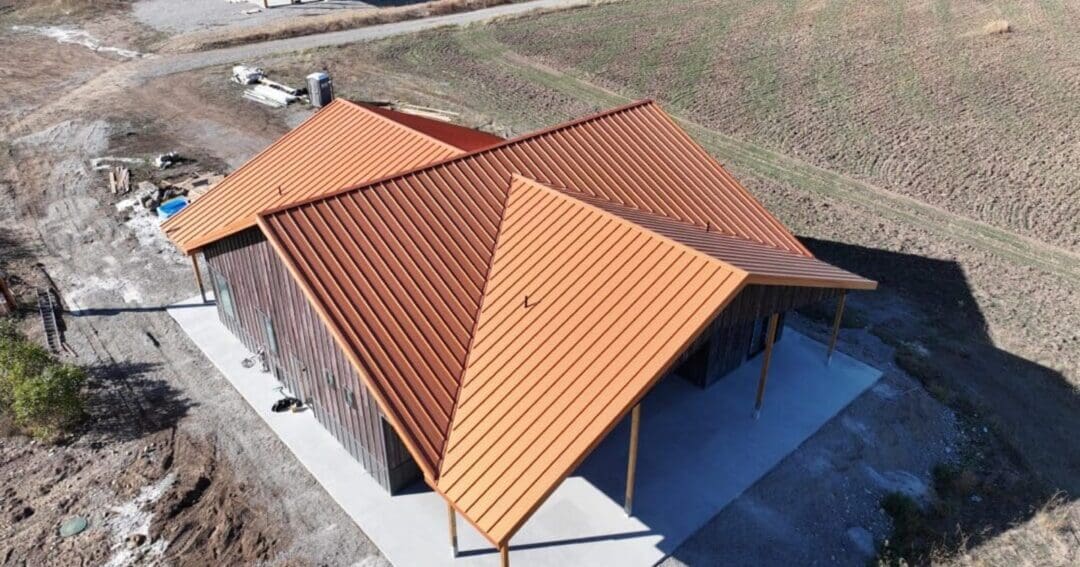
Roof pitch: A steeper roof (6/12 to 8/12) sheds snow fast and looks intentional. A shallow pitch (3/12 to 4/12) is cheaper and looks modern.
Metal roof ridge cap: The peak detail matters. A metal roof ridge cap keeps water out and finishes the look. Standard practice for any metal garage.
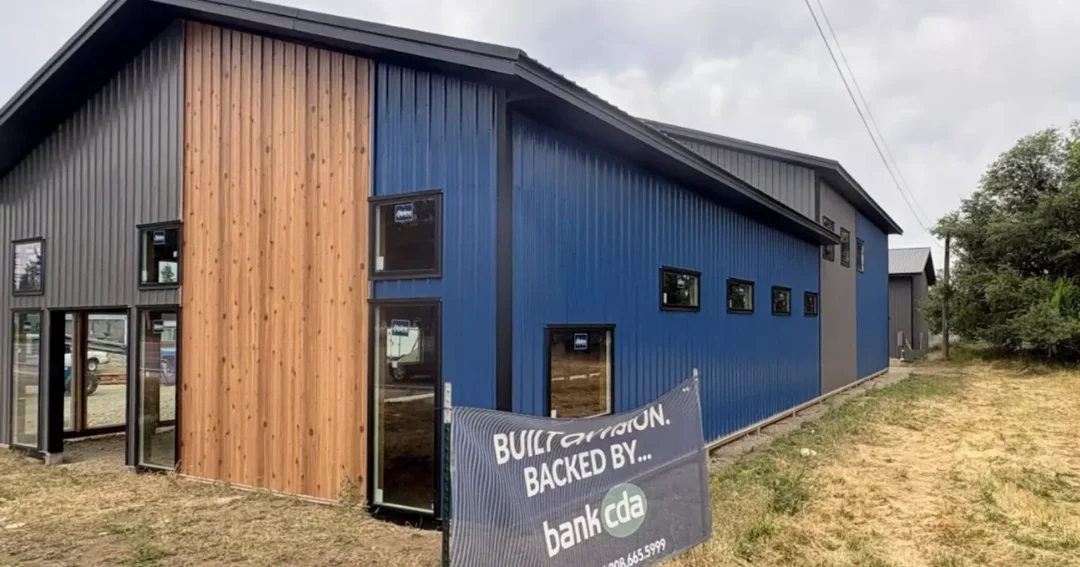
Siding: Corrugated metal is tough and cheap. Wavy panels look classic. Flat panels look modern. Wood-look metal is trendy and costs a bit more but matches new farmhouse aesthetics.
Colors: WeatherXL SMP (standard colors like white, black, red, gray), PVDF premium finishes, or wood-look prints. Pick something that complements your house or fits your land.
Wainscoting: Add corrugated or flat panels up 3 to 4 feet from the ground for durability and style. Wainscoting adds visual interest and protects the lower wall from bumps and weather.
Doors: Roll-up garage doors (standard 8×7 or 9×7), walk-in entry doors, and maybe windows for light. Each adds cost and function.
Your metal garage should look like it belongs on your property, not like a prefab from the internet.
Metal Garage Features Worth Considering
Insulation: If you spend time in the garage or want to regulate temperature (for cars, storage, or a workspace), insulation is worth the cost. Batts or spray foam, both work.
Concrete floor: Standard. Should be 4 to 6 inches of 3,000 psi concrete with rebar. Costs $3 to $5 per square foot for a professional slab.
Ventilation: Metal buildings can sweat from condensation. Roof vents, soffit vents, or a small ridge vent help. More important in humid climates.
Lighting and power: 200-amp service is standard. You’ll add circuits for lights, outlets, and anything else you need. Run conduit before the roof goes on; it’s cheap insurance.
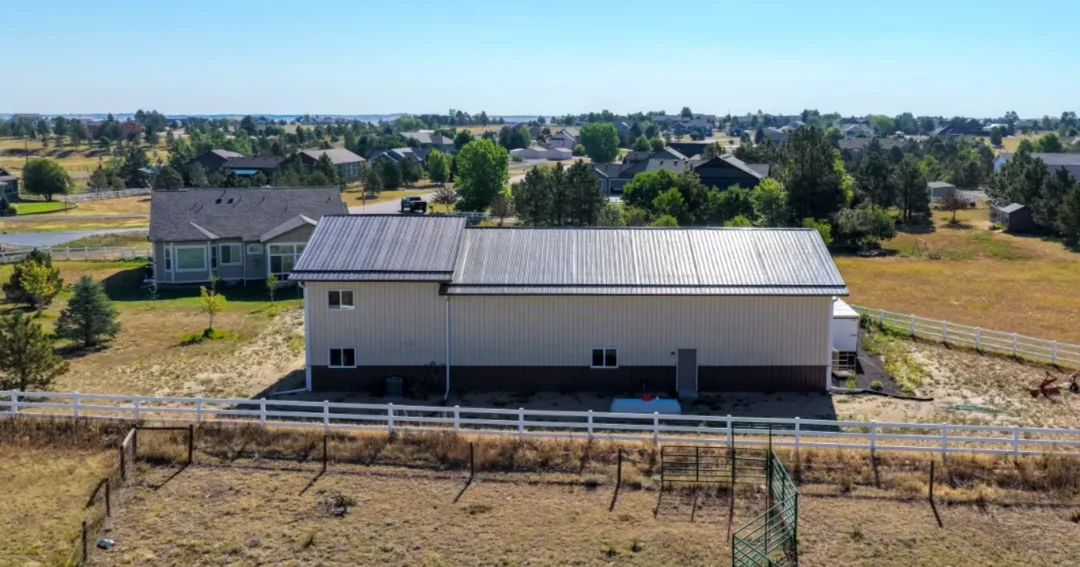
Lean-to addition: Add a 12-foot or 16-foot lean-to on one side for firewood, lawn equipment, or extra storage. 30% of the garage cost, 20% more roof to maintain.
The Cost of a Metal Garage
Here’s what moves the price for a custom metal garage:
Size: Square footage is the biggest driver. Bigger building = more materials, more labor.
Site prep: Grading, drainage, and concrete. Easy, level sites cost less. Sloped sites, poor drainage, or tough soil costs more.
Finishes: Basic 26-gauge corrugated roof, standard siding, standard color. No extras. Premium finishes (wood-look panels, wainscoting, multiple colors) add 15 to 25%.
Insulation: Adds $2 to $4 per square foot.
Doors and windows: A roll-up door is $600 to $1,200. Multiple doors or specialty windows cost more.
Local factors: Permit costs, labor rates, and material prices vary by region. A metal garage in rural Idaho costs less than the same garage in Boise or Denver.
Bottom line: A basic two-car metal garage runs $10,000 to $18,000. A finished garage with insulation, multiple doors, and nice finishes runs $20,000 to $35,000.
Metal Garage vs. Traditional Garage
Comparing a metal garage to stick-frame construction:
Cost: Metal garage is 20 to 40% cheaper. Stick-frame requires expensive roof trusses, interior framing, and foundation work.
Build time: Metal garage: 6 to 10 weeks. Stick-frame: 12 to 20 weeks. Metal is faster because the structure is simple.
Durability: Metal lasts 40+ years with minimal maintenance. Stick-frame needs roof replacement every 20 to 25 years.
Customization: Metal garage clear span means no interior posts. Stick-frame often needs posts or beams inside, limiting where you park.
If you want fast, economical, and low-maintenance, metal wins.
Permits and Building Codes
Your local building department will want:
- Engineered drawings showing the garage design, roof pitch, wind and snow loads
- Foundation plan and specifications
- Electrical plan if you’re running power
Permit turnaround is usually 2 to 4 weeks. Your contractor handles the paperwork. If they don’t talk about permits, that’s a red flag.
Building codes in Idaho, Washington, Oregon, Montana, Wyoming, and Colorado all require metal garages to be engineered for local wind and snow load. A contractor who knows the code and does it right saves you headaches.
Finding a Local Metal Garage Contractor
When you search “metal garages near me,” you’re looking for someone who:
- Builds metal structures, not just sells kits
- Has crews and equipment ready, not subcontractors
- Has done 50+ projects you can reference
- Gets permits, does engineering, and pulls inspections
- Stands behind the work with a warranty
A good metal building contractor will give you a detailed quote, answer your questions, and explain the design choices. They’ll also tell you what’s worth spending money on (thicker posts, better roof pitch for your climate) and where you can save.
FAQ
Can I add to a metal garage later?
Yes. You can add a lean-to on the side or expand the building if you need more space. The structure is modular and simple to expand if you plan ahead.
How long does a metal garage last?
40 to 50 years for metal panels and structure. If you maintain it (keep the roof clear, seal fasteners every 10 years), it’ll outlast the cars in it.
Do metal garages rust?
No, not if they’re built right. Modern metal siding and roofing are coated (WeatherXL, PVDF, or Cor-Ten), not bare steel. Coatings protect them from rust. Fasteners should be stainless steel or coated to prevent rust stains.
Is a metal garage good in a cold climate?
Yes. Metal handles snow load and wind well. Insulation is recommended in cold areas to reduce condensation and keep the space comfortable if you work in it.
Ready to Build a Metal Garage?
A custom metal garage built locally is an investment in durability, function, and value. It’ll look good on your property, last decades with minimal maintenance, and cost less than stick-frame.
We’ve built metal garages across Idaho, Washington, Oregon, Montana, Wyoming, and Colorado. If you’re ready to talk about a garage that fits your property and your needs, call (800) 833-9997 or request a free quote. We’ll design it, engineer it, pull permits, and build it right.