
2-Car and 3-Car Pole Barn Garage Sizes, Costs, and Layouts
Figuring out how big your pole barn garage should be is one of the first questions buyers face, and it is worth getting right before you pour a slab. A garage that feels spacious during planning can get cramped fast once you factor in open doors, a workbench, and the way you actually move around vehicles day to day.
This guide breaks down the most common 2-car, 3-car, and 4-car pole barn garage sizes, what they realistically fit, what they cost, and how to think about layout so you end up with a building you actually love using.
Why Size Matters More with a Pole Barn Garage
With a standard stick-built garage, sizing is often dictated by cost and lot constraints. Post-frame construction changes that equation. Because pole barns are significantly more affordable per square foot at larger sizes, it is often practical to go bigger than you might expect. A 40×60 pole barn garage, which would be a major project in stick-built, is a common mid-range option in post-frame.
That said, bigger is not always better if you do not need the space. The goal is finding the size that fits your vehicles comfortably, gives you the workflow you want, and stays within your budget.
How to Think About Minimum Size for Your Vehicle Count
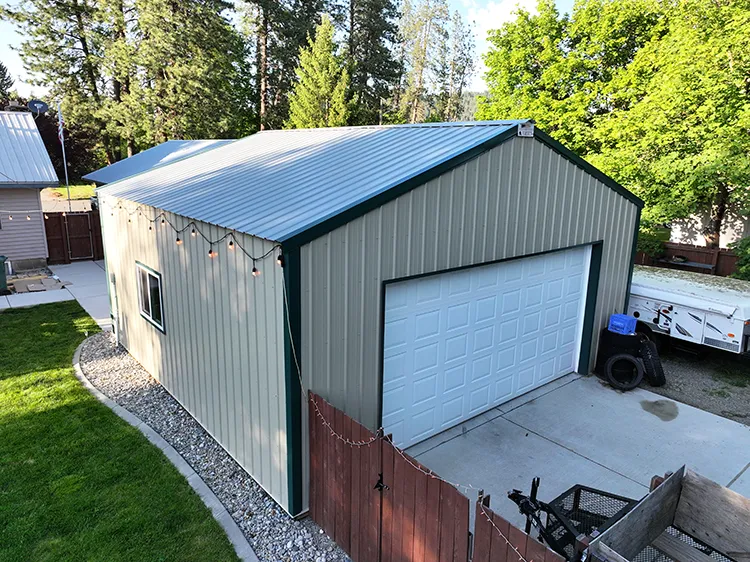
A good starting point is to think about minimum clearance, not just whether cars technically fit. A garage that is too tight means opened car doors hitting walls, difficulty backing in and out, and a frustrating day-to-day experience.
Here are general rules of thumb for how much width and depth you need per vehicle:
| Vehicles | Minimum Width | Comfortable Width | Minimum Depth | Comfortable Depth |
| 1 car | 12 ft | 14 ft | 20 ft | 24 ft |
| 2 cars | 20 ft | 24 ft | 20 ft | 30 ft |
| 3 cars | 30 ft | 36 ft | 24 ft | 40 ft |
| 4 cars | 40 ft | 48 ft | 24 ft | 40 ft |
These are minimums for parking only. Add 10 to 20 feet of depth if you want a dedicated work area or storage zone on one end.
2-Car Pole Barn Garage Sizes
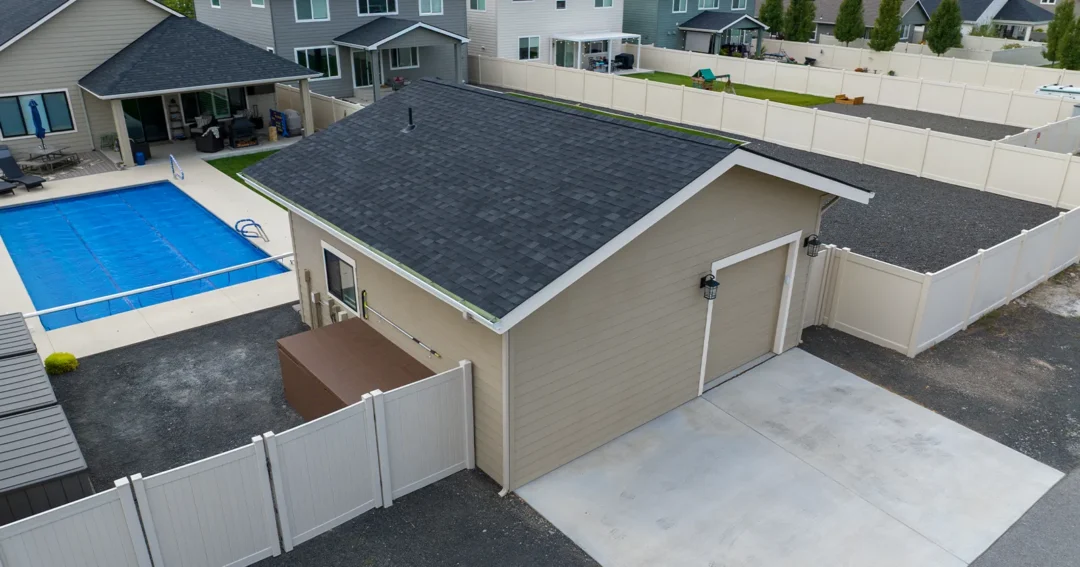
24×24 Pole Barn Garage
A 24×24 is the classic two-car garage footprint. Two standard sedans or compact SUVs fit side by side, but clearance is tight. You will have around 2 feet between vehicles and a few feet of clearance at the front and rear. This size works if your primary goal is basic covered parking and you are not planning to do much work inside.
What fits: two standard vehicles. What it lacks: room to fully open both doors on both sides simultaneously, or meaningful workspace.
30×40 Pole Barn Garage (Most Popular Two-Car Size)
A 30×40 is the sweet spot for most two-car buyers. You get 1,200 square feet of floor space, which is enough for two vehicles with comfortable clearance on all sides, plus a decent amount of room for storage shelving, a workbench along the back wall, or a riding mower. Two standard 9-foot overhead doors across the front is the most common door configuration.
What fits: two full-size trucks or SUVs with full door swing clearance, plus 8 to 10 feet of working space at the rear.
Estimated turnkey cost range: $45,000 to $75,000 depending on features and finish level.
3-Car Pole Barn Garage Sizes
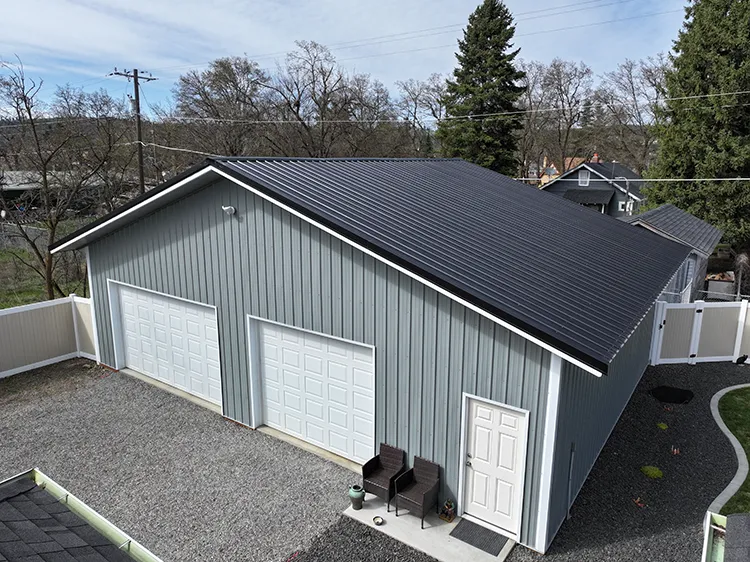
30×50 Pole Barn Garage
Adding 10 feet of depth to a 30×40 gives you a noticeably more usable building. The extra footage creates a dedicated zone for tools, storage, or a small workshop without crowding the vehicle bays. This is a solid option if you want two primary parking spaces with a third bay area for hobbies or equipment.
40×60 Pole Barn Garage (Most Popular Three-Car Size)
A 40×60 is the go-to size for buyers who want three vehicles, real workspace, and room to move. At 2,400 square feet, you can comfortably park three full-size trucks, set up a workbench along the full rear wall, add a storage loft above part of the building, and still have clearance to work around every vehicle.
Three overhead doors across the front, each 10 to 12 feet wide, is a common configuration. Some buyers opt for two wider doors instead if they want a more open bay feel.
Estimated turnkey cost range: $75,000 to $120,000 depending on features and finish level.
40×80 Pole Barn Garage
A 40×80 steps up to 3,200 square feet and is the right choice if you are parking three or four vehicles and also want a serious shop setup, RV storage, or large equipment clearance. The extra depth on a 40-foot wide building gives you room to divide the space into distinct zones: parking, workshop, and storage, without any zone feeling cramped.
4-Car Pole Barn Garage Sizes
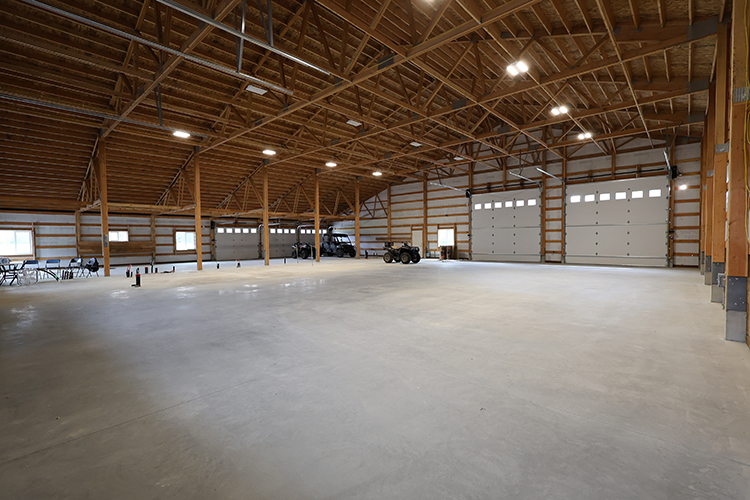
50×60 or 50×80 Pole Barn Garage
True four-car garages need width above everything else. A 50-foot wide building gives you room for four overhead doors side by side, each with enough bay width to open doors fully without hitting the vehicle next to it. Paired with 60 to 80 feet of depth, this size handles four vehicles plus a dedicated shop area comfortably.
60×80 or Larger
If you are parking four full-size trucks or combining four vehicles with heavy equipment, boats, or an RV, a 60×80 or larger gives you the clearance and workflow to make it all practical. These are common sizes for hobbyists with large toy collections or contractors who need both vehicle storage and an operational shop.
Size Comparison at a Glance
| Size | Square Feet | Vehicles | Est. Turnkey Cost Range | Best For |
| 24×24 | 576 sq ft | 2 (tight) | $30,000 to $50,000 | Basic covered parking only |
| 30×40 | 1,200 sq ft | 2 (comfortable) | $45,000 to $75,000 | Two vehicles plus storage |
| 30×50 | 1,500 sq ft | 2 to 3 | $55,000 to $85,000 | Two bays plus work area |
| 40×60 | 2,400 sq ft | 3 (comfortable) | $75,000 to $120,000 | Three vehicles plus full shop |
| 40×80 | 3,200 sq ft | 3 to 4 | $100,000 to $160,000 | Four vehicles or large equipment |
| 50×80 | 4,000 sq ft | 4+ | $130,000 to $200,000+ | Four vehicles plus serious shop |
Layout Ideas by Vehicle Count
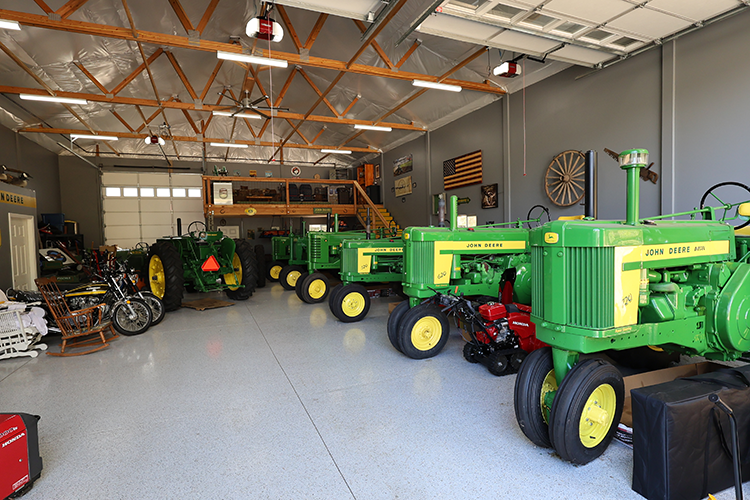
Two-Car Layout Tips
For a two-car layout, the most practical approach is two separate overhead doors rather than one wide double door. Separate doors let you access one vehicle without fully opening the garage, which is a convenience most buyers appreciate after the first winter.
Place your workbench and storage shelving along the rear wall and one side wall if possible, keeping both vehicle bays open and easy to navigate.
Three-Car Layout Tips
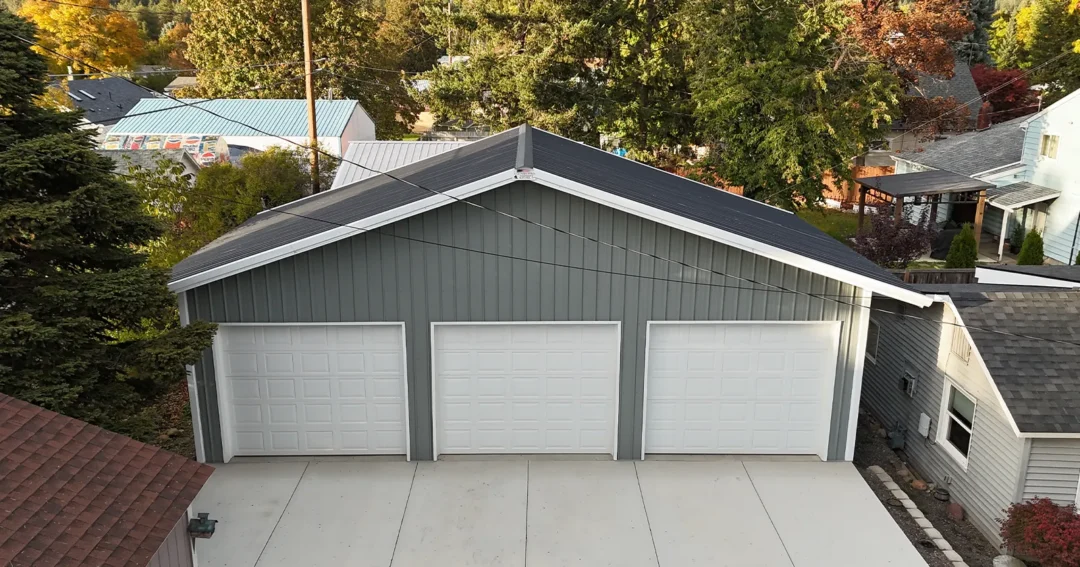
Three-car garages work best with three individual overhead doors across the front, which gives you maximum flexibility. The most common layout is to dedicate two bays to daily drivers and one bay to a project vehicle, recreational equipment, or a shop area.
If one vehicle is taller than the others (a truck with a rack, a van, or a trailer), plan the taller door on one end rather than in the middle so it does not create an awkward visual break.
Four-Car Layout Tips
Four-car garages benefit from thinking about traffic flow. How will you pull vehicles in and out without blocking others? A pull-through configuration (doors on both ends) is one option for long buildings. Tandem parking (two vehicles parked end to end in a deep bay) is another way to fit more cars without going excessively wide.
What Features Add the Most Value?
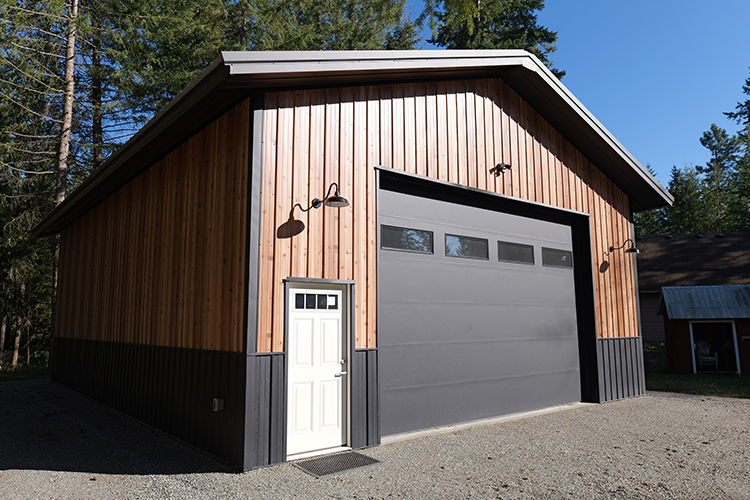
Once you have settled on a size, these are the upgrades that buyers in our region most consistently find worth the investment:
- Insulation package: Makes a year-round difference in comfort and protects vehicles from temperature extremes.
- Taller overhead doors: If there is any chance you will store a truck with a topper, a van, or a trailer, going to 12 or 14-foot door height now saves a costly retrofit later.
- Extra electrical capacity: Plan for more outlets and circuits than you think you need. Vehicle chargers, lifts, and shop equipment are power-hungry.
- Concrete apron: A poured concrete apron in front of the doors makes pulling in and out cleaner and extends the life of the approach area.
- Floor drain: Especially useful in rainy climates or if you wash vehicles inside.
Next Steps: Get a Quote for Your Pole Barn Garage

Steel Structures America builds custom pole barn garages across Idaho, Washington, Oregon, Colorado, and Montana. We handle design, engineering, permits, and construction from start to finish. If you are trying to decide on the right size and layout for your property, we are happy to walk through the options with you.