
Pole Barn Garage with Loft or Apartment: Plans and Costs
A pole barn garage with a loft is one of the most versatile buildings you can put on your property. The garage handles what garages handle: vehicles, equipment, storage, and workspace. The loft above adds a bonus layer that can be anything from simple storage to a finished room you actually use every day.
Whether you want basic loft storage, a finished bonus room, or a full apartment above a detached garage, post-frame construction makes all of it practical and affordable. This guide covers how these buildings are designed, what the most popular layouts look like, what they typically cost, and what to think through before you commit to a plan.
Loft vs. Apartment: What Is the Difference?
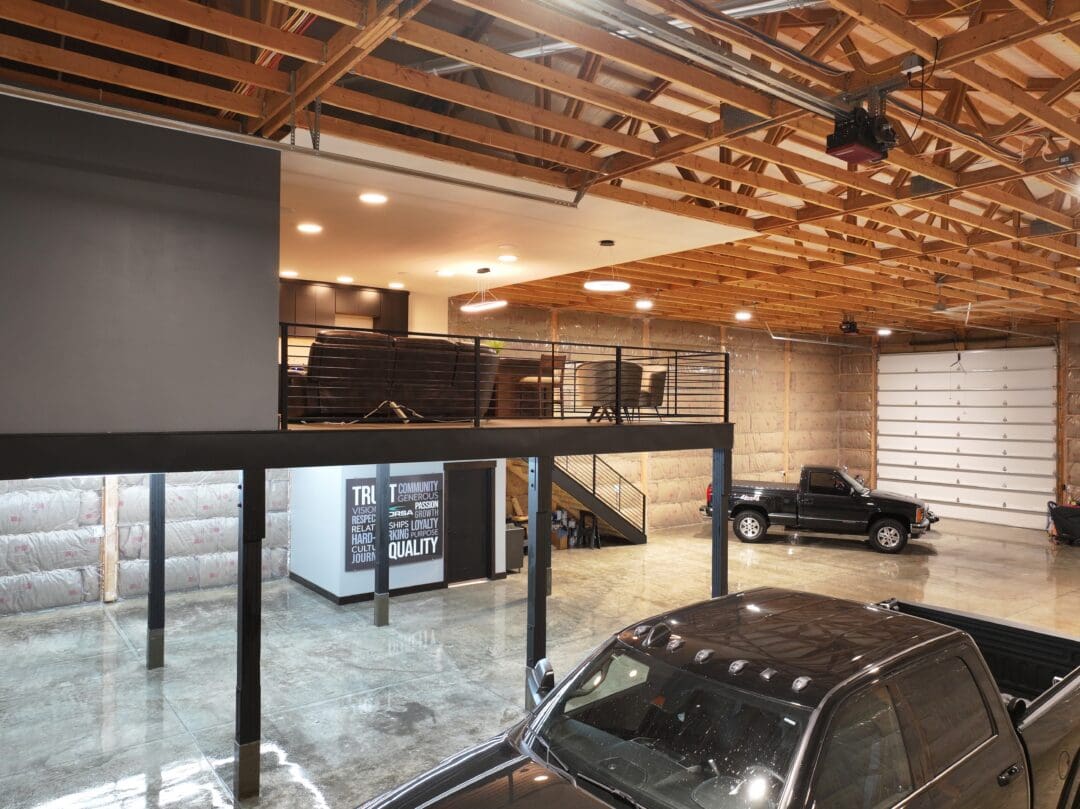
These terms get used interchangeably, but they mean different things when it comes to planning and budget.
| Type | What It Is | Typical Use | Permit Complexity |
| Open loft | Unfinished floor above part of the garage. No walls, no insulation, accessible by a fixed staircase or pull-down attic stairs. | Seasonal storage, overflow storage, hobby space. | Low. Usually treated like storage space. |
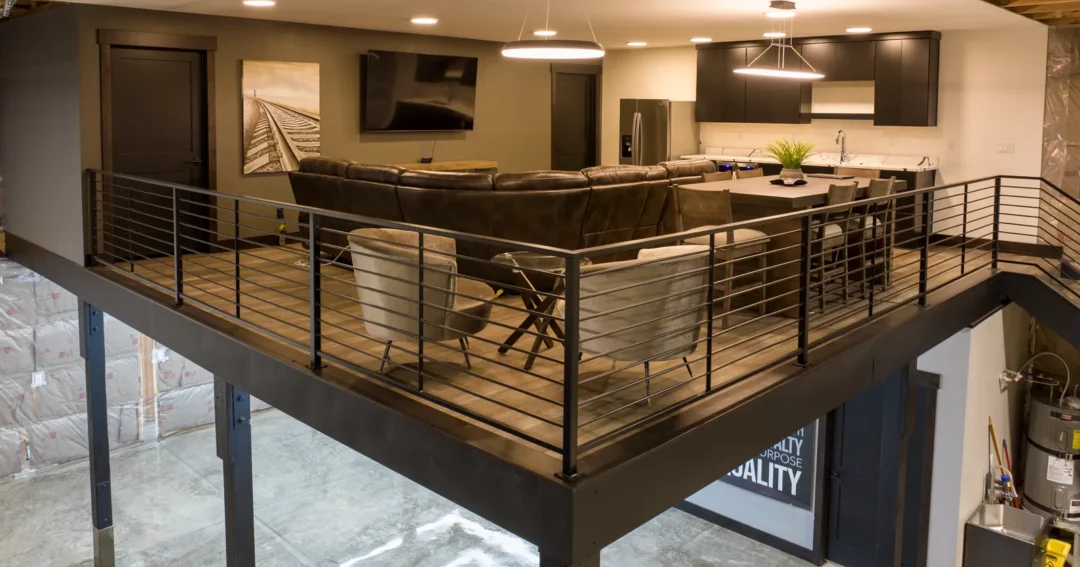
| Finished bonus room | Insulated and drywalled room above the garage with electrical and HVAC. Not a legal dwelling unit. | Home office, guest room, man cave, kids hangout. | Moderate. Treated as living space but not a separate dwelling. |
| Full apartment | Fully finished living unit with kitchen, bathroom, and separate entrance. Intended for occupancy. | In-law suite, rental unit, caretaker housing, personal retreat. | High. Requires full residential permits, inspections, and often separate utility connections. |
Most buyers come in asking for an apartment and end up with a finished bonus room, because a finished bonus room gives you most of what you actually want without the permit complexity and cost of a legal dwelling unit. If you are planning to rent the space or have a family member live there full time, a true apartment is the right goal. If you want a personal retreat, home office, or guest overflow space, a finished bonus room is often the better path.
Note: This article covers garage-first buildings with bonus space above. If you are planning a dedicated full-time home with a garage component, that is a different structure and a different buyer situation covered in our pole barn homes content.
How a Pole Barn Garage Loft Is Built
In a standard pole barn, the structural columns and roof trusses are designed to carry roof loads only. To add a loft, the building needs to be engineered from the start to handle floor loads in addition to roof loads. This is not a retrofit you add after the fact without significant structural changes, which is why it is critical to plan the loft into the original design.
The loft floor is typically framed with engineered floor joists spanning between the structural posts. The posts themselves need to be sized and spaced appropriately for the additional load. Your builder will have an engineer stamp the drawings, which is standard for permitted buildings in most jurisdictions.
One common layout is to run the loft across the full width of the building over one end, leaving the rest of the garage open to the full ceiling height. This gives you the benefits of the loft without reducing ceiling clearance in the main bays.
Popular Pole Barn Garage with Loft Floor Plans
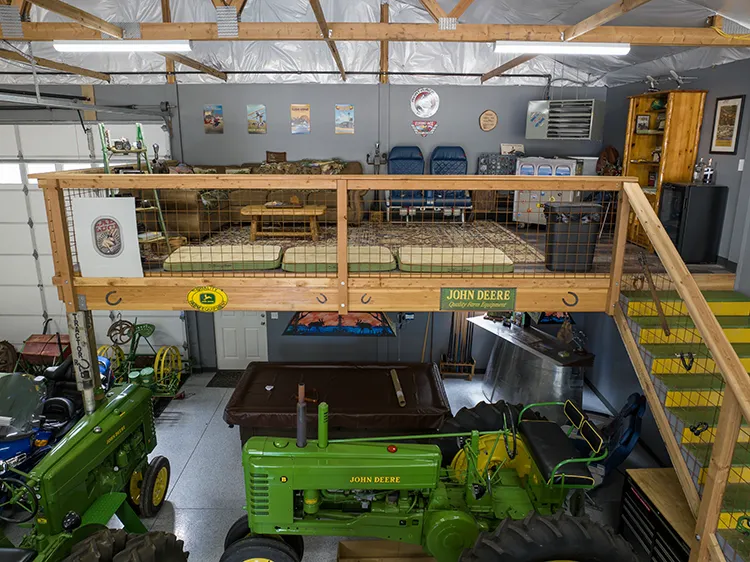
One-Bay Loft Over a Two-Bay Garage
This is the most common layout. Imagine a 30×40 or 40×60 garage with a loft running across the full width over the back 16 to 20 feet of the building. The front two-thirds stays open to full ceiling height for vehicles. The back has the loft above and storage or workspace below.
Access is typically a staircase in the rear corner. The loft itself can be open storage or finished into a room, depending on your goals and budget.
Full-Width Loft Above the Entire Garage
Some buyers want maximum loft square footage and opt for a loft that runs the full length of the building. The tradeoff is ceiling height in the main bays, which will be reduced to the floor-to-loft height (typically 10 to 12 feet rather than the full 14 to 16 feet). This works well if you are parking standard-height vehicles, but is not ideal if you need clearance for trucks with racks, vans, or trailers.
Detached Garage with Full Apartment Above
A 40×60 or larger building with a full-width upper floor, a separate exterior staircase, a private entrance, a bathroom, kitchenette, and full HVAC is what most people picture when they think of a garage apartment. At this scale, the upper floor is genuinely livable and private from the garage below.
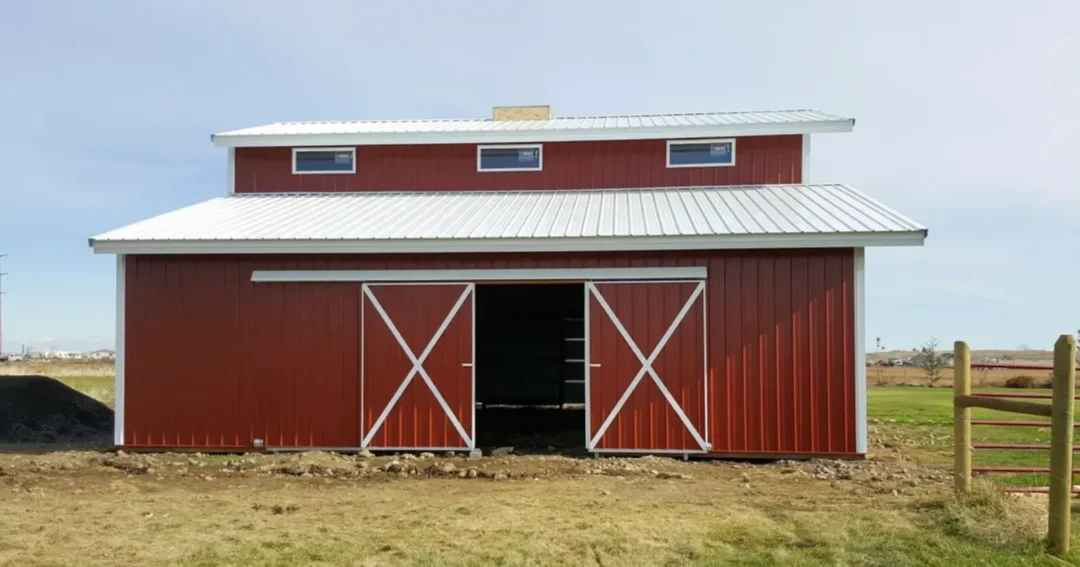
These buildings look like a two-story structure from the outside. The garage occupies the full ground floor footprint, and the apartment sits above it. Because the apartment has its own entrance, someone living there does not need to walk through the garage.
What Does a Pole Barn Garage with Loft Cost?
Cost ranges vary widely depending on loft size, finish level, and whether you are building a storage loft or a full apartment. Here is a rough breakdown of what to expect in SSA’s service area:
| Building + Loft Type | Estimated Turnkey Range | Notes |
| 30×40 with open storage loft | $55,000 to $85,000 | Basic loft floor and staircase, no finish work. |
| 40×60 with finished bonus room | $120,000 to $175,000 | Insulation, drywall, electrical, HVAC, windows. |
| 40×60 with full apartment | $175,000 to $260,000+ | Full kitchen, bath, separate entrance, all permits. |
| 50×80 with full apartment | $240,000 to $350,000+ | Larger footprint, more living space, full finish. |
These are estimates for turnkey builds. Site prep, permitting fees, and utility connections (especially if running a separate electrical service for the apartment) are additional costs that vary by location.
Key Questions to Answer Before You Design
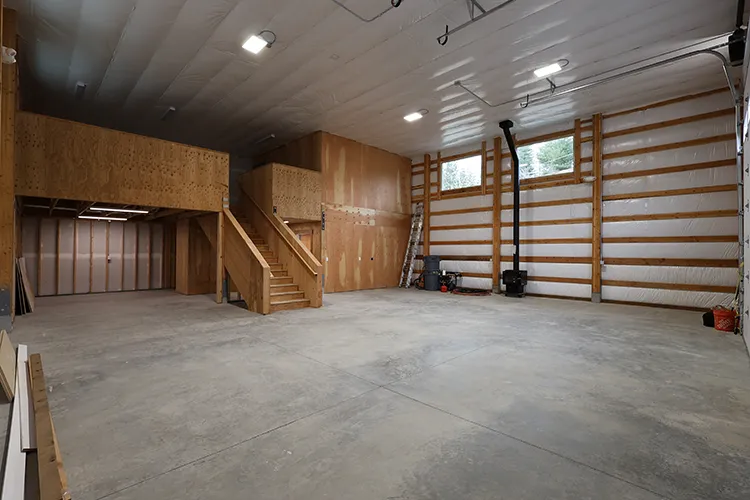
Who will use the loft and how often?
If it is occasional storage, an open loft is the right call. If someone is sleeping there regularly, you need insulation, HVAC, and a bathroom at minimum. If someone is living there independently, you need a full apartment build.
Do you need a separate entrance?
A garage apartment without a private entrance means the occupant walks through your garage every time they come and go. For a guest bedroom or bonus room, that may be fine. For a rental unit or an in-law suite, a dedicated exterior staircase and door is an important part of the design.
What are your local zoning rules for accessory dwelling units?
This is the one that catches people off guard most often. Many counties and municipalities have specific rules about whether you can build a legal dwelling unit in a detached structure, whether it can be rented, and what the minimum size and feature requirements are. Your contractor should know the rules in your area. If a full apartment is your goal, get clarity on this before you finalize plans.
How tall do your main garage bays need to be?
This is a loft placement decision. If you need 14-foot clearance for trucks, trailers, or large equipment, the loft needs to be placed carefully so it does not eat into that clearance in the bays you need it in.
Features Worth Planning From the Start
- Rough plumbing for a future bathroom: Even if you are not installing a full bathroom now, running the plumbing during construction costs a fraction of what it costs to add later.
- Separate electrical sub-panel: A bonus room or apartment needs its own circuit capacity. Plan the panel size appropriately.
- Adequate staircase width: Pull-down attic stairs are fine for occasional storage. If people are going up and down regularly, a proper fixed staircase with a comfortable rise-to-run ratio makes a real difference.
- Insulation in the loft floor: Sound and temperature transfer between the garage and the room above is a real issue. Insulating the loft floor assembly helps with both.
- Egress windows: If the loft is classified as a sleeping space, most jurisdictions require at least one egress window. Plan window placement accordingly.
Ready to Start Planning?
Steel Structures America designs and builds custom pole barn garages with loft space and finished apartments across Idaho, Washington, Oregon, Colorado, and Montana. We handle engineering, permitting, and construction from the ground up. If you have a loft or apartment in mind, we can help you figure out the right layout and what it will realistically cost on your property.
Reach out for a free quote or call us at (866) 490-4012.