
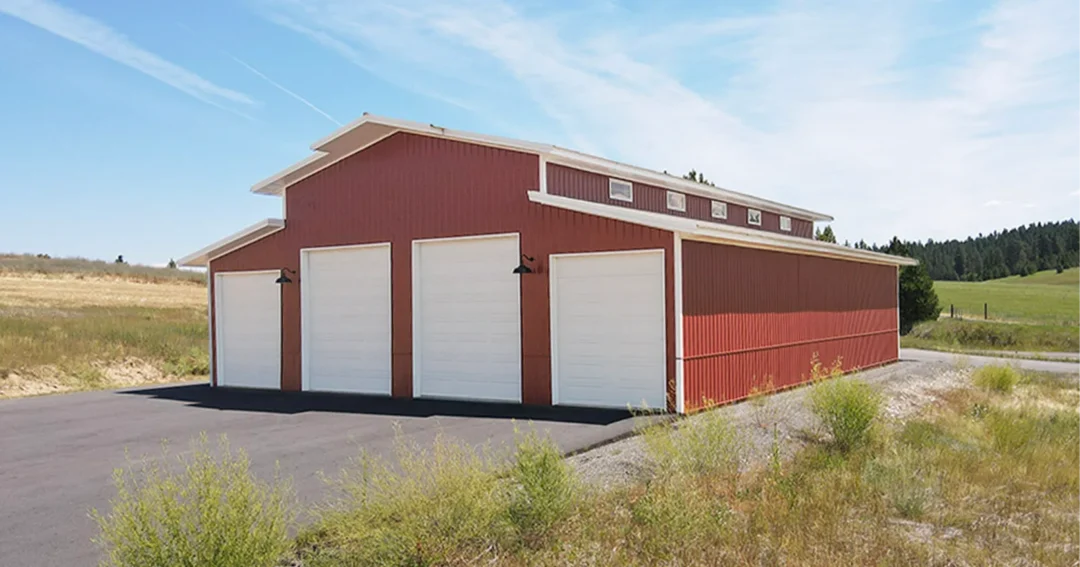
Hay Storage Buildings: Barn Sizes, Designs, and Ventilation
A hay storage building is one of the most cost-effective investments a livestock operation can make. Hay stored outdoors, even when tarped, can lose 20 to 40 percent of its dry matter and nutritional value depending on the climate and storage conditions. A well-designed hay pole barn eliminates most of that loss, protects your forage investment, and keeps your feed supply consistent through the winter feeding season.
The challenge is that hay storage buildings are not just simple covered sheds. They have specific requirements around ventilation, fire risk, structural design, and the open versus enclosed tradeoff that you need to think through before you build. Get those decisions right, and you have a structure that serves your operation well for decades. Get them wrong, and you are dealing with moldy hay, fire risk, or a building that does not work for your workflow.
This guide covers everything you need to know to plan a hay storage building that fits your operation, including sizes, open versus enclosed designs, ventilation, fire safety, and common mistakes to avoid.
Why Hay Storage Matters
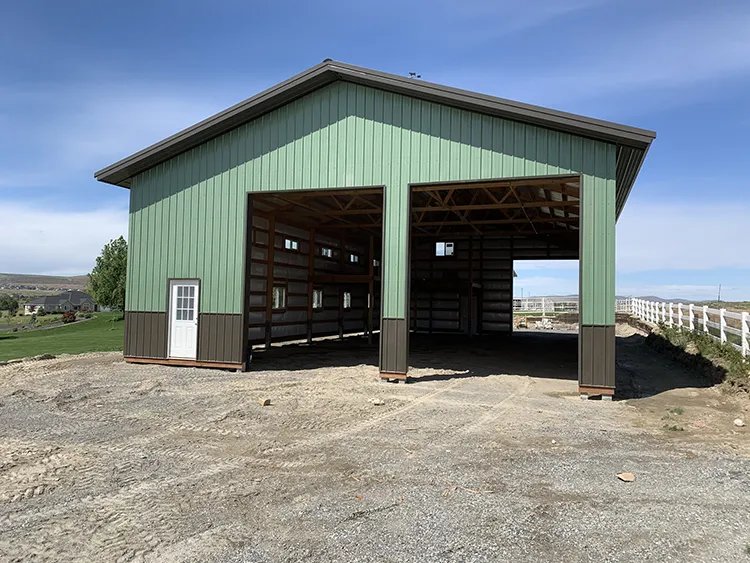
Hay quality starts to degrade the moment it is baled and continues to decline throughout storage. The primary enemies are moisture, UV radiation, and temperature fluctuation. Outdoor stacking, even with good tarping, exposes hay to all three. A covered hay barn or hay pole barn eliminates or significantly reduces all of them.
Here is a quick look at how much dry matter loss varies by storage method:
| Storage Method | Estimated Dry Matter Loss | Notes |
| Outside, no cover | 15-40%+ | Highly variable; worst in wet climates |
| Outside, tarped | 10-25% | Better than uncovered, but still significant loss |
| Inside open-sided barn | 3-8% | Major improvement; dependent on rain exposure |
| Inside fully enclosed barn | 2-5% | Best protection from weather and UV |
The economic case for a hay storage building is usually straightforward. If you are feeding 100 round bales per year and losing 20 percent to weather damage, you are effectively throwing away 20 bales a year. Over the life of a hay barn, the building pays for itself many times over in reduced hay losses alone, not counting the labor savings from dealing with damaged or spoiled feed.
Open Hay Barn vs. Enclosed Hay Barn
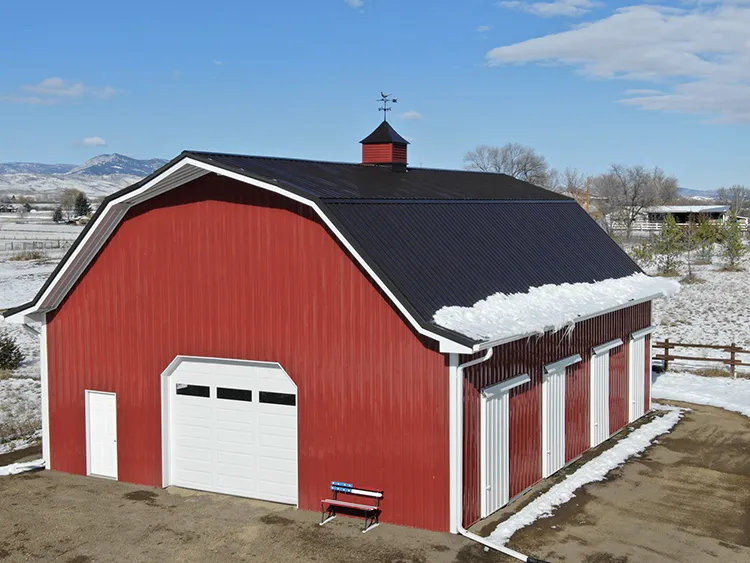
One of the first and most important decisions in planning a hay storage building is whether to build open-sided or fully enclosed. Both approaches work, but they have different tradeoffs that depend on your climate, your hay type, and how you use the building.
Open-Sided Hay Barns
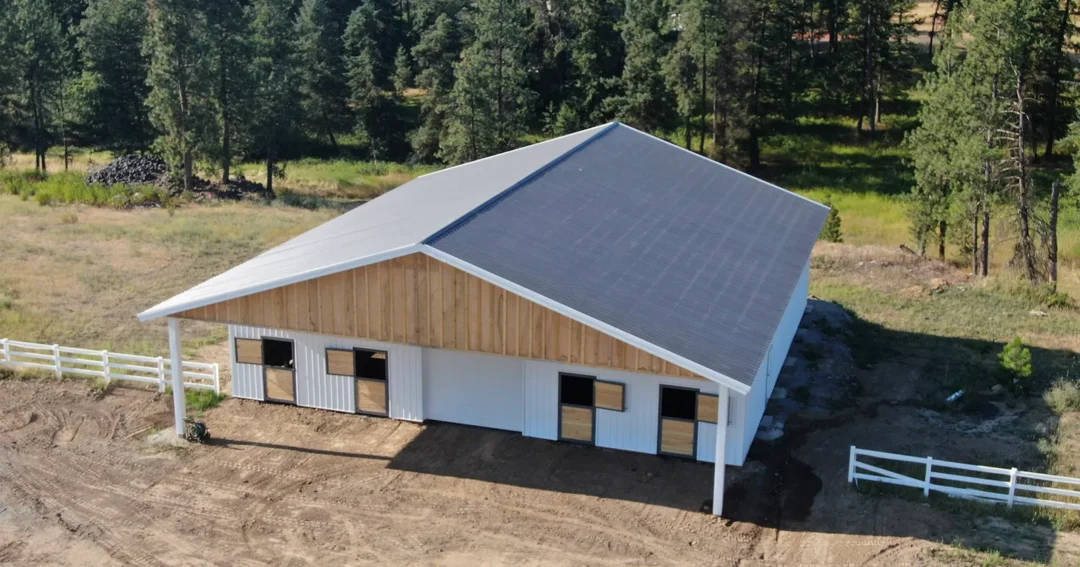
An open-sided hay pole barn typically has a roof and one or more solid back walls, with the remaining sides left open or fitted with removable panels. This is the most traditional hay storage design in the western United States, and for good reason.
Open-sided barns allow maximum natural airflow through the stored hay, which is important for two reasons. First, hay that goes into storage with higher moisture content continues to release moisture as it cures. If that moisture cannot escape, it leads to mold, heat damage, and in severe cases, spontaneous combustion. Second, good airflow through stored hay reduces the overall humidity inside the building, which slows surface mold growth on the outer bales.
The tradeoffs with open-sided hay barns are primarily about weather exposure. In climates with significant blowing rain or heavy snow, an open-sided barn may allow weather intrusion along the open sidewalls, particularly on the weather side. This can cause moisture damage to bales near the edges. In drier climates or for producers stacking bales with enough buffer from open edges, this is less of a concern.
Fully Enclosed Hay Barns
A fully enclosed hay barn provides maximum protection from precipitation and UV exposure. This is the better choice in wetter climates, for producers storing square bales that are more susceptible to moisture damage than round bales, or for operations that want to maximize storage density without concern for weather intrusion.
The tradeoff is ventilation. An enclosed hay barn needs deliberate ventilation design to prevent moisture and heat buildup inside. This typically means ridge vents, gable vents, and elevated eave openings to allow heat and moisture to escape upward and out. Without adequate ventilation, a fully enclosed hay barn can become a humidity trap that promotes mold on stored hay.
Partial Open Designs
Many farmers end up with a partial open design that gives them the best of both approaches. A common configuration is a building that is fully enclosed on the north and west walls to block prevailing winter weather, with open gable ends and an open or panel-covered south or east sidewall for airflow. This allows good ventilation while limiting weather intrusion from the direction it comes from most often.
Hay Barn Ventilation: Why It Matters and How to Get It Right
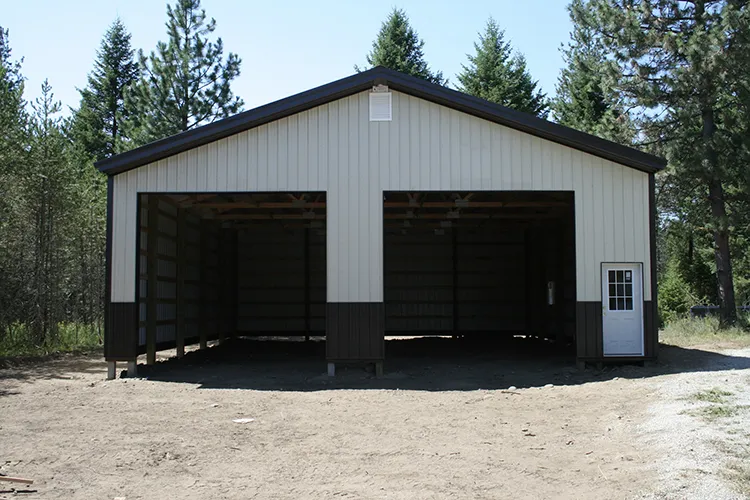
Ventilation is the most technically important design element in a hay storage building, and it is also the element that is most often underestimated. Here is why it matters so much.
The Risk of Spontaneous Combustion
Hay that is baled or stacked with too much moisture generates heat as it continues to cure. Under the right conditions, that heat can build to the point of spontaneous combustion. This is a genuine and recurring cause of hay barn fires throughout agricultural regions. Proper ventilation, combined with monitoring hay temperature in the first few weeks after storage, is the primary defense against this risk.
The risk is highest with large square bales and with hay stored too green. Round bales are somewhat more forgiving because their shape allows more airflow through the stack, but they are not immune. If you are storing hay that went in even slightly damp, active monitoring and good ventilation are essential in the first 30 to 60 days.
Condensation and Roof Drip
A second ventilation issue specific to hay barns with metal roofs is condensation drip. When warm air inside the building meets a cold metal roof surface, condensation forms and can drip onto stored bales below. This causes moisture damage to the top layer of stored hay, which is often your highest quality feed from the most recent cutting.
Solutions include proper ridge ventilation to exhaust warm air before it contacts the roof panel, insulating the roof panels to reduce the temperature differential, or using vented ridge cap systems that allow moisture-laden air to escape upward. Open-sided designs handle this naturally because air can move freely without being trapped under a tight building envelope.
Ventilation Design Elements
- Ridge vents or vented ridge cap along the full length of the building to allow hot air and moisture to escape upward.
- Open eave vents or continuous soffit venting to allow fresh air to enter low and exit high.
- Gable end vents or open gable ends for cross-ventilation in the lengthwise direction.
- Adequate roof pitch to promote air movement. Steeper pitches generally perform better than low-slope designs for natural convection.
- Avoidance of vapor barriers on open hay barns, which would trap moisture rather than let it escape.
Hay Barn Size Guide
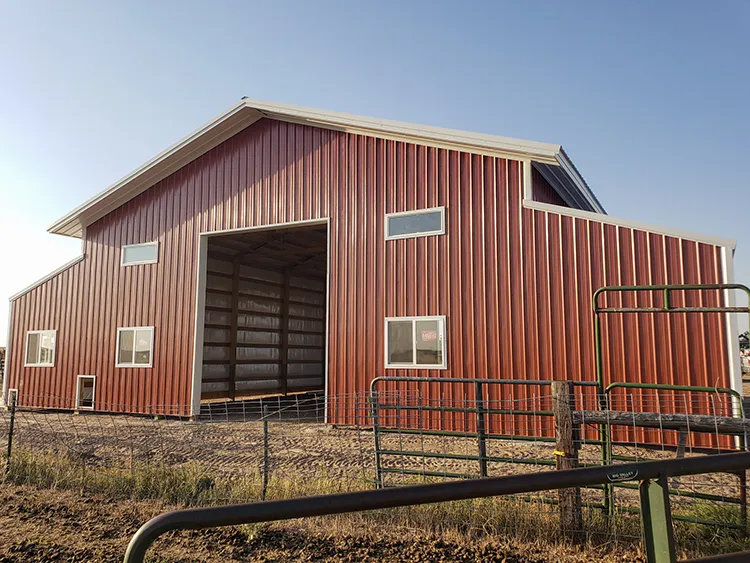
Sizing a hay storage building starts with knowing how much hay you need to store, what bale type and size you are using, and how you will load and unload. Here are the key sizing considerations:
Space Per Bale
The amount of floor space needed per bale varies by bale type and how you stack:
| Bale Type | Approx. Bale Dimensions | Floor Space Per Bale (stacked 2 high) | Rough Weight |
| Round bale (standard) | 5 ft diameter x 4-5 ft wide | 25-30 sq ft | 800-1,200 lbs |
| Round bale (large) | 6 ft diameter x 5 ft wide | 35-40 sq ft | 1,200-1,800 lbs |
| 3-string large square bale | 3x3x8 ft approx. | 12-15 sq ft stacked | 800-900 lbs |
| Small square bale | 14x18x36 in approx. | 4-5 sq ft stacked | 50-70 lbs |
Building Size by Storage Capacity
Here are common hay barn sizes and approximate bale capacities to help you plan:
| Building Size | Approx. Round Bale Capacity (1 high) | Approx. Round Bale Capacity (2 high) | Best For |
| 30×60 | 35-45 bales | 70-90 bales | Small hobby farm or supplemental storage |
| 40×60 | 50-60 bales | 100-120 bales | Small to mid-size cattle operation |
| 40×80 | 65-80 bales | 130-160 bales | Mid-size herd, year-round storage |
| 60×100 | 115-130 bales | 230-260 bales | Large operation or commercial hay production |
| 60×120+ | 140-160+ bales | 280-320+ bales | Full-season storage for large ranches |
These are approximate figures based on standard round bale sizing with access aisles. Your actual capacity will depend on bale size uniformity, stacking height, and whether you maintain aisles inside the building for equipment access. If you are using a skid loader or tractor to move bales inside the barn, you need to account for the turning radius and aisle space required.
Door and Access Planning
How you get hay into and out of the building is as important as how much you can store. A hay barn that requires carrying bales by hand because the doors are too small is a frustration you will deal with every winter.
- For round bale handling with a tractor or skid loader, plan for at least a 14-foot wide opening and 12-foot clearance height.
- If you are loading with a spear on a front-end loader, you need enough height clearance for the loader arms at full extension.
- Drive-through layouts with doors on both ends save time by eliminating the need to back equipment out of the barn after unloading.
- Sliding doors or bifold doors are popular choices on hay barns because they do not require swing clearance in front of the opening.
Fire Safety Considerations for Hay Barns
Hay fires are a real risk in any hay storage building, and they deserve deliberate planning. Here are the key fire safety practices to build into your barn design and management system:
- Monitor hay temperature regularly in the first 30 to 60 days after storage. A hay probe thermometer lets you check internal bale temperatures. Temperatures above 150 to 160 degrees Fahrenheit signal active heating that requires action.
- Store hay separately from livestock housing whenever possible. Many jurisdictions require a fire-rated separation wall between hay storage and any attached livestock area. Separate buildings are the safest approach.
- Keep combustibles away from stored hay. Fuels, oils, and other flammable materials should not be stored in or immediately adjacent to the hay barn.
- Electrical wiring in hay barns should be enclosed in conduit and kept away from hay contact. A single spark from a faulty connection can start a fire in dry hay within seconds.
- Post No Smoking signs and enforce them. Hay barns are among the most fire-prone agricultural structures on any farm.
- Plan access for firefighting equipment. In a rural setting, fire response times are long. Know where your nearest water source is and make sure the building is accessible from multiple sides.
Combining Hay Storage with Other Building Functions
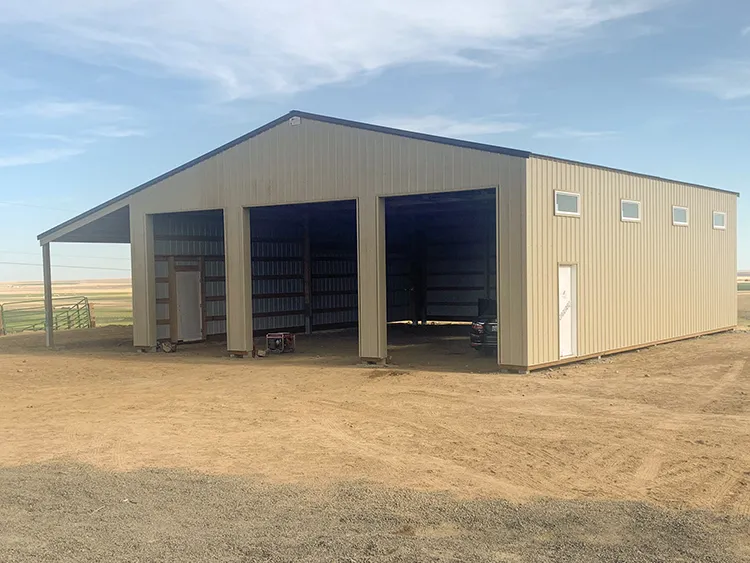
Hay storage buildings are commonly combined with other agricultural uses, and doing so thoughtfully can increase the value of your building footprint significantly. Here are common combinations that work well:
Hay and Equipment Storage
Storing hay and equipment in the same building is feasible but requires planning. The most common approach is to divide the building into zones: an enclosed section for hay and a separate bay with a different door access for equipment. This keeps equipment accessible without opening up the entire hay storage area to weather when moving machinery in and out.
Hay Storage with Lean-To Addition
A lean-to addition on the side of a hay storage building is one of the most cost-effective ways to add covered equipment storage or working space adjacent to your hay supply. A 16 to 20-foot lean-to running the length of the hay barn adds substantial covered space at a lower cost per square foot than the main building, since it shares the main wall.
Open-Sided Hay Storage Attached to a Livestock Barn
On many livestock operations, the hay barn is built directly adjacent to or attached to the main livestock area, with a solid fire-rated wall separating the two. This allows easy hay distribution to animals without moving bales long distances, while keeping the fire risk compartmentalized. If you are considering this layout, check the permit and fire code requirements in your county. Some jurisdictions have specific requirements for separation distances and wall construction between hay storage and occupied livestock areas.
Pole Barn Construction for Hay Storage
Post-frame construction is an excellent structural choice for hay storage buildings across every size range. Pole barns deliver large clear-span interiors without interior columns that interfere with bale stacking and equipment movement. They are also well-suited to open-sided designs because the post-frame structure does not rely on sidewalls for structural support the way traditional stick-built construction does.
This is a meaningful advantage for hay barn construction. An open-sided post-frame hay barn can have one or more sidewalls removed or left open entirely without compromising the structural integrity of the building. The posts carry the load, the roof system spans between them, and the wall panels are infill that can be configured however your ventilation and weather exposure needs require.
Foundation Considerations for Hay Barns
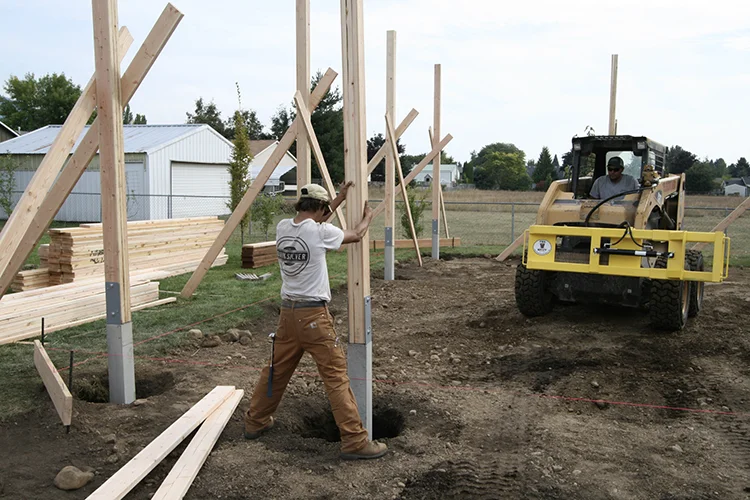
Hay barns deal with moisture constantly, from the stored hay itself, from roof condensation, and from the wet and muddy conditions around agricultural buildings throughout the rainy season. Traditional buried wood posts are vulnerable to rot over time in these conditions.
For a hay storage building that you expect to last 30 or more years, Perma-Column precast concrete foundation columns are worth considering. They eliminate the buried wood post entirely and dramatically reduce the risk of post rot, particularly in areas with wet soils, high water tables, or frequent standing water. Steel Structures America is a Perma-Column partner and can help you evaluate whether this foundation upgrade makes sense for your site and your building.
Ready to Plan Your Hay Storage Building?
Steel Structures America builds hay storage structures for farms and ranches across Idaho, Washington, Oregon, Colorado, and Montana. We understand the specific design requirements that make a hay barn actually work, from ventilation and open-sided configurations to door sizing and foundation durability.
Whether you are building your first hay barn or replacing an aging structure, we can help you design and build something that protects your forage investment and serves your operation for decades to come.
Call us at (866) 421-0412 or fill out a quote request online to get started.
Don’t forget to ask about our other agricultural buildings as well.