
Concrete Piers for Pole Barn Builds: Poured Piers vs. Precast Columns
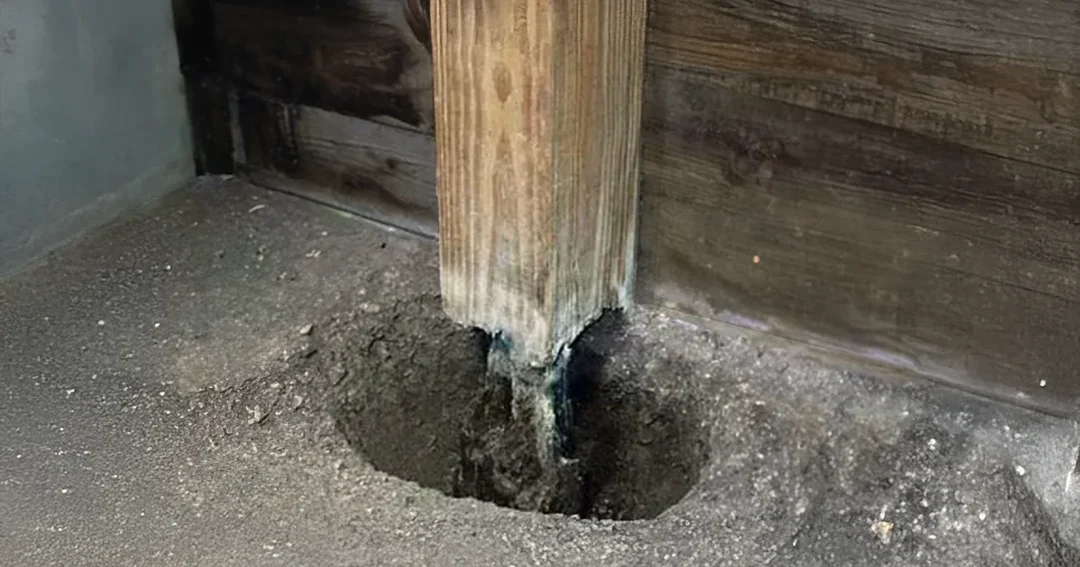
Concrete piers for pole barn construction do one job: they put concrete in the ground and keep the wood post above it. Instead of burying a treated post, you set the post on a pier with a steel bracket, so nothing that can decay ever touches soil. The honest answer on whether you need them: a pole barn doesn’t require piers, but they’re the most direct way to take ground-contact rot off the table. The bigger decision is which kind, because a pier poured on site and a precast concrete column get you there differently.
What concrete piers for a pole barn are (and aren’t)
A lot of people hear “posts set in concrete” and assume that’s a pier. It isn’t. There are three different things that get mixed up:
- Embedded post with a concrete footing. The traditional method. The wood post goes in the hole, sitting on a concrete pad or held by a concrete collar. The wood is still below grade.
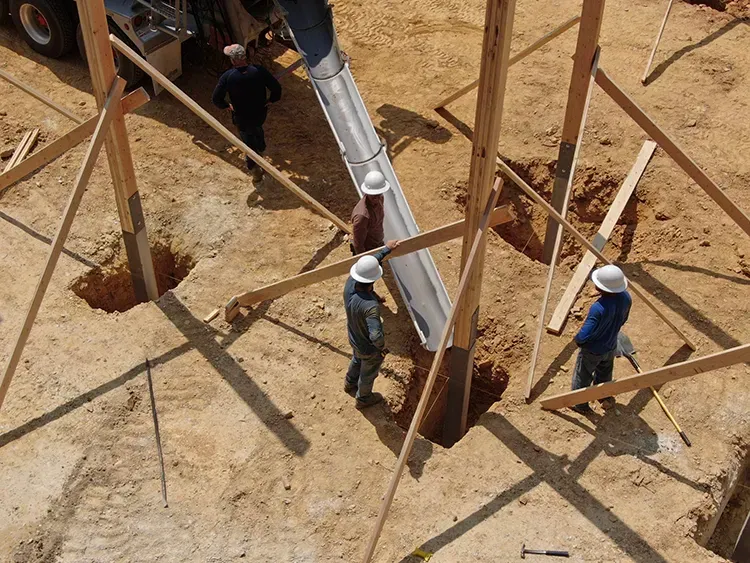
- Poured concrete pier. Concrete fills the hole (usually in a round form) up to or above grade. A steel bracket set in the top holds the post. The wood starts above the soil.
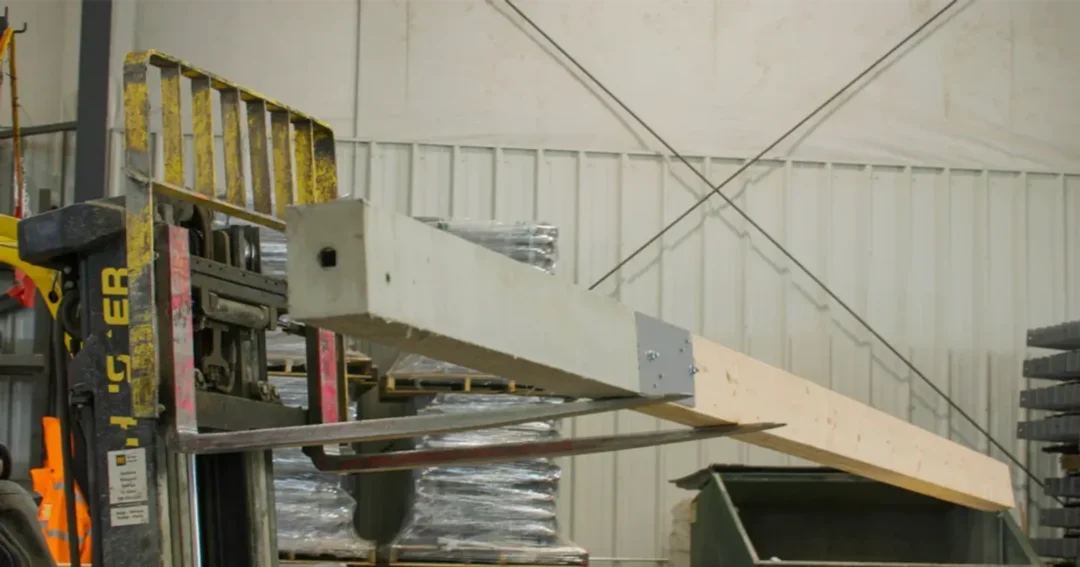
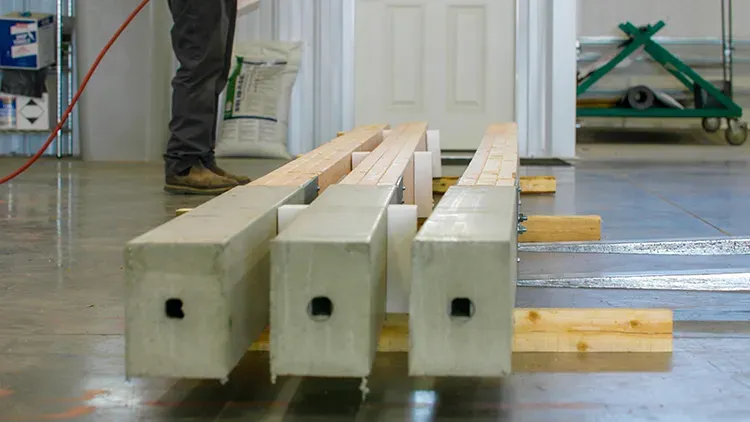
- Precast concrete column. A factory-made concrete column goes in the hole in place of the wood, with a steel bracket already attached at the top. Same result as a pier, different way of getting there.
Only the last two keep wood out of the ground. If you’re comparing the first against the others, start with pole barn posts in the ground vs. on concrete.
Poured piers vs. precast columns
Both are concrete below grade with a bracketed wood column above. The differences are in how they’re made and what that means on your site.
| Poured concrete pier | Precast concrete column | |
|---|---|---|
| Where the concrete is made | Mixed and poured on your site | Cast in a plant, delivered ready to set |
| Wait before framing | Concrete has to cure first | None, it arrives cured |
| Weather sensitivity | Cold and wet weather complicate the pour | Sets the same in any season |
| Bracket placement | Set by hand in wet concrete, so layout accuracy depends on the crew | Bracket is part of the column |
| Consistency | Varies with the mix, the weather, and the pour | Made under controlled conditions |
Poured concrete piers
A poured pier is flexible. It can be formed to whatever diameter and depth the engineering calls for, and the materials are available anywhere. The tradeoffs are time and precision. Every pier has to cure before it carries the building, every bracket has to land in exactly the right spot while the concrete is wet, and a pour in freezing weather needs extra care. Across the Northwest and the Intermountain West, that last one matters for a good part of the year.
Precast concrete columns
A Perma-Column is the precast version. The concrete is cast and cured before it ever reaches your property, the steel bracket is built in, and the crew sets it in the hole the same way they’d set a post. The laminated wood column bolts into the bracket above grade and framing continues right away. This is the option we offer at Steel Structures America, and it’s the one we point people to when they tell us rot is their main concern. You can read the manufacturer’s details at Perma-Column.
What your engineer has to size
There’s no standard pier. Anyone who gives you a diameter and depth without knowing your site is guessing. The engineering for your building sets these, and here’s what drives them:
- Frost depth. The bottom of the pier has to sit below your local frost line so freezing soil can’t lift it. Your building department sets that depth, and it varies a lot across Idaho, Washington, Oregon, Montana, and Colorado.
- Soil bearing. Softer soils need a wider base to spread the load.
- Snow load. Heavier roof loads mean more weight coming down each column.
- Wind. Wind pushes sideways on the walls and pulls up on the roof. The pier and its bracket have to resist both, which is why the bracket connection gets as much attention as the concrete.
- Building size and post spacing. A taller wall or a wider clear span changes what each column has to do.
All of this goes on the stamped drawings your county reviews. Our guide to pole barn permits and building codes explains that process, and engineering and permitting are included in every building we do.
Piers and your concrete floor
Piers and the slab are separate pieces. The piers or precast columns carry the building. The pole barn concrete floor is poured later, inside the finished shell, and doesn’t hold the building up. That’s one of the cost advantages of post-frame: you don’t need a continuous perimeter foundation.
If you do want the building sitting on a slab or foundation wall instead, the posts connect with surface-mounted brackets. We cover those in our guide to Sturdi-Wall brackets.
Frequently asked questions
Are concrete piers better than posts in the ground?
For rot, yes, because there’s no wood below grade to decay. A properly treated in-ground post on a well-drained site is still a sound, proven foundation. It comes down to how long you plan to own the building and how much risk you want to design out. Here’s a closer look at what causes pole barn post rot.
Do concrete piers cost more?
Yes, concrete in the ground costs more than a treated post in the ground. How much depends on the number of columns and what your engineering requires, so it’s a line item we price on a real quote, not a number worth guessing at.
Can I add piers to an existing pole barn?
Existing posts can sometimes be cut off above the decay and supported on new concrete, one at a time. It’s repair work that depends on the building’s condition, so it starts with an inspection.
The bottom line
Concrete piers keep the wood in your pole barn above the soil, and that’s the whole point. Poured piers get you there with site-mixed concrete and some cure time. Precast columns get you there with factory-made concrete and no waiting. For a full look at how these fit with the rest of the options, see our guide to pole barn foundations. When you’re ready to talk about your site, give us a call at (800) 833-9997 or request a free quote.