
ADU Permits in Idaho: What You Need Before You Can Build
An ADU permit in Idaho is not optional, but the good news is that Idaho’s new ADU law changed how cities are allowed to handle the approval process. If your property qualifies, your city cannot put you through a lengthy discretionary review. They must approve your project administratively if it meets the established requirements.
That does not mean the paperwork disappears. It means the bureaucratic friction is lower than it used to be. You still need a building permit, engineered drawings, inspections, and in most cases a utility connection approval. This guide walks you through exactly what is required, what to expect from your city, and what your contractor should be handling on your behalf.
| This article covers the permit process for ADU construction in Idaho. For a full explanation of Idaho’s ADU law, SB 1354, including which cities it applies to and what cities are prohibited from requiring, see our Idaho ADU law guide. |
Do You Need a Permit to Build an ADU in Idaho?
Yes. Idaho’s SB 1354 gives you a protected right to build a detached ADU in qualifying cities, but that right does not eliminate the permit requirement. Every residential structure built in Idaho requires a building permit. The ADU law changed the approval process, not the permitting requirement.
What the law does change is how your city must handle your application. In cities covered by SB 1354, cities with populations over 10,000, the city is required to approve ADU projects that meet established land use requirements on an administrative basis. That means no public hearings, no discretionary review board, no waiting to see if a neighbor objects. If your project meets the rules, it gets approved.
What Permits Does an ADU Require in Idaho?
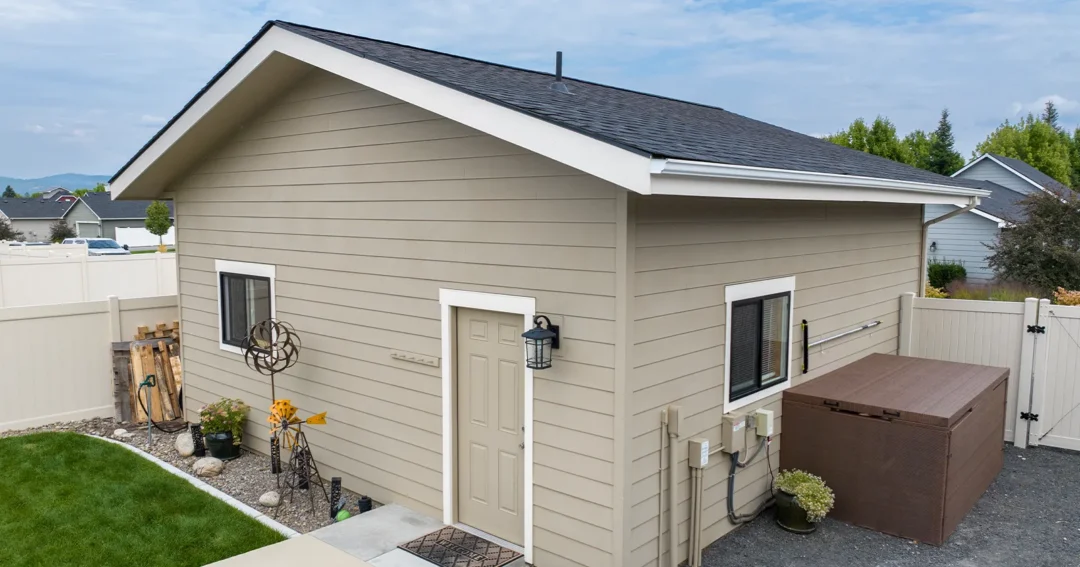
The exact permit list varies slightly by city, but most Idaho ADU projects require some combination of the following.
Building Permit
The building permit is the primary permit for any new structure. It covers the structural, architectural, and general construction aspects of the project. Your contractor submits the application with construction drawings, and the city reviews for code compliance before issuing the permit. Inspections occur at various stages of construction and a final inspection closes the permit when the building is complete.
Mechanical, Electrical, and Plumbing Permits
In most Idaho cities, mechanical (HVAC), electrical, and plumbing work require separate sub-permits in addition to the main building permit. These are typically pulled by licensed subcontractors and include their own inspection requirements. A full-service contractor like SSA coordinates all of these on your behalf.
Site Plan or Zoning Review
Before or alongside the building permit application, most cities require a site plan showing where the ADU will be placed on your lot, its dimensions, and its relationship to property lines, setbacks, and existing structures. This is what confirms your project meets the setback and placement rules for your zoning district.
Utility Connection Approvals
If your ADU will connect to city water and sewer, you will need approval from the utility provider. Some cities handle this through the building permit process. Others require a separate application. If you are on a private well or septic, you may need a county health department review to confirm your existing systems can support the additional unit.
Engineered Plans: What Your Builder Must Provide
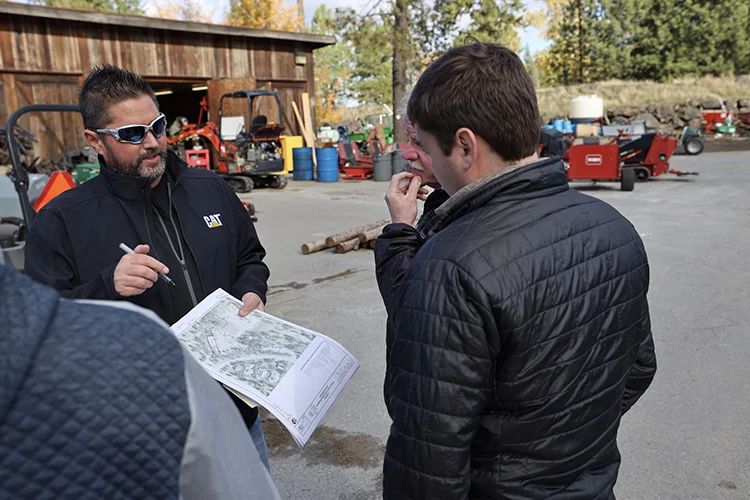
Idaho building departments require engineered, stamped construction drawings for residential structures. This is not optional and it is not something you can substitute with a sketch or a generic floor plan downloaded from the internet.
Stamped plans are drawings prepared and signed by a licensed structural engineer. They document the building’s structural system, load calculations, foundation design, and compliance with the International Residential Code. The building department uses them to verify that the structure is designed to be safe.
For post-frame and pre-engineered ADU systems like the Kit Culture Ready Frame from our sister company Kit Culture, stamped drawings are included with every kit as a standard part of the package. This is one of the practical advantages of working with a system-built product versus a fully custom build, where engineering is a separate cost and scheduling item.
The ADU Permit Process in Idaho: Step by Step
- Confirm your property qualifies. Before anything else, confirm that your property is inside city limits in a qualifying Idaho city and that your lot is zoned for single-family residential use. If you are in unincorporated county land, SB 1354 does not apply and you will need to work with your county planning office instead.
- Develop your project plans. Work with your contractor to finalize your ADU design, size, placement, and site layout. For SSA builds, this includes selecting your Kit Culture model and confirming the placement on your lot relative to setbacks and existing structures.
- Prepare permit application documents. Your contractor assembles the permit package, which typically includes: stamped architectural and structural drawings, site plan showing lot boundaries and ADU placement, energy compliance documentation, and utility connection information.
- Submit to the city building department. Applications are submitted to your city’s building or planning department, either online or in person depending on the city. Most Idaho cities have moved to online permitting portals.
- Plan review. The building department reviews your application for code compliance. For ADU projects in cities covered by SB 1354, this must be an administrative review. Cities are not permitted to subject qualifying projects to discretionary approval. Review timelines vary by city but typically run two to six weeks.
- Permit issuance and construction. Once approved, the permit is issued and construction can begin. Inspections occur at defined construction stages, typically foundation, framing, rough mechanical, and final.
- Final inspection and certificate of occupancy. When construction is complete, the final inspection confirms everything was built according to the approved plans. A certificate of occupancy or final inspection approval is issued, which is what makes the unit legally habitable.
How Long Does the ADU Permit Process Take in Idaho?
Permit timelines vary by city, by how complete your application is when submitted, and by current workload at the building department. Here is a general guide.
| Stage | Typical Timeline |
| Application preparation (plans, site plan, documents) | 1 to 3 weeks depending on builder |
| City plan review | 2 to 6 weeks (varies significantly by city) |
| Construction and inspections | 6 to 12 weeks for a Kit Culture build |
| Final inspection and certificate of occupancy | 1 to 2 weeks after construction complete |
| Total from application to move-in | Typically 4 to 6 months with SSA |
One of the most common causes of permit delays is an incomplete application. Missing documents, incorrect site plan dimensions, or stamped plans that do not match the site plan trigger correction requests that can add weeks to the review. Working with a contractor who has a complete permit package ready at submission is the most reliable way to keep the process on schedule.
ADU Permit Costs in Idaho
Permit fees are set by each city and vary based on the project’s valuation and the city’s fee schedule. Here is a general range for Idaho cities.
| Permit Type | Typical Fee Range in Idaho |
| Building permit (based on project valuation) | $800 to $3,000+ |
| Mechanical permit | $100 to $400 |
| Electrical permit | $150 to $500 |
| Plumbing permit | $100 to $400 |
| Plan review fee (sometimes separate) | $300 to $1,500 |
| Water and sewer connection fees | $1,500 to $8,000+ (varies widely by city) |
Water and sewer connection fees are often the largest single permit-related cost and vary the most between cities. Some cities charge impact fees for ADUs. Idaho’s SB 1354 caps these fees: cities cannot charge impact fees for ADUs that exceed what they charge for other single-family dwellings. If you believe a fee you are being charged is higher than what the law allows, that is worth a conversation with a real estate attorney.
City-by-City: What to Expect in Major Idaho Markets
Coeur d’Alene
Coeur d’Alene is covered by SB 1354 and must allow detached ADUs once the law takes effect July 1, 2026, with full code compliance by February 1, 2027. The City of Coeur d’Alene has its own building department that processes residential permits. Contact City of Coeur d’Alene Planning and Building at cdaid.org for current fee schedules and submission requirements.
Post Falls
Post Falls was ahead of the curve on ADU-friendly policy even before the state law passed and is a relatively smooth permitting environment for residential projects. SSA is based in Post Falls and has an established relationship with the local building department. Contact Post Falls Building Department at postfallsidaho.gov for current requirements.
Boise
Boise already had a permissive ADU framework before SB 1354 and processes a significant volume of ADU applications each year. The city uses an online permitting portal. Plan review timelines in Boise can run longer than smaller Idaho cities due to application volume. Contact City of Boise Planning and Development Services at cityofboise.org.
Nampa and Meridian
Both cities are above the 10,000 population threshold and must comply with SB 1354 by February 1, 2027. Both have established building departments with online permitting. Contact each city’s building department directly for current fee schedules and review timelines.
What Your Contractor Should Handle
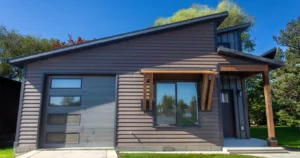
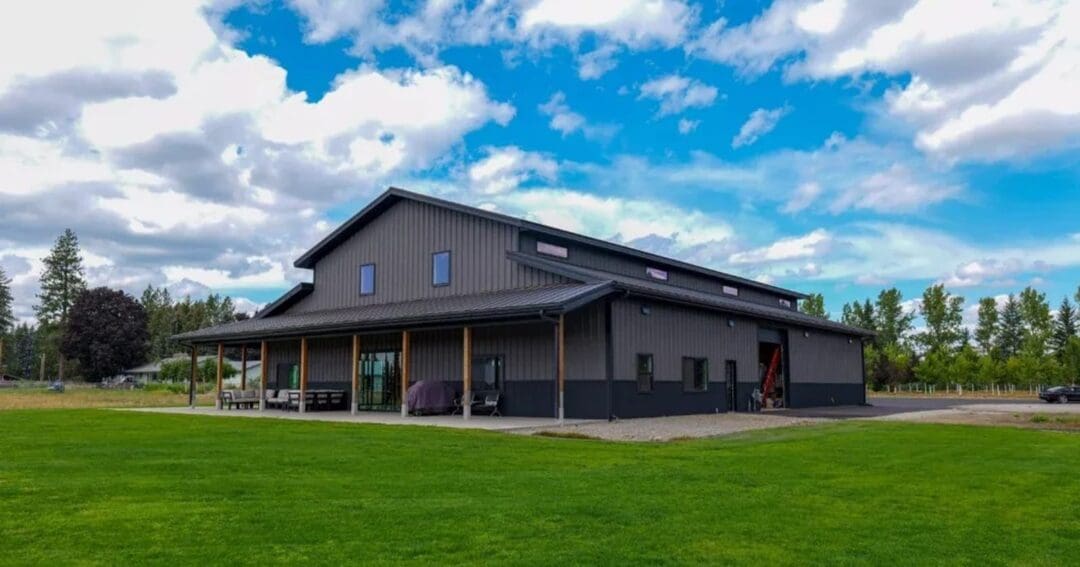
A kit home from our sister company Kit Culture can be easily adapted into an ADU.
A full-service ADU contractor should take the permit process largely off your plate. Here is what SSA handles as part of every project:
- Preparation of the complete permit application package including stamped engineering drawings
- Site plan preparation showing ADU placement and setback compliance
- Submission to the city building department
- Coordination with the plan reviewer on any correction requests
- Scheduling and coordination of all required inspections during construction
- Final inspection coordination and certificate of occupancy
If a contractor you are considering asks you to pull your own permits or navigate the permitting process independently, that is a red flag. Licensed contractors in Idaho are required to pull permits for work they perform.
Unpermitted ADUs: Why It Is Not Worth the Risk
Some homeowners consider skipping the permit process to save time and fees. This is one of the costlier mistakes you can make with an ADU project.
- It affects your appraisal. An unpermitted structure is typically excluded from or discounted in a property appraisal. If you ever sell or refinance, this will cost you more than the permit fees saved.
- It affects your insurance. Homeowner’s insurance policies often do not cover damage to unpermitted structures. A fire or storm event that damages an unpermitted ADU may leave you unprotected.
- It creates liability. If someone is injured in an unpermitted ADU, the absence of inspections and code compliance documentation creates serious legal exposure.
- Code enforcement. Cities have the authority to require unpermitted structures to be brought into compliance or demolished. The cost of retroactive permitting or reconstruction almost always exceeds what proper permitting would have cost.
Frequently Asked Questions
Can I start building before my permit is approved?
No. Construction cannot legally begin until the permit is issued. Beginning work before permit issuance is a violation that can result in stop-work orders, fines, and in some cases a requirement to demolish unpermitted work.
What if my city has not yet updated its codes to comply with SB 1354?
SB 1354 takes effect July 1, 2026, with a city compliance deadline of February 1, 2027. If your city has not yet updated its local codes, the state law takes precedence as of July 1. If a city denies your application in a way that appears to violate SB 1354, you may have legal recourse. Consult a real estate attorney familiar with Idaho land use law.
Are there any ADU projects that do not require a permit in Idaho?
Any new detached structure intended for human habitation requires a building permit in Idaho. Accessory structures below a certain size, typically 200 square feet in most jurisdictions, may not require a permit in some cities, but these are too small to qualify as habitable ADUs and are not suitable for the purpose.
How do engineer-stamped plans from Steel Structures America help with permitting?
Steel Structures America includes permit-ready stamped engineering drawings with every build. These drawings are prepared by licensed structural engineers and are formatted to meet standard building department review requirements. This means SSA can submit a complete, professionally prepared permit package on day one, rather than waiting weeks for engineering to be completed after a design is finalized. It is one of the reasons SSA builds typically move from permit submission to approval faster than traditional stick-frame projects.