Pole Barn Ventilation: What Good Ventilation Looks Like in a Quality Build
Pole barn ventilation is one of those building system details that most buyers never think about until something goes wrong. A building without adequate ventilation traps heat in summer, accumulates moisture through the colder months, develops condensation on the roof and walls, and creates an environment that degrades insulation, promotes rust, and shortens the useful life of everything stored inside. A building with good ventilation avoids all of that.
This article explains how ventilation works in a post-frame building, what components your contractor should be specifying, how those systems are sized, and what questions to ask when you are evaluating a builder or reviewing a quote.
Why Ventilation Matters in a Pole Barn
The ventilation system in a pole barn does several distinct jobs simultaneously. Understanding each one helps you appreciate why it deserves to be designed and sized thoughtfully rather than treated as a checkbox.
Moisture Management
Air inside any building picks up moisture from the ground, from occupants, from animals, from vehicles that have been out in the rain, and from other sources depending on how the building is used. Without ventilation, that moisture accumulates inside the building and eventually finds cold surfaces where it condenses. This is the cause of the dripping metal roofs and sweating walls that plague poorly built post-frame buildings in cold climates.
Ventilation continuously exchanges the humid interior air with drier exterior air, which keeps interior humidity at a level where condensation is much less likely to be a problem. This is why ventilation and condensation control go hand in hand. A good contractor addresses both, and the two systems work together.
Heat Management in Summer
Metal roofing absorbs solar heat very efficiently. On a hot summer day, the air trapped inside an unventilated metal building can reach temperatures significantly above the outside air temperature. This heat load makes the building uncomfortable to work in, degrades certain stored materials, and in buildings with livestock, can create serious welfare concerns.
A properly designed passive ventilation system allows that hot air to exit at the ridge continuously, drawing cooler air in at the eaves and keeping the interior temperature closer to the outdoor ambient level. The improvement in comfort and usability can be dramatic in summer months.
Protecting Insulation Performance
Insulation that gets wet loses a significant portion of its thermal value. Fiberglass batts saturated with moisture from condensation or air infiltration can lose more than half their rated R-value in some cases, while also potentially harboring mold and creating ongoing moisture problems in the wall or roof assembly.
Good ventilation is part of what keeps insulation dry and performing as designed. This is especially true in the attic or roof space above a finished ceiling, where warm moist air can migrate upward and condense on cold surfaces if there is not adequate airflow to carry it out.
Air Quality for Occupants and Animals
In any building where people spend significant time working, or where livestock are housed, air quality matters. Carbon monoxide from equipment exhaust, ammonia from animal waste, fumes from finishing work, and other airborne contaminants need to be diluted and removed continuously. Ventilation does this. A tightly enclosed building with no air exchange creates an environment that is not just uncomfortable but potentially hazardous.
The Ridge Vent and Eave Vent System: How It Works
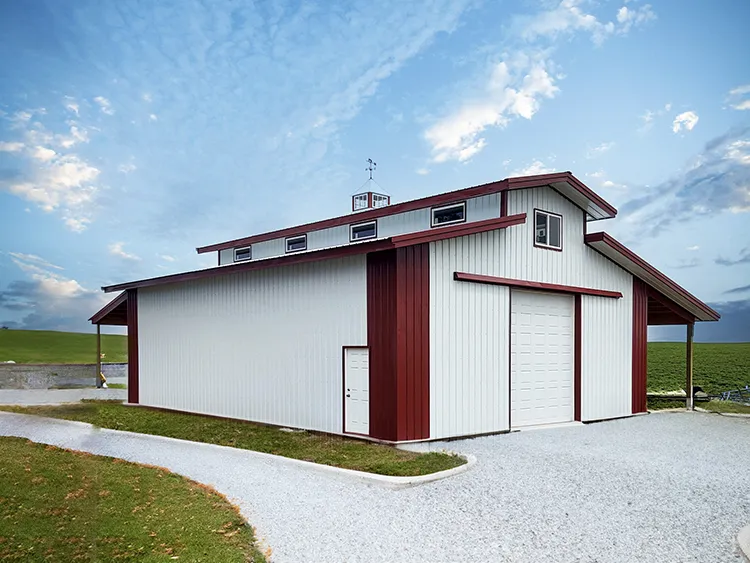
The standard passive ventilation system for post-frame buildings uses the physics of warm air rising to create continuous air movement without any fans or mechanical components. Here is how it works.
Warm air is less dense than cool air, so it rises naturally. In a building with a ridge vent at the peak of the roof and intake vents at the eaves, warm interior air rises and exits through the ridge opening. As it does, cooler outdoor air is drawn in through the eave vents to replace it. This creates a continuous convective cycle that runs all day and night as long as there is a temperature or pressure differential between inside and outside.
In summer, the hot air that builds up under the roof panels exits through the ridge vent, and cooler air from the shade of the eaves enters below. In winter, the humid interior air rises and exits, and drier cold air enters at the eaves. The system works in both directions and for both reasons you need it.
Ridge Vents
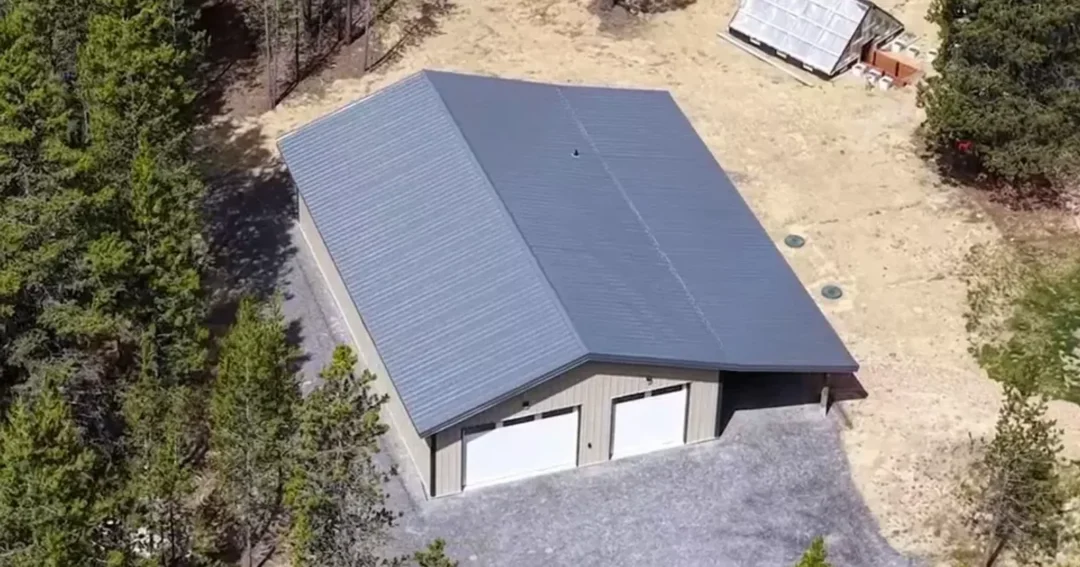
The ridge vent runs along the peak of the roof. In post-frame buildings, it is typically a continuous vent cap that replaces or is integrated into the standard ridge cap. The vent cap has openings that allow air to exit while keeping rain, snow, and insects out. The quality of this detail matters. A poorly designed or incorrectly installed ridge vent can allow water to blow in during driving rain or let nesting birds and insects into the roof cavity.
Your contractor should be using a ridge vent designed specifically for metal building applications. Generic ridge caps with afterthought holes drilled in them are not the same thing. Ask to see a spec or product example if you are uncertain what is being quoted.
Eave Vents and Soffit Vents
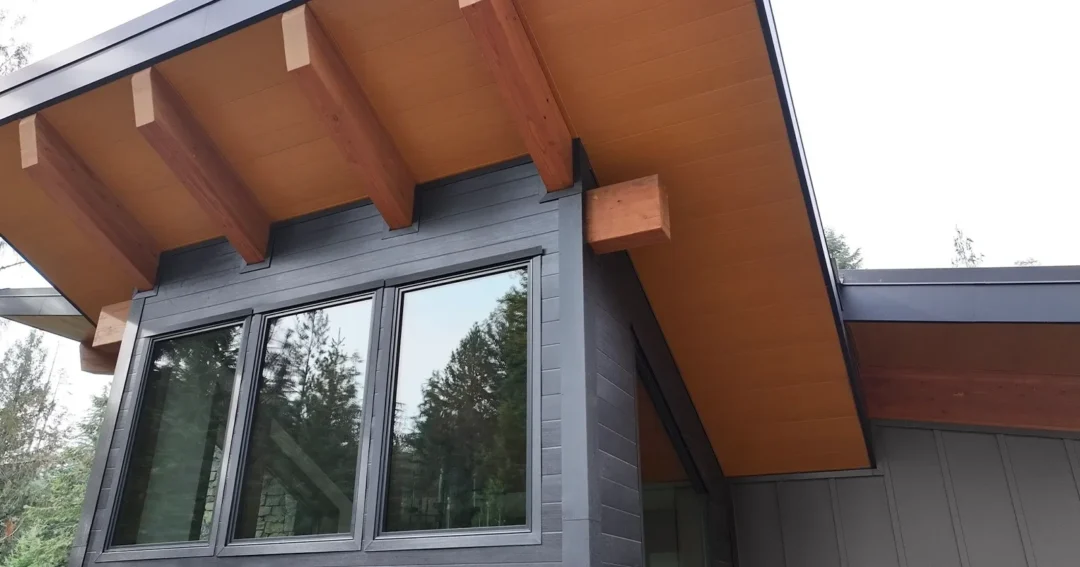
The eave vent is the intake side of the passive ventilation system. Air enters at the low point of the roof along the eave line, then travels up toward the ridge and exits. In a post-frame building with an enclosed soffit, the vent openings are built into the soffit panel. In buildings with open soffits or no soffits, the eave opening between the wall and the roof panel can serve this function if it is kept unobstructed.
The eave vent and ridge vent must be balanced. A ridge vent with no intake vents does not ventilate well because there is nowhere for replacement air to enter. An intake vent with no ridge vent has nowhere for the air to go. Your contractor should be specifying both sides of the system and ensuring the net free area of the intake and the exhaust are appropriately matched.
Ventilation Sizing: Why It Matters and How It Is Done
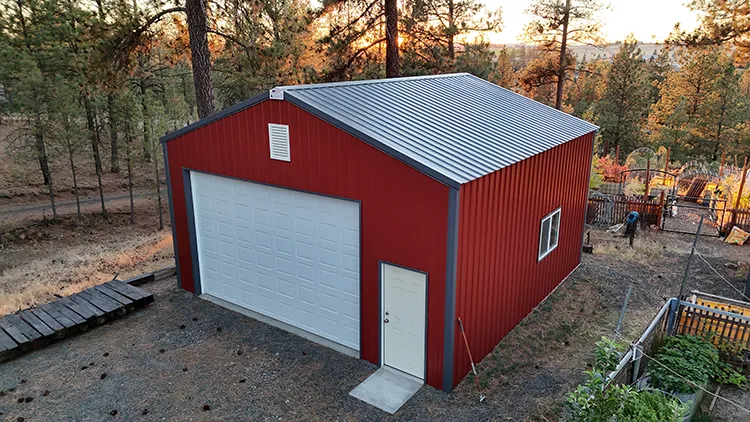
Ventilation sizing is where a lot of contractors fall short. Adding a ridge vent and some eave openings is easy. Sizing them correctly for the building’s volume and use takes a little more thought.
The general rule of thumb for passive ventilation in attic and roof spaces is one square foot of net free vent area for every 150 square feet of floor area, split roughly evenly between intake and exhaust. For a 40×60 building with 2,400 square feet of floor area, that works out to approximately 16 square feet of net free vent area, which might be 8 square feet of ridge vent opening and 8 square feet of eave openings distributed along both eaves.
For livestock buildings, that baseline often needs to be increased significantly. Animal heat and respiration produce substantial moisture and ammonia. The ventilation requirement for a building housing cattle or hogs is dramatically higher than for a dry equipment storage building of the same size. A contractor experienced in agricultural building construction will know how to size for these applications.
For heated and insulated shops or barndominium living spaces, the ventilation calculation changes because the goal is different. You are not trying to ventilate an attic cavity but to provide fresh air exchange for a conditioned space. In these applications, mechanical ventilation (fans or an HRV/ERV system) often supplements or replaces passive ventilation because you want controlled air exchange without uncontrolled heat loss.
Ventilation Options by Building Type
| Building Type | Recommended Approach | Notes |
| Dry equipment or vehicle storage, unheated | Continuous ridge vent and eave openings or soffit vents, properly sized | Passive system is sufficient. Pair with condensation-control panel backing. |
| Heated shop or workshop | Passive ridge and eave system in attic space; add powered exhaust fan or operable windows for workspace air quality | Exhaust fan critical if welding, painting, or running engines inside |
| Hay or grain storage | High ventilation rate; consider open or partially open eaves and large ridge vent opening | Moisture from hay requires aggressive air exchange. Fire risk from wet hay also addressed by ventilation. |
| Livestock building | High ventilation rate; often supplemented with sidewall openings, curtains, or powered circulation fans | Animal heat and ammonia require significantly higher air exchange than storage buildings |
| Barndominium or pole barn home | Attic ventilation via passive system; whole-house mechanical ventilation (HRV or ERV) for living space fresh air | Building code may require mechanical fresh air in occupied residential space depending on jurisdiction |
Additional Ventilation Features in Quality Builds
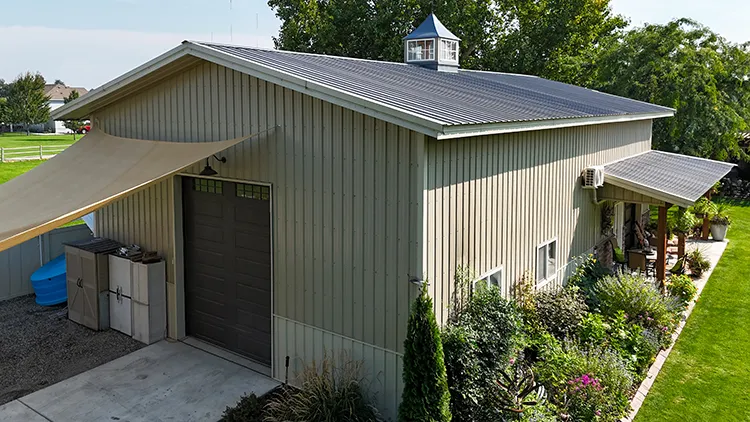
Beyond the basic ridge and eave system, there are several additional ventilation features that show up in well-built post-frame buildings. Here is what each one does and when it applies.
Ventilated Ridge Cap
This is the specific product your contractor uses to cap the ridge of the roof while allowing air to exit. A quality ventilated ridge cap is designed for metal building applications with a mesh or baffled opening that allows airflow while blocking rain intrusion. It is not the same as a standard ridge cap with a gap left at the top. Ask specifically what product is being used and confirm it is designed for ventilation rather than being a standard cap with an incidental gap.
Sidewall Vents or Louvers
In tall buildings or buildings with large volumes of air to exchange, gable-end louvers or sidewall vents supplement the ridge-and-eave system by providing additional intake or exhaust area. These are particularly common in hay storage buildings and livestock facilities. They can be fixed open or adjustable to regulate airflow seasonally.
Powered Exhaust Fans
For heated shops, spray booths, welding areas, and any space where fumes or exhaust accumulate, passive ventilation alone is not adequate. A powered exhaust fan draws air directly out of the building at a controlled rate and can be operated on demand when you are doing work that generates fumes. These fans are relatively inexpensive to add during construction and expensive to retrofit properly afterward. If you plan to do any painting, welding, or engine work inside your shop, raise this in your contractor conversation.
Turbine Vents
Turbine vents are wind-driven spinning ventilators mounted on the roof that use wind energy to draw air out of the building. They are an older and still widely used option in agricultural buildings. They provide ventilation without any mechanical or electrical components, and they work reasonably well in areas with consistent wind. Their limitation is that they rely on wind and do not provide meaningful ventilation on still days.
Cupola Ventilators
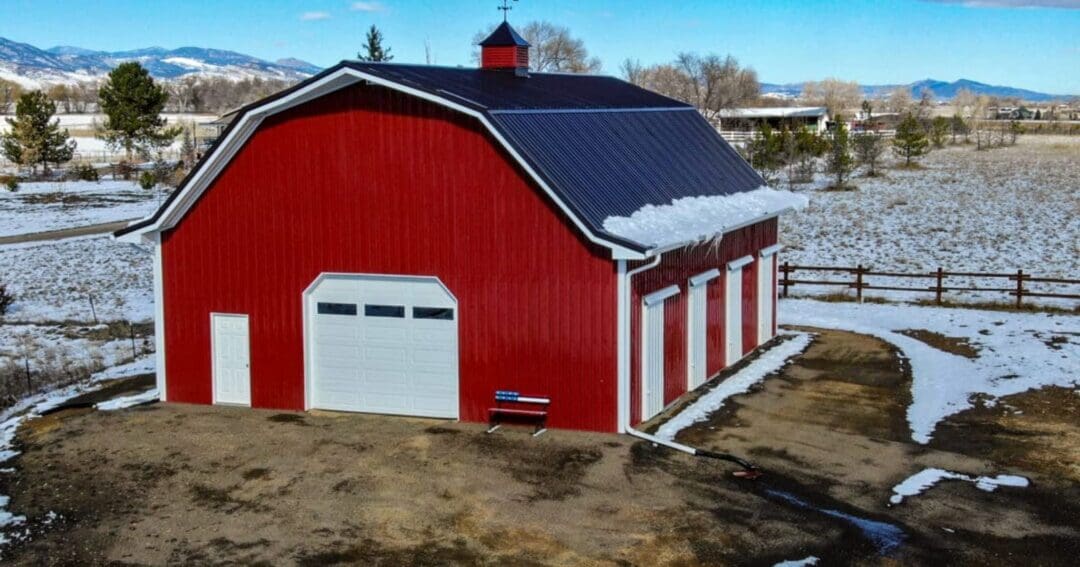
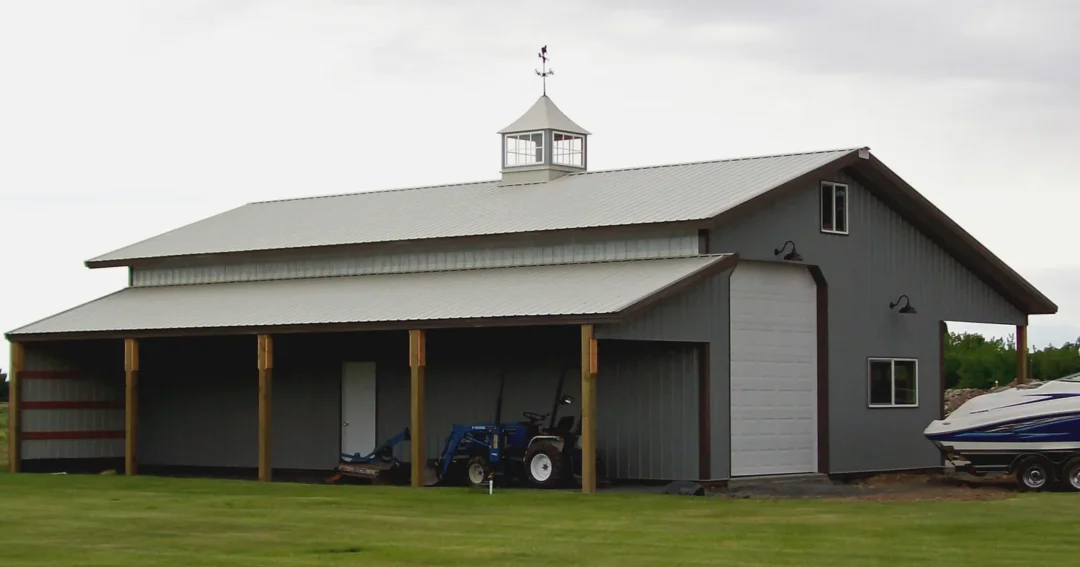
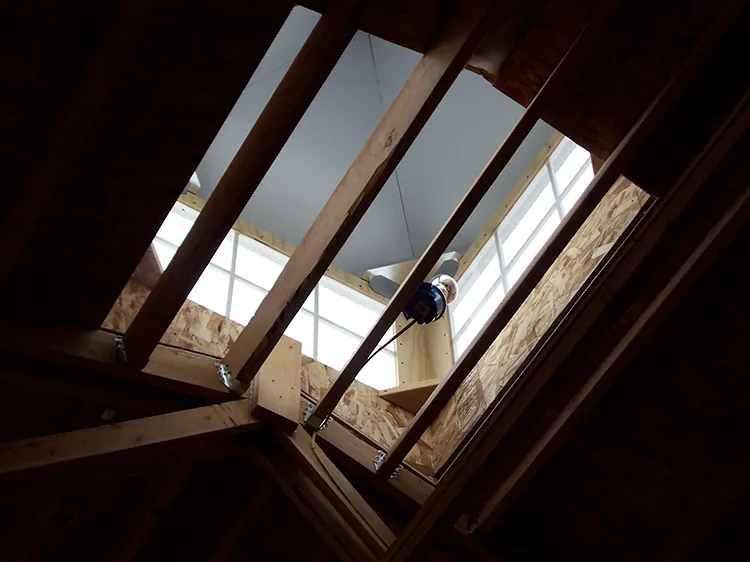
A cupola positioned at the ridge of a post-frame building serves both a decorative function and a practical one. A ventilated cupola provides additional exhaust area at the highest point of the building while also giving the building the traditional barn aesthetic that many buyers in SSA’s service area find appealing. If you are considering a cupola for appearance reasons, ask your contractor whether it can be specified with ventilation louvers to do double duty.
The Relationship Between Ventilation and Insulation
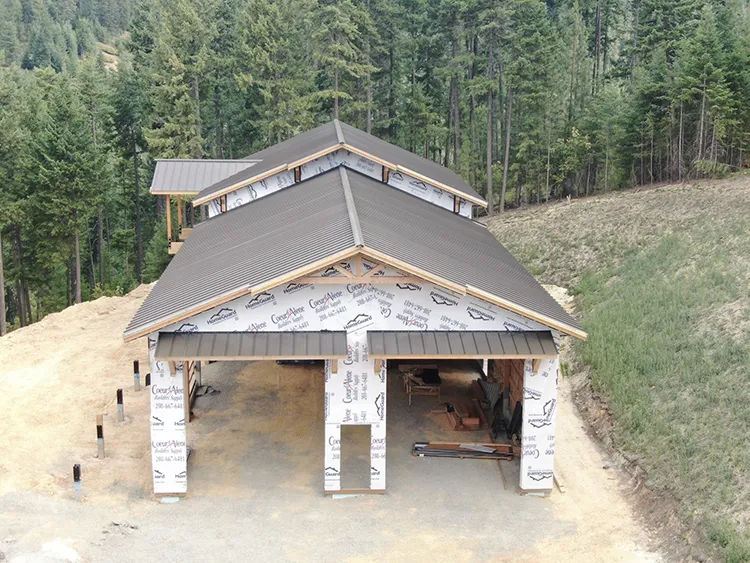
One of the more common misunderstandings about pole barn ventilation is that ventilation and insulation work against each other because insulation seals the building and ventilation opens it up. That is not quite right. They address different parts of the same moisture management system and need to be designed together.
In an uninsulated building, ventilation does most of the work of managing moisture and heat. The building breathes relatively freely, and the continuous air exchange keeps humidity and temperature under reasonable control.
In a fully insulated building, the insulation and vapor barrier create a controlled envelope, and the ventilation system manages the attic space above that envelope separately from the conditioned interior. The attic ventilation protects the structural framing and insulation from moisture buildup, while the living or working space below is handled by whatever mechanical ventilation is appropriate for that occupancy.
Where things go wrong is when a building is partially insulated or when the insulation and vapor barrier are installed incorrectly, leaving pathways for warm interior air to migrate into the wall or roof cavity where it can condense on cold surfaces. A contractor who understands building science specifies the insulation system and the ventilation system together, making sure they complement rather than undermine each other.
What to Ask Your Contractor About Ventilation
Ventilation is one of the details easiest to under-specify without the buyer noticing until problems appear. Here is what to ask during your planning conversation.
- What ridge vent product do you use, and is it designed specifically for metal building ventilation?
- How do you provide the intake side of the ventilation system? Soffit vents, open eaves, or another method?
- How do you size the ventilation for this building’s volume and intended use?
- For a livestock or hay storage building, how do you increase the ventilation rate above the basic storage building standard?
- For a heated and insulated shop or home, what do you include for mechanical ventilation?
- Does the ventilation system meet any applicable local code requirements for the building type?
- What is your approach to the relationship between insulation and ventilation? How do you make sure they work together?
Ventilation Is a Long-Term Investment in Your Building
A properly ventilated pole barn runs cooler in summer, drier in winter, and simply lasts longer than one without it. The cost difference between adequate ventilation and inadequate ventilation in the construction budget is modest. The difference in the building’s performance over 20 or 30 years is substantial.
If a contractor quote comes back noticeably lower than others and you cannot identify where the savings are coming from, ventilation is one of the first things to look at. It is easy to skip, hard to see the impact of immediately, and expensive to add properly after the fact.
Ready to Build?
Steel Structures America builds post-frame buildings across Idaho, Washington, Oregon, Colorado, and Montana with ventilation systems designed for our climate zones and for the specific use of each building. We address ventilation, condensation control, and insulation as integrated systems rather than separate line items.
If you are planning a pole barn, shop, or agricultural building and want to talk through what the right build looks like for your property, give us a call at (866) 988-0072 or reach out through our website. We are glad to walk through the details with you.