
What Is a Barndominium? The Complete Guide to Barndominium Homes
Barndominiums have gone from a niche rural curiosity to one of the most searched home types in the country, and it is not hard to see why. A barndominium gives you the wide-open space and rugged durability of a barn or metal building combined with the full comforts of a custom home, all on your own land and often at a lower cost per square foot than traditional stick-built construction.
Whether you are dreaming of a modest home with a two-car garage on a few acres or a massive shop-home with 4,000 square feet of living space and room for all your equipment, a barndominium can be designed to fit your life. This guide covers everything you need to know, including what a barndominium actually is, how much one costs, what floor plans work best, what builders to look for, and how the whole process comes together from raw land to finished home.
What Is a Barndominium?
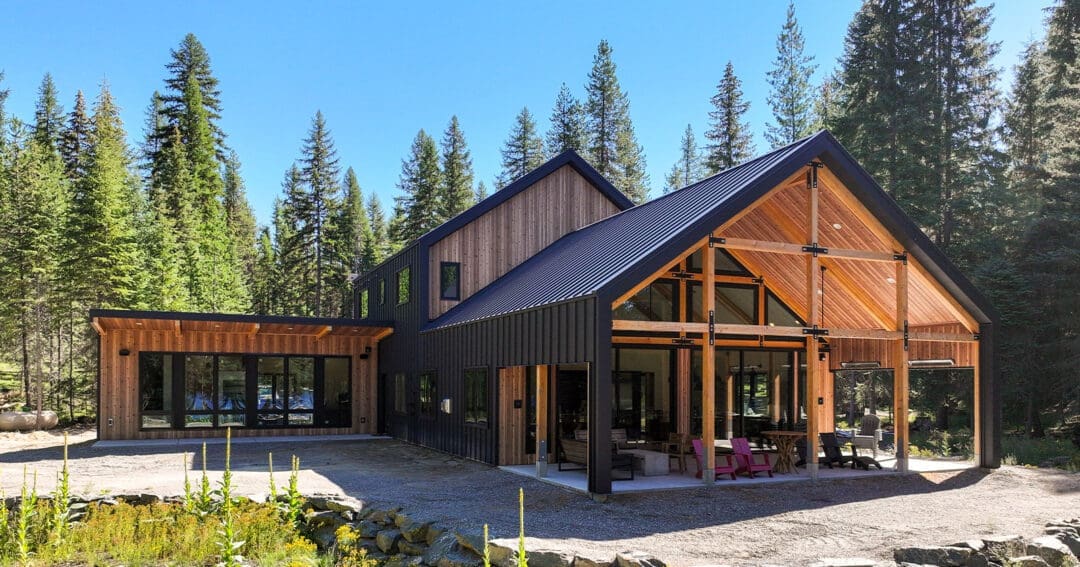
A barndominium is a home built using a metal or post-frame structure as its primary shell, with a fully finished living space inside. The name is a mashup of barn and condominium, though modern barndominiums look nothing like either one. They typically feature high ceilings, wide-open floor plans, large garage or shop areas integrated directly into the building, and a distinctive exterior aesthetic that mixes industrial materials with residential design details. We have a guide on layout and floor plan ideas for barndominiums here.
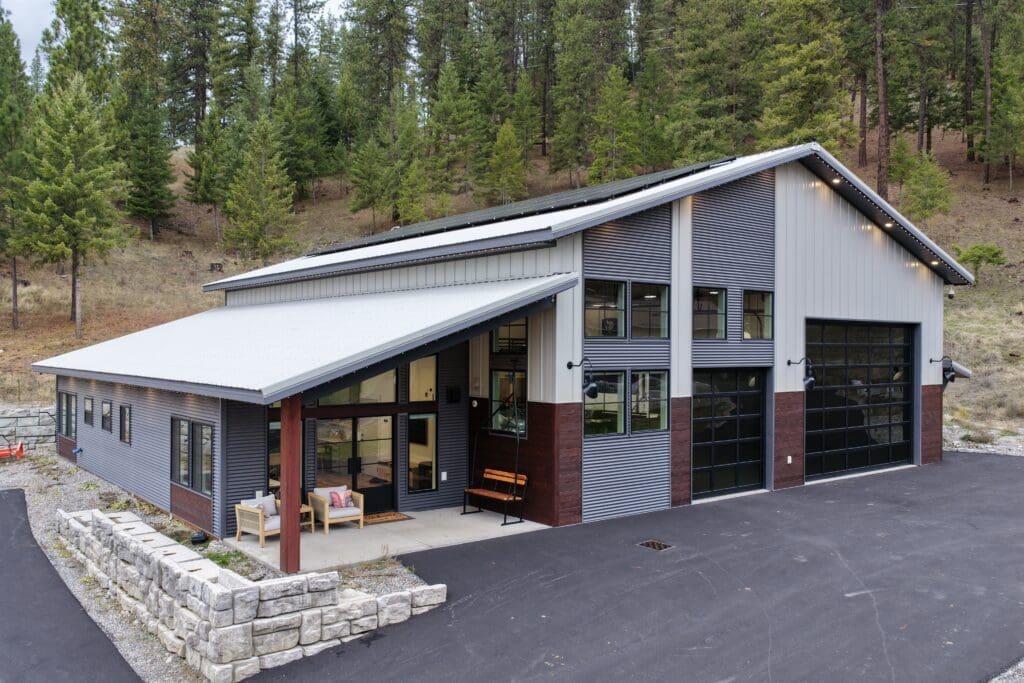
The defining characteristic is the structural system. Instead of a conventional wood-framed house, a barndominium uses either a steel rigid-frame system (similar to a commercial metal building) or a post-frame system (similar to a pole barn). Both approaches create large, column-free interior spans that are difficult or expensive to achieve with traditional framing, which is a big part of the appeal. For a complete comparison of barndominium’s vs pole barns, view this article.
Inside, a barndominium can look as polished as any custom home. Open floor plans with exposed steel beams, concrete or hardwood floors, shiplap or board-and-batten interior walls, custom kitchens, spa bathrooms, and loft areas are all common. The exterior typically features metal roofing and siding, though many builders incorporate board and batten siding, stone accents, large windows, and covered porches to create a modern farmhouse or rustic-industrial look.
Why Are Barndominiums So Popular?
The growth in barndominium interest over the past decade comes down to a few things that line up well with where a lot of buyers find themselves today.
More Space Per Dollar
Barndominiums typically cost less per square foot than comparable stick-built custom homes, especially when you factor in the shop or garage space. A 2,400-square-foot barndominium with a three-car garage might cost significantly less than a 2,400-square-foot traditional home with the same attached garage, because the structural system that makes a barndominium work also creates that large-span space without the added cost of engineered beams or additional framing.
Large Integrated Shop or Garage Space
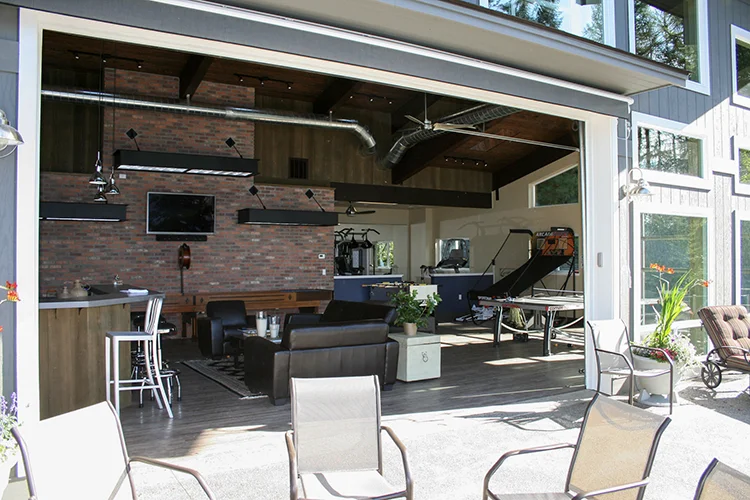
This is one of the biggest draws. A barndominium makes it easy to integrate serious shop or garage space directly into the home footprint. You are not adding a detached building or a cramped attached garage. The shop is part of the home, with high ceilings, wide doors, and a floor plan that flows naturally between the living area and the work area.
Durability and Low Maintenance
Metal roofing and siding last far longer than asphalt shingles and wood siding. The structural system is not susceptible to termites, rot, or the kind of settling and warping that plagues conventionally framed homes over decades. For buyers who want a home that holds up with minimal ongoing maintenance, that is a real advantage.
Rural Land Ownership
Barndominiums are especially well matched to rural and semi-rural properties. If you are buying acreage and building a home, a barndominium lets you accomplish more on that land. You get a strong, durable home that fits the working landscape around it, rather than a suburban-style house that looks out of place on ten acres.
Design Freedom
Because the structure does not rely on load-bearing interior walls, you have enormous flexibility in how you lay out the living space. Open floor plans, unusual room configurations, lofts, mezzanines, and creative spatial arrangements that would be difficult or expensive in conventional framing are much more achievable in a barndominium.
How Much Does a Barndominium Cost?
Barndominium cost is one of the most common questions buyers bring to their first conversation with a builder, and the honest answer is that it varies quite a bit depending on size, finish level, location, and what is included. That said, there are some useful ranges to anchor your planning.
| Finish Level | Estimated Cost Per Sq Ft (2024-2025) |
| Basic shell / kit only (buyer finishes interior) | $35 – $65 per sq ft |
| Builder-finished, standard finishes | $100 – $150 per sq ft |
| Builder-finished, mid-range finishes | $150 – $200 per sq ft |
| Custom, high-end finishes | $200 – $275+ per sq ft |
These ranges reflect the finished structure and do not always include site preparation, foundation work, utilities, permits, or land. For a complete picture of what it costs to build a barndominium from the ground up, it helps to break the project into phases and price each one separately. For a deeper look at cost breakdowns, read our full guide to barndominium cost.
A 2,000-square-foot barndominium with mid-range finishes, a two-car garage bay, and a covered porch might run anywhere from $300,000 to $450,000 depending on your state, your builder, and what your site requires. A larger, more custom build with a dedicated shop, premium interior finishes, and a complex floor plan can push well past $600,000.
One important note: do not compare barndominium cost-per-square-foot to a standard home without accounting for what is included in that square footage. A 3,000-square-foot barndominium that includes 800 square feet of shop space is giving you a very different value proposition than a 3,000-square-foot house with a standard two-car garage.
Want to get deeper into this topic? We have a full guide breaking down barndominium costs here.
Barndominium Floor Plans: What Works and What to Think About
Barndominium floor plans are one of the most fun parts of the planning process because the structural system gives you a lot of options that conventional home framing does not. Without load-bearing interior walls, you can carve up the interior in ways that actually match how you want to live.
Common Barndominium Layouts
| Floor Plan Type | Best For |
| Single-story open plan with attached garage | Smaller builds, accessibility-focused buyers, efficient use of square footage |
| Single-story with integrated shop bay | Buyers who want serious garage or workshop space tied into the home |
| Two-story with loft | Buyers who want more sleeping space without a large footprint |
| Split living/shop layout | Buyers who want clear separation between residential and work areas |
| Wraparound porch layout | Rural lifestyle buyers, properties with strong views or outdoor living emphasis |
| Two-bedroom starter | Budget-focused builds, hunting cabins, rental properties |
| Three-to-four bedroom family layout | Full-time primary residence with multiple bedrooms and bathrooms |
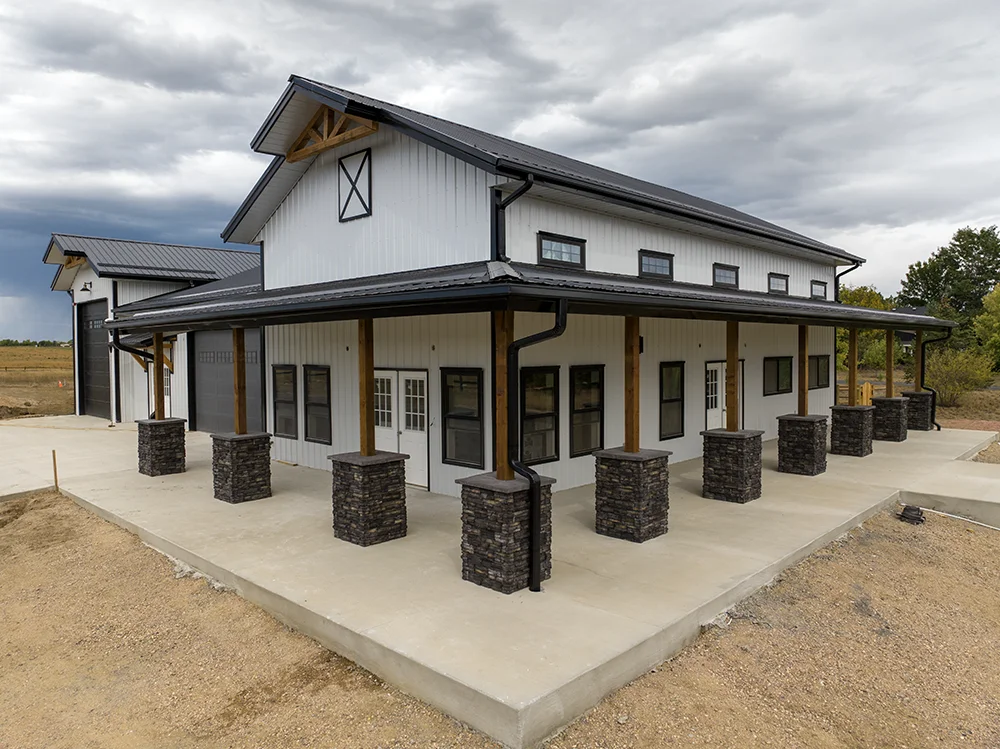
The most popular barndominium floor plans tend to share a few features. Large kitchen and dining areas open to the main living space. Master bedroom on the main floor, often with a large walk-in closet and ensuite bathroom. A mudroom or utility entry connected to the garage bay. And some version of a covered outdoor living area, whether that is a full wraparound porch or a rear patio.
Barndominiums with a Shop: The Dream Combo
One of the things that makes barndominiums especially popular with rural landowners, contractors, farmers, and equipment-heavy hobbyists is how naturally the structure accommodates a large shop bay integrated with the home. Rather than building a separate shop building on your property, the shop becomes part of the home footprint.
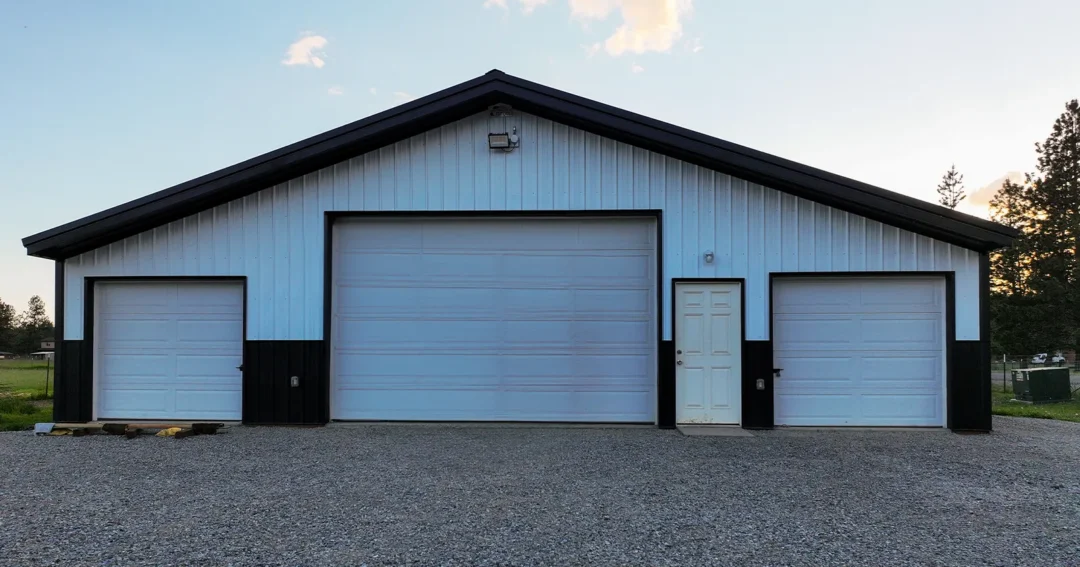
A common setup might include 1,800 to 2,400 square feet of finished living space on one side of the structure, with a separate 1,200 to 2,000-square-foot shop or garage bay on the other side, all under the same roof with shared entry points. The high ceilings that come standard with most barndominium structures mean the garage bay can accommodate a lift, a large RV, a boat, or full-height shelving without any modifications.
Key things to plan for when designing a barndominium with a shop:
- Overhead door height and width. Taller doors (14-foot or 16-foot clearance) cost more but are much more useful if you ever need to store an RV, agricultural equipment, or large trailers.
- Floor load ratings. Shop floors that will see heavy equipment need to be designed and poured accordingly, typically with a thicker slab and more steel.
- Separation between shop and living space. Fire-rated walls between the shop bay and the living area are often required by code, and they also just make sense for noise and climate control.
- Electrical service. A shop that will run welders, compressors, or other high-draw equipment needs dedicated electrical service planned in advance. Retrofitting is expensive.
- HVAC zoning. Most buyers heat and cool the living area and treat the shop separately, whether with a dedicated heater, a mini-split, or just good insulation on the dividing wall.
Barndominium Design Ideas
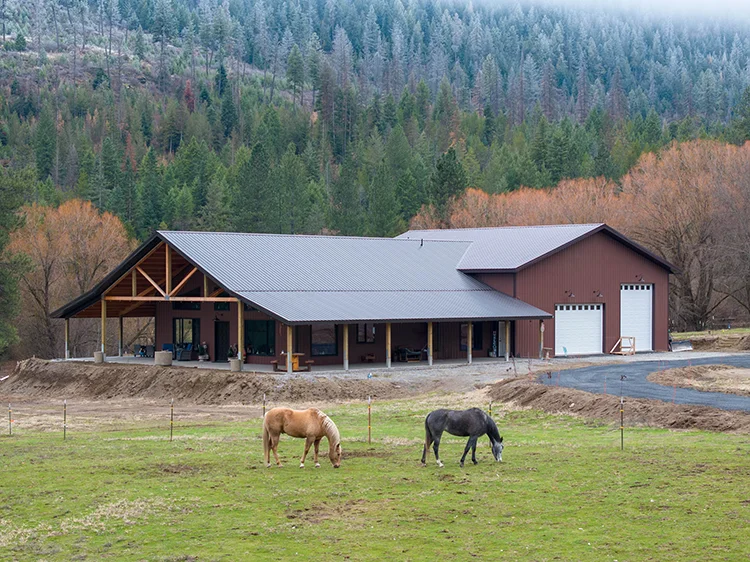
The design range for barndominiums is surprisingly wide. They can look rustic and agricultural, clean and modern, or somewhere in the contemporary farmhouse middle that has been popular for the past several years. Here are some of the most common design directions buyers explore.
Modern Farmhouse
Black or dark charcoal metal exterior with white or cream board and batten accents. Large black-framed windows. White oak or light wood interior finishes. Exposed steel beams in the main living area. A covered front porch with simple wood columns. This is probably the most popular design direction right now and photographs beautifully.
Industrial
Raw or exposed steel interior framing left visible. Polished concrete floors. Open ductwork and high-bay lighting. Minimal interior walls. Dark metal accents throughout. This direction leans into the building’s structural bones rather than concealing them.
Rustic
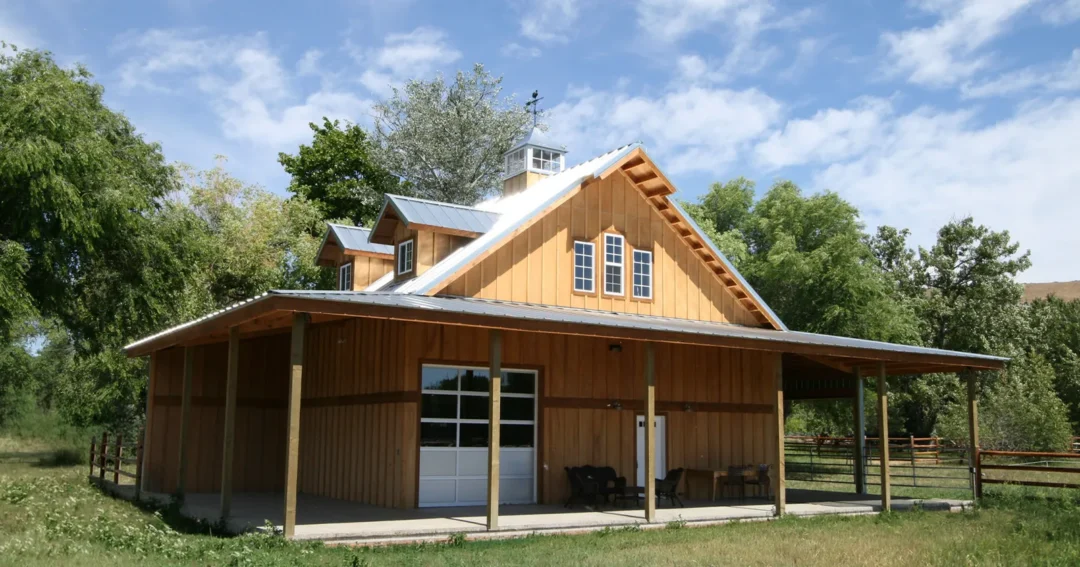
Weathered wood accents, stone chimneys, metal roofing in a weathered finish, warm-toned interior walls. Feels like a classic ranch home built with modern materials. Often paired with wraparound porches and a more traditional room layout.
Transitional / Suburban
More conventional exterior, sometimes with traditional rooflines, brick or stone accents, and siding mixed with metal panels. Interior looks much like a standard custom home. This approach works well for buyers in suburban-adjacent or HOA-governed areas where a full metal exterior might draw pushback.
Exterior Color Combinations That Work
Some of the most popular exterior color pairings for barndominiums include charcoal gray siding with white trim, all-black with matte metal roof, navy blue with cream trim and cedar accents, and deep green with stone wainscoting. The combination of metal roofing, metal or board-and-batten siding, and a contrasting trim color gives you a lot of room to create something that feels distinctive.
How Barndominiums Are Built: Post-Frame vs. Steel Frame
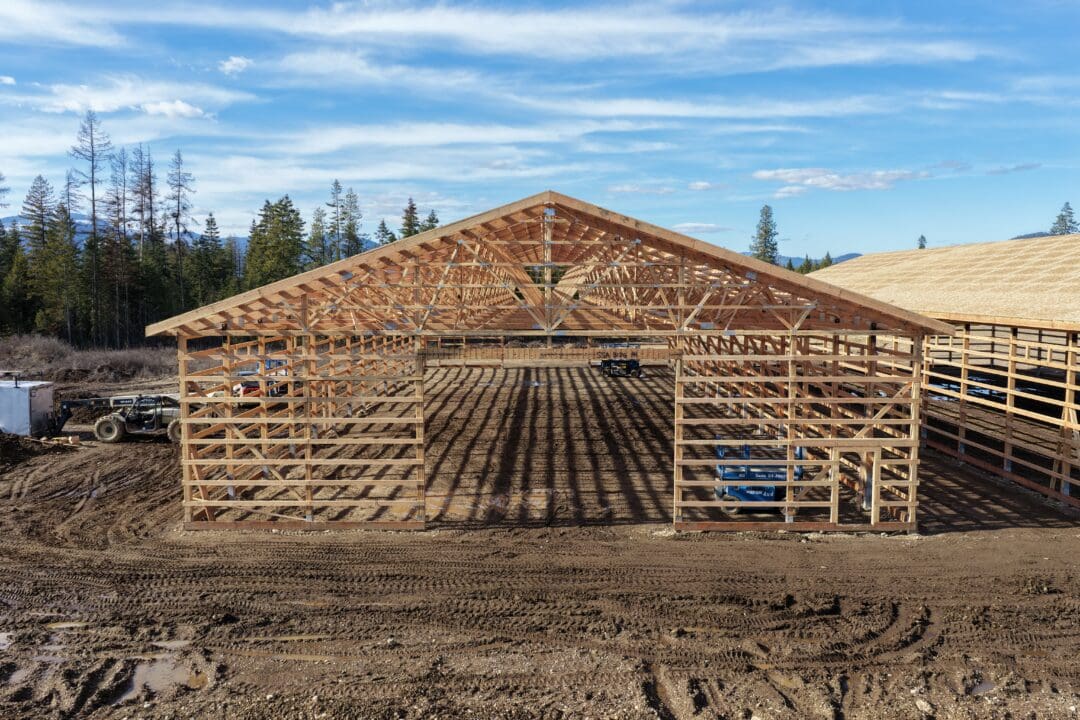
Most barndominiums are built using one of two structural systems, and the choice affects cost, appearance, and what your local code allows.
Post-Frame Barndominiums
Post-frame construction (also called pole barn construction) uses large wood columns set into the ground or onto concrete piers, with horizontal girts and purlins spanning between them to create the wall and roof system. It is a well-established building method in agricultural construction, and it adapts well to residential use when properly designed and insulated.
Post-frame barndominiums are often less expensive than steel-frame barndominiums at similar sizes. They are also more familiar to local contractors in rural areas, which can make permitting and construction easier in some markets. The main consideration is the foundation system. Properly handled, a post-frame barndominium can last as long as any other well-built home. A good foundation approach here, like a precast concrete column system, eliminates the wood-to-soil contact that can be a long-term concern with traditional buried posts.
Steel-Frame Barndominiums
Steel-frame barndominiums use a rigid steel frame system similar to what you would find in a commercial metal building, with steel columns and rafters welded or bolted together to create the structural skeleton. Metal wall panels and roofing panels attach to this frame.
Steel-frame barndominiums tend to have wider clear-span capabilities, which is useful for very large shop bays. They also appeal to buyers who want the specific look of a metal building exterior with its clean, contemporary lines. On the cost side, the steel frame itself is often more expensive than post-frame construction, though that gap narrows as building size increases.
Which Should You Choose?
For most buyers building a primary residence or a shop-home on rural property, post-frame construction is a very competitive and practical option. For buyers building a large commercial-scale structure or in a market where steel-frame construction is more common among local builders, steel-frame may be a better fit. The right answer depends on your location, your builder, your budget, and your specific design goals.
Barndominiums vs. Other Building Types: A Quick Comparison
| Building Type | Key Differences from a Barndominium |
| Stick-built custom home | Conventional wood framing, typically more expensive per sq ft for large clear-span areas, shorter lifespan for roofing and siding, more design constraints for large open interiors |
| Pole barn home | Often used interchangeably with barndominium, though some use the term to describe a post-frame residential build specifically; a barndominium can be either post-frame or steel-frame |
| Shouse (shop house) | Similar concept, typically emphasizes the shop portion more than the living space; often used to describe a metal building with a smaller living quarters added |
| Modular / manufactured home | Factory-built sections, lower upfront cost, less customization, no integrated shop space, shorter structural lifespan |
| Traditional log home | Distinctive aesthetic, very high cost per sq ft, significant maintenance requirements, no large clear-span option |
Barndominium Builders: What to Look For
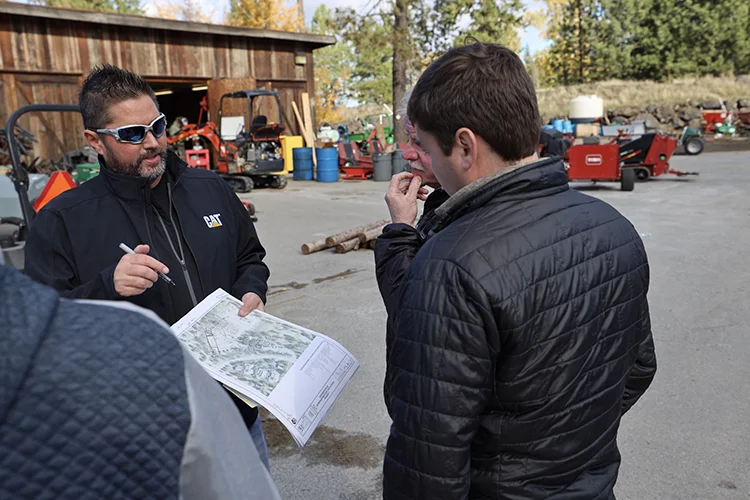
Finding the right builder is one of the most important decisions in the whole process, and it is worth taking your time here. Barndominium construction is a specialized skill set that sits between traditional home building and agricultural or commercial construction. Not every contractor handles it well.
Especially when it comes to conversions. We explore this further in out article on pole barn to barndominium conversions.
Key Things to Look For in a Barndominium Builder
- Proven experience with post-frame or steel-frame residential construction specifically. A builder who does great pole barns for storage is not necessarily equipped to deliver a high-quality residential finish.
- A portfolio of completed barndominium projects. Ask to see finished photos and, if possible, talk to past clients.
- Familiarity with local building codes and permit requirements for residential post-frame or metal building construction. Requirements vary significantly by county and state.
- Clear documentation of what is and is not included in their quote. Material costs, labor, site prep, foundation, utilities rough-in, and finish work should all be clearly defined.
- Financial stability and a track record of completing projects on budget and on time. Check references and online reviews.
- Communication style that works for you. A custom home project is a long relationship. You want a builder who keeps you informed and responds to questions promptly.
Barndominium Builders Near Me: How to Find Local Options
Because barndominium construction requires specific expertise, your best starting points are builders who specialize in post-frame or metal building construction in your region. Many pole barn builders have expanded into residential barndominium work as demand has grown. Steel building contractors who have experience with residential projects are another strong option.
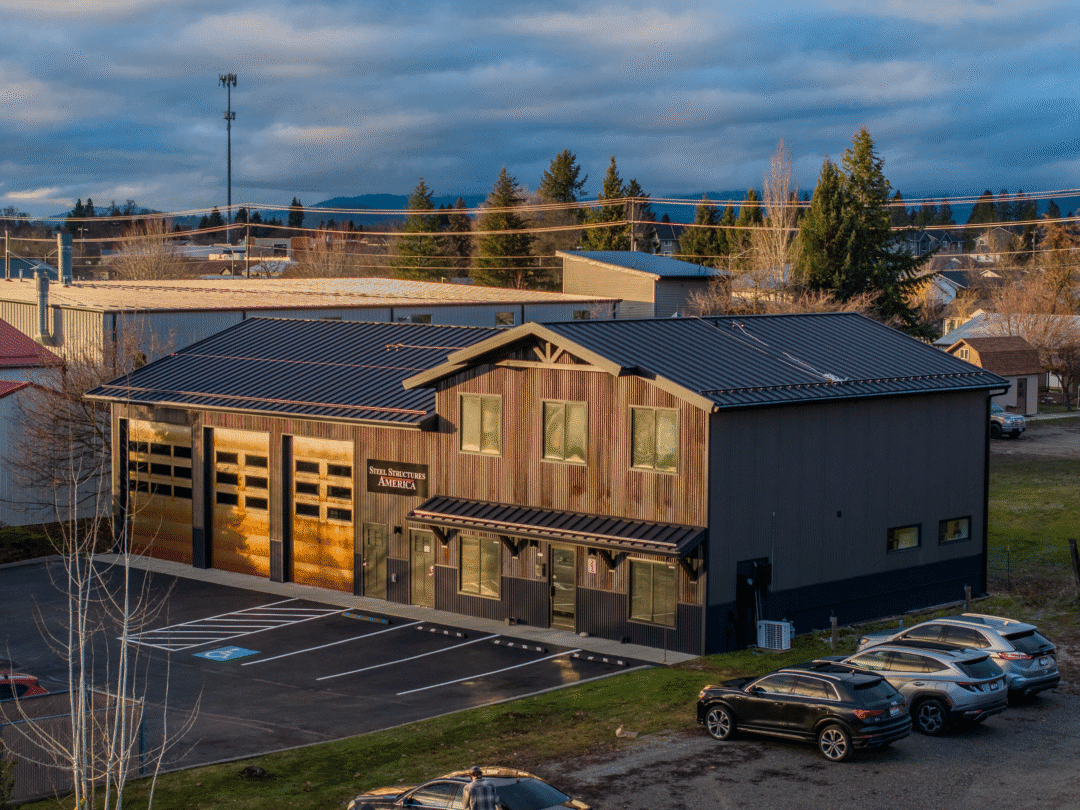
At Steel Structures America, we build custom barndominiums across Idaho, Washington, Oregon, Colorado, Montana, and surrounding states. We bring experience in both post-frame and metal building construction to residential projects, which means we understand the structural requirements, the residential finish details, and the site-specific challenges that come with building on rural land.
The Barndominium Building Process: What to Expect
Understanding how the process unfolds helps you plan better and avoids surprises. Here is a general overview of what building a barndominium looks like from start to finish.
1. Site Evaluation and Planning
Before any design work starts, you need to understand what your site requires. This includes soil conditions, drainage, access, utility availability, and setback requirements. Site preparation can range from minimal grading to significant earthwork depending on the property, and that cost needs to be part of your planning from the beginning.
2. Design and Floor Plan
Work with your builder to develop a floor plan that fits your lifestyle and your budget. Be realistic about what you need and prioritize early. It is much cheaper to move a wall on paper than to change it during construction.
3. Permits and Engineering
Residential barndominiums require building permits in most jurisdictions, and the structural system needs to be engineered for your location’s snow loads, wind loads, and seismic conditions. Your builder handles most of this, but you will need to be involved in decisions about what the building needs to meet code.
4. Foundation and Site Prep
Whether you are using buried posts, a concrete perimeter foundation, or a full slab, the foundation work typically happens after the site is cleared and graded. A full concrete floor slab is standard for most barndominium builds and represents a significant portion of the total cost.
5. Framing and Exterior Shell
The structural frame goes up relatively quickly once the foundation is in place. For post-frame construction, columns are set first, then the wall and roof framing follows. For steel-frame, the rigid frame sections are erected and the metal panels are attached. The exterior shell is usually weather-tight within a few weeks of framing starting.
6. Rough-In Work
Electrical, plumbing, and mechanical rough-in happens once the building is enclosed. This is also when insulation is typically installed. Getting this phase right is critical because changes after drywall are expensive.
7. Interior Finish
Interior finish work includes framing interior walls, installing drywall or interior wall panels, painting, flooring, cabinetry, fixtures, and trim. This is often where the project timeline stretches, especially on custom builds with lots of design detail.
8. Exterior Finish
Porches, exterior doors and windows, trim details, and any stone or siding accents are completed here, along with the driveway, any retaining walls, and landscaping.
Don’t forget to check out our pole barn home buyers guide for other considerations and expectations.
And after that, you can prepare our barndominium planning checklist.
Barndominium Financing: How Do You Pay for One?
Financing a barndominium works differently than financing a conventional home, and it is worth understanding those differences before you start planning around a specific budget.
The primary challenge is that many conventional mortgage lenders are not set up to handle post-frame or metal building residential construction. Some lenders do not know how to appraise a barndominium, others have specific restrictions on non-traditional construction, and some rural properties fall outside the geographic limits of conventional loan programs.
That said, there are good options available. Construction-to-permanent loans work well for barndominium builds and allow you to finance both construction and the permanent mortgage in one loan. USDA rural development loans are available for qualifying rural properties and buyers. Portfolio lenders and local community banks often have more flexibility than large national lenders. Agricultural lenders like Farm Credit sometimes offer competitive financing for rural property and farm-adjacent residential construction.
Barndominium Pictures: What Do They Look Like?
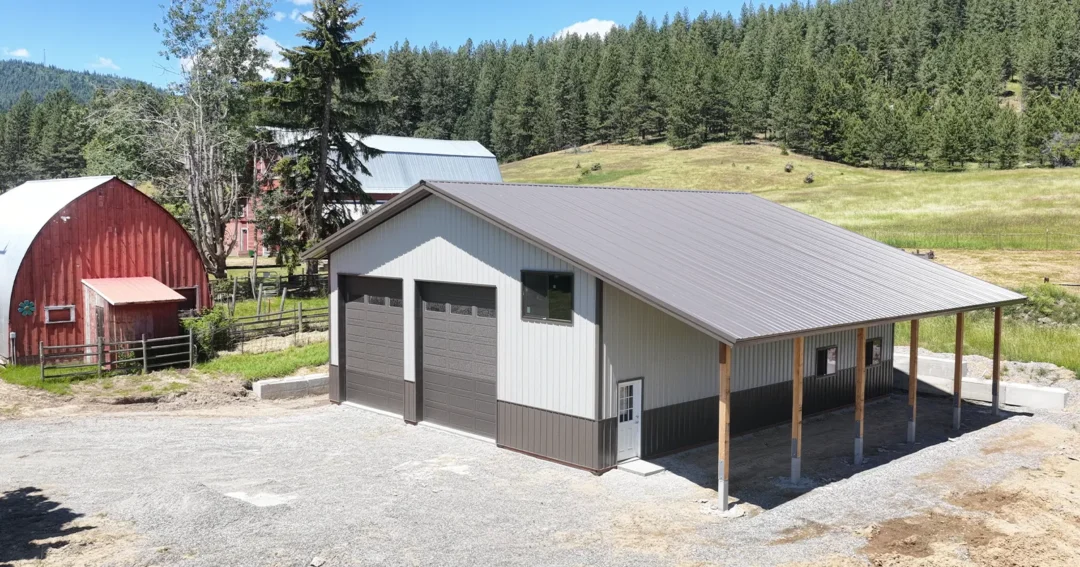
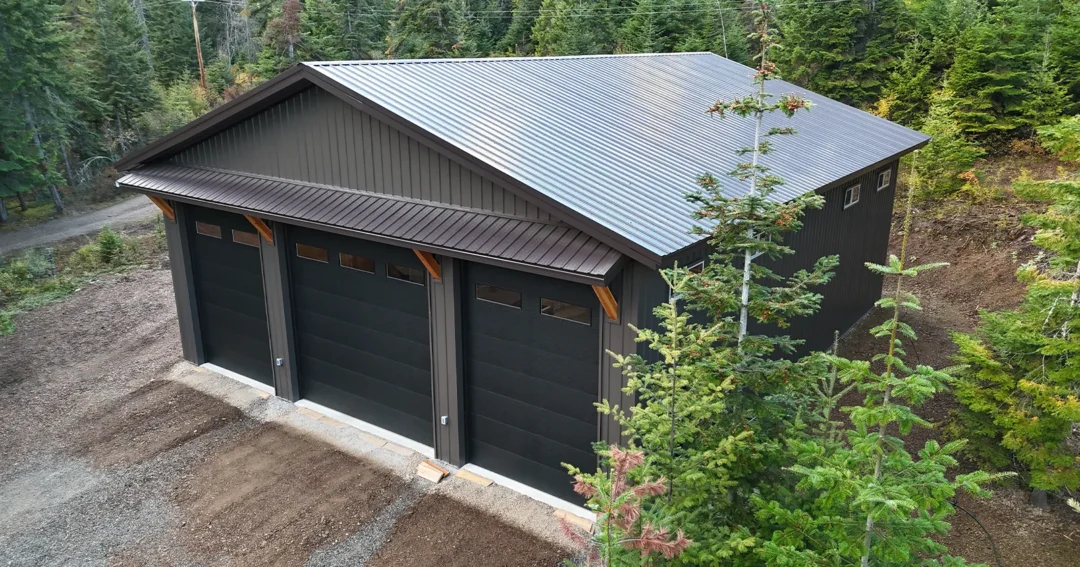
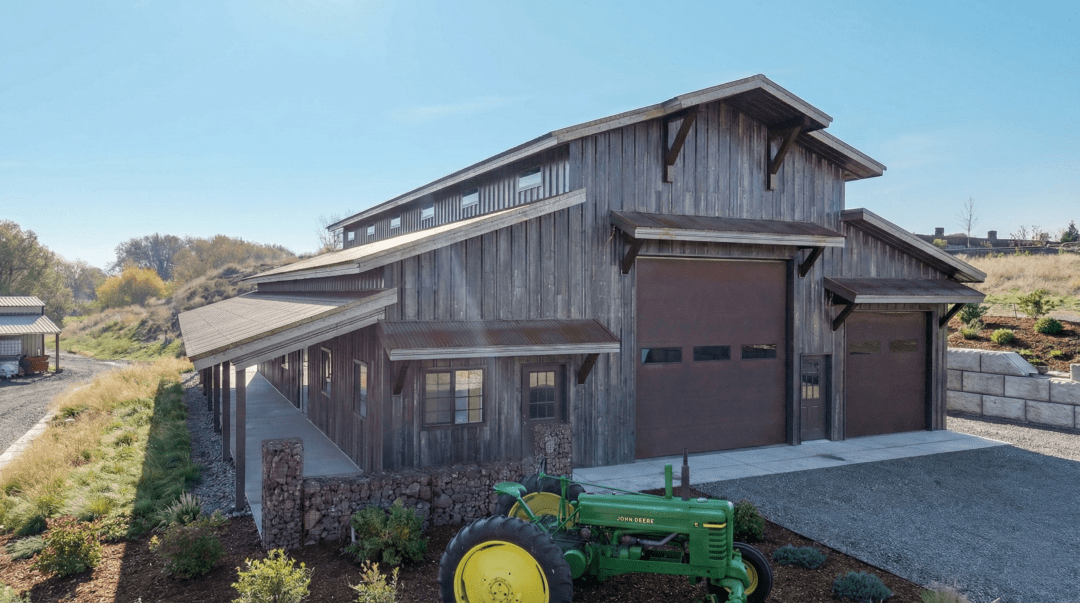
If you have not spent much time browsing barndominium design, you might be surprised by how wide the range is. At the simple end, a barndominium might look like a clean metal agricultural building with a few windows and a residential entry door. At the high end, it might be indistinguishable from a luxury custom home except for the metal roofing and the oversized garage doors.
The most popular visual elements in current barndominium design include large black-framed windows and doors, metal roofing in standing seam or corrugated styles, board and batten siding mixed with metal panels, wraparound or covered front porches, and two-tone exterior color combinations. Interiors often feature open-concept layouts, exposed structural elements, high ceilings, large kitchen islands, and a blend of industrial and warm materials.
Steel Structures America maintains a project gallery showcasing completed barndominium builds across our service area. It is one of the best ways to get a feel for what is achievable in your region.
Frequently Asked Questions About Barndominiums
How long does it take to build a barndominium?
Timeline varies widely depending on size, complexity, and how busy your builder is. A smaller, straightforward build might be complete in four to six months from breaking ground. A large custom barndominium with complex finishes and significant site work can take twelve months or more. The permitting and design phase before construction starts adds additional time.
Are barndominiums a good investment?
Barndominiums can hold their value well, especially in rural markets where large-format homes with integrated shop space are in demand. The challenge is finding comparable sales for appraisal purposes, since barndominiums are less common than conventional homes in most markets. In areas where they are more established as a building type, they tend to appraise and resell well. In markets where they are rare, appraisal can be more challenging.
Do barndominiums require special insurance?
Standard homeowner’s insurance carriers handle barndominiums, though you may need to shop around. Some insurers are more familiar with metal building construction than others. Make sure your policy covers both the residential living area and any shop or storage space in the building, and that your coverage reflects actual replacement cost rather than just market value.
Can you build a barndominium anywhere?
Zoning and building codes vary significantly by location. Some rural counties are very permissive about barndominium construction. Others have restrictions on metal exterior buildings in certain zones, or require specific construction standards for residential use. Always check local requirements before purchasing land for a barndominium project.
What size barndominium should I build?
This depends on how you plan to use the building. A couple building a primary residence with a two-car garage might be very comfortable in 1,800 to 2,200 square feet total. A family of four who wants a shop, a home office, and multiple bedrooms might target 3,000 to 4,000 square feet. Our barndominium floor plans guide walks through common size configurations and what fits in each one.
Can you get a mortgage on a barndominium?
Yes, but it takes more research than a conventional home loan. Not all lenders finance post-frame or metal building residential construction. Construction-to-permanent loans, USDA loans, local portfolio lenders, and agricultural lenders are typically the most accessible options. Your builder should have experience working with buyers on financing and can point you toward lenders who have successfully closed on similar projects in your area.
Ready to Build a Barndominium? Here Is How to Get Started
The best first step is a conversation with an experienced builder who works in your area and has a real track record with barndominium construction. Bring your must-haves, your budget range, and your site information. A good builder will tell you honestly what is achievable in your market and help you figure out where to put your money for the best outcome.
Steel Structures America works with buyers across Idaho, Washington, Oregon, Colorado, Montana, and the surrounding region to design and build custom barndominiums that fit their land, their lifestyle, and their budget. We bring experience with both post-frame and metal building construction to every project, and we know how to navigate the permitting, engineering, and site challenges that come with building on rural land.
Call us at (800) 833-9997 or visit steelstructuresamerica.com/quote-request to start a conversation about your project.