
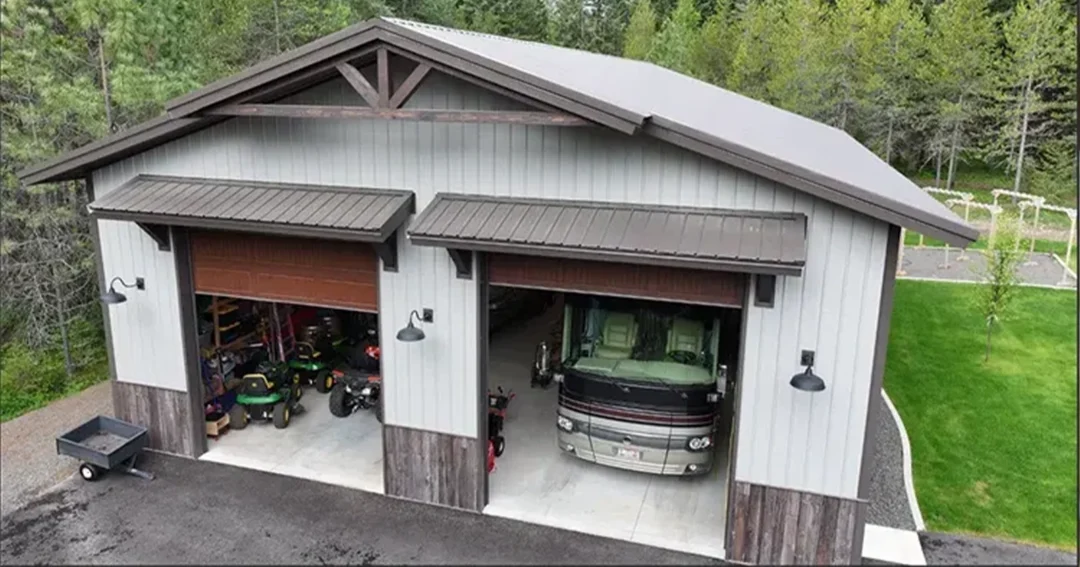
RV Storage Buildings: Sizes, Designs, and What to Expect
An RV storage building is one of the most straightforward investments a rural property owner can make. Your RV, boat, or toy hauler is worth tens of thousands of dollars, and leaving it parked outside year-round in Idaho, Washington, Oregon, Colorado, or Montana subjects it to UV damage, hail, heavy snow loads, moisture intrusion, and rodents. A purpose-built covered RV storage structure protects that investment, keeps your insurance costs lower, and makes your rig ready to roll the moment you want it.
Post-frame construction is by far the most popular and practical method for building RV storage. The open, column-free interiors, fast build times, and metal exterior systems are a natural fit. Here is what you need to know before you start planning.
How Big Does an RV Storage Building Need to Be?

The single biggest planning mistake RV owners make is underestimating how much space they actually need. RVs are larger than most people remember when they are parked somewhere else, and you need clearance on all sides to move around the rig comfortably, open slide-outs, and work on the vehicle.
Start with your RV’s actual dimensions, not a general estimate. Common RV sizes by class:
| RV Type | Typical Length | Typical Height | Recommended Door Width | Recommended Door Height |
| Class A Motorhome | 30 to 45 ft | 12 to 13.5 ft | 14 to 16 ft | 14 to 16 ft |
| Class B / C Motorhome | 20 to 30 ft | 10 to 12 ft | 12 to 14 ft | 12 to 14 ft |
| Fifth Wheel | 24 to 40 ft | 12 to 13.5 ft | 14 to 16 ft | 14 to 16 ft |
| Travel Trailer | 15 to 35 ft | 10 to 12 ft | 12 to 14 ft | 12 to 14 ft |
| Toy Hauler | 24 to 44 ft | 12 to 13.5 ft | 14 to 16 ft | 14 to 16 ft |
| Boat on Trailer | 18 to 35 ft | 8 to 12 ft | 12 to 14 ft | 12 to 14 ft |
Add at least 4 feet to your RV’s length to determine minimum building depth, and add 4 to 6 feet to the width for comfortable access. A Class A motorhome that is 40 feet long and 13 feet tall needs a building that is at least 44 to 50 feet deep with a 14 to 16-foot overhead door.
Common RV Storage Building Sizes

Most RV storage buildings fall into a few standard footprints depending on what you are storing and whether you want extra space for shop work, additional vehicles, or storage:
| Building Size | Best For | Notes |
| 14×40 or 14×50 | Single travel trailer or small boat | Minimum footprint. Tight but functional for a smaller rig. |
| 16×50 | Single Class B/C or mid-size fifth wheel | Good single-rig option with a bit of room to work. |
| 20×50 or 20×60 | Single large Class A or fifth wheel | Comfortable for most full-size rigs. Room to walk all the way around. |
| 30×50 or 30×60 | One large RV plus a boat, trailer, or UTVs | Most popular size for owners with multiple toys. |
| 40×60 or 40×80 | Multiple rigs or combined RV and shop space | Good option if you want RV storage plus a workshop or extra garage bays. |
| 50×100+ | Multiple rigs, commercial storage, or car collection | For serious collectors or shared family use. |
If you are on the fence between two sizes, go bigger. Clearance around the rig for maintenance, slide-outs, and awning deployment is something you will use every time. Cramped storage becomes frustrating quickly.
Features Worth Including in Your RV Storage Building
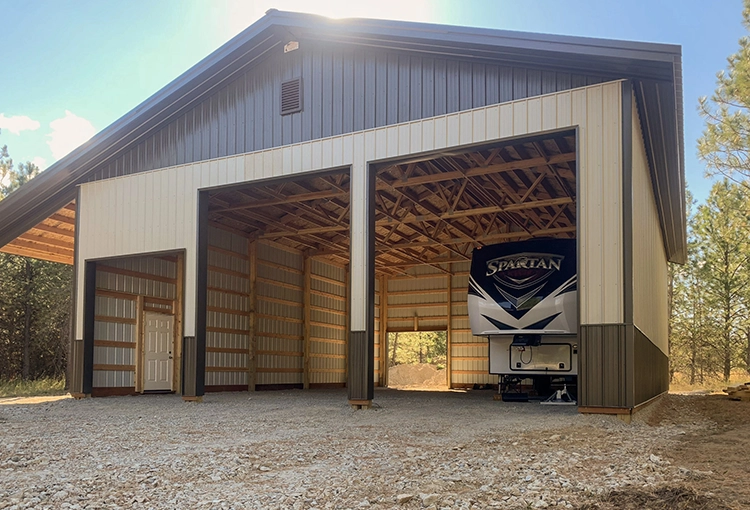
A basic covered shell protects your rig from weather. A well-designed RV building makes working on and living out of your RV significantly more convenient. Here are the features most owners are glad they included:
Tall Overhead Door
This is the single most important dimension decision in an RV storage building. A 14-foot overhead door clears most Class A and fifth wheel rigs, but a 16-foot door gives you a comfortable margin and future-proofs the building for larger rigs or vehicles with roof-mounted AC units, antennas, or solar panels. Going slightly oversized on the door costs very little relative to the total project but saves enormous headaches.
Shore Power Connection
A 30-amp or 50-amp electrical hookup inside the building lets you keep your RV plugged in while stored, which maintains batteries, runs a trickle charger, powers dehumidifiers, and keeps a refrigerator cold between trips. Plan this during the build rather than adding it later. Your contractor will rough in the electrical conduit during framing.
Interior Lighting
Adequate lighting matters for pre-trip prep, maintenance, and loading. LED shop lights mounted to the ceiling ridge provide even illumination with minimal energy use. Include switched outlets on a wall panel near the entry door for convenience.
Separate Entry Door
A standard walk-in door on the side or rear of the building lets you access the RV without opening the full overhead door. Practical for checking on your rig, grabbing gear, or doing quick maintenance work without the thermal loss of a wide-open bay.
Concrete Floor
A concrete slab floor is worth the investment. It keeps moisture out from below, makes the space usable for maintenance, and dramatically improves the look and feel of the building. A 4-inch slab with wire mesh and a vapor barrier is standard. If you plan to do vehicle maintenance, discuss floor drain options with your contractor during the planning phase.
Additional Bays for Boats, Trailers, or ATVs
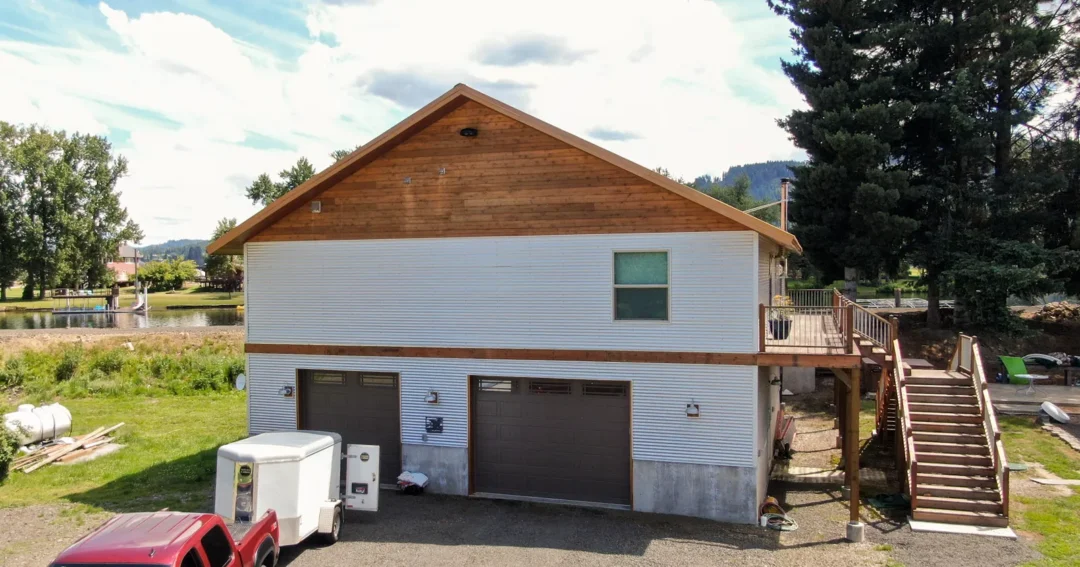
Many RV storage buildings do double duty as a general toy storage building. Adding a second bay with a standard 10 or 12-foot overhead door alongside the tall RV bay is very cost-effective at the time of initial construction. It gives you covered space for a boat, side-by-side, motorcycle, or trailer without requiring a separate structure.
RV Storage Building Cost: What to Expect
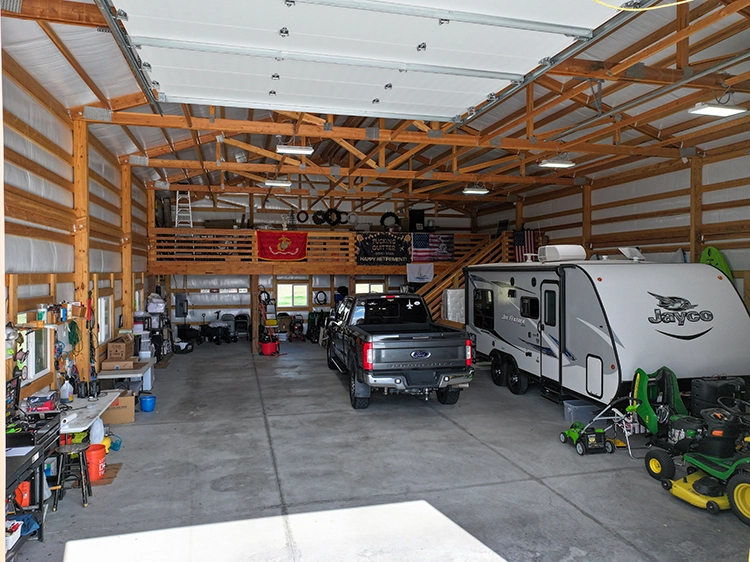
Costs below reflect turnkey post-frame construction in SSA’s service area (Idaho, Washington, Oregon, Colorado, Montana) and include foundation, framing, metal roofing and siding, a tall overhead door, a walk-in entry door, and basic electrical rough-in. Concrete floor is included in the mid-range estimate.
| Building Size | Shell Only | With Concrete Floor + Electrical | Fully Finished |
| 14×50 (single rig) | $18,000 – $28,000 | $26,000 – $40,000 | $38,000 – $55,000 |
| 20×60 (single large rig) | $28,000 – $42,000 | $40,000 – $58,000 | $55,000 – $80,000 |
| 30×60 (RV + boat/trailer) | $42,000 – $65,000 | $58,000 – $85,000 | $80,000 – $115,000 |
| 40×60 (RV + shop combo) | $65,000 – $95,000 | $85,000 – $120,000 | $115,000 – $160,000 |
| 40×80 (multiple rigs) | $85,000 – $125,000 | $110,000 – $155,000 | $150,000 – $200,000 |
These are general estimates. Final pricing depends on steel costs at the time of your build, site conditions, door sizing, and any added features. Ask your contractor for a line-item proposal that breaks out each component.
RV Storage Building vs. Covered RV Parking: Which Is Right for You?
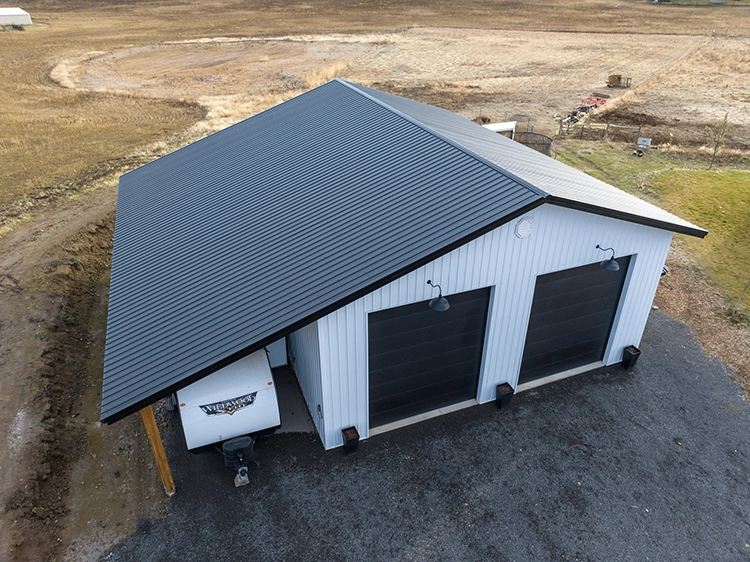
Not every property owner needs a fully enclosed building. Here is a quick comparison of the common options:
- Open carport or shade structure. Lowest cost option. Protects from sun and most precipitation but offers no security and limited protection from wind-driven rain, snow, or hail. Good for mild climates or a short-term solution.
- Three-sided pole barn. A back wall and two side walls with an open front. Better weather protection than a carport, easy drive-through access, no overhead door required. Popular for boat and trailer storage.
- Fully enclosed building. Maximum protection for your rig. Locks securely, protects from hail and UV, keeps rodents and pests out, and allows you to maintain shore power connection year-round. Best long-term option for expensive rigs.
For anyone storing a Class A motorhome, a high-end fifth wheel, or a boat valued over $30,000, a fully enclosed building is the right investment. The cost of a single hail damage claim or rodent infestation can exceed the price difference between an open carport and an enclosed building.
Frequently Asked Questions
Do I need a permit to build an RV storage building?
In most rural areas in SSA’s service footprint, smaller accessory buildings may qualify for agricultural or rural exemptions that simplify or eliminate the standard permit process. Larger buildings and those on suburban lots typically require a full building permit. Your contractor will check local requirements for your property before construction begins.
Can I build an RV storage building with a shop attached?
Absolutely, and it is a very popular combination. A layout with a tall single-bay RV section on one end and a standard-height shop or garage section on the other side gives you everything in one structure at a lower cost per square foot than two separate buildings. This is one of the most common requests SSA receives from acreage owners.
What is the minimum ceiling height for an RV storage building?
For a Class A motorhome or tall fifth wheel, plan for a minimum finished ceiling or eave height of 14 feet and an overhead door of at least 14 feet. A 16-foot eave height with a 16-foot door is better if your budget allows. Measure your specific rig’s height at its tallest point, including any roof-mounted equipment, before finalizing your building design.
Ready to Protect Your Investment?
Steel Structures America builds RV storage buildings, hobby shops, and multi-bay toy garages throughout Idaho, Washington, Oregon, Colorado, and Montana. We will help you size the building correctly for your rig, design a layout that works for your property, and give you a detailed quote with no surprises.
Call us at (866) 490-4012 or request a free quote online.